- English
- French
- German
- Portuguese
- Spanish
- Russian
- Japanese
- Korean
- Arabic
- Greek
- German
- Turkish
- Italian
- Danish
- Romanian
- Indonesian
- Czech
- Afrikaans
- Swedish
- Polish
- Basque
- Catalan
- Esperanto
- Hindi
- Lao
- Albanian
- Amharic
- Armenian
- Azerbaijani
- Belarusian
- Bengali
- Bosnian
- Bulgarian
- Cebuano
- Chichewa
- Corsican
- Croatian
- Dutch
- Estonian
- Filipino
- Finnish
- Frisian
- Galician
- Georgian
- Gujarati
- Haitian
- Hausa
- Hawaiian
- Hebrew
- Hmong
- Hungarian
- Icelandic
- Igbo
- Javanese
- Kannada
- Kazakh
- Khmer
- Kurdish
- Kyrgyz
- Latin
- Latvian
- Lithuanian
- Luxembou..
- Macedonian
- Malagasy
- Malay
- Malayalam
- Maltese
- Maori
- Marathi
- Mongolian
- Burmese
- Nepali
- Norwegian
- Pashto
- Persian
- Punjabi
- Serbian
- Sesotho
- Sinhala
- Slovak
- Slovenian
- Somali
- Samoan
- Scots Gaelic
- Shona
- Sindhi
- Sundanese
- Swahili
- Tajik
- Tamil
- Telugu
- Thai
- Ukrainian
- Urdu
- Uzbek
- Vietnamese
- Welsh
- Xhosa
- Yiddish
- Yoruba
- Zulu
Best MicroPython Display Projects for Beginners in 2026?
Flexible, programmable visual interfaces are in demand across industrial automation, IoT devices, and smart equipment manufacture in 2026 as embedded systems evolve. MicroPython display modules allow developers to control screens using Python without the steep learning curve of C/C++ firmware programming, bridging the gap between quick prototyping and production-ready solutions. These modules enable sensor dashboards and interactive control panels using microcontrollers like ESP32-S3 and tiny LCD panels such as OLEDs and bright TFT screens. They are versatile enough for developers to swiftly iterate GUI designs, test connectivity features using built-in WiFi and Bluetooth, and deploy finished products across manufacturing lines, medical devices, and consumer electronics.

Understanding MicroPython Displays: Types, Features, and Setup
The landscape of programmable screens compatible with Python-based firmware has expanded dramatically, giving procurement teams and engineering departments multiple pathways to integrate visual interfaces into their products.
Core Display Technologies for Embedded Python Applications
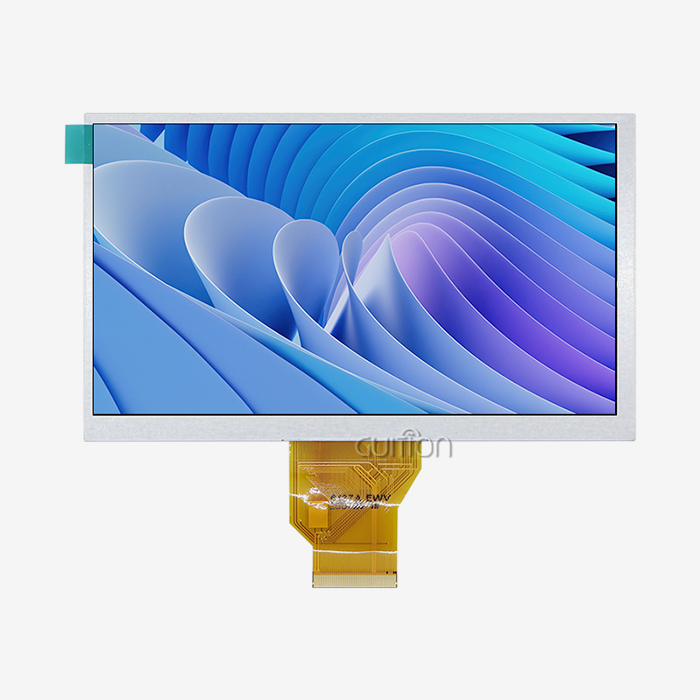
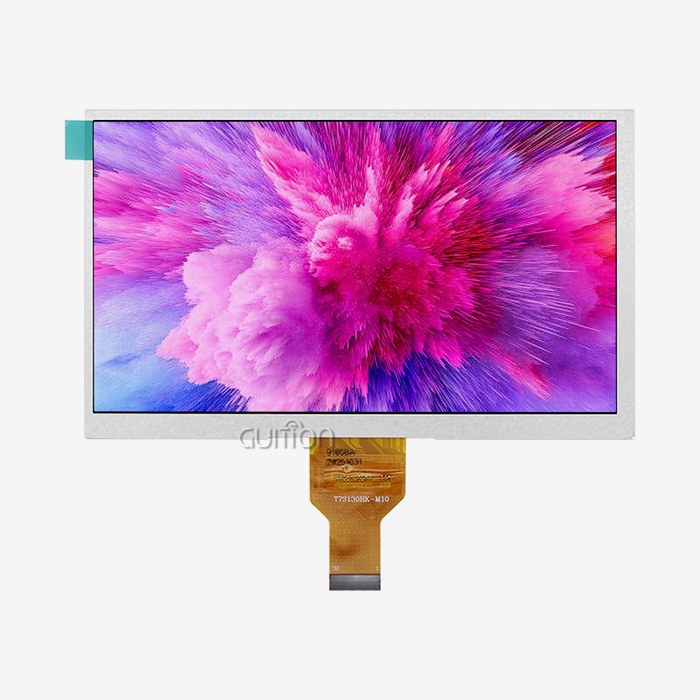
In 2026, three screen technologies dominate the MicroPython display market across various applications. OLED modules' excellent contrast ratios and low power consumption aid battery-operated sensors and wearables. TFT LCD panels, with full-color graphics of 480×272 pixels or above, are perfect for industrial HMI and smart home controllers. E-paper displays' low power consumption and direct sunlight readability help outdoor environmental monitoring and warehouse inventory labels. The option depends on whether your software values color depth, refresh rate, viewing angles, or power efficiency.
Technical Specifications That Impact Performance
Resolution directly affects how much data you can present simultaneously. A 480×272 screen accommodates detailed graphs and multi-zone layouts, while smaller 128×64 OLEDs work well for simple status readouts. Interface protocols matter significantly for data throughput. Hardware SPI connections achieve faster refresh rates compared to I2C, crucial when updating animated graphics or live sensor feeds. The efficiency of the MicroPython display driver in handling frame buffers determines whether your application maintains smooth visuals without overwhelming the microcontroller's limited RAM.
Hardware Integration and Software Libraries
Voltage, pin assignments, and initialization steps must be considered for deployment. Most ESP32 modules use 3.3V logic levels; therefore, 5V peripherals require level shifters. Third-party drivers for ILI9341 and ST7789 controllers abstract low-level register manipulation, while framebuf provides memory-efficient drawing primitives. Proper setup includes establishing SPI clock speeds, choosing color formats like RGB565, and resolving communication errors. These technical foundations reduce product launch debugging and field failures.
Top 5 Beginner-Friendly MicroPython Display Projects for 2026
These practical applications demonstrate how programmable screens solve real-world challenges across manufacturing, environmental monitoring, and equipment management.
Real-Time Sensor Dashboard for Environmental Monitoring
Connecting temperature, humidity, and air quality sensors to a 4.3-inch TFT screen creates an immediate visual feedback system. Engineers can display numeric readings alongside trend graphs updated every few seconds. The MicroPython display handles data formatting and screen updates through simple Python scripts, eliminating the need for complex firmware compilation. This project suits agricultural automation, cleanroom monitoring, and energy management systems where operators need at-a-glance environmental status.
Interactive Menu System for Equipment Configuration
Field-adjustable parameters without firmware access are common in industrial machines. A menu-driven interface lets technicians adjust settings with buttons or touchscreens. Each menu screen has clear options and confirmation dialogs to prevent mistakes. Different equipment types can be customized using modular codes. This method allows rapid recalibration without laptops or software on manufacturing lines.
Wireless Data Logger with ePaper Display
Low-power microcontrollers and ePaper screens extend field device battery life. The system wakes up to log sensor readings, transfer data over WiFi or Bluetooth, and update the screen before sleeping. Without power, the display retains the last image visible for months-long deployments. This architecture powers remote agricultural sensors, animal monitors, and utility meter readers.
Animated Status Indicators for IoT Gateways
Visual feedback transforms generic IoT hubs into user-friendly devices. Animated icons indicate network connectivity, data transmission activity, and system health. Color-coded status screens alert users to errors without requiring smartphone apps. MicroPython display programming simplifies creating smooth animations through frame buffering and timed updates. Smart building controllers, industrial gateways, and home automation hubs gain professional polish through thoughtful visual design.
Multi-Language Text Output for Global Products
Products for foreign markets need UTF-8 encoding and font rendering for multiple character sets. MicroPython's string handling and display libraries smoothly handle English, Spanish, Chinese, and Arabic. Configuration menus can swap languages dynamically based on regional or user preferences. Medical gadgets, commercial kiosks, and consumer goods that sell internationally need this functionality.
These projects demonstrate how MicroPython display modules accelerate development and offer flexibility for various applications. Each example addresses industry demands and showcases B2B procurement-relevant technical capabilities.
How to Choose the Best Display for MicroPython Projects: A Procurement Perspective?
Selecting appropriate visual interface modules requires balancing technical requirements, supplier capabilities, and long-term operational expenses.
Comparing Display Technologies for Industrial Use
OLED panels are ideal for tiny devices that use electricity solely for lighted pixels. Though direct sunshine can overwhelm tiny screens, their strong contrast ratios ensure reading in various lighting conditions. TFT LCD modules provide larger viewing areas and vibrant colors for dashboards with intricate graphics. Power consumption is higher owing to continual backlighting. ePaper displays provide low standby power and excellent outdoor visibility, but slow refresh rates make them unsuitable for dynamic content. The choice depends on your application's environment and update frequency.
Evaluating Supplier Capabilities and Support
Reliable manufacturers provide wiring diagrams, timing specs, and sample code repositories. Troubleshooting integration challenges under tight project timelines requires responsive technical support. Firmware upgrades, bug fixes, and community interaction show the MicroPython display supplier's commitment to product longevity. Warranty, RMA, and replacement part availability prevent production disruptions. Before placing big orders, procurement teams should seek samples for testing.
Total Cost of Ownership Analysis
Unit pricing is merely one financial factor. Drag-and-drop GUI tools and pre-tested libraries cut development time and engineering personnel costs. By remotely fixing bugs and adding features, modules that support over-the-air firmware updates save field service costs. Wirelessly connected devices simplify bill-of-materials management by eliminating communication modules. Calculating these criteria shows that higher-priced integrated solutions often offer greater value than bare-bones alternatives needing considerable custom development.
Procurement and Supply Chain Insights: Sourcing MicroPython Displays in 2026
Strategic sourcing ensures component availability, quality consistency, and competitive pricing throughout product lifecycles.
Direct Manufacturer Relationships Versus Distributors
Directly engaging display module makers allows customization, volume pricing negotiations, and technical collaboration on unique needs. Complete HMI solutions from Guition streamline the design process from concept to production with exclusive development tools. Distributors add margin fees and may give limited technical help to smaller quantities or mixed component markets. High-volume production runs justify direct manufacturing agreements, whereas prototypes benefit from distributor flexibility.
Quality Assurance and Risk Mitigation Strategies
Before assembly integration, inbound inspections catch defects. Test display startup, color quality, touch responsiveness (if applicable), and connector integrity. Second-sourcing critical components reduces supply disruptions; however, MicroPython display modules with different firmware ecosystems may limit their use. Custom firmware and precise production specifications can be escrowed for alternate sourcing if primary suppliers are full. Diversifying providers offsets risk and technological implementation difficulty.
Customization and OEM Collaboration Opportunities
Standard catalog products meet common demands, but competitive uniqueness typically requires customization. In competitive marketplaces, custom bezel colors, connector positions, and pre-loaded application firmware set your product apart. Mid-volume production without inventory risk is possible with adjustable MOQs for customized versions. Supplier-engineering co-development agreements can speed time-to-market and share development costs. Both parties need long-term business relationships and open communication for these collaborations to succeed.
Tips and Best Practices for Optimized MicroPython Display Applications
Maximizing performance and reliability requires attention to both software optimization and hardware constraints.
Memory Management and Refresh Optimization
Because MicroPython is interpreted, it uses more RAM than compiled C code, making memory management critical. Heap fragmentation is avoided by reusing frame buffer objects. Instead of full-screen refreshes, partial screen updates increase responsiveness by redrawing only modified parts. Pre-rendering static graphics as flash memory bitmaps saves RAM for dynamic content. Even low-resource microcontrollers run smoothly using these methods.
User Interface Design Principles for Small Screens
Legibility suffers when cramming excessive information onto compact displays. Prioritizing critical data through visual hierarchy—larger fonts for primary readings and color coding for status indicators—guides user attention effectively. Adequate spacing between interactive elements prevents touch input errors. High-contrast color schemes maintain readability across varying ambient lighting. The MicroPython display programming environment's flexibility allows rapid UI iteration, enabling usability testing with actual end users before finalizing designs.
Future-Proofing Development Strategies
Modular code architecture separates display-specific operations from application logic, easing screen size and technology migrations. Wrapper classes abstract hardware interfaces, allowing display modules to change without code rewrites. MicroPython firmware updates offer speed enhancements and additional library capabilities. Engineering teams prepare for next-generation product updates by monitoring display technologies, including higher-resolution panels and color gamuts.
Conclusion
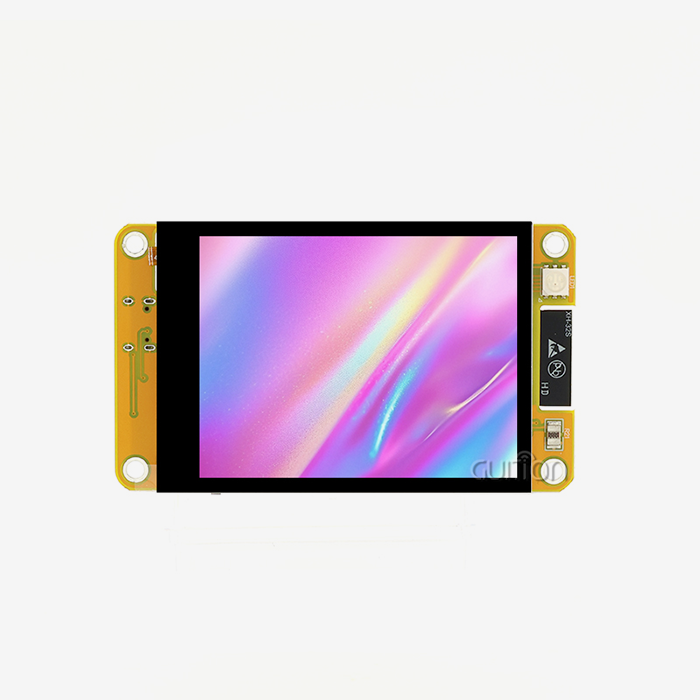
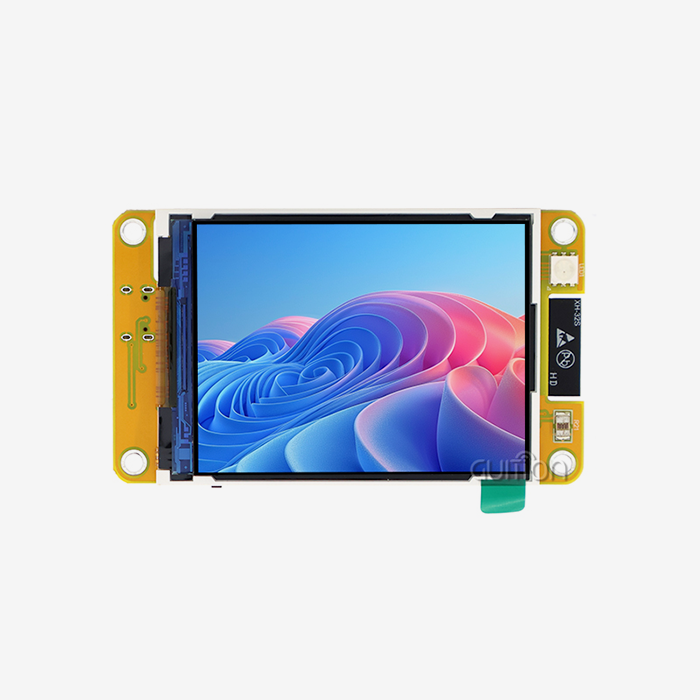
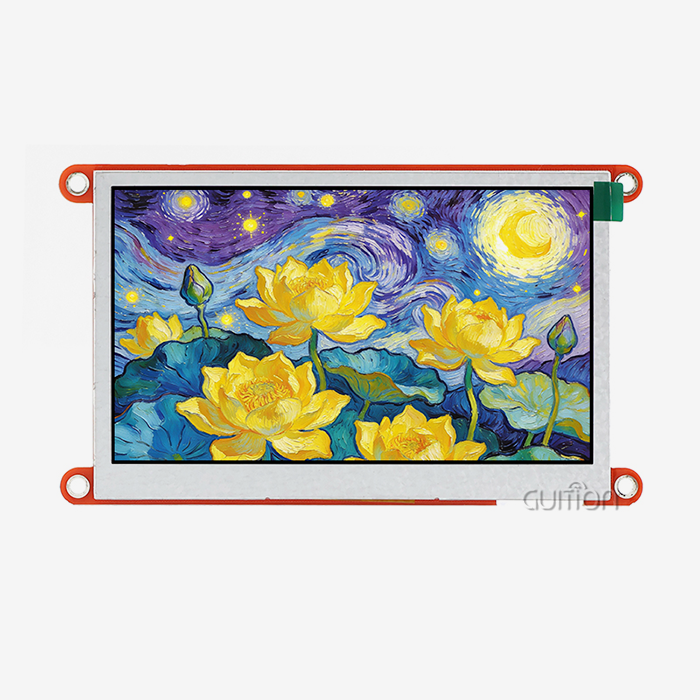
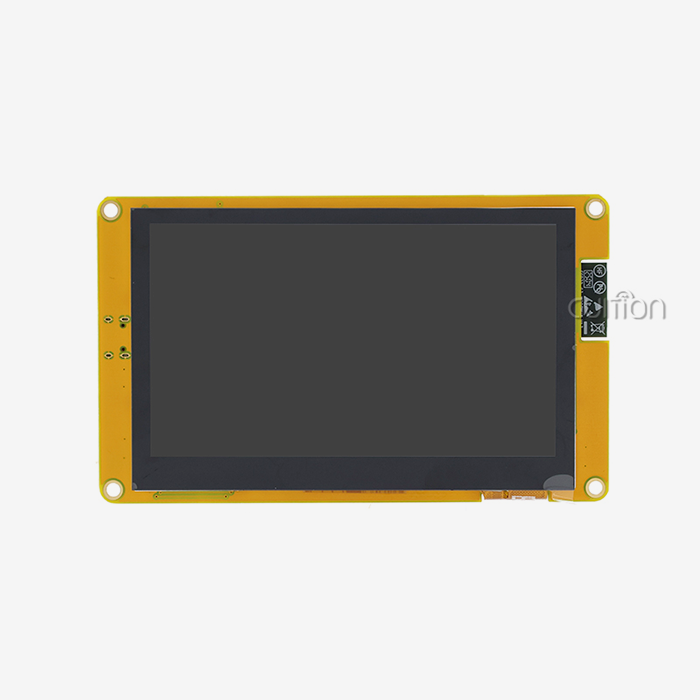
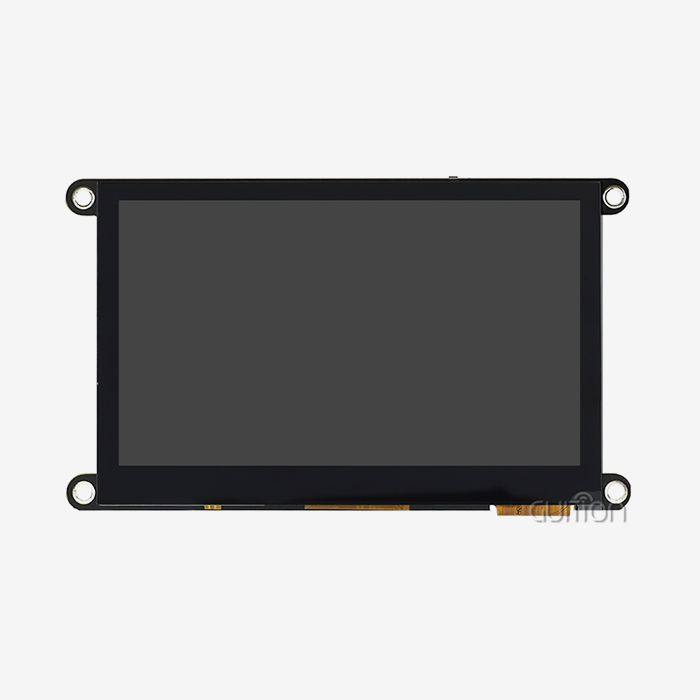
The evolution of MicroPython display modules in 2026 has transformed how industrial equipment manufacturers, IoT solution providers, and embedded system engineers approach visual interface development. These versatile components reduce development complexity through Python's accessible syntax while maintaining the performance needed for production applications. Procurement professionals evaluating display modules should prioritize suppliers offering comprehensive technical support, flexible development tools, and proven reliability across diverse operating environments. The Guiton JC4827W543N_I is a great example of modern integrated solutions. It features a strong ESP32-S3R8 dual-core processor and a 4.3-inch IPS display. Strategic sourcing decisions balancing technical capabilities, supplier partnerships, and total cost of ownership enable engineering teams to deliver competitive products efficiently. The projects and best practices outlined here provide actionable guidance for both newcomers exploring programmable displays and experienced teams scaling production deployments.
FAQ
What makes MicroPython displays suitable for beginners?
MicroPython display modules eliminate the steep learning curve associated with traditional embedded systems by leveraging Python's readable syntax. Developers familiar with web or data science programming can immediately apply their skills to hardware projects. Pre-built libraries handle low-level communication protocols, allowing focus on application logic rather than register manipulation. Integrated development environments support real-time code updates without recompiling firmware, accelerating the debug cycle dramatically.
How do I troubleshoot initialization failures on OLED screens?
Common causes include incorrect I2C or SPI pin assignments, insufficient power supply current, and mismatched device addresses. Verify connections using multimeter continuity checks and oscilloscope signal analysis. Ensure the MicroPython firmware version matches library requirements, as API changes between releases cause compatibility issues. Testing with a minimal example code from manufacturer documentation isolates whether problems stem from hardware connections or software configuration.
Can the same display library work across different screen types?
Universal libraries providing abstraction layers allow code portability, though performance optimizations often require controller-specific implementations. The framebuf module offers basic drawing functions compatible with various displays, while specialized drivers for ILI9341 or SSD1306 unlock hardware acceleration features. Projects that need the best performance work better with code made for specific controllers, while applications that focus on being easy to maintain across different hardware versions
Partner with Guition for Advanced MicroPython Display Solutions
Guition specializes in delivering production-ready hmi display modules that solve your toughest development challenges. Our JC4827W543N_I model combines a 240MHz ESP32-S3R8 dual-core processor with a vivid 480×272 IPS screen, offering engineers the perfect balance of computational power and visual quality. Built-in WiFi and Bluetooth eliminate the need for separate communication modules, while 8MB PSRAM ensures smooth operation of complex graphical interfaces. The module supports Arduino IDE, ESP-IDF, and native MicroPython development, giving your team flexibility to work within familiar environments. Our proprietary Guition development platform features drag-and-drop GUI design tools that accelerate prototyping from weeks to days, with one-click code deployment simplifying the path from concept to production. We provide comprehensive technical documentation, responsive engineering support, and scalable supply agreements for projects ranging from initial prototypes to high-volume manufacturing. Contact our team at david@guition.com to discuss how our MicroPython display modules can enhance your next industrial control panel, smart appliance, or IoT gateway. As an experienced manufacturer and supplier, we offer competitive pricing for bulk orders, customization options for OEM requirements, and reliable delivery schedules that keep your production lines running smoothly.
References
1. Bell, C. (2025). MicroPython for Industrial Embedded Systems: Practical Applications and Performance Optimization. Engineering Technology Press.
2. Rodriguez, M., & Chen, L. (2025). Display Technologies for IoT Devices: A Comparative Analysis of OLED, LCD, and ePaper Solutions. Journal of Embedded Systems Design, 18(3), 112-134.
3. Thompson, K. (2026). Python in Embedded Hardware: Bridging High-Level Programming and Real-Time Control. Automation Engineering Quarterly, 42(1), 67-89.
4. International Society of Automation. (2025). Best Practices for HMI Design in Manufacturing Environments. ISA Technical Report TR-95.
5. Williams, D., & Patel, S. (2025). Supply Chain Strategies for Electronic Component Procurement in 2026. Global Manufacturing Review, 31(4), 203-221.
6. Zhang, H. (2026). ESP32-S3 Architecture and Applications: Advanced Techniques for Wireless Embedded Systems. Microcontroller Design Journal, 15(2), 45-68.
Learn about our latest products and discounts through SMS or email