- English
- French
- German
- Portuguese
- Spanish
- Russian
- Japanese
- Korean
- Arabic
- Greek
- German
- Turkish
- Italian
- Danish
- Romanian
- Indonesian
- Czech
- Afrikaans
- Swedish
- Polish
- Basque
- Catalan
- Esperanto
- Hindi
- Lao
- Albanian
- Amharic
- Armenian
- Azerbaijani
- Belarusian
- Bengali
- Bosnian
- Bulgarian
- Cebuano
- Chichewa
- Corsican
- Croatian
- Dutch
- Estonian
- Filipino
- Finnish
- Frisian
- Galician
- Georgian
- Gujarati
- Haitian
- Hausa
- Hawaiian
- Hebrew
- Hmong
- Hungarian
- Icelandic
- Igbo
- Javanese
- Kannada
- Kazakh
- Khmer
- Kurdish
- Kyrgyz
- Latin
- Latvian
- Lithuanian
- Luxembou..
- Macedonian
- Malagasy
- Malay
- Malayalam
- Maltese
- Maori
- Marathi
- Mongolian
- Burmese
- Nepali
- Norwegian
- Pashto
- Persian
- Punjabi
- Serbian
- Sesotho
- Sinhala
- Slovak
- Slovenian
- Somali
- Samoan
- Scots Gaelic
- Shona
- Sindhi
- Sundanese
- Swahili
- Tajik
- Tamil
- Telugu
- Thai
- Ukrainian
- Urdu
- Uzbek
- Vietnamese
- Welsh
- Xhosa
- Yiddish
- Yoruba
- Zulu
Are Custom Colour lcd display module Solutions Worth It?
Custom colour LCD display module solutions are worth it, especially for B2B applications where standard off-the-shelf panels simply cannot meet precise mechanical, electrical, or environmental requirements. A colour LCD display module built to specification reduces integration friction, lowers long-term support costs, and delivers a user interface that matches your product's exact demands. For engineers building industrial control panels, medical monitors, or IoT devices, the difference between a generic TFT panel and a purpose-configured display module can determine whether a product succeeds or stalls at the prototype stage.

Understanding Colour LCD Display Modules and Their Key Specifications
It's helpful to know what a colour LCD display module is made of and why each part is important before deciding between custom and standard choices.
Core Technologies: TFT, IPS, and Beyond
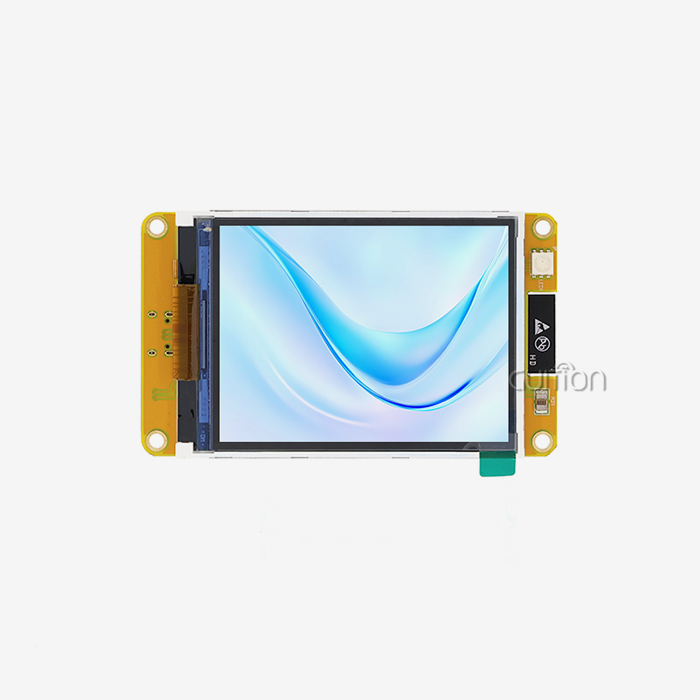
A colour LCD display module usually includes a TFT liquid crystal screen, a driver IC, a control PCB, an LED backlight unit, and a touch interface, if one is available. Active matrix addressing is used in TFT technology, which means that each pixel has its own transistor. This allows for fast refresh rates and precise color control. Many people like IPS panels because they have wider viewing angles (about 178°), which makes them better for medical and public kiosks.
Key Specifications to Evaluate
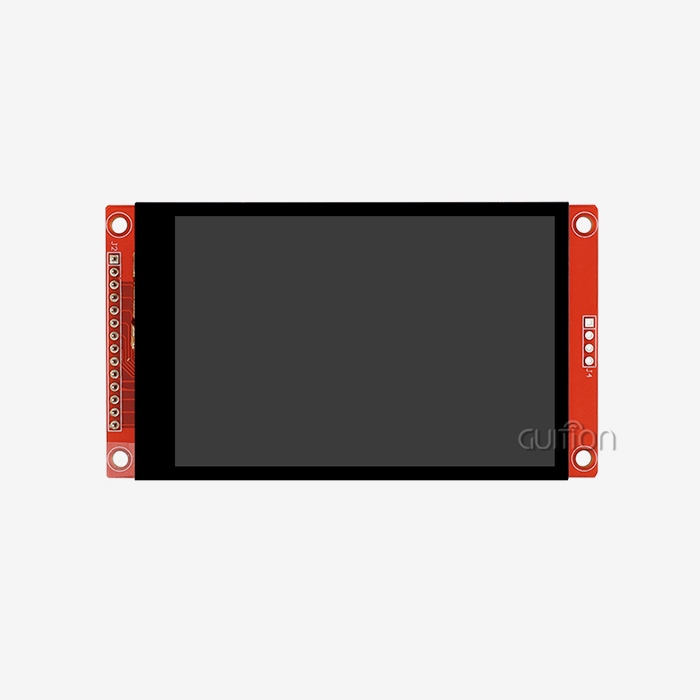
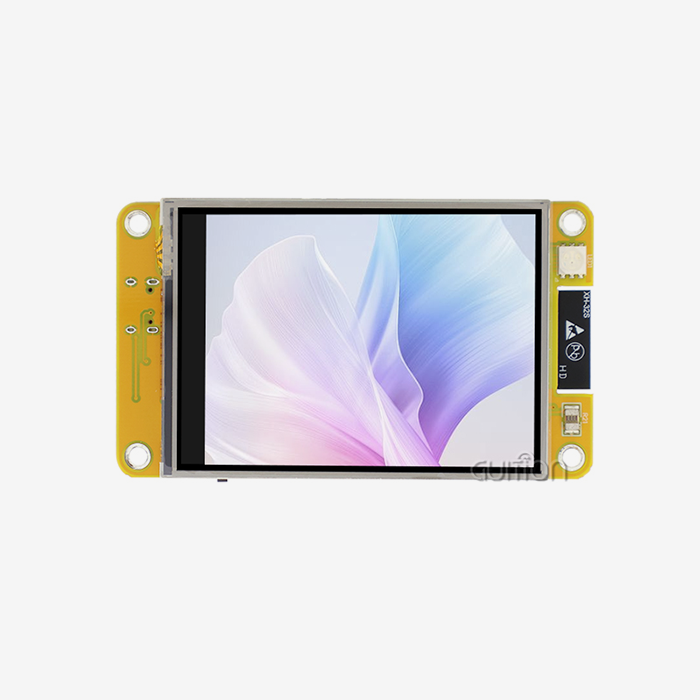
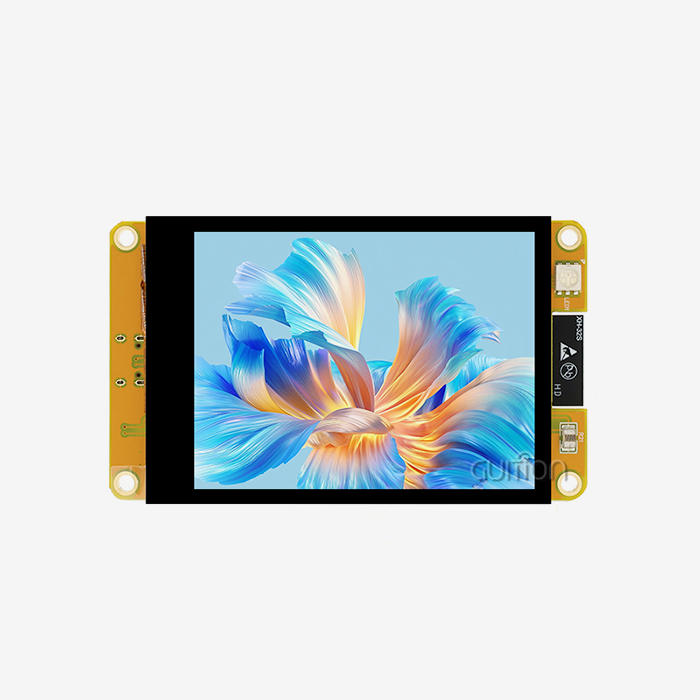
The five things that have the most direct effect on integration results are screen size, resolution, brightness (in nits), interface type, and touch technology. A 3.5-inch panel can display 320x480 pixels with 16-bit 65K colors thanks to an SPI-based colour LCD display module like the GUITION JC3248S035R, which uses a 4-wire SPI bus with an ILI9488 driver IC. While keeping wide compatibility across Arduino, ESP-IDF, and STM32 platforms, this configuration uses few GPIO pins.
Why Interface Type Matters
When the screen is less than 3.5 inches and the GUI information is mostly static, SPI works well. RGB parallel connections work well with mid-range screens that need to send video. For screens bigger than 7 inches, LVDS or MIPI DSI can handle the data bandwidth without too much electromagnetic interference. Picking the wrong interface early on in the development process costs a lot of money.
The Case for Custom Colour LCD Display Module Solutions
Colour LCD display modules that come standard cover a lot of uses, but they fall short in really tough situations.
Where Standard Modules Fall Short
Off-the-shelf TFT modules are made to work best for as many people as possible. Because of this, their working temperature range, panel brightness, and where the connectors are placed might not work with your enclosure design or the surroundings. A medical device that needs to be 800 nits bright and sealed with an IP65 rating, or an agricultural automation terminal that has to work in -20°C winters, will probably be too much for a standard commercial-grade module to handle.
What Custom Configuration Adds
Engineers can choose the screen size, connection type, backlight brightness, touch technology (resistive or capacitive), and even surface treatments like anti-glare or anti-reflective coatings when creating a custom colour LCD display module setup. This level of control directly lowers the number of failures in the field and guarantees fewer returns. A 2022 IHS Markit study on the display market said that OEMs that used application-specific display configurations had up to 30% fewer hardware-related support tickets than OEMs that used generic modules.
Real-World Application Payoff
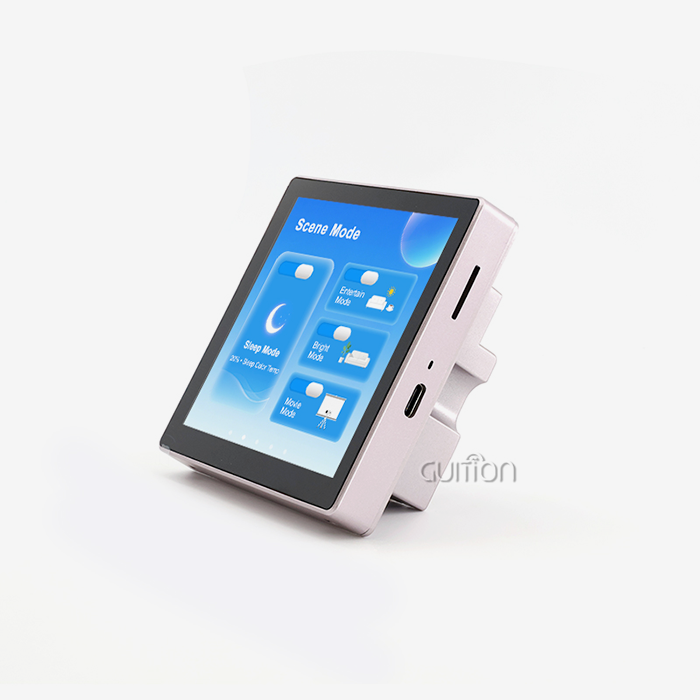
The use of external brightness-control circuits in industrial HMI panels is eliminated by a properly defined colour LCD display module, which also makes PCB planning easier. Smart home devices can use a small 3.5-inch SPI display with resistive touch, like the JC3248S035R, because it doesn't need a separate frame buffer chip. This makes the bill of materials (BOM) much cheaper.
Comparing Custom vs Standard Colour LCD Display Modules: A Rational Choice Approach
Standard Module Strengths and Limits
Standard units from companies like Newhaven Display and Riverdi can be shipped within days and come with driver support that is well-documented. This speed is really helpful for testing or making small amounts of goods. But standard modules often force technical sacrifices, like putting connectors in strange places, making sure the aspect ratios don't clash, or setting the brightness too low for places that get a lot of sun.
Where Custom Modules Justify the Investment
At the tooling stage, a special colour LCD display module usually costs 20% to 50% more per unit. That premium is balanced out, though, by less work needed for integration, fewer PCB redesigns, and better alignment over a longer product lifecycle. When brands buy scalable product lines like smart appliances, business booths, and energy management consoles, they get their money back in the first production run.
MOQ, Lead Time, and Supplier Collaboration
Custom designs usually need a minimum order quantity (MOQ) of 500 to 1,000 units and wait times of 4 to 8 weeks. The risk of specification drift between design approval and mass production is reduced by choosing a colour LCD display module supplier with open engineering communication and well-documented customization workflows.
How to Effectively Procure Custom Colour LCD Display Modules
Define Requirements Before Contacting Suppliers
Write an easy-to-understand list of the colour LCD display module's features, including its size, resolution, type of interface, operating temperature range, touch requirements, brightness goal, and mechanical envelope. A colour LCD display module maker can give you exact wait times and prices instead of rough figures if you give them this paper up front.
Evaluate Supplier Capability Thoroughly
Give more weight to suppliers who offer full datasheets, reference firmware, and test code that works on multiple platforms. For example, GUITION's interface creation software comes with full sample programs that engineers can use to test how well the display works on their target MCU before placing a production order. To get into the US market, you have to get certifications like RoHS and REACH approval.
Sample Testing and Contract Terms
Before entering into a production deal, always ask for a working model of the colour LCD display module. Check it against your real power source, the temperature range it can work in, and the way it talks to other devices. Talk about clear warranty terms, promises to replace parts, and the right to make changes to any display parameters that were found during field validation.
Troubleshooting and Maintaining Custom Colour LCD Display Modules
Common Failure Modes and Their Causes
When integrating a new colour spi display module, one of the most common problems is interface mismatches, particularly wrong SPI clock polarity or phase settings. Noise from the power source can make the backlight flicker or the driver IC restart. Over time, things in the environment like condensation can damage ITO traces or polarizer adhesive.
Proactive Maintenance Strategies
The device will last longer if it gets regular firmware updates that include routines for calibrating the display. For touch-enabled modules, occasional resistive testing stops coordinate drift in places where the temperature changes. The GUITION JC3248S035R can be upgraded over-the-air (OTA) through the Guition platform. This lets firmware maintenance be done remotely without direct access, which is very helpful for industrial or farming systems that are already in use.
Supplier Support as a Maintenance Asset
The settlement of problems is greatly accelerated by a responsive colour LCD display module provider. GUITION's technical documentation goes over register-level ILI9488 configuration, backlight PWM control, and SD card interface details. This gives embedded engineers the information they need to figure out problems on their own, without having to wait for support tickets to be resolved.
Conclusion
When your application needs a tight mechanical fit, long-lasting performance in harsh environments, or interface support that standard panels can't provide, custom colour LCD display module solutions offer quantifiable value. The GUITION JC3248S035R is a good example of this balance. It has a 3.5-inch TFT screen with a resolution of 320x480, an ILI9488 driver, a 4-wire SPI Display Module interface, a built-in SD card slot, and an optional resistive touch. It also comes with the Guition development software and cross-platform sample code. Choosing a reliable colour LCD display module provider expedites development and reduces field issues for teams building integrated systems for mass production.
FAQ
How long does custom colour LCD display module production typically take?
It usually takes 4–8 weeks from the time the plan is approved until the first sample is delivered for custom configurations, but only 2–5 business days for normal stock modules. Planning early for buying schedules keeps output from being held up.
Is the GUITION JC3248S035R compatible with Arduino and ESP32?
Yes. The JC3248S035R works with the ILI9488 driver IC through a normal 4-wire SPI interface. The ILI9488 driver IC has open-source tools that are well taken care of for Arduino, ESP-IDF, and STM32 platforms. GUITION gives test code to cut down on the time needed for the first setup.
Does customisation affect long-term supply reliability?
This risk is lower if you work with a reputable colour LCD display module supplier whose product lifecycles are well documented. GUITION keeps its supply stable across all of its display lines and allows remote over-the-air (OTA) updates to make its products last longer.
What touch technology does the JC3248S035R support?
The module comes with a sensitive touch screen that can be used as an extra. It has touch control circuits built right in. Resistive touch works effectively in wet places and with gloves on, so it can be used in both indoor and outdoor settings.
Can I use this display module in a medical device project?
The JC3248S035R is compliant with RoHS rules. For medical device certification, you should check with your certification body about specific regulatory requirements and compare module specs to your device's IEC 60601 series responsibilities.
Ready to Source Your Colour LCD Display Module? Contact GUITION
With the Guition development software, multi-language support, and OTA upgrade capability, GUITION offers a full range of colour LCD display module products from 1.28" to 21.5". Our engineering team is ready to help you with your next production build, whether you need a standard SPI display or a TFT solution that is set up just the way you want it. You can email our team at david@guition.com to get product datasheets, sample units, or a quote. GUITION makes it easy to go from idea to production as a reputable colour LCD display module provider supporting the industrial, medical, and IoT markets worldwide.
References
1. IHS Markit — Display Technology & Supply Chain Report, 2022
2. Society for Information Display (SID) — Information Display Journal, 2021
3. IEEE Transactions on Industrial Electronics — Human-Machine Interface Design in Embedded Systems, 2020
4. Embedded Computing Design — Selecting Display Modules for Industrial HMI Applications, 2022
5. Electronic Design Magazine — TFT LCD Integration Guide for Embedded Engineers, 2021
6. IPC — J-STD-001 Standards for Electronic Assembly and Component Procurement, 2023
Learn about our latest products and discounts through SMS or email