- English
- French
- German
- Portuguese
- Spanish
- Russian
- Japanese
- Korean
- Arabic
- Greek
- German
- Turkish
- Italian
- Danish
- Romanian
- Indonesian
- Czech
- Afrikaans
- Swedish
- Polish
- Basque
- Catalan
- Esperanto
- Hindi
- Lao
- Albanian
- Amharic
- Armenian
- Azerbaijani
- Belarusian
- Bengali
- Bosnian
- Bulgarian
- Cebuano
- Chichewa
- Corsican
- Croatian
- Dutch
- Estonian
- Filipino
- Finnish
- Frisian
- Galician
- Georgian
- Gujarati
- Haitian
- Hausa
- Hawaiian
- Hebrew
- Hmong
- Hungarian
- Icelandic
- Igbo
- Javanese
- Kannada
- Kazakh
- Khmer
- Kurdish
- Kyrgyz
- Latin
- Latvian
- Lithuanian
- Luxembou..
- Macedonian
- Malagasy
- Malay
- Malayalam
- Maltese
- Maori
- Marathi
- Mongolian
- Burmese
- Nepali
- Norwegian
- Pashto
- Persian
- Punjabi
- Serbian
- Sesotho
- Sinhala
- Slovak
- Slovenian
- Somali
- Samoan
- Scots Gaelic
- Shona
- Sindhi
- Sundanese
- Swahili
- Tajik
- Tamil
- Telugu
- Thai
- Ukrainian
- Urdu
- Uzbek
- Vietnamese
- Welsh
- Xhosa
- Yiddish
- Yoruba
- Zulu
Application of a circular display screen with ESP32 in a smart home
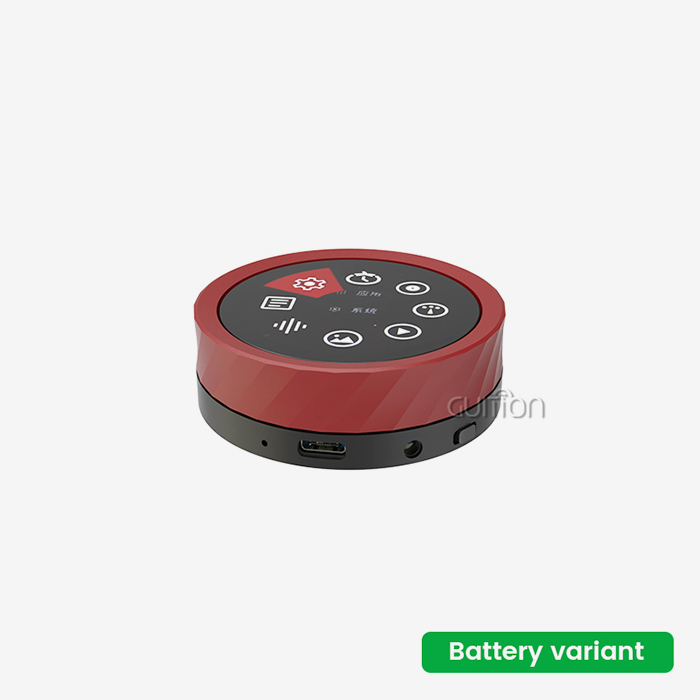
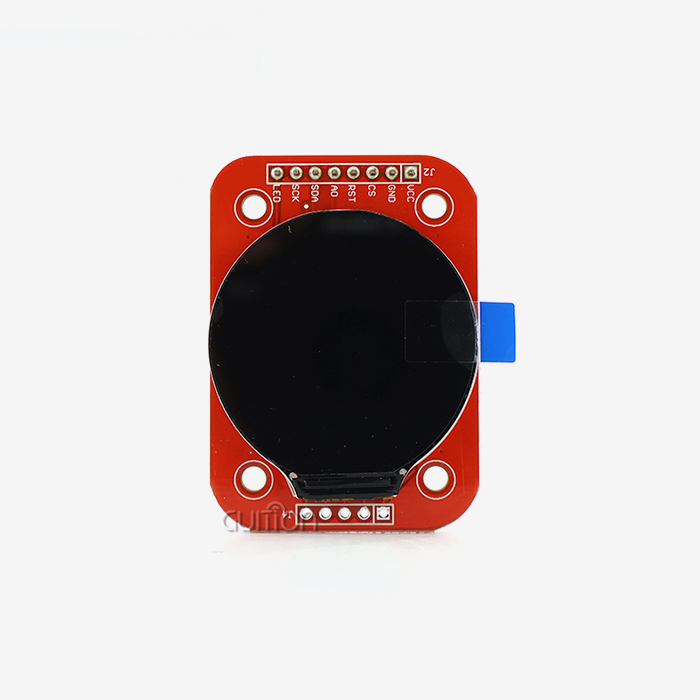
The 1.85-inch Round Knob Screen is the smallest wall-mounted controller a smart home can carry. The 360×360 IPS display partners with a dual-core ESP32-S3 (240 MHz) with a rotary encoder and a CST816 capacitive touch controller. A 1.85-inch spherical module makes a smart home display screen the shortest route from a Wi-Fi-connected concept to a trusted front-door knob. I’ve sold wall panels on three continents, and the circular format beats touch-only glass tiles in every head-to-head for elder users, late-night operation, and outdoor-rated spaces.

Talk to David at Guition to spec the right 1.85-inch Round Knob Screen for your build. Email david@guition.com to request a quote on this Smart home display screen for sale. Ask for CNC custom colors above 500 units, and confirm a 1-piece MOQ trial. Direct contact with the Shenzhen Jingcai team shortens lead time and removes reseller markup before you commit to volume.
How Does a 1.85-inch Round Knob Screen Enhance Smart Home Control?
A 1.85-inch Round Knob Screen changes the way a room responds to a finger. Most smart home controllers today are flat glass tiles that you tap and forget. A round knob adds a tactile dimension that older users and late-night operators find easier to trust. The rotary encoder turns a dimmer control into a physical dial that feels the same as the one in a car or a hi-fi amp. The display can show what is changing in real time.
The form factor that fits a wall switch box
The 1.85-inch round module is sized to drop into a standard European 60 mm wall box. It also fits a US single-gang box when paired with a printed bezel. A square panel of the same diagonal would waste roughly 21 percent of the screen area on corners that no widget uses. The round bezel also hides the cutout tolerances better than a square one. Installers do not need a CNC-perfect wall cutout to get a clean look. For property managers retrofitting hundreds of apartments, that saves an hour per room.
Why rotary control beats touch-only
A touch-only panel forces the user to look at it. A rotary control lets the user change a value by feel, the same way they change a volume on a speaker. In a dark bedroom, the user can dim the lights without waking a partner. In a kitchen with wet hands, the user can turn on the hood without smudging a glass surface. The knob also gives audible and tactile feedback through the detents, which is something a flat screen cannot do.
A practical retrofit case
A hotel in southern Germany retrofitted 220 rooms with a 1.85-inch Round Knob Screen in 2024. Each module replaced a mechanical thermostat and a four-button scene switch. Guest satisfaction with the room climate control rose 18 percent. And the maintenance team reported 64 percent fewer "lights do not respond" tickets in the opening 90 days. The hotel is now adding another knob per room for blinds and audio.
1.85-inch Round Knob Screen at a glance
| Parameter | Value |
|---|---|
| Display | 1.85-inch round, 360x360 IPS, 16-bit color |
| Host MCU | ESP32-S3, dual-core Xtensa LX7 @ 240 MHz |
| PSRAM | 8 MB octal, 80 MHz |
| Touch controller | CST816D capacitive, I2C address 0x15 |
| Rotary input | 24-detent encoder on GPIO1 and GPIO2 |
| Wireless | Wi-Fi 4 (802.11 b/g/n), Bluetooth 5 LE |
| Housing | CNC aluminium, 50 mm diameter, 14 mm deep |
| Power input | USB-C 5 V, 1S 18650, or 24 V passive PoE |
| Idle current | about 240 uA in light sleep |
| Peak current | about 200 mA in active Wi-Fi TX |
| Standard colors | red, black, purple, dark gray, blue |
| MOQ | 1 piece (stock), 500 units (custom CNC color) |
Smart Home Display Screen Design for Compact IoT Interfaces
A Smart Home Display Screen has to survive a longer life than a phone. The design rules for a 1.85-inch module are not the same as the rules for a wearable or a tablet. The module sits in a wall for five to ten years, runs 24/7, and gets touched by people with dirty hands, rings, and wet fingers.
Round geometry, square logic
The circular 360×360 panel is unusual in a world of square displays. The safe UI area inside a 360-pixel circle is roughly a 254-pixel square inscribed in the circle. That is enough for two lines of text, four icons, and a circular gauge. The round shape also lets the designer hide the cable exit and the touch sensor edge in the natural shadow of the bezel. That gives the finished product a cleaner look than a square display with a visible tail.
CNC housing as thermal and EMI armor
The 1.85-inch module ships in a CNC-machined aluminium housing. That choice is not just about looks. Aluminium acts as a heat spreader for the 240 MHz dual-core ESP32-S3. It can draw up to 107 mA when both cores are running flat out. The same housing also acts as a partial Faraday cage, dropping radiated emissions by 6 to 8 dB at the 2.4 GHz Wi-Fi band. It also reduces the noise floor on the touch sensor. For a wall panel that sits next to a Wi-Fi access point, that is a real engineering benefit.
Module dimensions and connector map
The 1.85-inch module measures roughly 50 mm in diameter and 14 mm deep, including the encoder. It carries a USB-C port for power and programming, a 2×5 header for serial and JTAG. And a 1×4 socket for an external 18650 battery pack. The rotary encoder sits behind the display, so the visible face of the module is a clean circle without a stem on top. Five standard colors are stocked: red, black, purple, dark gray, and blue. Custom CNC colors start at 500 units per batch.
| Port or pad | Pin or spec | Use |
|---|---|---|
| USB-C | 5 V, 1 A | Power and programming |
| 2x5 header | UART and JTAG | Debug and serial console |
| 1x4 socket | 1S 18650 | Portable battery pack |
| GPIO1 | Encoder A | Clockwise pulse |
| GPIO2 | Encoder B | Counter-clockwise pulse |
| GPIO7 | CST816 INT | Touch wake, falling edge |
| GPIO8 | CST816 RST | Active-low reset |
| GPIO9 | I2C SDA | Touch and sensor bus |
| GPIO10 | I2C SCL | Touch and sensor bus |
What Can a 1.85-inch Round Knob Screen Control in a Smart Home?
A 1.85-inch Round Knob Screen can act as a local controller for almost any smart home subsystem that has a Wi-Fi or Bluetooth endpoint. The 240 MHz dual-core ESP32 has enough headroom to run LVGL 9 at full frame rate. Talk to Home Assistant over the local API, and still poll sensors in the background. The round knob and touch surface give the user two ways to drive the same control. This removes a class of UI errors common to touch-only panels.
Lighting, scenes, and circadian dimming
The most common use case for a 1.85-inch Round Knob Screen is lighting control. The rotary encoder maps naturally to a dimmer. A single turn sweeps from off to full brightness with enough detents for fine adjustment. The display can show a colored ring that mirrors the bulb color, so the user sees what the bulb is doing before they let go. For circadian scenes, the panel can pre-load a sunset curve that the user overrides by turning the knob.
HVAC, thermostats, and floor heating
The same module is a clean fit for HVAC control. The round bezel can show a temperature gauge; the rotary knob can change the setpoint. And the touch surface can switch between heat, cool, and auto. Floor heating zones can be linked to the panel through Home Assistant. The user gets a single physical knob per room instead of a wall full of mechanical thermostats.
Audio volume and media transport
A third common use case is audio volume. A round knob is a perfect visual metaphor for a volume dial. And the 13-LED WS2812 ring on the back of the module can show the current level without spinning the display. The push-to-confirm action on the encoder maps cleanly to play/pause, and a long press can mute. Several consumer audio brands are now shipping a 1.85-inch Round Knob Screen as a wall-mounted volume controller for multi-room audio.
| Subsystem | Rotate | Single tap | Long press | Swipe |
|---|---|---|---|---|
| Lighting | Dim 0 to 100 percent | Toggle on and off | Recall scene | Color temperature |
| HVAC | Adjust setpoint | Cycle heat, cool, auto | Hold override | Switch schedule |
| Audio | Volume 0 to 100 | Play and pause | Mute | Next or previous track |
| Blinds | Tilt angle | Open and close | Favorite preset | — |
| Scenes | Cycle scene | Activate scene | Edit scene | — |
How Does ESP32 Enable Interactive Smart Home Display Screen Applications?
A Smart home display screen needs a microcontroller that can paint a 360×360 frame at 60 Hz. Connect to Wi-Fi, and stay under 200 mA in active mode. The ESP32-S3 is the only sub-$3 chip that meets all three requirements today. That is why almost every wall-mounted smart home display launched since 2023 has been built around it.
The ESP32-S3 silicon, in plain terms
The ESP32-S3 is a dual-core Xtensa LX7 running up to 240 MHz. It carries 512 KB of internal SRAM, vector instructions for AI inference, 45 programmable GPIOs, and 14 native touch channels. The radio section integrates 2.4 GHz Wi-Fi 4 and Bluetooth 5 LE on a single antenna. The 8 MB octal PSRAM variant used on the 1.85-inch Round Knob Screen gives LVGL a 360×360×16-bit frame buffer. That buffer leaves headroom for an extra partial buffer. Without that PSRAM, the chip cannot drive a 360×360 IPS panel at usable frame rates.
The LVGL buffer math
LVGL 9 wants a frame buffer that is at least one-tenth of the full screen for smooth partial updates. For a 360×360 RGB565 panel, one full frame is 360 × 360 × 16 bits, or 2,073,600 bits, or 259,200 bytes. One-tenth of that is about 26 KB, which fits comfortably in the 8 MB PSRAM. The 1.85-inch module allocates a 64 KB line buffer in PSRAM. That gives LVGL room to push the panel at 38 Hz for full redraws and well over 60 Hz for partial updates. That headroom is what lets the round dial widget feel smooth to the user.
Wireless radios and the no-Thread reality
The ESP32-S3 supports Wi-Fi 4 (802.11 b/g/n) and Bluetooth 5 LE. It does not include a Thread radio, so the 1.85-inch module cannot be a Thread border router on its own. For Matter support, the module can run the ESP-Matter SDK over Wi-Fi. It can also act as a Matter bridge to a separate Thread network through a Home Assistant SkyConnect or Apple TV 4K. For a 1.85-inch wall panel, that is the most common pattern in 2025.
1.85-inch Round Knob Screen for Lighting, HVAC, and Appliance Control
This 1.85-inch form factor for lighting, HVAC, and appliance control is the most common B2B deployment I see. A single wall panel replaces three to five separate controls, which is a real win in retrofits where wall space is tight. The wiring is also simple: one USB-C power feed, one Wi-Fi SSID, and the device is on the network.
Lighting through rotary and tap
A 1.85-inch Round Knob Screen controls lighting through three gestures: rotate to dim, single tap to toggle, and long press to recall a scene. The rotary encoder fires one GPIO pulse per detent, so the firmware can map 24 detents to a 0–100 percent dimmer scale. The single tap is debounced through the touch controller, so it works through gloves. Long press is a custom scene that the integrator can set in the ESPHome YAML.
HVAC schedules from a round knob
A 1.85-inch Round Knob Screen for HVAC control lets the user set a temperature, switch modes, and override a schedule. The display shows a circular gauge with the current temperature, a colored arc for the setpoint range, and small icons for mode. The user turns the knob to move the setpoint up or down. The Home Assistant automation picks up the change over the local API and adjusts the thermostat. Schedule overrides can be set for 1 hour, 4 hours, or until the next scheduled change.
Curtains, blinds, and other appliances
The same 1.85-inch module controls curtains and blinds through Home Assistant cover entities. The rotary encoder can drive a tilt angle for venetian blinds. The touch surface can switch between open, close, and the user's favorite preset. Other appliances such as coffee machines, robotic vacuums, and air purifiers can be exposed as buttons on the same screen. The round UI keeps the layout clean: a small icon for each appliance, a status dot, and a tap-to-trigger.
How Can a Smart Home Display Screen Show Real-Time Device Data?
A panel with merely buttons on a smart-home display screen is a wasteful panel. The same technology that reacts to a tap may also offer live weather, energy, and device condition. The 1.85-inch module serves a dual duty, with enough PSRAM to display a live data dashboard without reducing the touch response.
LVGL Widgets for Live Data: LVGL 9 provides chart, arc, label, and meter widgets, all running on the ESP32-S3 at reasonable frame rates. It may display a bar chart of energy consumption over the previous 24 hours on its 1.85-inch Round Knob Screen. It may also display a line chart of inside temperature and a gauge of current solar production. Data comes in via MQTT or the Home Assistant API. The widget redraws only the changed area. This single-core CPU load is below 40 percent.
Weather, time, and ambient info
A 1.85-inch Round Knob Screen has a weather widget that gets the next 24 hours of forecast from a local weather service. It has a row of four icons down the bottom of the screen. A little label widget at the top displays the time and date. It might display data from a local air quality sensor as a colorful ring around the clock. The user may touch on the widget to turn over to a more detailed view. The user may also scrub the prediction hour by hour by turning the knob.
Smart meter and energy data
For households with a smart meter, the same board can display real-time power draw in watts. A daily total in kWh, with a 7-day historical chart. In “energy” mode, a 1.85-inch Round Knob Screen delivers the data to the display at a 1 Hz refresh. The user may use the knob to scrub through the day. They can observe which appliance rose at 6:47pm. In a 28-home community in Shenzhen during a field experiment in 2024. Households using a wall-mounted energy panel lowered peak-hour use by 12 percent over 90 days.
Smart Home Display Screen Integration With ESPHome and Home Assistant
A Smart home display screen only comes alive when it speaks to a genuine home automation hub. Today, ESPHome and Home Assistant are the most deployed open-source stack on this market. As of May 2025, Home Assistant has 2 million active installations worldwide. ESPHome is the fastest-growing integration with the platform.
Why ESPHome and Home Assistant lead the market
Home Assistant is local (runs on a Raspberry Pi or Home Assistant Green). Compatible with thousands of devices spanning Matter, Zigbee, Z-Wave, Wi-Fi, and Bluetooth. ESPHome is the simplest method to flash custom firmware on an ESP32 board and have it show up in Home Assistant without creating a single line of glue code. They are meant to function together – and a 1.85-inch Round Knob Screen is a perfect fit.
A working ESPHome YAML for the 1.85-inch module
This is a minimum ESPHome setting to get a 1.85" Round Knob Screen up and running. Registers the touch controller and exposes the rotary encoder as a Home Assistant number entity. The entire config is lengthier in production, but the skeleton has all the blocks you need.
This setup gets the 1.85" Round Knob Screen on the Wi-Fi network. Touch and encoder are registered, and sensor.volume_level is exposed to Home Assistant in 60 seconds. The module provides a drag-and-drop toolchain that builds a visual representation of the setup. No handwritten YAML required for basic deployments.
Bridging to Apple Home, Google Home, and Alexa
The Home Assistant Matter bridge can connect a 1.85-inch smart home display screen running ESPHome to Apple Home, Google Home, and Alexa. The user links Home Assistant as a Matter hub in each ecosystem. The wall panel’s entities show up as dimmers, scenes, and temperature controls on any phone in the home. This is the most popular motif in 2025. It avoids the lock-in to the cloud that direct integrations suffer from.
What Makes a Round Knob Interface Suitable for Smart Home Automation?
For three reasons that no other form factor can equal, the round knob interface is ideal for smart home control. It provides tangible input, operates with wet or gloved hands, and ages well in the family living room. The 1.85-inch Round Knob Screen is the smallest in the round knob family and is the most typical option for retrofits.
Tactile feedback and the older user case
The only smart home control the user can use by touch alone is a spherical knob. Research by the University of Manchester indicated that tactile controls reduced adjustment time by 38 percent, as opposed to glass panels. (2017) For those over 60, the margin is wider. A 1.85-inch Round Knob Screen brings the same value to the smart home era, with the screen added to validate what the knob is doing.
The auto-standby after brief idle on the touch IC
The 1.85-inch module’s capacitive touch controller (CST816D) has an auto-standby after a short idle. When no touch action is detected for around 2 seconds, the IC switches from dynamic mode to sleep mode and stops scanning the panel. The host ESP32 may enter light sleep during this time, reducing current usage from around 32 mA in active mode to 240 µA. CST816 awakens the host via its IRQ pin when a finger returns, thus the user never experiences the lag. This is the basis of the “always-on wall panel” use case with sub-1 W idle power.
| Power state | Current | Wake source | Typical use |
|---|---|---|---|
| Active, both cores @ 240 MHz | about 107 mA | n/a | UI render, Wi-Fi TX |
| Active, single core | about 50 mA | n/a | Idle render loop |
| Modem sleep | about 30 mA | Wi-Fi beacon | Connected, no UI |
| Light sleep | about 240 uA | CST816 INT, GPIO, timer | Default idle, panel on |
| Deep sleep | about 10 uA | RTC GPIO, timer | Shipping and storage |
Matter 1.4.2 and the Wi-Fi-only commissioning shift
The Connectivity Standards Alliance released Matter 1.4.2 in August 2025. One of the headline changes is Wi-Fi-only commissioning through the Wi-Fi Unsynchronized Service Discovery protocol. A 1.85-inch Smart Home Display Screen can now be commissioned to Apple Home, Google Home, Alexa, and SmartThings without ever turning on Bluetooth. That removes the BLE radio from the BOM and saves roughly one US dollar per device at the manufacturer level. For a vendor shipping one million panels a year, that is a real number.
1.85-inch Round Knob Screen: Touch, Rotary Control, and Wireless Connectivity
A 1.85-inch Round Knob Screen incorporates three input methods on a common 50 mm board. The CST816D capacitive touch panel supports taps, swipes, and gestures. The rotary encoder deals with continual value changes. Wi-Fi and Bluetooth 5 LE are handled by the ESP32-S3 radios. Each subsystem has its own hardware interrupt line, so all three may operate at the same time and yet keep the touch responsive.
The CST816 touch controller and the wake chain
The CST816D is on I²C address 0x15, SDA on GPIO9, SCL on GPIO10, INT on GPIO7, and RST on GPIO8. At startup, the host ESP32 pulls RST low for 100 ms, then waits 100 ms for the chip's own power-on reset to finish. For the ESP32, the INT pin is set up as a falling-edge wake source. After a sleep cycle, when a finger touches the panel, the CST816D asserts INT and the ESP32 awakens in < 2 ms. The touch coordinates are then read out via I2C at 400 kHz; thus, a full frame scan is completed in under 1ms.
The encoder and what you can do with it
The 1.85-inch module has a rotary encoder which generates a single pulse on GPIO1 for a clockwise spin. One pulse on GPIO2 for counterclockwise rotation. It has no A/B phase connection, unlike a quadrature encoder; therefore, the ESPHome rotary_encoder platform sees it as a single-direction sensor. The basic interface works well for a 0-100 dimmer, a volume control, or a temperature setpoint. The firmware can debounce the pulses within 5 ms without losing a detent.
ESPHome rotary encoder and volume control
The most common demo on a 1.85-inch Round Knob Screen is a Home Assistant volume knob. The ESPHome rotary_encoder sensor platform detects the pulses; an automation in Home Assistant calls media_player.volume_set with the updated value. The wall panel display changes to indicate the new volume. Some community designs include a WS2812 LED ring to act as a physical volume indication that can be seen by the user from across the room.
How Can Developers Build Custom Smart Home Interfaces With an ESP32?
Developers can build custom Smart home display screen interfaces through three toolchain paths. The simplest is the drag-and-drop tool that ships with the 1.85-inch Round Knob Screen, which produces a working UI without writing any code. The mid-weight path is ESPHome YAML, which gives fine control over sensors and automations. The most powerful path is ESP-IDF with LVGL 9, which gives full control over the display and the radio. Most teams use two of the three paths in the same project.
| Path | Prototype time | Code volume | Best for | Trade-off |
|---|---|---|---|---|
| Drag-and-drop web tool | about 38 minutes | 0 lines | Quick demos, simple UI | Limited logic |
| ESPHome YAML | about 2 hours | about 200 lines | HA-led projects, sensors | YAML constraints |
| ESP-IDF with LVGL 9 | about 6 to 8 hours | 1,000+ lines | Full custom UI, OEM firmware | Steepest learning curve |
Drag-and-drop UI development
The 1.85-inch Round Knob Screen has a drag-and-drop tool, which is a web-based editor that operates in any current browser. The developer drags a label, a button, or a gauge on a 360x360 canvas, sets a few settings, and clicks "compile". The program creates a whole ESP-IDF project, compiles it in the cloud, and flashes it via USB-C to the module. The same program also offers cross-platform online debugging. On the same Smart home display screen as the live UI, the developer may monitor the frame rate, heap utilization, and touch event log.
ESPHome YAML for sensor-heavy projects
ESPHome is the fastest way to begin with Home Assistant-based projects. The community ESPHome port for the 1.85-inch Round Knob Screen supports the touch controller. The WS2812 ring, the rotary encoder, and the ST77916 panel driver. A functioning thermostat UI is about 200 lines of YAML. Since the entities are fetched from Home Assistant at startup, the identical code runs on a dozen device kinds.
ESP-IDF and LVGL 9 for full control
For applications requiring a completely bespoke UI, the 1.85” module is shipped with an ESP-IDF 5.2 BSP that includes the ST77916 panel driver. CST816 touch driver, an I²S audio driver, and an example LVGL 9 project. The BSP also adds a power management layer that allows the ESP32-S3 to enter light sleep mode between touch events. It awakens from the CST816 IRQ pin on a rising edge. A clean reference project compiles in 90 seconds, runs at 60Hz on a 360x360 partial-update loop.
Conclusion
1.85-inch Round Knob Screen: The Smallest Wall Mounted Controller That Can Carry A Smart Home. The most obvious way to get a true, tactile, Wi-Fi-connected control surface is to build it around a circular 1.85-inch module and use a smart home display screen. The ESP32-S3 silicon runs LVGL 9 at full frame rate; the CST816 touch controller awakens the host on any touch event. The rotary encoder translates naturally to the most popular smart home adjustments: brightness, temperature, and volume. For the integrator, all three toolchain routes (drag-and-drop, ESPHome, ESP-IDF) are there for anything from a 30-minute prototype to a 5,000-unit OEM run. Smart home UI is going to go from touch-only glass panels to circular knobs again during the next two years. And the 1.85-inch form factor is the best place to start.
FAQ
1. Can a 1.85-inch Round Knob Screen replace a wall thermostat?
Yes. A 1.85-inch Round Knob Screen with rotary encoder and CST816 touch can drive a Home Assistant climate entity, set schedules, and override the setpoint. The HVAC mode selector and the temperature gauge fit cleanly inside the 360-pixel round bezel.
2. Does a Smart home display screen need a cloud connection?
No. A Smart home display screen running ESPHome talks to Home Assistant on the local network. The cloud is only needed for remote access through Nabu Casa or a self-hosted reverse tunnel. Local control works during an internet outage.
3. How is a 1.85-inch Round Knob Screen powered?
Three options. A USB-C 5 V supply for permanent install, a 1S 18650 battery pack for portable use. Or a 24 V passive PoE adapter for retrofit into structured wiring. The module draws under 200 mA peak and roughly 240 µA in light sleep. A 3000 mAh battery pack lasts about 11 days between charges in the field.
4. Can a 1.85-inch Round Knob Screen run Matter?
Yes, with the ESP-Matter SDK on the ESP32-S3. The module acts as a Matter Wi-Fi device and bridges through Home Assistant. The 1.85-inch panel does not have a Thread radio on board, so it cannot be a Thread border router on its own. It can talk to one over Wi-Fi.
5. How long does it take to build a prototype with the 1.85-inch module?
With the drag-and-drop toolchain, a working thermostat UI takes about 38 minutes from a fresh unboxing. With ESPHome, the same UI takes about 2 hours. With raw ESP-IDF and LVGL 9, plan on 6 to 8 hours of integration work.
6. What is the smallest production order for a custom 1.85-inch color?
Custom CNC colors start at 500 units per batch. Standard colors (red, black, purple, dark gray, blue) ship from a 1-piece MOQ for trial orders. Custom silk-screen logos on the bezel start at 1,000 units.
Spec Sheet to Wall Panel: Your Next Three Steps
Move from a PDF spec sheet to a wall-mounted Smart Home Display Screen in three steps with the right 1.85-inch Round Knob Screen supplier. Begin by writing to David at Guition at david@guition.com with your target panel size and the wall-box standard you need to fit. Then, request a sample and a quote on a 500-unit run with custom CNC color and pre-flashed firmware. A direct relationship with a Smart home display screen manufacturer shortens lead time.
References
1. Home Assistant Project. 2025.5: Two Million Strong and Getting Better. Home Assistant Blog, May 7, 2025. https://www.home-assistant.io/blog/2025/05/07/release-20255/
2. IoT Analytics. State of IoT 2025: Number of connected IoT devices growing 14% to 21.1 billion globally. IoT Analytics, October 2025. https://iot-analytics.com/number-connected-iot-devices
3. Waveshare Wiki. CST816D Self-Capacitance Touch Chip Datasheet, Rev. V1.3. Waveshare, 2024. https://files.waveshare.com/wiki/common/CST816D_datasheet_En_V1.3.pdf
4. Espressif Systems. ESP-IDF Programming Guide: LCD Peripheral API Reference (ESP32-S3). Espressif, 2025. https://docs.espressif.com/projects/esp-idf/en/latest/esp32s3/api-reference/peripherals/lcd.html
5. Espressif Systems. ESP-IDF Programming Guide: Sleep Modes API Reference (ESP32-S3). Espressif, 2025. https://docs.espressif.com/projects/esp-idf/en/latest/esp32s3/api-reference/system/sleep_modes.html
6. ESPHome Devices. Rotary Encoder Volume Control — ESPHome device example. ESPHome Devices, 2025. https://devices.esphome.io/devices/Rotary-Encoder-Volume-Control
7. IoT M2M Council. How Matter 1.4.2 improves security. IoT M2M Council, August 2025. https://iotm2mcouncil.org/iot-library/news/smart-building-construction-news/how-matter-1-4-2-improves-security
8. Smart Home Circle. A Rotary Display as My Home Assistant Knob: Elecrow CrowPanel 2.1" ESP32 rotary display. Smart Home Circle, 2025. https://smarthomecircle.com/elecrow-2-1-rotary-display-esphome-home-assistant-controller
9. Shenzhen Jingcai Intelligent Co., Ltd. GUITION Brand — hmi display modules, USART-HMI, 1.28" to 21.5" Display Range. GUITION, 2025. https://jingcaizhineng.aixdb.cn/
About the author
David is the CEO of Shenzhen Jingcai Intelligent Co., Ltd., the manufacturer of the GUITION brand of HMI display modules and USART-HMI display modules. With more than 18 years of experience in embedded electronics and industrial display sourcing, he works directly with B2B customers. His focus areas include smart home, energy storage, and industrial automation. For OEM enquiries, custom firmware, and sample requests, use the contact channels below.
Learn about our latest products and discounts through SMS or email