- English
- French
- German
- Portuguese
- Spanish
- Russian
- Japanese
- Korean
- Arabic
- Greek
- German
- Turkish
- Italian
- Danish
- Romanian
- Indonesian
- Czech
- Afrikaans
- Swedish
- Polish
- Basque
- Catalan
- Esperanto
- Hindi
- Lao
- Albanian
- Amharic
- Armenian
- Azerbaijani
- Belarusian
- Bengali
- Bosnian
- Bulgarian
- Cebuano
- Chichewa
- Corsican
- Croatian
- Dutch
- Estonian
- Filipino
- Finnish
- Frisian
- Galician
- Georgian
- Gujarati
- Haitian
- Hausa
- Hawaiian
- Hebrew
- Hmong
- Hungarian
- Icelandic
- Igbo
- Javanese
- Kannada
- Kazakh
- Khmer
- Kurdish
- Kyrgyz
- Latin
- Latvian
- Lithuanian
- Luxembou..
- Macedonian
- Malagasy
- Malay
- Malayalam
- Maltese
- Maori
- Marathi
- Mongolian
- Burmese
- Nepali
- Norwegian
- Pashto
- Persian
- Punjabi
- Serbian
- Sesotho
- Sinhala
- Slovak
- Slovenian
- Somali
- Samoan
- Scots Gaelic
- Shona
- Sindhi
- Sundanese
- Swahili
- Tajik
- Tamil
- Telugu
- Thai
- Ukrainian
- Urdu
- Uzbek
- Vietnamese
- Welsh
- Xhosa
- Yiddish
- Yoruba
- Zulu
9 Benefits of Choosing a Guition Display Module
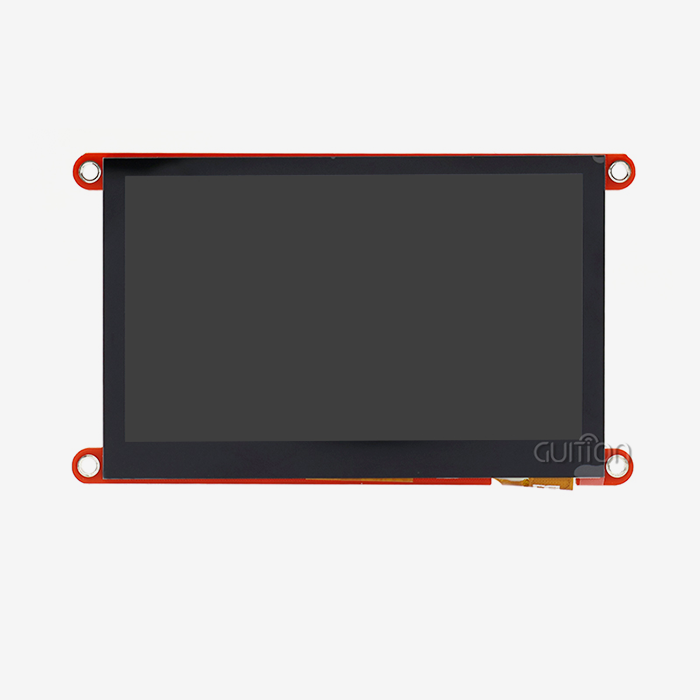
Choosing the right display module can determine whether your product ships on schedule or gets stuck in endless debugging cycles. The Guition display module — specifically the ESP32-8048S050C_I — is a 5.0-inch, 800×480 IPS capacitive touch solution built on the ESP32-S3R8 dual-core processor. It integrates Wi-Fi, Bluetooth, 16MB Flash, and 8MB PSRAM into one compact board. For embedded engineers, R&D managers, and product teams across industrial, medical, and smart-home markets, this module addresses real development bottlenecks and delivers measurable results from day one.

What Is the Guition Display Module?
Hardware Architecture at a Glance
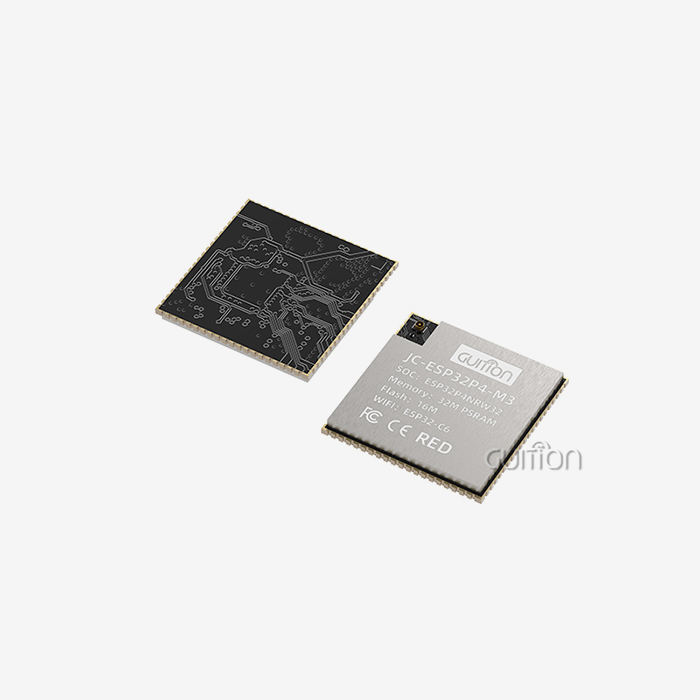
The ESP32-8048S050C_I is built around the ESP32-S3R8, which is a 240MHz dual-core Xtensa® LX7 MCU. This esp32 display module has 512KB SRAM, 384KB ROM, 8MB PSRAM, and 16MB Flash, so it can handle complicated UI rendering and real-time data processing without a separate host driver.
Display and Touch Specifications
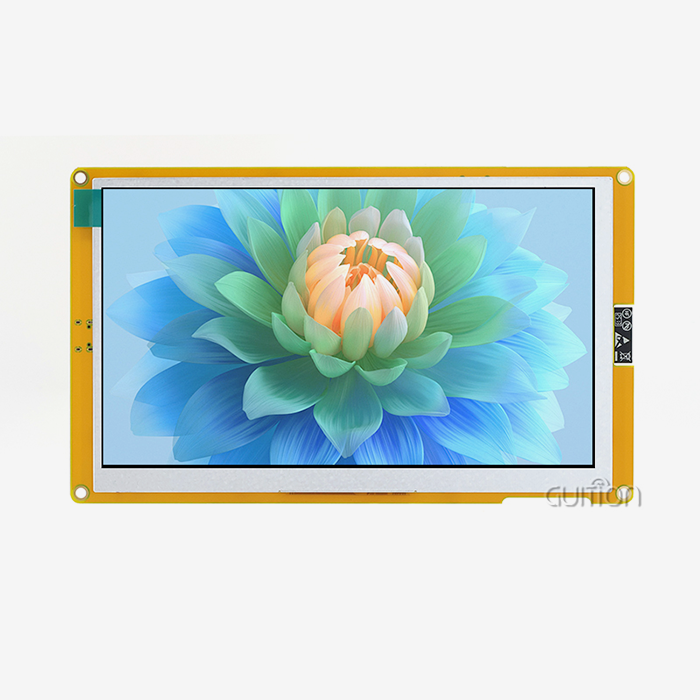
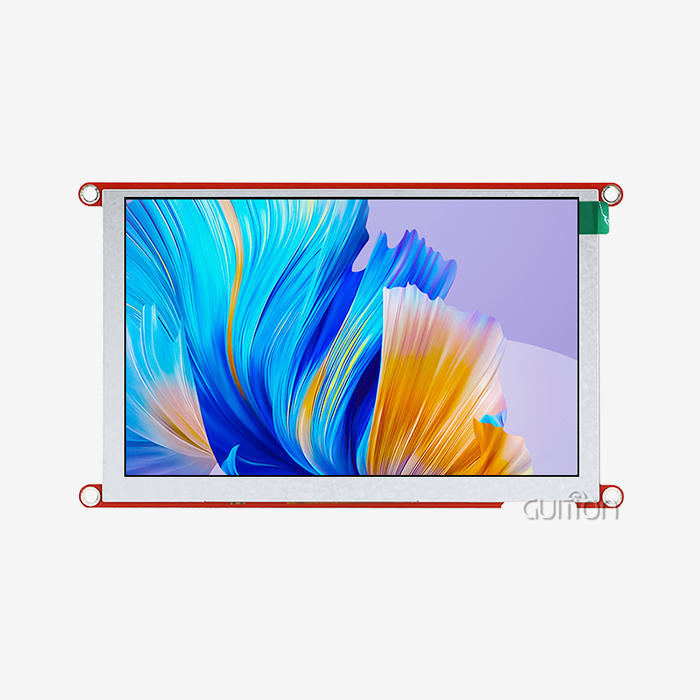
With a 800x480 resolution, 178° viewing angles, and bright colors, the 5.0-inch IPS panel is a great choice. The capacitive touch controller that is built in responds right away to input. This makes it perfect for medical monitoring equipment, industrial control panels, and commercial kiosks that need precise user interaction.
Connectivity and Expansion
Built-in Wi-Fi and Bluetooth LE mean you don't need any extra wireless chips. Local data logging, picture storing, and firmware assets are all taken care of by a TF card slot. Engineers can connect sensors, switches, and other peripheral devices without having to rework the carrier board because of reserved IO port connections.
Benefits 1 & 2: Faster Development and Reduced Coding Overhead
Pre-Loaded Test Code Ships With Every Unit
Each Guition display module comes with test apps already installed. Engineers can check the screen output, touch response, and wireless connectivity as soon as they get there, without having to write a single line of initialization code. This can cut days off of early-stage prototyping by itself.
Four Supported Development Environments
With these choices, engineers don't have to learn new toolchains or port drivers every time the needs of a project change. Iteration speed stays high throughout the product lifecycle because switching environments doesn't require much work to be redone.
- Arduino IDE — Large library ecosystem, one-click uploads, and a shallow learning curve make it ideal for rapid prototyping and SME teams with mixed skill levels.
- ESP-IDF — Full access to FreeRTOS, low-level peripheral control, and optimized memory management for production-grade firmware targeting industrial automation.
- MicroPython — Script-based development accelerates iteration for IoT solution providers who prioritize deployment speed over bare-metal performance.
- Mixly — Block-based visual programming lowers the barrier for education-oriented and cross-functional teams who need fast results without deep C experience.
Designers can drag and drop built-in controls, change sizes and positions visually, and write code directly with Guition's own interface creation tools. With WYSIWYG design, you can quickly go from an idea for the user interface to software that works. This method has been proven to work on projects for industrial control panels and smart appliances.
Guition UI Development Tool
Guition's proprietary interface development software lets designers drag and drop built-in controls, adjust sizes and positions visually, and export code directly. WYSIWYG design cuts the gap between UI concept and working firmware — a workflow validated across industrial control panel and smart appliance projects.
Benefits 3 & 4: Cross-Platform Debugging and Technical Support
Cross-Platform Online Debugging
The Guition display module allows cross-platform live debugging, which lets teams find problems and fix them without having to switch hardware. In real time, developers can watch how the screen is rendered, touch events, and serial communication. This method cuts down on debugging time a lot compared to old-fashioned serial HMI systems that need special script writers. Some teams say they cut down on debug cycles by 40% or more on their first production runs.
Dedicated Documentation and Community Resources
You can get full secondary development interfaces, sample code libraries, and technical documents. When purchasing managers look at long-term relationships with suppliers, the quality and amount of documentation shows them directly how much the project will cost and how risky it is.
Benefits 5 & 6: Flexible Procurement and Scalable Ordering
Display Size Range from 1.28" to 21.5"
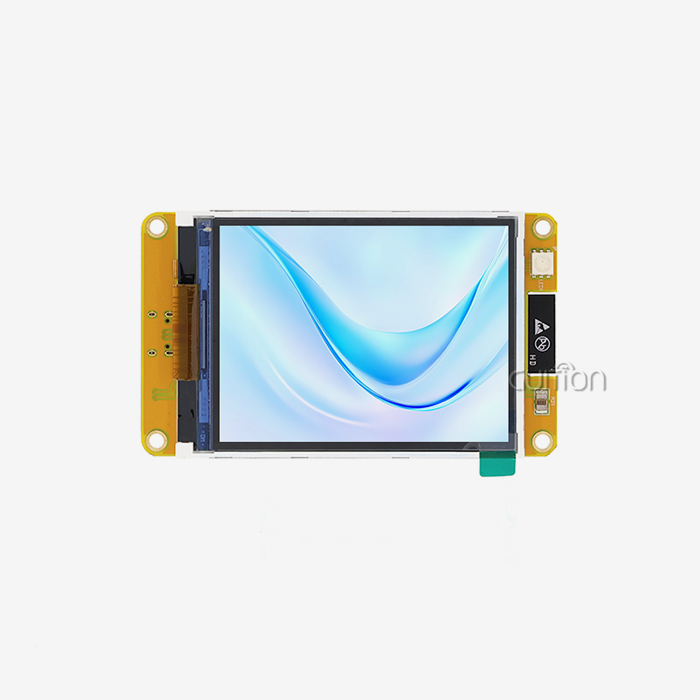
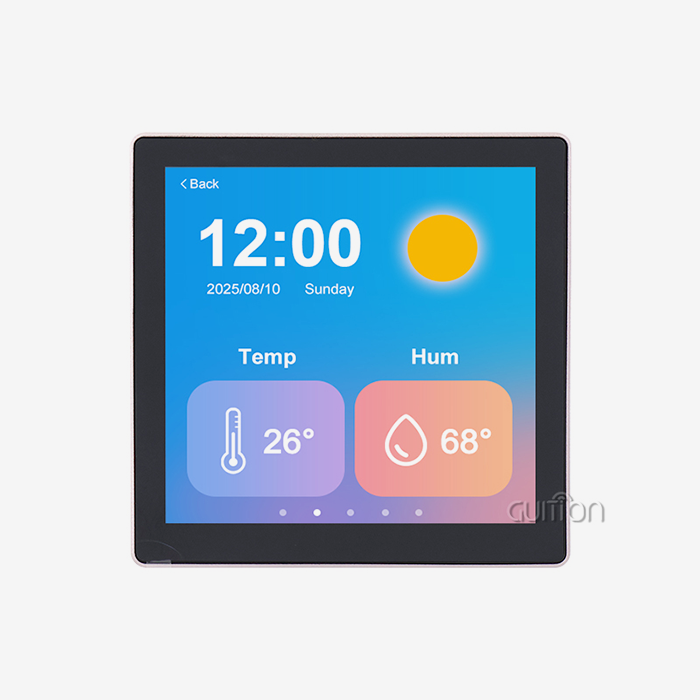
The company that made the Guition display module also makes a wide range of other products, from 1.28-inch knob displays to 21.5-inch industrial screens. This range of sizes lets product teams use the same source and software environment for all of their products, which lowers the cost of managing vendors.
B2B Purchasing Options and Supply Reliability
If you're a SME company or a big OEM maker, the Guition display module provider has choices for you. Here are some benefits of procurement that are worth mentioning:
- Flexible order quantities — Supports sample orders for validation alongside bulk purchasing for production, with no forced minimum order commitments at the evaluation stage.
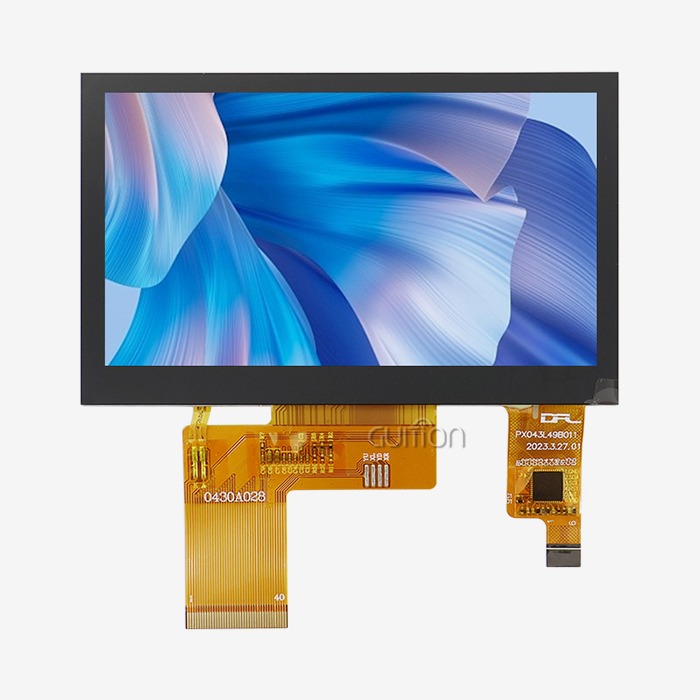
- Stable component supply — Standard 40-pin RGB and parallel interface pin-outs are used. If a specific glass cell reaches end-of-life, compatible replacements maintain the same mechanical housing and driver logic, protecting long-term projects.
- CE/FCC and RoHS compliance — All modules meet EMI/EMC standards and comply with RoHS and REACH environmental directives, clearing customs and regulatory hurdles for global deployment.
Standard 40-pin RGB and parallel communication pin-outs are used, and the supply is stable. When a certain type of glass cell hits the end of its useful life, suitable replacements keep the same mechanical housing and driver logic, which keeps long-term projects safe. ESP32 Display Module solutions also follow reliable integration standards for embedded applications. All modules meet EMI/EMC standards and are in line with RoHS and REACH environmental directives. This means they can be used anywhere in the world without any problems with customs or regulations.
Benefits 7, 8 & 9: OTA Upgrades, Multi-Language Support, and Proven Industry Trust
OTA Firmware Updates Without Hardware Recall
The ESP32-S3R8 can automatically receive HTTP/HTTPS updates, which means that installed Guition display modules can get UI changes, new features, and security fixes from afar. This feature gets rid of the need for expensive field service visits for EV charging stations, agricultural automation systems, or medical devices that are spread out over large areas. Thousands of units can be updated overnight with just one OTA run.
Multi-Language and UTF-8 Encoding
The Guition display module can switch between languages and encode data in UTF-8 format. Product teams that want to sell their products in North America, Europe, and the Asia-Pacific region can use the same base firmware and change the display language while the app is running, instead of keeping separate builds for each region. This directly lowers the costs of making new products for sales around the world.
Verified Application Track Record
The module has been shown to work well in a wide range of demanding application categories. Its 800x480 resolution makes it easy to see what's going on in industrial control screens. The capacitive touch is very accurate, and the backlight lasts a long time—30,000 to 50,000 hours at half brightness. This is something that medical device makers respect. For smart home brands and business kiosk owners, the built-in Wi-Fi and Bluetooth meant they didn't have to add a separate wireless module, which cut the bill of materials (BOM) for each unit.
Three things—the ability to be maintained from afar, support for multiple languages, and a proven track record of applications—set a capable module apart from a production-ready platform.
Conclusion
The Guition ESP32 Display Module (ESP32-8048S050C_I) is a single board that handles processing, display, touch, wireless connection, and development tools all in one place. It is perfect for embedded engineers, product managers, and system builders. From faster prototyping with the Arduino IDE to updates in the field over-the-air (OTA) and global deployment in multiple languages, each benefit is directly linked to a real cost or time savings. This is backed up by Jingcai Intelligence's full line of products from 1.28 inches to 21.5 inches, stable supply, and quick expert support. This makes it a reliable long-term partner for projects in medical, industrial, and smart devices.
FAQ
Does the Guition display module support OTA updates?
Yes. The ESP32-S3R8 architecture natively supports OTA firmware updates via HTTP/HTTPS. Teams can push UI changes, bug fixes, or new features to deployed devices without any physical access.
What development environments are compatible?
The module works with Arduino IDE, ESP-IDF, MicroPython, and Mixly — covering the majority of embedded development workflows used in the US market.
Can this module operate in industrial temperature ranges?
Standard IPS modules operate between -20°C and +70°C, which covers most industrial and outdoor enclosure environments.
Does the backlight brightness suit indoor applications?
Standard models provide 300–400 nits, which is suitable for indoor industrial panels, medical equipment, and smart appliances. High-brightness variants exceeding 800 nits are available for outdoor or high-ambient-light scenarios.
How does Guition handle end-of-life component risk?
Guition uses standard pin-out definitions. If a panel component goes end-of-life, a compatible replacement is engineered to fit the same housing and driver logic — protecting long-running industrial projects from forced redesigns.
Ready to Source Your Next HMI Solution? Contact Guition Today
The company that makes Guition display modules helps B2B buying teams with everything from testing samples to making a lot of them. The people at Jingcai Intelligence can help you find a Guition display module for a medical device, a smart home product, or an industrial control panel. They can also give you technical information, sample units, and bulk pricing. Visit https://jingcaizhineng.aixdb.cn/ or email david@guition.com with your project requirements to get help finding the right show solution for your needs.
References
1. Espressif Systems. ESP32-S3 Technical Reference Manual. Espressif Systems, 2023.
2. IEEE. IEEE Standard for Human-Machine Interfaces in Industrial Automation. IEEE Standards Association, 2021.
3. Grand View Research. Human-Machine Interface Market Size, Share & Trends Analysis Report. Grand View Research, 2023.
4. IPC. IPC-A-610 Acceptability of Electronic Assemblies. IPC Standards, 2020.
5. MarketsandMarkets. Embedded Display Market — Global Forecast to 2027. MarketsandMarkets, 2022.
6. TechRepublic. IoT Display and Connectivity Trends in Industrial Applications. TechRepublic, 2023.
Learn about our latest products and discounts through SMS or email