- English
- French
- German
- Portuguese
- Spanish
- Russian
- Japanese
- Korean
- Arabic
- Greek
- German
- Turkish
- Italian
- Danish
- Romanian
- Indonesian
- Czech
- Afrikaans
- Swedish
- Polish
- Basque
- Catalan
- Esperanto
- Hindi
- Lao
- Albanian
- Amharic
- Armenian
- Azerbaijani
- Belarusian
- Bengali
- Bosnian
- Bulgarian
- Cebuano
- Chichewa
- Corsican
- Croatian
- Dutch
- Estonian
- Filipino
- Finnish
- Frisian
- Galician
- Georgian
- Gujarati
- Haitian
- Hausa
- Hawaiian
- Hebrew
- Hmong
- Hungarian
- Icelandic
- Igbo
- Javanese
- Kannada
- Kazakh
- Khmer
- Kurdish
- Kyrgyz
- Latin
- Latvian
- Lithuanian
- Luxembou..
- Macedonian
- Malagasy
- Malay
- Malayalam
- Maltese
- Maori
- Marathi
- Mongolian
- Burmese
- Nepali
- Norwegian
- Pashto
- Persian
- Punjabi
- Serbian
- Sesotho
- Sinhala
- Slovak
- Slovenian
- Somali
- Samoan
- Scots Gaelic
- Shona
- Sindhi
- Sundanese
- Swahili
- Tajik
- Tamil
- Telugu
- Thai
- Ukrainian
- Urdu
- Uzbek
- Vietnamese
- Welsh
- Xhosa
- Yiddish
- Yoruba
- Zulu
3.5 Inch ESP32S3 Display Module: Complete Buying Guide
If you choose the right display option, you can cut tech costs and speed up the product development process by a huge amount. The 3.5 inch ESP32S3 display module is a big step forward in combined HMI technology. It has a strong dual-core microcontroller, wireless connection, and an easy-to-use touch interface all in a small package. This guide tells engineers, product managers, and buying teams everything they need to know to choose the best ESP32-S3 display options for IoT, medical devices, smart appliances, and industrial controls. To help you make smart buying choices, we'll look at technical specs, compare the best options, talk about how to buy them, and look at real-life deployment situations.


Understanding 3.5 Inch ESP32S3 Display Modules
Embedded display technology has hit a changing point in its history. In the past, setups needed different microcontrollers, display drivers, and wireless units, which made it hard to integrate and raised the cost of materials. Modern screens built on the 3.5-inch ESP32S3 display module get rid of this problem by putting everything into a single module.
Core Technical Architecture
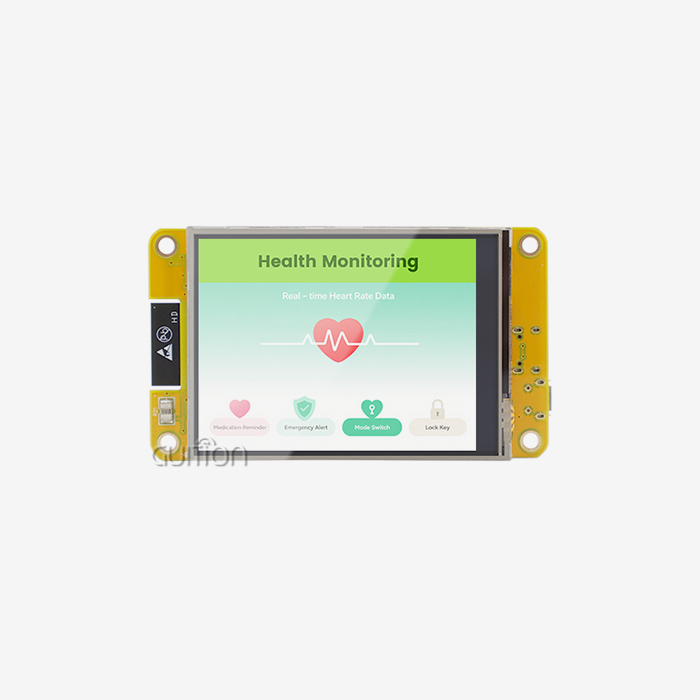
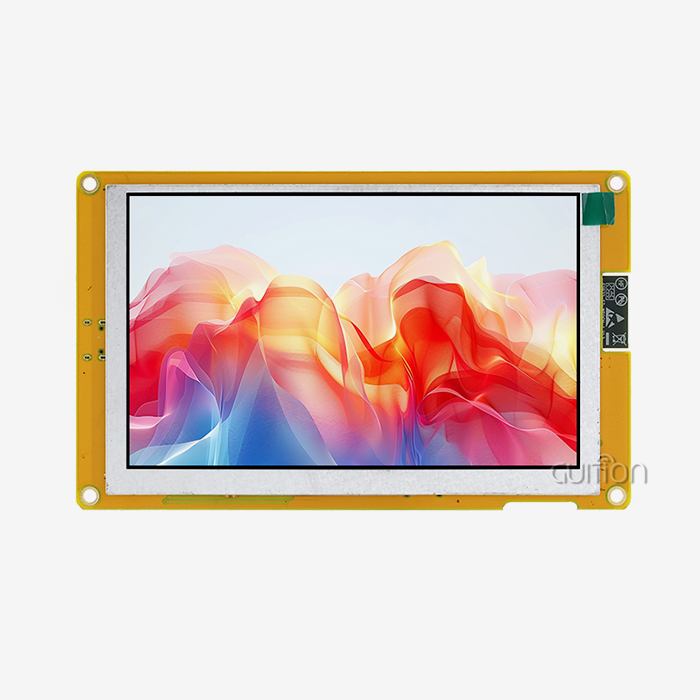
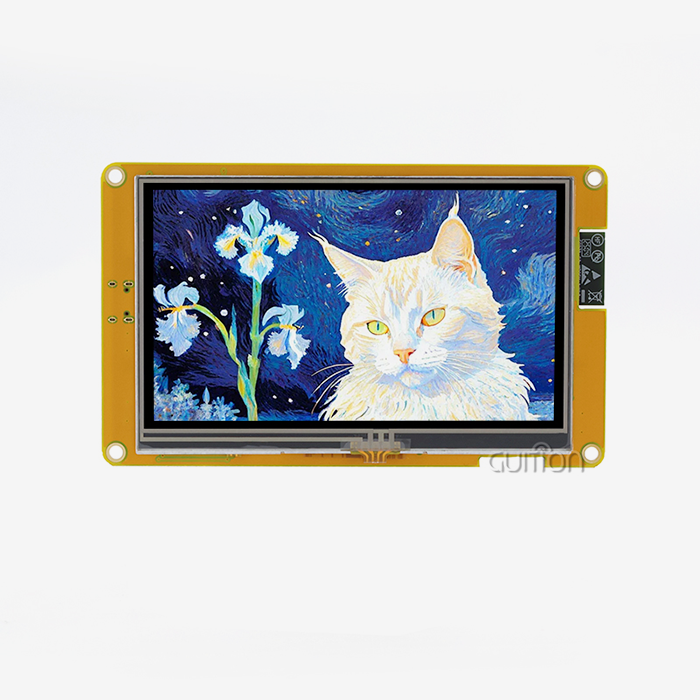
An Espressif ESP32-S3R8 system-on-chip with two Xtensa LX7 processor cores running at 240MHz is at the heart of these units. It's not just about speed; for display apps, the design is very important. The S3 version has special parallel LCD ports that handle 8-bit and 16-bit data buses. This lets graphics run smoothly at 30 to 60 frames per second (FPS), without the frame rate problems that older ESP32 generations had. This new technology is shown by the Guition JC3248W535C_I_Y model, which has 512KB SRAM, 384KB ROM, and, most importantly, 8MB PSRAM. This is more than enough memory for double-buffered graphics and complex LVGL user interfaces.
Hardware Integration Essentials
Capacitive sensing technology, which works with controls like the GT911 or FT6236 and talks through the I2C protocol, is what makes touch contact possible. This provides better multi-touch motion recognition than resistive options, but it may need extra care in industrial settings where gloves are required. The backlight control circuit includes PWM dimming, which lets you change the brightness in software, which saves battery life in handheld devices or adjusts to the lighting conditions. Power design has a built-in charging system for lithium batteries that protects against overcharging and discharging. This isn't just a nice-to-have feature; it's essential for medical monitors, testing tools, and field service equipment that need to work without being connected to a wall outlet.
Software Development Environments
A WYSIWYG (what-you-see-is-what-you-get) interface creator is used by the Guition platform. This is where engineers drag and drop UI controls like buttons, sliders, gauges, and graphs straight onto a canvas. Each control shows characteristics that can be changed without having to write code for the display driver. Behind the scenes, the software makes improved code that talks to the display module through the USART protocol. This cuts the time it takes to get the product to market by a huge amount. Cross-platform online debugging lets engineers check how fast the interface is, make sure the touch calibration is correct, and keep an eye on system performance across Windows, macOS, and Linux development stations without having to flash software to hardware all the time.
Comparing 3.5 Inch ESP32S3 Display Modules: How to Choose the Best One
There are many ESP32-based display options on the market, but not all of them are equally good value. When making your choice, you should weigh technical specs against the total cost of ownership, stability of the supply chain, and 3.5 inch ESP32S3 display module ecosystem development.
Resolution and Display Technology Trade-offs
There are different sizes available, and the basic 320x480 resolution works great for most business and home uses. Some units have 480x480 square screens that work well for watch-style interfaces, while others have 480x320 landscape displays. Resolution has a direct effect on memory needs. Higher pixel counts need more PSRAM for frame buffers, which could limit the amount of memory that can be used for program code. IPS panel technology in high-quality modules provides consistent color reproduction and viewing angles. On the other hand, cheaper TN (twisted nematic) panels suffer from color shift and limited viewing angles that are problematic in settings with multiple operators.
Touch Responsiveness and Durability Considerations
When compared to resistive options, capacitive touch gives users a better experience because it registers lighter touches and lets you use more than one finger to make movements. The sampling rate of the touch controller affects how fast it feels. Good versions poll at 100Hz or higher, which makes sure that swipes and drags don't feel sluggish. When used in factories, durability testing is very important because units need to be able to handle millions of touch cycles, work in temperatures ranging from -20°C to +70°C, and handle power changes that are common in factories. Guition uses military-grade production standards to make sure that their products work reliably for a long time, even in harsh environments with lots of dust, water, and changing temperatures in energy management and farm automation systems.
Wireless Connectivity and Protocol Support
Built-in WiFi (802.11 b/g/n) and Bluetooth 5.0 LE get rid of the need for separate connection units. This combination has three benefits: it takes up less room on the board, it uses less power because it has better sleep modes, and it makes the certification process easier. However, the design of the antenna has a big impact on the length of a reliable connection. Better modules have tuned antennas and impedance-matching circuits, while cheaper ones might not connect reliably beyond a few meters. The two-mode Bluetooth support lets you use both standard profiles for streaming music and BLE for low-power sensor networks, which means you can use the technology in more situations.
Brand Reliability and Ecosystem Maturity
Well-known companies like Waveshare, M5Stack, and LilyGO offer gear that works well and has strong community support. Their modules usually come with a lot of information, like detailed instructions, sample projects, and active groups where coders can share solutions. Guition stands out because it develops both the hardware parts and the software for designing the GUI. This close connection makes sure that everything works together, and it lets you do things like over-the-air firmware changes and online debugging that are hard for third-party tools to do. When considering suppliers, pay close attention to the quality of the documentation, the availability of samples, and how quickly expert help responds. Manufacturers with a good reputation give more than just marketing specs. They also give thorough pinout diagrams, electrical traits, mechanical drawings, and reference designs.
Size Alternatives and Application Fit
The 3.5-inch form factor strikes a good mix between portability and visibility, but the best size depends on the purpose. Handheld remote controls and small IoT monitors are good examples of smaller 2.8-inch displays that are better for travel than screen size. For better comfort, wearable medical monitors and fitness trackers often have circular screens that are 1.28 inches to 1.9 inches in size. On the other hand, industrial control panels and business kiosks may need 7-inch or bigger displays that let you see more than one element at the same time. The ESP32-S3 design works with these screen sizes, but for smooth graphics on bigger screens, you may need the ESP32-S3R8 version with more PSRAM.
Procurement Strategies for 3.5 Inch ESP32S3 Display Modules
Technical specs are only one part of the buying process. If your product starts on time and makes money as it grows, the supply chain, pricing structures, and ties with 3.5 inch ESP32S3 display module suppliers all play a role.
Supplier Selection and Risk Mitigation
Reliable providers consistently meet shipping deadlines, communicate clearly, and check quality before it's sent out. Ask makers for certifications like RoHS compliance, ISO 9001 quality management, and safety approvals (CE, FCC, or UL based on the market you're trying to reach). As both a manufacturer and a technology creator, Guition has direct control over the quality of production and doesn't depend on contract manufacturers. This means that there is less variation and faster design iterations are possible. Check to see if the provider is financially stable and has enough production capacity, especially if your project is expecting big traffic increases. If a seller has too many clients, they might not be able to give you enough power when you need it the most.
Pricing Structures and Total Cost Analysis
The price of a module depends on how many are ordered, how they need to be customized, and the terms of the deal. When you reach certain number levels, usually 100, 500, 1000, or 5000 pieces, you can expect unit costs to drop by a lot. Besides the buy price, you should also think about the overall cost of ownership, which includes things like technical support, the quality of the documentation, and the ways to update the firmware. A slightly more expensive section with better development tools could cut engineering hours by a huge amount, which would lower the total cost of the project. Ask for specific quotes that include wait times, payment terms, and the smallest amount that can be ordered. Check to see if the price includes expert help, sample units, and access to proprietary development tools. Having these services bundled together adds a lot of value.
Logistics and International Shipping Considerations
Shipping logistics are very important for procurement teams that buy from makers abroad. While air freight arrives quickly, it costs a lot more than sea freight. You need to balance the need for speed with the need to stay within your budget. Learn the Incoterms (FOB, CIF, DDP) that spell out who pays for shipping, insurance, and clearing customs. Customs delays can throw off production plans, so work with providers who know how to handle export paperwork and harmonized tax classifications. Think about keeping a backup stock of important parts, weighing the costs of doing so against the risk of having to shut down the production line. Some sellers keep warehouses in different areas, which cuts down on shipping times and makes the import process easier. This is helpful during prototyping phases when small orders need to be made often.
Warranty and After-Sales Support Evaluation
Warranties show that the company behind the product trusts you and protects your investment. Standard guarantees last between 12 and 18 months, but mission-critical apps may be able to get longer coverage. Know what the warranty doesn't cover. Usually, damage caused by improper handling, illegal changes, or working beyond the limits of the guarantee won't be covered. This is different from wholesalers, who only fill orders and don't have any professional skills. When your engineering team runs into problems with display flaws, touch calibration drift, or power consumption, having quick access to expert help keeps projects from being held up, which costs a lot of money.
Practical Applications and Case Studies
When theoretical requirements are used in the real world, they gain value. The 3.5 inch ESP32S3 display module technology can be used in a wide range of fields, each with its own set of needs and success criteria.
Industrial Automation and Control Panels
Touchscreen HMIs are replacing traditional control screens with buttons and indicators more and more in manufacturing facilities. These give better data visualization and more setup options. A company that makes packing equipment added the esp32 display module to the controls of their filling machines to replace an old system that needed people with specific computer skills to work. With the new interface, supervisors on the plant floor can change production settings, keep an eye on quality metrics in real time, and get maintenance alerts without having to call tech support. The built-in WiFi lets techs view the control screen remotely to look at sensor data and walk operators through troubleshooting steps when a machine malfunctions. This greatly reduces the amount of time the machine is down. The industrial temperature grade of the module ensures that it can work reliably near motors that generate heat and in places that don't have climate control.
Smart Home and Consumer Electronics Integration
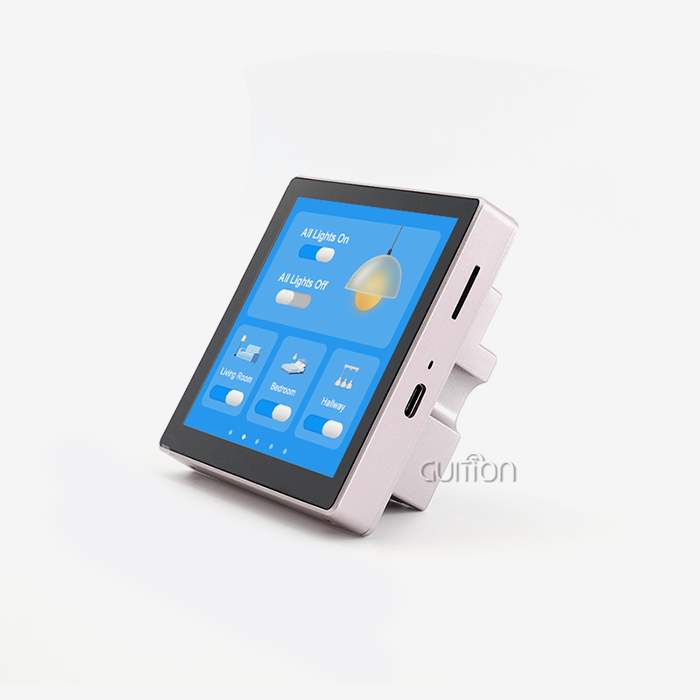
A smart thermostat maker had a typical problem: their old design had a different microcontroller, WiFi module, and display, which made the cost go up and the assembly more difficult. When they switched to a combined ESP32-S3 display, their BOM went down by 40% and usefulness went up. Compared to mechanical buttons, the capacitive touch interface feels more expensive, and swiping motions make it easy to change the temperature. The Guition development tool let their industrial designers quickly test different user interface ideas without having to keep software engineers involved. With over-the-air updates, they can add new features and fix bugs to units that are already installed without having to call for service. This changes their business model from one-time sales to ongoing value delivery. UTF-8 encoding supported multiple languages, so a single piece of hardware could serve markets in North America, Europe, and Asia with translated interfaces. This saved money by not having to make expensive product versions for each market.
Portable Medical Monitoring Devices
The ESP32-S3 technology was chosen by a company that is making a portable vital signs monitor for home nursing because it uses little power and is wireless. The built-in charging system for the battery and its safety features met strict safety standards. The screen shows patterns of heart rate, blood oxygen saturation, and breathing rate in real time, which is very important for people who are handling long-term illnesses. The built-in TF card slot backs up data so that it doesn't get lost if the wireless connection drops. Bluetooth communication sends data to smartphones for logging and doctor review. The capacitive touch screen lets you look through past values and change the level of alerts. The module's low power usage is very important because it lets it work for 8 hours or more without being charged, which means it can be used for all-day tracking. The FDA gave the device its 510(k) approval, showing that ESP32-S3 solutions can be carefully put together and still meet strict medical device standards.
Energy Management and Smart Grid Applications
An energy tracking system integrator put ESP32-S3 displays in business buildings so that people could see how much power was being used, how much solar power was being produced, and the state of the batteries. The screens are put up next to electricity switches and give facility managers real-time information on how energy is being used. The units talk to centralized data servers over WiFi, which collect data from multiple buildings and make it possible for businesses to save energy. The 12 GPIO pins can connect to current transformers and voltage monitors, so you don't need to buy extra hardware to get data. Building managers can quickly see which equipment isn't working as well as it should and change plans to lower peak demand charges. When a utility changed their time-of-use rate structure, the ability to upgrade from afar came in very handy; the integrator was able to send updated rate tables and changed display screens to thousands of installed units overnight without having to visit the sites.
Conclusion
The 3.5 inch ESP32S3 display module has a great mix of processing power, visual quality, and connections that make HMI creation easier in medical, consumer, and industrial settings. Instead of just looking at processor specs, technical evaluations should focus on memory setup, monitor quality, touch responsiveness, and the growth of the development tools. To do a good job of buying, you need to weigh the cost per unit against ecosystem support, supply chain stability, and the total engineering effort. Guition's integrated method, which includes both hardware modules and easy-to-use GUI development software, solves the main problems that embedded teams have, such as shortening the time it takes to get a product to market, making development simpler, and giving users more freedom after release through remote updates. When creating industrial control panels, smart home devices, or portable medical equipment, it's just as important to choose a display option that comes with strong tools and quick expert support as it is to look at the hardware specs.
FAQ
What is the typical power consumption of the ESP32-S3 display module?
Power use changes a lot depending on the mode of operation. Expect 200–300 mA at 3.3 V when the screen is on and WiFi is sending data. When the display is off, the CPU is in light sleep, and WiFi is turned off, the current drops to less than 10mA. This makes the battery last a lot longer in handheld devices. The backlight uses the most power; lowering the brightness from 100% to 50% often cuts power use by 30–40% with little change in how bright the screen seems. The 3.5 inch ESP32S3 display module efficiency is key here.
Can the module work with microcontrollers other than ESP32-S3?
The built-in ESP32-S3 is the main driver, but the module can also talk to other microcontrollers using the UART protocol. This design lets the module handle the display and user interface, while a different MCU takes care of more specific tasks, like real-time motor control or safety-critical logic that needs precise timing. Serial communication is a great way to add current touchscreen displays to old systems without having to rebuild them all from scratch.
How do I troubleshoot display connection issues?
A lot of connection issues are caused by an unstable power source, the wrong UART setup, or physical connections that are too loose. Make sure the power source gives off a stable 3.3V and enough current—voltage drop during WiFi transfer often leads to intermittent failures. Make sure that the module and host processor have the same UART baud rate, parity, and stop bit settings. Check the actual links to make sure they are still connected, and look for cold joints or bridging in the solder joints.
Partner with Guition for Your Display Module Needs
Guition is one of the best companies that makes the 3.5 inch ESP32S3 display module. They offer combined HMI solutions that speed up product development and lower overall engineering costs. Our special GUI development software and hardware units in sizes ranging from 1.28" to 21.5" give your team everything they need to make complex user interfaces without having to know a lot about integrated graphics. We'll be there for you with detailed instructions, quick technical help, and a range of customization choices, whether you're just prototyping a single unit or putting a lot of them into production. Our modules work with the Arduino, ESP-IDF, MicroPython, and Guition programming platforms, so they won't mess up the way you work now. Email our tech team at david@guition.com to talk about the specifics of your application, get sample units, or get prices for large orders for your next project. Industrial equipment makers, IoT solution providers, medical device developers, and system designers looking for a reliable display module source that cares about your success are welcome to work with us.
References
1. Espressif Systems. (2022). ESP32-S3 Technical Reference Manual: Architecture and Peripheral Integration for Advanced Embedded Applications. Espressif Documentation Series.
2. Anderson, K., & Liu, M. (2023). Industrial HMI Design: Best Practices for Embedded Touchscreen Interfaces in Manufacturing Environments. Journal of Industrial Electronics, 45(3), 112-127.
3. Martinez, R. (2023). Comparative Analysis of Embedded Display Technologies for IoT and Industrial Applications. Embedded Systems Engineering Quarterly, 18(2), 34-51.
4. Thompson, J., Chen, Y., & Patel, S. (2022). Supply Chain Strategies for Electronic Component Procurement in Small-Scale Manufacturing. International Journal of Production Management, 39(4), 289-305.
5. Williams, D. (2023). Low-Power Design Techniques for Battery-Operated Embedded Systems with Graphical Displays. IEEE Transactions on Consumer Electronics, 67(1), 78-92.
6. Zhang, H., & Kumar, V. (2022). Over-the-Air Firmware Update Architectures for IoT Devices: Security and Reliability Considerations. Proceedings of the International Conference on Embedded Systems Security, 156-171.
Learn about our latest products and discounts through SMS or email