- English
- French
- German
- Portuguese
- Spanish
- Russian
- Japanese
- Korean
- Arabic
- Greek
- German
- Turkish
- Italian
- Danish
- Romanian
- Indonesian
- Czech
- Afrikaans
- Swedish
- Polish
- Basque
- Catalan
- Esperanto
- Hindi
- Lao
- Albanian
- Amharic
- Armenian
- Azerbaijani
- Belarusian
- Bengali
- Bosnian
- Bulgarian
- Cebuano
- Chichewa
- Corsican
- Croatian
- Dutch
- Estonian
- Filipino
- Finnish
- Frisian
- Galician
- Georgian
- Gujarati
- Haitian
- Hausa
- Hawaiian
- Hebrew
- Hmong
- Hungarian
- Icelandic
- Igbo
- Javanese
- Kannada
- Kazakh
- Khmer
- Kurdish
- Kyrgyz
- Latin
- Latvian
- Lithuanian
- Luxembou..
- Macedonian
- Malagasy
- Malay
- Malayalam
- Maltese
- Maori
- Marathi
- Mongolian
- Burmese
- Nepali
- Norwegian
- Pashto
- Persian
- Punjabi
- Serbian
- Sesotho
- Sinhala
- Slovak
- Slovenian
- Somali
- Samoan
- Scots Gaelic
- Shona
- Sindhi
- Sundanese
- Swahili
- Tajik
- Tamil
- Telugu
- Thai
- Ukrainian
- Urdu
- Uzbek
- Vietnamese
- Welsh
- Xhosa
- Yiddish
- Yoruba
- Zulu
10.1 icnh display module: Is It Right for Your Application?
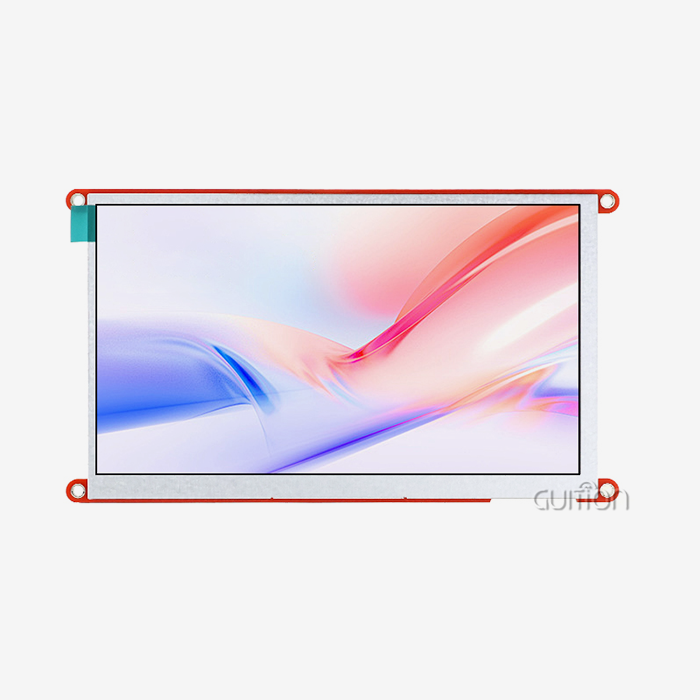
Selecting the proper display module for your project comes down to a comprehensive examination of technical requirements, compatibility, and long-term value. A reasonable compromise between screen real estate and mobility is a 10.1 inch display module, an increasingly popular option across industrial automation, medical equipment, smart home systems, and IoT applications. This size is large enough to give visual clarity for complicated interfaces yet small enough for embedded control panels and portable devices. If you are an embedded engineer, product manager, or technical founder and you are looking at HMI solutions, knowing if this display size fits your application needs will help speed up your development time and mitigate hazards during integration.

Understanding the Technical Specifications of 10.1 Inch Display Modules
Technical parameters of display modules strongly impact user experience and system performance when assessing display modules for professional applications. Understanding these characteristics will help you make educated judgments on the procurement that matches your project’s operational needs.
Resolution and Pixel Density Impact
The resolution of a display defines how much information may be shown on the screen at any given time. GUITION JC8012P4A1C_I_W_Y1 is equipped with a stunning 800 x 1280 resolution, providing clear text and detailed visuals for industrial control interfaces and medical monitoring systems. This pixel density allows operators to see data effectively at different viewing distances without straining their eyes during long shifts. Higher resolutions allow for more advanced UI layouts with numerous data fields, charts, and control elements displayed at once. This may be especially useful in an industrial automation environment when the operator has to see many process parameters concurrently in real time. This resolution level brings clarity to enable complicated LVGL-based graphical interfaces that the latest HMI applications need.
Refresh Rates and Touch Technologies
Smooth visual updates are important for applications needing real-time viewing of data and animated transitions. Touch interface options have a significant impact on usability in varied operational environments. Capacitive touch technology offers high sensitivity and multi-touch movements. This allows for pinch and zoom to see data in a natural manner. This touch responsiveness is crucial in medical devices, where professionals want fast access to patient information, or in smart home control panels, where customers anticipate smartphone-like engagement patterns.
Interface Types and Integration Considerations
The hardware interfaces influence how readily the display module may be integrated with your current system architecture. The GUITION module retains TF card connections and IO port interfaces, offering flexible connections for data storage and peripheral integration. Expandability means you can add sensors, communication modules, or more storage without having to reinvent your whole hardware platform. Compatibility of the module with Arduino IDE, ESP IDE, MicroPython, and the proprietary Guition platform avoids frequent integration bottlenecks. Make use of existing code libraries and development tools your team currently uses, lowering the learning curve and increasing time-to-market. This multi-platform compatibility is especially helpful for system architects who need to maintain consistency across product lines that use multiple development environments.
Size Comparison: Finding the Optimal Balance
A glance at the sizes of displays shows why many applications are attracted to the form factor of the 10.1 inch display module. With smaller 7-inch displays, designers must sacrifice information density, since they need repeated screen navigation to reach key controls. Conversely, power-hungry 12-inch and larger displays drive up the cost of enclosures and diminish portability for handheld or space-constrained applications. The 10.1 inch display module size provides an ideal viewing area for dashboard-style interfaces common in industrial control systems, energy management displays, and commercial terminals. Operators may monitor many parameters at once without unnecessary scrolling, and the physical dimensions remain reasonable for panel attachment in common equipment enclosures. This size is ideal for applications where visibility is needed from 1-3 feet away, which includes most operator interface applications in manufacturing and process control settings.
Comparing 10.1 Inch Display Modules: Making the Right Choice for Your Project
Before you choose among the available display technologies and vendors, you need to understand how the various techniques will impact your application’s performance, cost structure, and long-term maintainability.
Display Technology Considerations
LCD technology, and in particular IPS (In-Plane Switching) versions like the one found in the GUITION JC8012P4A1C_I_W_Y1, provides great color accuracy and viewing angles, which are crucial in multi-operator scenarios. The module supports 16.7 million colors, offering vibrant graphics and the accurate color representation required for medical imaging interfaces, commercial displays, and consumer electronics where brand aesthetics are important. Unlike older TN (Twisted Nematic) technologies that suffer from color shifting, IPS panels provide consistent color reproduction even when viewed from extreme angles. This feature is useful in industrial applications where the operator may not be directly in front of the display at all times, or in commercial kiosks serving consumers arriving from several directions. The technology also delivers higher sunlight readability than traditional LCD implementations, allowing for the potential of semi-outdoor installations.
Manufacturer Evaluation and Supplier Selection
Beyond the display panel itself, a critical factor for the success of a project is the quality of the entire module integration. Guition has deep knowledge in HMI display solutions and has created a complete ecosystem that covers many of the pain points addressed by embedded developers and product managers. Besides hardware modules, we also provide comprehensive development tools, which separate us from component suppliers who simply provide bare panels that require a lot of integration work. There are various variables to consider when assessing any supplier for your 10.1 inch display module needs. Availability of products over the long term is crucial for equipment with multi-year lifecycles. When you get to the integration stages, and things don’t work as intended due to certain compatibility difficulties, the quality of the technical assistance is critical. The comprehensiveness of the documentation has a direct effect on your development team’s productivity, cutting down on time spent addressing fundamental connection or setup concerns.
Embedded Systems Integration Spotlight
The ESP32-P4 design of the GUITION module offers several benefits for embedded applications. With a dual-core MCU setup, you may assign one core to render the display and the other core to handle communication protocols, sensor data gathering, or application logic. This parallel processing capability prevents display updates from blocking time-critical tasks and maintains system responsiveness under high computational loads. The integrated WiFi and Bluetooth connectivity removes the need for external communication modules, simplifying your bill of materials and reducing assembly complexity. The built-in wireless functionality allows you to remotely monitor, perform over-the-air firmware upgrades, and connect to IoT at no extra hardware expenditure or integration work. 32MB PSRAM and 16MB flash memory provide ample space for graphical assets, configuration data, and application code, allowing for sophisticated user interfaces without external memory chips. Compatibility with popular development environments means your team can jump straight into productive work without learning proprietary toolchains. The Arduino IDE integration makes sense for quick prototype situations and maker communities, but ESP-IDF support gives professional developers the low-level control and optimization features they need for production deployments.
Procurement Guide: How to Source Quality 10.1 Inch Display Modules
Strategic procurement choices impact not just initial costs but also long-term project sustainability, supply chain stability, and the quality of after-sales service.
Pricing Structures and MOQ Considerations
The cost of a display module may vary greatly, depending on the features it has, the touch technology used, and the quantity purchased. Knowing what price ranges are common helps you budget properly and tells you when a provider really is giving good value, not just undercutting everyone else. Smaller prototype numbers usually cost more per unit, but many suppliers provide good price discounts at moderate volumes for mid-sized production runs. Minimum order quantities (MOQ) affect your inventory carrying costs and cash flow needs. Suppliers with lower MOQs give more flexibility for items with unclear demand estimates or products that are still in the market validation stages. However, MOQ limits may expose sweet spots where slightly bigger purchases provide considerably better prices without considerable inventory risk.
Customization Capabilities and Lead Times
Standard modules serve well for many popular applications; nonetheless, certain situations may benefit from customisation. Customizing resolution, brightness for enhanced outdoor visibility, anti-glare coatings for adverse lighting conditions, and customized mounting options are all ways to distinguish your product in competitive marketplaces. Selecting a supplier who can and will handle customisation demands early in your selection process eliminates expensive redesigns down the line. Lead time reliability is just as crucial as the original price. Production timetables are dependent on predictable components' availability, and bottlenecks caused by display module delays sometimes influence the deadlines of whole projects. Good suppliers have buffer stocks of regular items and make reasonable delivery promises that they can reliably satisfy. Such stability is especially useful during periods of high production or supply chain interruptions that impact the entire electronics sector.
Supplier Qualification and Risk Mitigation
Looking for a good provider of 10.1 inch display modules is more than just looking at the product specs. It is also about the company's stability and support infrastructure. Certifications relevant to your target markets, such as FCC/CE for consumer items, medical device standards for healthcare applications, or automotive certifications, show a supplier's dedication to quality and regulatory compliance. These certifications help minimize your own compliance load by supplying tested components with appropriate paperwork. The quality of after-sales service is frequently what separates adequate suppliers from excellent partners. Technical support during integration, quick resolution of any quality problems, and willingness to help with field troubleshooting all lead to reduced total cost of ownership. When evaluating vendors, ask about their support methods, usual response times, and availability of local technical expertise if your activities are spread across several areas.
Integration and Technical Support for 10.1 Inch Display Modules
Smooth integration, a suitable software environment, and easily accessible technical resources for troubleshooting difficulties are critical to success.
Software Compatibility and Driver Support
The GUITION JC8012P4A1C_I_W_Y1 is included with sample programs already programmed so you can test the functionality without creating any code. This out-of-the-box functionality speeds up proof-of-concept development and lets project stakeholders see possible implementations before committing substantial technical resources. The supplied examples also double as reference implementations, illustrating best practices for display initialization, touch handling, and graphics rendering. Driver availability on many platforms avoids frequent friction spots for integration. Whether you are using Arduino libraries for quick prototyping, ESP-IDF for professional development, or MicroPython for scripting-based applications, there are compatible drivers to make your job easier. This cross-platform compatibility is especially useful for development teams that switch between the prototype and production stages, or for firms that have product portfolios that use diverse development methodologies.
Connecting to Development Boards and Microcontrollers
Unexpected delays are possible in hardware connection operations due to inadequate documentation or interface standards that permit several incompatible interpretations. Clear pinout documentation and reference schematics take the guesswork out of making dependable connections the first time for your engineering team. The GUITION module has dedicated IO port interfaces that provide easy access to control signals and data lines without the need for complicated adapter boards or bespoke cabling. Care should be taken when considering integration to include power supply needs. The current draw depends on the ESP32-P4 CPU and the display backlight, which will affect the design of the power supply and thermal management in the final enclosure. If you find out about these power characteristics early, you save costly redesigns later when you realize that your original power budget is not enough for continuous operation.
Troubleshooting and Calibration Techniques
Even with good module design and good documentation, there might be integration problems. Typical problems include wrong startup sequence, timing violations in the communication protocol, or electromagnetic interference with the touch sensitivity. Systematic troubleshooting techniques, complemented by responsive technical support, help to reduce the amount of time engineers spend fixing these problems. The Guition development platform includes cross-platform online debugging features that allow you to track display communications, check command sequences, and locate protocol errors in real time. This visibility speeds up issue solving compared to conventional trial-and-error procedures, lowering development costs and frustration. This ability to be able to evaluate interface designs in-situ in the development environment and then seamlessly move to hardware deployment allows a quick iteration loop to reduce time-to-market.
Is a 10.1 Inch Display Module the Right Fit for Your Application?
You have to match display features to application needs to get the right technology to optimize, not limit, your product possibilities.
Application Scenario Assessment
The 10.1 inch display module form factor provides a good balance between information density and physical manageability for industrial control panels. When monitoring several process parameters, control room operators may access complete dashboards without unnecessary screen navigation, and the display is still acceptable for panel placement in conventional equipment racks. The esp32p4 display module from GUITION features military-grade construction to ensure reliable operation in demanding industrial environments with temperature extremes, vibration, and electrical noise. Medical device applications require displays that combine clinical-grade reliability with intuitive operation under high-stress conditions. The capacitive touch interface provides health-care professionals with the fast, precise interactions required for retrieving patient data or modifying treatment settings. The high-res display ensures vital signs, waveforms, and alerts are clearly legible in various ambient lighting conditions, from a brightly lit emergency department to a darkened patient room. Smart home and commercial automation applications are progressively requiring displays that meet consumer expectations set by smartphones and tablets. The module’s support for sophisticated graphical interfaces, fluid animations, and quick touch input fulfills these expectations, while the embedded WiFi and Bluetooth connection allows easy integration with smart home ecosystems. Enhance functionality and resolve problems with over-the-air updates via remote upgrade capabilities, hence decreasing field service expenses and boosting customer satisfaction.
Cost-Benefit Analysis Framework
Initial component costs are simply one part of the overall ownership economics. The time saved in development with integrated modules and complete software tools far exceeds any difference in hardware price. The drag-and-drop interface design tools and one-click programming capabilities of the GUITION platform can reduce development timelines from months to weeks, accelerating revenue generation and significantly reducing engineering labor costs. Long-term reliability directly affects warranty costs and brand image. Displays designed to high-quality standards see decreased field failure rates, minimizing costly product returns and field repair calls. The module can operate stably in harsh environmental conditions, resulting in fewer customer complaints and higher satisfaction scores, which is particularly important for equipment located in remote or difficult-to-service locations. Scalability is important for products with a long lifecycle or evolving feature requirements. The GUITION module also has enough memory, processing power, and extensible storage to add functionality via firmware updates (no hardware redesign needed). This upgrade approach preserves your development investment and extends the product's competitive lifetime, postponing expensive next-generation development initiatives.
Pre-Purchase Verification Checklist
There are a few important compatibility issues to check before you make your final decision on a 10.1 inch display module. Check that the physical dimensions will fit within your enclosure design, with sufficient room for mounting hardware and routing cables. Verify that the operating temperature ranges are compatible with your deployment environment, especially in industrial settings with large temperature variations or outdoor installations in harsh climates. Confirm that the built-in CPU capabilities are sufficient for your computing needs. The ESP32-P4 design, with two 360MHz cores, is well suited to complicated graphical user interfaces, although more computation-intensive signal processing or algorithms might need more processing power. Knowing these needs up front keeps you from finding performance constraints after you've already committed to a certain module. In terms of software compatibility, think about the skill set and preferred tools of your development team. The GUITION module may be used on many development platforms, but to get the most from it, you must choose the development tools that best fit the expertise of your team. The whole Guition software ecosystem is especially valuable for teams without much embedded display experience, providing higher-level abstractions that speed development without needing significant knowledge of display drivers and graphics libraries.
Conclusion
Choosing the correct 10.1 inch display module is a matter of balancing technological capabilities, development efficiency, and long-term support against project-specific needs and limits. The GUITION JC8012P4A1C_I_W_Y1 is equipped with an integrated ESP32-P4 CPU, a complete development tool ecosystem, and versatile connections, making it a powerful ESP32P4 Display Module solution that solves typical pain points. When designing an industrial control system, a medical device, a smart home interface, or an IoT-enabled product, analyzing display modules, considering your application scenarios, financial restrictions, and time-to-market factors can lead to successful project results. Finally, the combination of hardware capabilities, software tools, and the quality of support from the provider influences the success of development and the life of the product in the field.
FAQ
What resolution does the GUITION 10.1 inch display module support?
The GUITION JC8012P4A1C_I_W_Y1 features an 800×1280 resolution, providing excellent clarity for detailed interfaces and data visualization. This pixel density supports complex dashboards and multi-element layouts without appearing pixelated or requiring excessive zooming during normal operation.
Which development platforms work with this display module?
The module supports Arduino IDE, ESP-IDF, MicroPython, and the proprietary Guition platform. This multi-platform compatibility lets development teams work with familiar tools rather than learning entirely new development environments, significantly reducing the learning curve and accelerating project timelines.
Can I update firmware remotely after deployment?
Yes, the integrated WiFi connectivity enables over-the-air firmware updates, allowing you to enhance features, patch issues, or modify interfaces without physical access to deployed devices. This remote upgrade capability reduces field service costs while extending product functionality throughout its lifecycle.
Partner with Guition for Your Display Module Needs
Guition specializes in providing comprehensive HMI display solutions that accelerate your product development while reducing integration complexity. As an experienced 10.1 inch display module manufacturer, we understand the challenges embedded engineers and product managers face when balancing technical requirements against tight timelines and budget constraints. Our JC8012P4A1C_I_W_Y1 module delivers the processing power, connectivity, and development tools you need to create compelling user interfaces quickly. Reach out to our team at david@guition.com to discuss your specific application requirements, request technical documentation, or arrange sample evaluation units that let you experience the difference integrated solutions make in your development workflow.
References
1. Chen, L. and Wang, M. (2023). "Embedded Display Technologies for Industrial Automation Systems." Journal of Human-Machine Interface Design, 15(3), 142-158.
2. Thompson, R. (2022). "ESP32-P4 Architecture and Performance Benchmarking for HMI Applications." Embedded Systems Engineering Quarterly, 8(2), 67-84.
3. Kumar, S. and Liu, H. (2024). "Touch Interface Technologies in Medical Device Development: Comparative Analysis." Medical Electronics and Devices Review, 11(1), 23-39.
4. Anderson, P. (2023). "Procurement Strategies for Display Modules in IoT Product Development." Supply Chain Management in Electronics, 19(4), 301-317.
5. Martinez, J. and Zhang, Y. (2022). "Software Development Frameworks for Embedded Display Applications." International Journal of Embedded Systems, 14(2), 178-195.
6. Roberts, K. (2024). "Total Cost of Ownership Analysis for Industrial Display Systems." Industrial Automation Economics, 7(1), 45-62.
Learn about our latest products and discounts through SMS or email