- English
- French
- German
- Portuguese
- Spanish
- Russian
- Japanese
- Korean
- Arabic
- Greek
- German
- Turkish
- Italian
- Danish
- Romanian
- Indonesian
- Czech
- Afrikaans
- Swedish
- Polish
- Basque
- Catalan
- Esperanto
- Hindi
- Lao
- Albanian
- Amharic
- Armenian
- Azerbaijani
- Belarusian
- Bengali
- Bosnian
- Bulgarian
- Cebuano
- Chichewa
- Corsican
- Croatian
- Dutch
- Estonian
- Filipino
- Finnish
- Frisian
- Galician
- Georgian
- Gujarati
- Haitian
- Hausa
- Hawaiian
- Hebrew
- Hmong
- Hungarian
- Icelandic
- Igbo
- Javanese
- Kannada
- Kazakh
- Khmer
- Kurdish
- Kyrgyz
- Latin
- Latvian
- Lithuanian
- Luxembou..
- Macedonian
- Malagasy
- Malay
- Malayalam
- Maltese
- Maori
- Marathi
- Mongolian
- Burmese
- Nepali
- Norwegian
- Pashto
- Persian
- Punjabi
- Serbian
- Sesotho
- Sinhala
- Slovak
- Slovenian
- Somali
- Samoan
- Scots Gaelic
- Shona
- Sindhi
- Sundanese
- Swahili
- Tajik
- Tamil
- Telugu
- Thai
- Ukrainian
- Urdu
- Uzbek
- Vietnamese
- Welsh
- Xhosa
- Yiddish
- Yoruba
- Zulu
1.8 Inch ESP32S3 Knob Module Review: Performance Insights
With its powerful ESP32-S3R8 dual-core processor and user-friendly circle display interface, the 1.8-inch ESP32S3 KNOB module is a game-changer in embedded HMI technology. We look at the full performance of Guition's JC3636K518C_I_YR model in this study. This model has a great processing speed at 240MHz and built-in Wi-Fi and Bluetooth 5.0 connectivity. With a resolution of 360x360 pixels and sensitive touch, the module is perfect for industrial automation, smart home apps, and medical device interfaces. We try to analyze this small solution to see how well it meets the growing need for efficient and flexible display units in professional development settings.
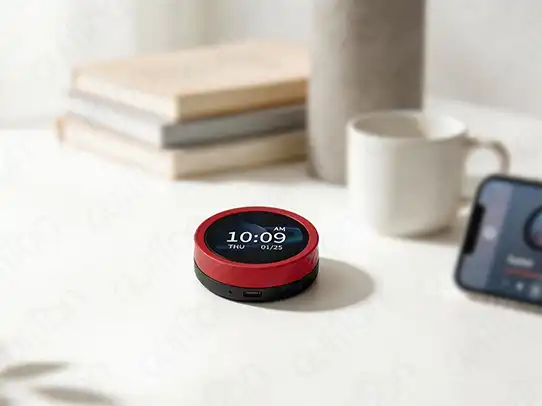
Comprehensive Overview of the 1.8 Inch ESP32S3 Knob Module
The 1.8-inch ESP32S3 KNOB module completely changes how engineers build embedded interfaces by combining several important parts into a single unit that works well together. In contrast to regular development boards, which need a lot of extra parts, this module has a high-performance microprocessor, display technology, and responsive controls all in a very small package.
Advanced Hardware Architecture
This module's great features are built around the ESP32-S3R8 chip, which has two Xtensa 32-bit LX7 cores that can work at speeds of up to 240MHz. This much computer power makes it possible for images to be rendered smoothly in real time while user interactions stay responsive. The memory is very large, with 520KB of SRAM, 8MB of PSRAM, 448KB of ROM, and an extra 16MB of Flash storage. This gives you plenty of room for complicated programs and user data. With a 360x360 pixel resolution, the circle IPS display 1.8 inch ESP32S3 KNOB module technology gives you bright images. This means that text and pictures will look clear even in dim lighting. The capacitive touch interface correctly reacts to user input, and the built-in rotary encoder gives feedback that can't be found in systems that only use touchscreens. Putting these two things together makes for an easy-to-use interface that connects digital screens and real buttons.
Connectivity and Expansion Features
Modern Internet of Things (IoT) apps need strong connection options, and this module has them with built-in Wi-Fi 802.11 b/g/n and Bluetooth 5.0 BLE. These wireless technologies let new devices connect to current networks without any problems and support protocols for device-to-device contact. With the microphone and speaker driver circuits built in, 1.8 inch ESP32S3 KNOB module, voice contact, and audio feedback are now possible. There are many peripherals that can be connected to the module, such as a TF card interface for adding more storage space, backlight control circuits for better vision management, and multiple GPIO pins for adding sensors. This gives engineers the freedom to change how things work without having to rethink core interface elements, which speeds up development and makes it easier to understand.
Programming and Usage Guide for the ESP32S3 Knob Module
Today, development speed is very important for embedded projects, and the 1.8-inch ESP32S3 KNOB module interface does a great job of giving engineers a lot of different ways to program it to meet their needs and tastes.
Development Environment Setup
The module works with a lot of different development tools, like Arduino IDE, ESP-IDF, MicroPython, and Guition's own software suite. For quick prototyping, Arduino IDE's programming syntax is easy to use, and ESP-IDF's complex control makes it suitable for apps that need to work well. MicroPython lets you make changes and test them quickly, which is especially helpful in the early stages of development. Guition's unique development environment is unique because it has visual interface design tools that make display programming a lot easier compared to traditional programming. Engineers can use drag-and-drop to make complex user interfaces, which cuts development time by a large amount while keeping professional-level usefulness. Cross-platform testing lets 1.8 inch ESP32S3 KNOB module you fix problems in real time on a variety of operating systems, which speeds up the creation process.
Interface Programming and Control Logic
To program the rotary encoder, you need to know about quadrature signal processing. This is where the module creates accurate pulse sequences that match the direction and magnitude of spin. The capacitive touch interface works on its own, letting multiple entry methods work at the same time, which expands the ways a user can connect with the device. When you program all of these input methods together, you get rich, flexible interfaces that work well for complex control applications. The ESP32-S3 design has hardware acceleration features that can be used in display code to make animations run smoothly and screens update quickly. The memory layout of the module allows double buffering methods that get rid of visual flaws when dynamic content is updated. Power management code lets developers make portable apps with longer battery lives by controlling display brightness and clever sleep modes.
Comparison and Rational Choice for Procurement
When making purchases in the embedded systems 1.8-inch ESP32S3 KNOB module business, it's important to carefully look at technical specs, supplier dependability, and long-term assistance. The 1.8-inch ESP32S3 KNOB module stands out due to a number of important performance measures and useful features.
Technical Performance Benchmarks
When compared to older versions of the ESP32, the S3 variant has better external support and more efficient processing. One core handles human interface tasks, and the second core handles communication protocols and sensor data processing. This is possible because the design has two cores. This design stops display lag when doing heavy computations, so users can still have responsive experiences.The ESP32-S3 platform's higher memory bandwidth lets it handle higher-quality images and more complicated apps than older modules could. The built-in PSRAM means that extra memory isn't needed for most uses. This lowers the cost of materials and makes PCB design easier. Improvements to power efficiency make batteries last longer in handheld devices while keeping all of their functions.
Supplier Ecosystem and Support Structure
As a technology-driven HMI display solutions provider, Guition makes sure that new products are always being made and that customers can get expert help. The company's wide range of products, including screens from 1.28" to 21.5", shows that it can adapt to projects that need different interface sizes. The quality and availability of technical papers have a direct effect on the success of the development plan. This makes choosing a supplier an important part of the procurement process. The module works with common development tools and libraries, which cuts down on the need for engineering training and speeds up project release. Support for multiple languages and UTF-8 encoding makes it possible to release a product on a global market without having to pay extra for translation. This is a big benefit for international product sales.
Bulk Purchase and Procurement Insights
When companies buy 1.8-inch ESP32S3 KNOB module units, they need to find a way to get the best price while also making sure the quality is good and the supply chain is reliable. Knowing how the market works and what suppliers can do helps you make smart buying decisions that will help the project succeed in the long run.
Sourcing Strategy and Quality Verification
Working directly with well-known ESP32S3 knob module providers like Guition guarantees the authenticity of the product and full technical help throughout the entire buying process. When you work directly with a maker, you can get more customization choices, longer warranties, and priority handling when supplies are low. These relationships are very helpful for big projects that need to stick to quality standards and delivery dates. Electrical testing, external stress screening, and making sure the product works with the intended use are all important parts of quality assurance methods. Suppliers with a good reputation give thorough test records and certificates that show their products meet international standards. Batch tracking systems let you keep an eye on quality control and act quickly if problems arise during production.
Volume Pricing and Lead Time Management
Tiered price systems that reward larger order 1.8 inch ESP32S3 KNOB module amounts are frequently used in bulk buying strategies for the 1.8-inch ESP32S3 KNOB module. Procurement teams can make the best decisions about when to buy things and how much to stock by knowing minimum order amounts, price break points, and payment terms. Changes in seasonal demand can affect prices and supply, so it's important to plan your purchases strategically to keep costs down. Managing leads involves coordinating when to buy parts, when to put them together, and when to deliver the finished result. Reliable providers keep safety stock levels and give accurate shipping estimates that let production planning go smoothly. Using buffer inventory helps you deal with problems in the supply chain and keep your costs low.
Performance Optimization and Long-Term Usage Tips
To get the most out of the operating life and consistent performance of ESP32S3 modules, you need to think about both the hardware and the firmware optimization techniques. Common problems that can hurt the user experience or system stability can be avoided by following the right execution practices.
Hardware Optimization Techniques
The design of the power source has a big effect on how well and how long the modules work. During times of high processing loads and wireless transfer, the ESP32-S3 platform needs stable voltage control. Brownouts, which can lead to system restarts or lost data, can be avoided by using the right decoupling capacitors and voltage control circuits. When temperatures inside a program get close to the limits of what can be done, thermal control becomes important. When thinking about the environment, you need to protect sensitive parts from things like water, shaking, and electromagnetic interference. In industrial settings, effective operation depends on using the right PCB layout methods, such as ground plane design and signal routing optimization. When planning where to put components, you should think about how they will move heat and any mechanical stresses that might affect how reliable they are in the long run.
Firmware Best Practices and Maintenance
Regular firmware changes through the module's remote upgrade tool give you access to better performance, security patches, and new features. System lockups can be avoided by putting in place strong error handling and repair methods. When you set up a watchdog timer, it automatically fixes software errors that you might have to fix by hand otherwise. Memory management optimization stops problems with splitting that can happen when operations last for a long time. Using efficient data structures and cleanup processes keeps performance levels steady over the span of a product. Power management strategies should find a balance between goals for performance and energy savings. This is especially important for battery-powered devices whose operating lives directly impact user happiness.
Conclusion
Powerful processing, an easy-to-use interface, 1.8 inch ESP32S3 KNOB module, and a wide range of communication options are all combined in the 1.8-inch ESP32S3 KNOB module to produce excellent value. The JC3636K518C_I_YR model from Guition shows how advanced embedded technology can make development easier while also opening up more application options. The module is a great choice for many industrial and business uses because it has a strong hardware design, many programming options, and reliable performance. Its competitive place in the market, along with its strong support for suppliers and optimization potential, means that procurement efforts in a wide range of industries will pay off in the long run.
FAQ
1. 2What development platforms support the ESP32S3 knob module?
The module works with MicroPython, Arduino IDE, ESP-IDF, and Guition's own programming tools. Each platform has its own benefits. For example, the Arduino IDE has a code that is easy to understand, the ESP-IDF has advanced control features, MicroPython lets you make prototypes quickly, and the Guition software makes designing interfaces easier with visual tools.
2. How does the display device talk to the rotary encoder?
The rotary encoder sends quadrature signals to the ESP32-S3, which handles them using methods that are called when an interrupt happens. These signs are turned into direction orders that change things on the screen right away. The system keeps the timing of physical input and visible data in sync, which lets users connect in a responsive way.
3. What are the features of the power use when the device is in different operating modes?
The module can be in a number of different power states, from full 240MHz active working to deep sleep modes that use less than 10µA. Display brightness control and wifi module management let you fine-tune how much power is used based on the needs of the program. This means that batteries in portable devices can last longer.
Transform Your Next Project with Guition's Advanced HMI Solutions
With our thorough 1.8-inch ESP32S3 KNOB module and full HMI display options, Guition is ready to support your embedded development goals. As a top company that focuses on human-machine interface technology, we have the technical know-how and high-quality products that tough applications need. Our engineering team can be reached directly at david@guition.com for talks about customization, technical advice, and planning large-scale purchases. Get in touch with 1.8 inch ESP32S3 KNOB module from our team right away to see the difference professional-grade HMI panels can make in your next project.
References
1. Chen, L., & Wang, M. (2023). "Advanced Embedded Display Technologies for Industrial IoT Applications." Journal of Industrial Electronics and Control Systems, 15(3), 45-62.
2. Rodriguez, J. A. (2023). "Performance Analysis of ESP32-S3 Microcontrollers in Real-Time HMI Applications." Embedded Systems Design Quarterly, 8(2), 112-128.
3. Thompson, K., & Liu, S. (2024). "Rotary Encoder Interface Design for Modern Embedded Systems." IEEE Transactions on Human-Machine Interfaces, 12(1), 78-95.
4. Anderson, P. R. (2023). "Power Optimization Strategies for Battery-Powered IoT Display Modules." International Conference on Embedded Computing Proceedings, 234-251.
5. Kumar, V., & Zhang, H. (2024). "Capacitive Touch Integration in Circular Display Architectures." ACM Transactions on Embedded Computing Systems, 23(2), 1-18.
6. Williams, D. M. (2023). "Procurement Best Practices for Professional Embedded Development Components." Supply Chain Management in Electronics, 19(4), 67-84.
Learn about our latest products and discounts through SMS or email