- English
- French
- German
- Portuguese
- Spanish
- Russian
- Japanese
- Korean
- Arabic
- Greek
- German
- Turkish
- Italian
- Danish
- Romanian
- Indonesian
- Czech
- Afrikaans
- Swedish
- Polish
- Basque
- Catalan
- Esperanto
- Hindi
- Lao
- Albanian
- Amharic
- Armenian
- Azerbaijani
- Belarusian
- Bengali
- Bosnian
- Bulgarian
- Cebuano
- Chichewa
- Corsican
- Croatian
- Dutch
- Estonian
- Filipino
- Finnish
- Frisian
- Galician
- Georgian
- Gujarati
- Haitian
- Hausa
- Hawaiian
- Hebrew
- Hmong
- Hungarian
- Icelandic
- Igbo
- Javanese
- Kannada
- Kazakh
- Khmer
- Kurdish
- Kyrgyz
- Latin
- Latvian
- Lithuanian
- Luxembou..
- Macedonian
- Malagasy
- Malay
- Malayalam
- Maltese
- Maori
- Marathi
- Mongolian
- Burmese
- Nepali
- Norwegian
- Pashto
- Persian
- Punjabi
- Serbian
- Sesotho
- Sinhala
- Slovak
- Slovenian
- Somali
- Samoan
- Scots Gaelic
- Shona
- Sindhi
- Sundanese
- Swahili
- Tajik
- Tamil
- Telugu
- Thai
- Ukrainian
- Urdu
- Uzbek
- Vietnamese
- Welsh
- Xhosa
- Yiddish
- Yoruba
- Zulu
Why Use an SPI LCD Display in Compact Devices?
When space is constrained and pin count matters, an SPI LCD Display becomes the logical choice for embedded engineers and product designers. Operating over just three to four signal lines — SCK, MOSI, CS, and an optional D/C pin — an SPI LCD display delivers graphical output without exhausting your microcontroller's GPIO resources. Compared to parallel interfaces that demand 8 to 16 data lines, the Serial Peripheral Interface protocol keeps PCB layouts clean, reduces electromagnetic interference, and enables faster integration cycles. For compact devices ranging from 3D printers to medical monitors, this communication architecture is both practical and scalable.

Comparing SPI LCD Displays with Other Display Technologies
Embedded developers regularly compare SPI LCD Display modules to I2C LCDs, parallel LCDs, OLEDs, and MIPI DSI panels. Each system has its own pros and cons, and knowing what they are can help you avoid expensive redesign rounds.
I2C LCDs only have two wires, but they work much more slowly (400 kHz to 1 MHz fast mode), so they can't be used for color graphical user interfaces. Parallel LCDs increase raw output, but they use 8 to 16 GPIO pins, which is a big problem for MCUs with limited pins, like the ESP32 or STM32L line. OLEDs have high brightness and low power when not in use, but they lose quality at high temperatures and get burned in when static UI elements are used. MIPI DSI screens can handle high-resolution video, but they need application processors and complicated lane setup, which means they are too complicated for most small HMI uses.
An SPI LCD display is a good compromise because it has enough bandwidth for graphical interfaces smaller than 3.5 inches, low GPIO consumption, RoHS-compliant FPC designs that can handle vibration, and a lot of driver library support for the Arduino, ESP-IDF, and STM32 HAL ecosystems. This balance is not a compromise for devices where sensors and connectivity hardware are more important than the display. It is the right architectural choice.
SPI LCD Displays in Embedded and Compact Device Applications
An SPI LCD Display can be used in a lot of different types of businesses. SPI LCD Displays show measurable technical value in the following main application categories:
- Industrial Handheld Instrumentation: Most of the MCU pins on portable oscilloscopes, multimeters, and field calibrators are used for precise measurement inputs. An SPI LCD Display takes care of the graphics layer without having to compete for resources. Operating temperature compliance from -20°C to +70°C makes sure that the device works reliably in the field all the time.
- Smart Home and IoT Control Panels: The SPI LCD Display can show transition effects and icon-rich GUIs on low-cost microcontrollers, so they don't need expensive application processors. This helps with thermostats, HVAC controllers, and appliance interfaces.
- Medical Wearables and Portable Monitors: Pulse oximeters and portable diagnostic tools need PCB layouts that are very small. An SPI LCD Display's small size directly allows for smaller enclosures, and SPI's ability to update only parts of the screen cuts down on power use, which is an important factor for devices worn by patients.
These three groups show steady B2B buying needs in the medical and industrial OEM supply lines in North America. When compared to parallel interface options, engineers who use SPI LCD Display modules early in the design process typically report shorter testing times and a simpler BOM.
Procurement Considerations for SPI LCD Displays
When choosing where to get display modules, unit price is not the only thing that matters. Total project cost is affected by lead times, the availability of driver ICs, the amount of technical documentation, and how responsive suppliers are during integration. When purchasing managers look at SPI LCD Display suppliers, they should check to see if the company offers full initialization code, cross-platform development support, and technical access after the sale.
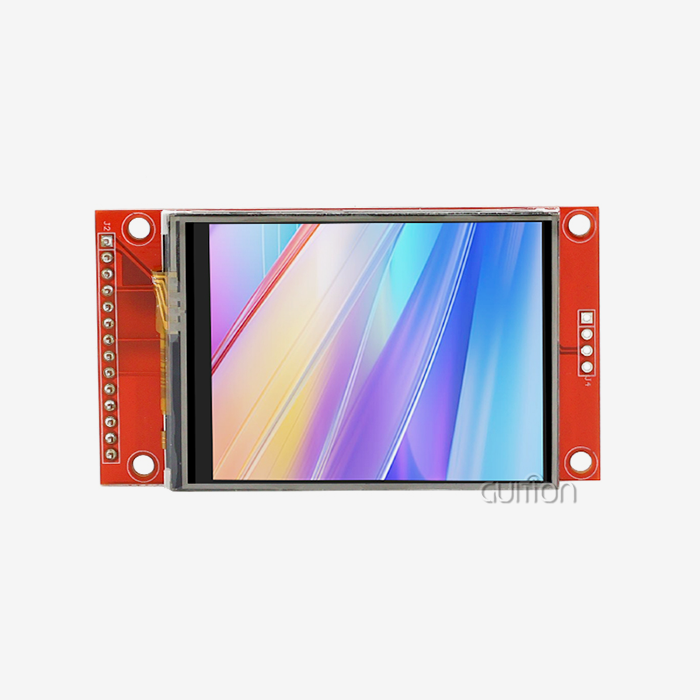
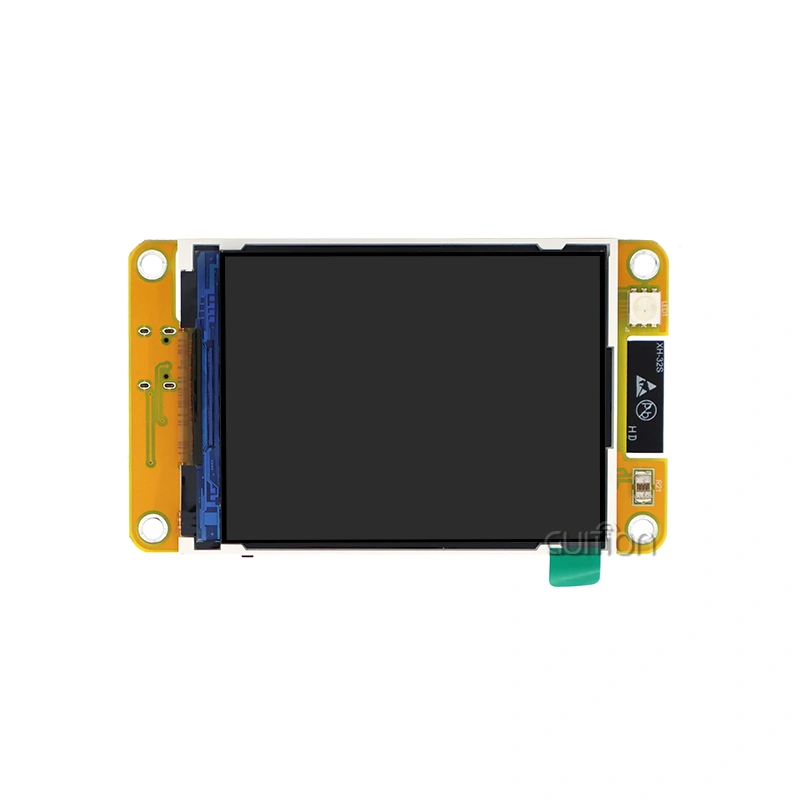
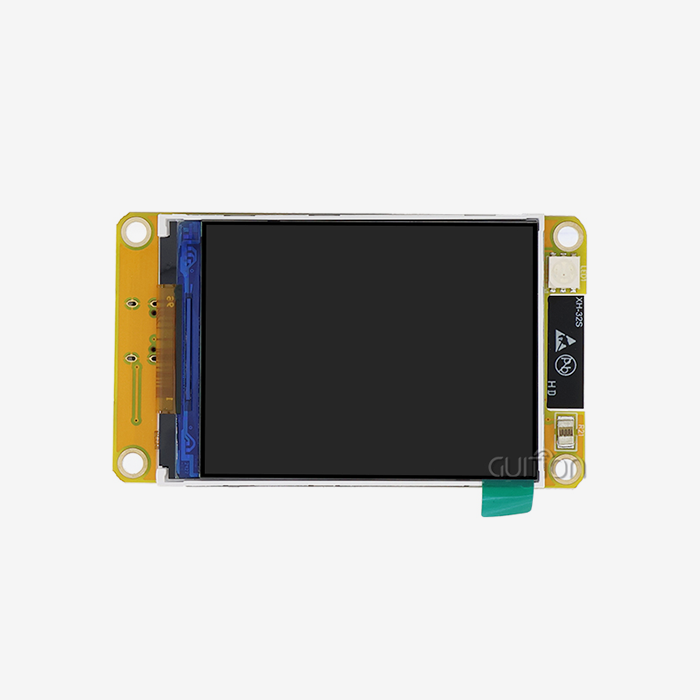
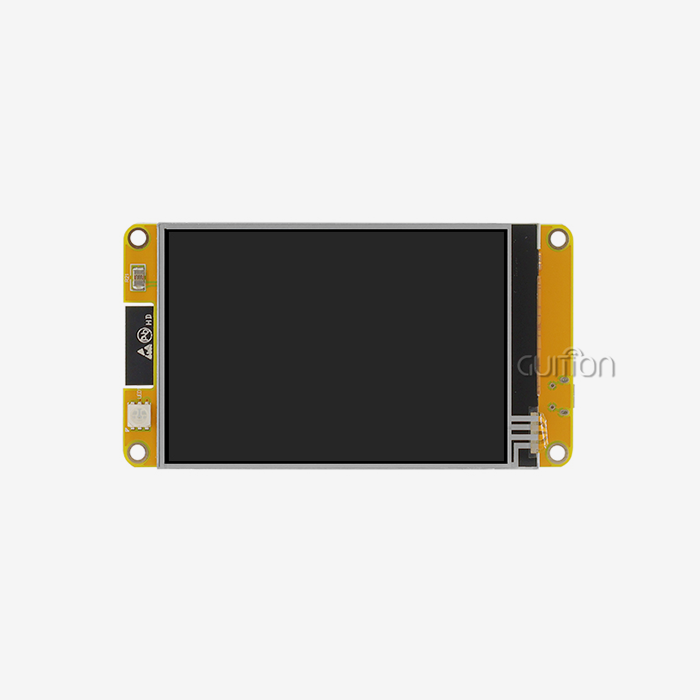
The GUITION JC3248A035C is a 3.5-inch SPI LCD display module. It is based on the ST7796 driver IC and has a capacitive touch screen and a size of 320x480. It also supports 65K RGB colors. Six LED backlights make it easy to see in a variety of lighting conditions, and the temperature range of -20°C to +70°C meets standards for industrial use.
This module is commonly used in 3D printer interfaces, EV charging stations, medical beauty equipment, and industrial control panels—places where the screen needs to be clear, the touch screen needs to work well, and the temperature needs to be stable. The ST7796 driver comes with a lot of code support for Arduino, ESP-IDF, and Guition's own development environment, which makes it easier for engineering teams to set up. As a reliable SPI LCD Display provider, GUITION supports this module with full secondary development interfaces, drag-and-drop UI tools, and the ability to update remotely over-the-air (OTA), which directly lowers the engineeriover the airafter the sale.
Why SPI LCD Displays Are the Preferred Choice in Compact Device Manufacturing
Serial display connections are the most popular type of HMI for screens smaller than 4 inches, according to market data from embedded systems buying trends. GPIO economy, PCB miniaturization, EMI reduction, and the growth of open-source driver communities are the main things that are pushing this market forward. As IoT device designs combine more functions onto a single low-pin-count SoC, the SPI LCD Display's small wiring footprint becomes physically beneficial instead of just useful.
Wearable health monitors, edge AI inference modules, and battery-powered field interfaces are all new types of products that all have to deal with the same hardware issues that make SPI the best display interface. Because PCB designs are flexible and there are many driver integrated circuits (ICs) available, the SPI LCD Display ecosystem keeps growing instead of shrinking. This gives procurement teams a wide range of reliable sourcing options for all production cycles.
Conclusion
Interfaces for small devices need to save pins, keep PCBs simple, and work effectively in a range of temperature and pressure conditions. All of these needs can be met by an SPI LCD display , which has a communication design that works with everything from Arduino hobbyist experiments to industrial panels used for production. This is shown by the GUITION JC3248A035C, a 3.5-inch module that has ST7796 driver performance, sensitive touch, 65K color depth, and wide-temperature operation, ready to be used right away. The serial display interface is not a compromise for tech teams that have to work with limited hardware and tight development timelines; it is the current realistic standard.
FAQ
1. Is an SPI LCD display compatible with Arduino and ESP32?
Yes. Most SPI LCD Display modules, like the JC3248A035C from GUITION, work with both Arduino and ESP-IDF development environments. When connecting to 5V Arduino Uno boards, make sure you use a logic level shifter because the ST7796 and most display driver ICs can only handle 3.3V.
2. What causes a white screen on SPI LCD display initialization?
This usually means that the driver's timing is off. According to the datasheet, make sure that your RST (reset) pulse stays low for at least 10 ms. Also, make sure that the initialization command sequence fits the exact driver IC version that is placed on the module.
3. How does SPI compare to I2C for graphical displays?
While I2C can go as fast as 1 MHz in fast mode, SPI LCD Display modules can go as fast as 20–80 MHz. I2C can't keep up with the frame rates needed for color TFT interfaces. SPI is the right standard for any app that needs to generate a graphical user interface.
4. Can I use a 4-wire SPI LCD display over a long cable?
SPI is made for short lines on the board. When cables are longer than 10–15 cm, they add capacitive loading that hurts the clock signal. If you need longer wire runs for your application, lower the SPI clock frequency or use signal buffer ICs.
Partner with GUITION for Your Next SPI LCD Display Project
GUITION has a tested collection of SPI LCD Display modules, like the JC3248A035C, for engineers who need to quickly integrate them and make sure they work well and have stable power for a long time. Every module is backed by the Guition UI development tool, cross-platform compatibility, OTA upgrade support, and clear technical documentation from Jingcai Intelligent, an established SPI LCD displaymanufacturer. You can email David at david@guition.com to find out about bulk prices, customization options, and engineering help that is tailored to your project needs.
References
1. Semiconductor Components Industries, LLC — ST7796S TFT LCD Single Chip Driver Datasheet, 2019.
2. Maxim Integrated — Fundamentals of the SPI Communication Protocol, Electronic Design Journal, 2017.
3. Microchip Technology — SPI Protocol and Interface Design for Embedded Systems, Application Note AN1043, 2018.
4. IHS Markit — Global Small and Medium Display Market Report: Embedded HMI Segment, 2022.
5. Texas Instruments — Logic Level Translation for SPI Interfaces, Application Report SLLA414, 2020.
6. IEEE Transactions on Industrial Electronics — Design Considerations for Human-Machine Interface Displays in Industrial Embedded Systems, Volume 68, Issue 4, 2021.
Learn about our latest products and discounts through SMS or email