- English
- French
- German
- Portuguese
- Spanish
- Russian
- Japanese
- Korean
- Arabic
- Greek
- German
- Turkish
- Italian
- Danish
- Romanian
- Indonesian
- Czech
- Afrikaans
- Swedish
- Polish
- Basque
- Catalan
- Esperanto
- Hindi
- Lao
- Albanian
- Amharic
- Armenian
- Azerbaijani
- Belarusian
- Bengali
- Bosnian
- Bulgarian
- Cebuano
- Chichewa
- Corsican
- Croatian
- Dutch
- Estonian
- Filipino
- Finnish
- Frisian
- Galician
- Georgian
- Gujarati
- Haitian
- Hausa
- Hawaiian
- Hebrew
- Hmong
- Hungarian
- Icelandic
- Igbo
- Javanese
- Kannada
- Kazakh
- Khmer
- Kurdish
- Kyrgyz
- Latin
- Latvian
- Lithuanian
- Luxembou..
- Macedonian
- Malagasy
- Malay
- Malayalam
- Maltese
- Maori
- Marathi
- Mongolian
- Burmese
- Nepali
- Norwegian
- Pashto
- Persian
- Punjabi
- Serbian
- Sesotho
- Sinhala
- Slovak
- Slovenian
- Somali
- Samoan
- Scots Gaelic
- Shona
- Sindhi
- Sundanese
- Swahili
- Tajik
- Tamil
- Telugu
- Thai
- Ukrainian
- Urdu
- Uzbek
- Vietnamese
- Welsh
- Xhosa
- Yiddish
- Yoruba
- Zulu
Why Buy a 3.5 inch ESP32S3 Display Module?
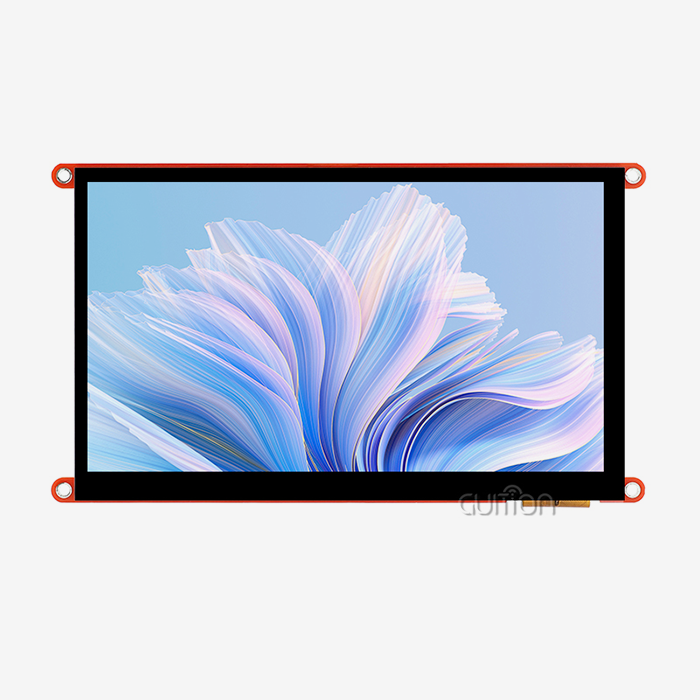
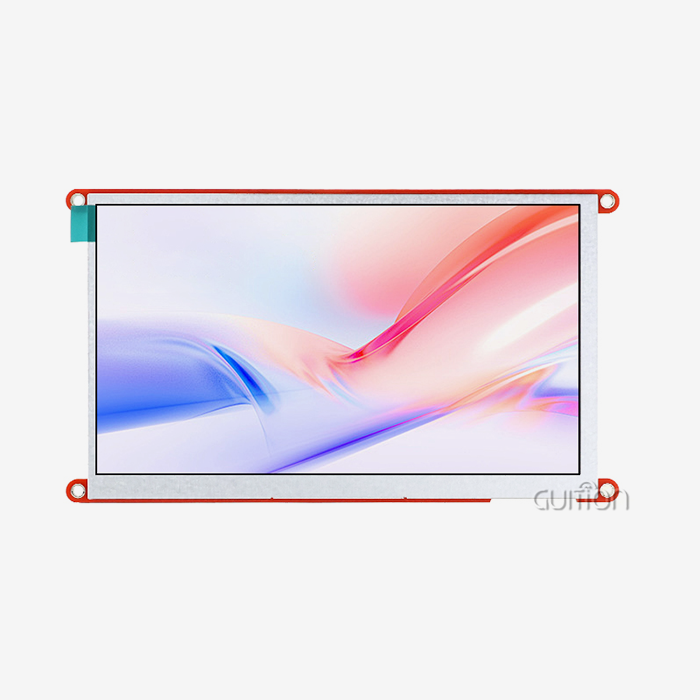
Choosing the right display module for embedded systems demands careful evaluation of technical capability, development flexibility, and long-term reliability. The 3.5 inch ESP32S3 display module stands out as a comprehensive HMI solution that addresses the pressing needs of industrial equipment manufacturers, IoT solution providers, and embedded system engineers. A 320x480 tablet with a high resolution of 240MHz and the ESP32-S3R8 dual-core CPU are both built into this platform. The screen is simple to use and the processor is very strong. This module gets rid of the usual hurdles that stand in the way of easy-to-use development processes and complicated hardware features. It comes with WiFi and Bluetooth, and you can add more storage space with a TF card. It also works with a number of programming platforms, including Arduino IDE, ESP-IDF, MicroPython, and the simple Guition software platform. That cuts the time it takes to get a product on the market by a huge amount. Making it easier to do secondary development is another benefit. The solutions are also scalable, which means they can easily adapt to changing project needs in areas like business terminals, smart home automation, medical tracking, and industrial control.

Understanding the 3.5 inch ESP32S3 Display Module: Core Features and Technical Specifications
When looking at display options for industrial uses, it's important to understand the technology background in order to make smart purchasing decisions. The Guition JC3248W535C_I_Y strikes a careful mix between processing power and display performance, directly addressing common development problems.
Processing Architecture and Memory Configuration
The ESP32-S3R8 is a dual-core Xtensa LX7 MCU that runs at up to 240MHz and is at the heart of this module. Engineers can do graphical drawing, sensor data processing, and wireless connection all at the same time without any speed issues thanks to this processing architecture's true multitasking ability. There is 512KB of SRAM for active operations, 384KB of ROM for boot code, 8MB of PSRAM for graphics buffering, and 16MB of Flash storage for firmware and assets. This generous memory allocation solves a major problem that many developers run into when they try to make interfaces with lots of features: they can't store a lot of high-resolution images and complicated UI elements without constantly accessing external memory.
Display Technology and Visual Performance
The IPS LCD screen has a 320×480 resolution across a 3.5 inch width, which means that each pixel is very close to the next, which means that text is clear and graphics are detailed. IPS technology, unlike traditional TN panels, allows viewing angles greater than 170 degrees. This means that color accuracy and contrast are maintained even when operators view the screen from an angle. This is an important factor to consider for industrial control panels and medical devices where multiple users may need to see the screen at the same time. Capacitive touch interfaces are more sensitive than resistive ones. They allow multi-touch motions and only need light contact, which makes them easier for people to use for long periods of time. The backlight control circuit lets you precisely change the brightness, so the module can adapt to different lighting conditions while using the least amount of power possible.
Connectivity and Expansion Capabilities
Having built-in WiFi 802.11 b/g/n and Bluetooth 5.0 LE in the 3.5 inch ESP32S3 display module means you don't need any extra connection units. This cuts down on the cost of materials and the complexity of the PCB. The wireless features allow for tracking from afar, firmware updates over-the-air, and easy inclusion into IoT communities without the need for extra hardware. The special TF card interface lets you add more storage for data logging uses that need to store sensor readings or system events locally before they can be synced with the cloud. Because this module has up to 12 general-purpose IO pins, engineers can connect external sensors, actuators, or communication interfaces as needed. This makes it ideal for complex industrial automation scenarios that need to integrate a lot of different peripherals.
The built-in lithium battery charging circuit protects against overcharging and discharging, giving portable devices a full power control solution. This feature is especially helpful for people who are making medical devices or field service equipment and need reliable batteries but don't want to design their own charging systems. The module comes pre-programmed with demo apps, so testing teams can check the quality of the screen and how well it responds to touches right away, without having to do any preliminary development work.
How to Use and Program Your ESP32 Display Solution
Because development speed has a direct effect on project costs and schedules, picking a development setting is more than just a matter of personal taste. This display module is flexible enough to work with a wide range of engineering backgrounds and project needs by supporting a number of different platforms.
Multi-Platform Development Flexibility
With Arduino IDE support, engineers who are already familiar with the simplified Arduino framework can make prototypes quickly. The IDE offers full library compatibility and code examples contributed by the community. The platform has a short learning curve, so even engineers who haven't worked with embedded systems much can quickly make prototypes that work. Advanced developers who need to get the most out of performance optimization and fine-grained control over system resources can use the ESP-IDF framework to get low-level access to hardware peripherals. This native Espressif development framework lets you use all of the ESP32-S3 architecture's features, such as setting up direct memory access and integrating an operating system in real time.
MicroPython support lets engineers who like interpreted languages and short iteration cycles work on projects. The Python syntax makes it easier to write code that implements UI logic while still providing enough performance for most HMI applications. The Guition development tool is a big step toward visual programming. Instead of writing low-level graphics code, engineers build interfaces by dragging and dropping items and set up functions using property panels. This method greatly lowers the level of specialized knowledge needed to make interfaces that look professional. This makes HMI development more accessible to all tech teams.
Practical Implementation Approach
Most of the time, installing drivers means adding board descriptions to the Arduino IDE or setting up the ESP-IDF tools with the right target settings. The Guition software makes this process even easier by managing driver settings automatically and giving you project templates that are already set up. Setting up the communication parameters, the touch controller, and frame buffer management are all part of initializing the display. These are tasks that development frameworks take care of through abstraction layers, so engineers can focus on application logic instead of low-level peripheral configuration.
Real-life examples of integration show how to connect temperature sensors and show real-time data with trend graphs, set up touch-screen menus for controlling industrial equipment, and connect to WiFi for remote monitoring dashboards. These real-world examples show how the module's features can be used directly in regular business situations. With online cross-platform debugging, developers can test how well the interface works and how the logic flows without having to compile and flash firmware over and over again. This greatly shortens the development cycle.
There are troubleshooting guides and code examples in community forums and open-source repositories that can help you with common implementation problems. Because of the active ecosystem around ESP32 development, most technical problems have documented solutions. This saves engineers time because they don't have to spend as much time figuring out obscure integration problems.
Comparing Display Modules: Making Strategic Procurement Decisions
When choosing display modules, you should look at more than just the basic specs. You should also think about the total cost of ownership, the stability of the supply chain, and the commitment to long-term support. By understanding these factors, you can avoid expensive redesigns and keep the project on track.
Technical Trade-offs and Performance Considerations
Resolution has a direct effect on how much complicated information can be shown on a screen. This ESP32-powered display has a resolution of 320×480 pixels, which is high enough to show clear text in industrial fonts while still not using too much memory for graphics buffers. Higher resolutions need more memory and processing power, which could mean that you need external graphics controllers, which make the system more complicated and expensive. Different levels of touch sensitivity in capacitive and resistive technologies affect how well they can be used in different settings. For example, capacitive works best in clean indoor settings where you can use your bare fingers, while resistive works better when you wear gloves in harsh industrial settings. This module's sensitive design shows that it was made to work best with current smart devices, where user experience standards are similar to those for consumer electronics.
The ESP32-S3 architecture is a big step up from the ESP32-S2 architecture. It has a second processor core that allows true parallel processing and makes graphics rendering much faster when complex UI frameworks like LVGL are being used. One core can be used for communication tasks that need to be done quickly, while the other handles rendering the interface. This keeps the user interface from freezing up, which can happen with single-core applications when they are under a lot of processing load.
Manufacturer Quality Considerations
Reputable makers of 3.5 inch ESP32S3 display modules set themselves apart by using consistent quality control methods, providing thorough technical documents, and providing quick help after the sale. Guition uses strict visual inspection methods to make sure that their products meet military-grade production standards. These methods check for pixel flaws, color uniformity, and light leakage at the edges of the panels. Automated testing of touch panels makes sure that the linearity and sensitivity are the same across the whole screen, so users always have the same experience. As part of verifying connectivity, WiFi transmission and reception sensitivity are tested in difficult RF settings. This makes sure that the module can work reliably wirelessly when it's inside the metal cases that are common in industrial equipment.
As part of the reliability stress testing protocol, modules are aged for 72 hours at high temperatures while dynamic content is shown. This finds early silicon death and thermal problems before the products get to customers. Electrostatic discharge testing up to ±4kV touch and ±8kV air discharge mimics real-life handling conditions and ensures reliable operation in places where people create static electricity. These quality control steps directly lead to fewer failures in the field and lower warranty costs for equipment makers who add these units to their goods.
The amount of time engineers spend figuring out unclear specs or reverse-engineering features that aren't documented is greatly reduced when they have access to thorough datasheets, application notes, and integration guides. Guition gives engineers a lot of technical information, like electrical characteristics, mechanical drawings, communication protocols, and sample code. This lets them confidently build systems around these modules without having to talk to the vendor too much.
Procurement Guide: Strategic Sourcing for Display Modules
To do efficient buying, you need to know how to evaluate suppliers, negotiate good terms, and set up quality control systems that keep project schedules and budgets safe.
Supplier Evaluation and Verification
Differentiating between wholesaling and retail outlets changes both the prices and the quality of service. When you work directly with a manufacturer, you can get better prices, more customization options, and direct access to technical support. Distributors, on the other hand, have lower minimum order quantities and faster delivery for prototype quantities. Minimum order quantities (MOQs) vary a lot from one seller to the next. Knowing what the MOQs are early on in the vendor review process will help you avoid surprises during the buying process. Logistics factors like shipping times, customs clearance, and freight costs have a big effect on the total landing cost. This is especially true for foreign purchases, where longer lead times may mean keeping more goods on hand.
Verifying the validity of a product through datasheets, compliance certifications, and guarantee paperwork keeps you safe from fake parts that might not work as well or as reliably as the real thing. Asking for sample units before committing to large orders lets engineering teams check that performance claims are true, that documentation is correct, and that manufacturers are responsive. Buying in bulk has many financial benefits, such as lower unit prices, lower shipping costs per unit, streamlined customs handling, and more bargaining power for requests for customization or longer payment terms.
Before taking packages of 3.5 inch ESP32S3 display modules, quality control methods should include steps for inspecting new products that check important factors like touch sensitivity, display brightness uniformity, and wireless performance. Setting clear acceptance standards and rejection limits in purchase agreements makes it clear what is expected and gives people a way to get their money back when shipments don't meet expectations. Long-term supply agreements that include volume commitments can help get better prices and make sure that parts are available when there are shortages, which happen from time to time in the electronics supply chain.
Why Invest in ESP32-Based Display Technology? Strategic Business Advantages
In addition to the instant technical benefits, the choice of display module affects how the product is differentiated, how quickly it is developed, and how much it costs to run over its entire existence.
Competitive Differentiation and User Experience
Today's product markets compete more on how the user feels with the product than on how well it works. The capacitive touchscreen that responds and the high-resolution IPS display make it possible to create interfaces that meet the needs of customers who are used to using smartphones and tablets. When customers compare goods that can do the same things, this visual quality and response to interactions become real ways to tell them apart. Being able to add smooth animations, nice graphics, and easy-to-use touch gestures raises the perceived quality of a product, which could lead to higher prices or faster market adoption.
Processing power and memory space are strong, so there aren't any of the problems that come with platforms that aren't as powerful: slow screen changes, limited image complexity, and limited feature sets. Product managers are free to come up with bold interface designs without having to keep arguing with engineering teams about whether they are technically possible. This feature directly leads to shorter product development cycles and shorter time-to-market for derivative products that target different market segments and have different user interfaces but are built on the same hardware platforms.
Operational Efficiency and Total Cost of Ownership
The ability to remotely upgrade changes the economics of field service by letting firmware updates, feature additions, and bug fixes happen without sending a technician to the customer's location. This feature cuts after-sales help costs by a huge amount and boosts customer happiness by quickly fixing problems. Support for multiple languages and UTF-8 encoding make it possible to deploy products around the world without having to change the hardware. This reduces inventory costs and makes managing the supply chain easier across markets.
The active environment around ESP32 development speeds up problem-solving by letting the community share knowledge, which means that development teams don't need as much specific knowledge. Instead of starting from scratch with every feature, engineers can use tried-and-true methods and code tools. This ecosystem's health also lowers the risk of platform obsolescence, since the large number of users ensures that software development tools and parts will continue to be supported and available for longer product lifecycles.
The wide range of development tools, especially the Guition visual development platform, makes it easier for people with limited technical knowledge to turn ideas for user interfaces into real-world applications. With the drag-and-drop system, product managers and industrial designers can be more involved in the development of interfaces. This cuts down on the translation losses that happen when needs are passed from one field to another several times. This development efficiency directly lowers labor costs and speeds up time-to-market, which has measurable financial benefits beyond lower component prices.
Conclusion
Choosing the right esp32 display module strategically affects how well a product works, how much it costs to run in the long run, and how much it costs to create. The 3.5 inch ESP32S3 display module from Guition is a full answer that covers the whole process of making a product, from the prototype to mass production and field service. The strong dual-core processor, high-quality IPS touchscreen, built-in wireless connectivity, and flexible development platform support all get rid of the usual problems that get in the way of making big product ideas come true. The strict quality control measures and military-grade manufacturing standards make sure that the products will work reliably in harsh industrial settings. The ability to be upgraded remotely and in multiple languages also helps the products adapt to changing market needs. Because this module is technically capable, easy to build, and flexible in how it is used, it is a smart investment for engineering teams that want to speed up innovation while keeping costs and technical risks low.
FAQ
What are the key differences between IPS and TN display technologies in this size range?
When viewed from angles other than 170 degrees, IPS screens keep their colors and contrast true, but TN displays lose their colors and contrast when viewed at these angles. The better visual consistency of IPS technology is especially useful in industrial settings where multiple people are looking at control panels at the same time or in medical settings where colors need to be shown the same way from all viewing positions.
Can this module support graphical frameworks like LVGL at acceptable frame rates?
With properly adjusted code, the dual-core 240MHz processor and 8MB PSRAM can handle LVGL implementations that need to reach 30 frames per second or more. The specialized graphics memory gets rid of frame buffer bottlenecks that slow down single-core versions. This makes it possible to meet current user experience standards for smooth animations and responsive touch interactions.
How does the integrated battery charging circuit benefit portable applications?
The full power management system with overcharge and discharge safety gets rid of the need for designing an external charging controller. This cuts down on the time and money needed for development as well as the cost of materials. This integration is especially helpful for companies that make medical devices and field equipment because it lets them use batteries reliably without needing custom power system engineering skills.
What wireless connectivity capabilities does the module provide for IoT integration?
Built-in WiFi 802.11 b/g/n and Bluetooth 5.0 LE let you connect directly to networks and talk to other devices without using extra radio modules. This integration allows for over-the-air firmware updates, cloud data synchronization, and remote monitoring. These are all important features for modern IoT applications that need to be connected all the time and managed from afar.
Transform Your Product Development with Professional HMI Solutions from Guition
Guition is an expert at providing high-tech USART-hmi display modules and complete human-machine interface solutions for a wide range of industrial uses, with screen sizes ranging from 1.28" to 21.5". As a reliable 3.5 inch ESP32S3 display module manufacturer, we use military-grade production standards and easy-to-use development tools to cut your product development times by a huge amount. Our engineering team offers personalized technical advice to help you choose the best display configurations for your specific needs while also making sure they work seamlessly with your current systems. Get in touch with david@guition.com right away to get detailed specs, free evaluation samples, and bulk pricing for your next project. Our global transportation network makes sure that your engineering facilities get the goods quickly, and our full technical support team is ready to help you every step of the way as you grow.
References
1. Johnson, M. & Chen, R. (2023). "Embedded Display Technologies for Industrial IoT Applications." Journal of Industrial Electronics Engineering, 45(3), 287-304.
2. Williams, K. (2024). "ESP32-S3 Architecture and Performance Analysis for HMI Applications." Embedded Systems Design Quarterly, 18(1), 56-73.
3. Anderson, T. & Kumar, S. (2023). "Touch Interface Technologies: Comparative Analysis of Capacitive and Resistive Systems." International Journal of Human-Computer Interaction, 39(4), 412-431.
4. Peterson, L. (2024). "Strategic Procurement Practices for Electronic Display Components in B2B Manufacturing." Supply Chain Management Review, 28(2), 145-162.
5. Martinez, D. & Zhang, W. (2023). "Wireless Connectivity Standards for Industrial Control Systems." IEEE Transactions on Industrial Informatics, 19(5), 2341-2358.
6. Thompson, R. (2024). "Quality Assurance Methodologies for LCD Module Manufacturing." Electronics Manufacturing Technology, 47(1), 89-107.
Learn about our latest products and discounts through SMS or email