- English
- French
- German
- Portuguese
- Spanish
- Russian
- Japanese
- Korean
- Arabic
- Greek
- German
- Turkish
- Italian
- Danish
- Romanian
- Indonesian
- Czech
- Afrikaans
- Swedish
- Polish
- Basque
- Catalan
- Esperanto
- Hindi
- Lao
- Albanian
- Amharic
- Armenian
- Azerbaijani
- Belarusian
- Bengali
- Bosnian
- Bulgarian
- Cebuano
- Chichewa
- Corsican
- Croatian
- Dutch
- Estonian
- Filipino
- Finnish
- Frisian
- Galician
- Georgian
- Gujarati
- Haitian
- Hausa
- Hawaiian
- Hebrew
- Hmong
- Hungarian
- Icelandic
- Igbo
- Javanese
- Kannada
- Kazakh
- Khmer
- Kurdish
- Kyrgyz
- Latin
- Latvian
- Lithuanian
- Luxembou..
- Macedonian
- Malagasy
- Malay
- Malayalam
- Maltese
- Maori
- Marathi
- Mongolian
- Burmese
- Nepali
- Norwegian
- Pashto
- Persian
- Punjabi
- Serbian
- Sesotho
- Sinhala
- Slovak
- Slovenian
- Somali
- Samoan
- Scots Gaelic
- Shona
- Sindhi
- Sundanese
- Swahili
- Tajik
- Tamil
- Telugu
- Thai
- Ukrainian
- Urdu
- Uzbek
- Vietnamese
- Welsh
- Xhosa
- Yiddish
- Yoruba
- Zulu
Why Are 7 Inch TFT LCD Display Modules Perfect for Touch Parallel LCDs?
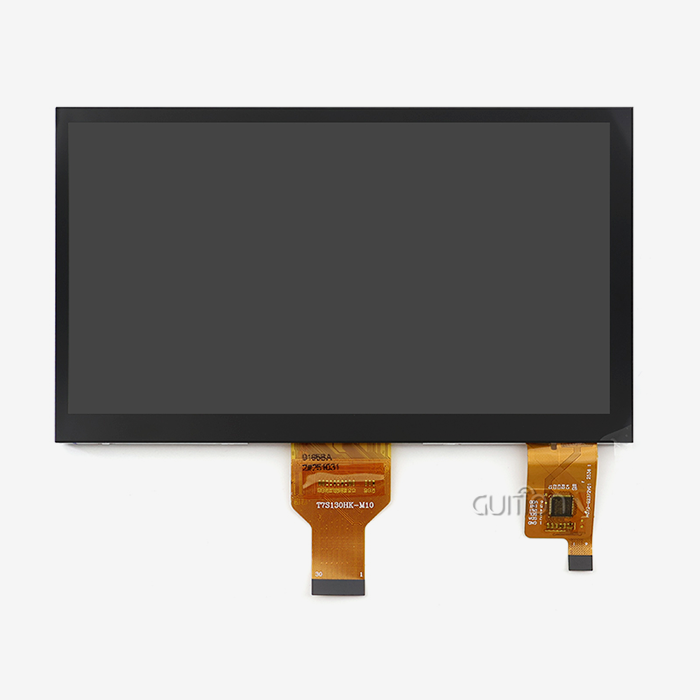
For industrial HMIs, embedded controllers, charging equipment, automation panels, and other space-limited applications, a 7 inch tft lcd display module can provide a practical combination of screen area, resolution, and integration flexibility. Menus, status information, controls, and graphics may be shown on the 7 inch tft lcd display module screen without taking up much room. Screen size alone does not define a module's touch-parallel LCD suitability. Before buying, engineers must consider resolution, interface architecture, touch technology, brightness, operational circumstances, power needs, software compatibility, and supplier support.

Start With the Application and Mechanical Requirements
A 7-inch display should be selected according to the complete system rather than the panel size alone. Before comparing suppliers, define what the screen needs to show, how users will interact with it, and where it will be installed.
Define the Interface Before Choosing the Panel
Industrial HMIs commonly show many data kinds. Control screens may display status indicators, numerical figures, navigation buttons, warning messages, trend graphs, or configurable menus. A charging station may require a simpler interface with big touch targets and status information.
Resolution and touch configuration depend on these criteria. For simple control interfaces, an 800x480 panel may suffice. However, applications with smaller text, complex graphics, or several information sections may need a higher-resolution panel.
The user interface should assess touch needs. The touch controller and sensor must be tested with the application's gloves if operators use gloves. A touch panel that works well with bare fingertips may not work with thick gloves or conductive equipment.
Confirm the Mechanical Fit
Mechanical compatibility is just as important as electrical compatibility. Procurement teams should request the complete mechanical drawing before approving a display.
Important dimensions include:
- Overall panel dimensions
- Active display area
- Viewing area
- Mounting-hole positions
- Connector location
- Module thickness
- Cable exit direction
- Touch-panel dimensions
- Required bezel or enclosure opening
A display that meets the electrical specification can still create costly redesign work if its connector or mounting position does not fit the enclosure.
Choose Resolution According to the Interface
Resolution affects image clarity, memory requirements, graphics performance, and the amount of information that can be displayed on one screen.
When 800×480 Is Enough
800×480 is a common resolution for embedded 7-inch displays because it provides enough space for many control interfaces while keeping the graphics workload manageable for embedded processors.
It can work well for:
- Industrial control panels
- Charging interfaces
- Equipment dashboards
- Smart controllers
- IoT gateways
- Simple monitoring terminals
For an interface built around large buttons, numerical readings, icons, and basic graphs, moving to a higher resolution may not provide enough practical benefit to justify additional processing and memory requirements.
When Higher Resolution Makes Sense
Higher resolution becomes more useful when the interface contains small fonts, detailed images, multiple windows, or dense graphical information.
Before selecting a higher-resolution display, however, check whether the host processor and 7 inch tft lcd display module controller can handle the additional data. More pixels mean more display data, which can affect framebuffer size, memory bandwidth, refresh performance, and power consumption.
The correct approach is therefore not to select the highest resolution available. Instead, match the resolution to the user interface and the capabilities of the host system.
Understand the Display Interface Before Ordering
Interface selection is one of the most important technical decisions when integrating a 7-inch TFT LCD.
RGB Parallel and MIPI DSI Are Not the Same
Parallel RGB interfaces provide several pixel-data bits across different signal lines. This boosts display bandwidth but also pin use and PCB layout.
The MIPI DSI method differs. Its high-speed differential serial transmission provides tremendous bandwidth with fewer physical signal connections than a parallel RGB interface.
This means MIPI DSI is not a parallel interface. Both architectures can support embedded screens, but they need different host processors, PCB layouts, connectors, and software drivers.
Check Host-Processor Compatibility
Before purchasing samples, engineers should confirm:
- What display interfaces are supported by the host processor?
- What resolutions and refresh rates are supported?
- What voltage levels are required?
- Is a dedicated display controller needed?
- Are the required GPIOs or high-speed lanes available?
- What initialization sequence is required?
- Is the required software driver available?
This prevents a common integration problem: selecting a display that looks suitable on paper but cannot be connected directly to the chosen controller.
Select Touch Technology for the Working Environment
Touch technology has a direct effect on usability and integration.
Capacitive Touch for Modern Interfaces
Where crisp images and gesture-based interaction are necessary, projected capacitive touch is popular. It supports tapping, swiping, and multi-touch when the touch controller and software support them.
Capacitive touch performance depends on system conditions. Cover glass, enclosure materials, grounding, electrical noise, and gloves affect touch.
For industrial devices, engineers should evaluate the display unit, not only the touch sensor.
Resistive Touch for Glove and Stylus Applications
Resistive touch detects physical pressure and can therefore work with gloves, styluses, and other objects that may not work with ordinary capacitive sensing.
This can be useful in applications where operators cannot use bare fingers.
The trade-off is that resistive and capacitive touch systems have different optical characteristics, durability requirements, controller architectures, and user-interface behavior. The appropriate choice depends on the actual operating environment rather than a general assumption that one technology is always better.
Evaluate Brightness, Viewing Conditions, and Temperature
Display performance can change significantly depending on the installation environment.
Indoor and Outdoor Brightness Requirements
A display installed inside a control cabinet normally has different brightness requirements from a panel exposed to direct sunlight.
Instead of choosing a 7 inch tft lcd display module based only on a headline brightness number, buyers should consider:
- Ambient light level
- Direct sunlight exposure
- Viewing angle
- Cover-glass reflection
- Backlight control
- Required contrast
- Power budget
For outdoor applications, sunlight readability should be tested with the complete enclosure and cover structure. A high-brightness panel alone does not guarantee good visibility because reflections can still reduce readability.
Check the Actual Temperature Range
Startup, operation, closure, and transportation may vary industrial equipment temperatures.
The supplier's datasheet should separate storage and operation temperatures. Buyers should also confirm if the temperature range applies to the module or only the LCD panel.
Sample testing under typical settings is recommended for equipment near the top or lower limit. Check touch responsiveness, display uniformity, backlight performance, and connector behavior.
Consider Power Consumption and Thermal Design
A display is part of the system's total power budget, not an isolated component.
Calculate the Complete Power Requirement
Engineers should account for:
- LCD logic power
- Backlight power
- Touch controller power
- Interface circuitry
- Peak current
- Startup behavior
Backlight brightness can have a major effect on overall consumption. If the application is battery-powered, brightness control or automatic backlight adjustment may be useful.
The supplier should provide electrical specifications under clearly defined conditions, especially when considering how to choose between a 7-inch TFT display module and a standard LCD for an embedded system. Avoid designing the power supply around a generic current range because actual consumption varies with panel configuration, backlight setting, controller, and operating conditions.
Plan for Heat Dissipation
Heat generated by the display and surrounding electronics can accumulate inside a sealed enclosure.
For compact industrial equipment, engineers should evaluate the display together with the processor, power supply, backlight driver, and other heat-producing components. If the system operates continuously, thermal testing under the expected enclosure conditions can reveal problems that are not visible during short bench tests.
Review Software and Development Support
Hardware compatibility is only part of the integration process. Software support can strongly affect development time.
Check Drivers and Initialization Requirements
The supplier should provide sufficient technical information for engineers to initialize the display correctly.
Depending on the module, this may include:
- Interface specifications
- Timing parameters
- Initialization commands
- Driver information
- Touch-controller documentation
- Pin definitions
- Example code
- Mechanical drawings
If the display is intended for an embedded development platform, confirm which development environments are supported and whether example projects are available for the exact hardware configuration.
Plan Framebuffer and Memory Usage
Higher-resolution displays require more graphical data to be processed and stored.
Engineers should determine whether the host system uses full-frame buffering, double buffering, or partial updates. The appropriate architecture depends on available RAM, external PSRAM or memory, refresh requirements, and GUI complexity.
For applications with limited memory, partial rendering can reduce memory requirements by updating only the portions of the interface that change.
Compare TFT LCD With Other Display Technologies
Technology comparisons should focus on application requirements rather than simply identifying which display technology has more advanced specifications.
TFT LCD Versus OLED
OLED can provide strong contrast and fast pixel response, but TFT LCD remains widely used for industrial interfaces because of its established manufacturing ecosystem and broad availability in embedded formats.
For interfaces containing mostly static menus, numerical data, and control elements, buyers should evaluate whether OLED's characteristics provide a meaningful system-level benefit, especially when considering: How do I choose between a 7-inch TFT display module and a standard LCD for an embedded system?.
The comparison should include:
- Purchase cost
- Expected operating conditions
- Brightness
- Static-image requirements
- Power consumption
- Availability
- Long-term supply
- Mechanical integration
The correct decision depends on the application rather than the display technology label alone.
Evaluate the Interface Rather Than the Marketing Term
Terms such as “industrial-grade,” “high-performance,” or “high reliability” should not replace technical documentation.
A procurement team should ask for the actual parameters behind these descriptions. If a supplier claims improved durability, request the relevant operating-temperature range, environmental test information, reliability data, or applicable certifications.
This approach produces a more useful comparison between suppliers.
Use a Structured Supplier Evaluation Process
Supplier selection is particularly important for B2B display procurement because the product may remain in production for several years.
Request Complete Technical Documentation
Before placing an order, request:
- Product datasheet
- Mechanical drawing
- Pinout
- Interface specification
- Touch specification
- Power requirements
- Operating and storage temperatures
- Brightness specification
- Connector information
- Compliance documents
- Warranty terms
The documentation should describe the exact model being quoted.
If a supplier changes the LCD panel, touch controller, connector, or other key component, the buyer should have a defined process for approving the change.
Ask About Samples, MOQ, and Lead Time
Samples allow engineers to test the actual hardware before committing to volume production.
Procurement teams should confirm:
- Sample availability
- Sample pricing
- MOQ
- Standard production lead time
- Customization lead time
- Packaging
- Shipping options
- Warranty
- Replacement procedure
For customized displays, ask whether the sample configuration will remain identical during mass production or whether substitutions may occur.
Validate the Module Before Mass Production
A technical datasheet cannot replace application-level testing.
Build a Practical Sample-Test Checklist
A 7-inch TFT LCD should be tested with the intended controller, enclosure, power supply, and software.
The test should cover:
- Display initialization
- Resolution and image quality
- Touch accuracy
- Touch response with actual gloves if required
- Brightness and readability
- Viewing angle
- Power consumption
- Operating temperature
- Interface stability
- Mechanical fit
- Connector reliability
- Long-duration operation
If the display will operate near motors, switching power supplies, wireless modules, or other noise sources, EMC-related behavior should also be evaluated within the complete system.
Verify the Production Configuration
The most important point is to ensure that the tested sample matches the production configuration.
A different LCD panel, touch controller, backlight, connector, or firmware configuration can change the final performance.
For this reason, B2B buyers should maintain a documented, approved specification and require supplier notification before significant component changes.
Where 7-Inch TFT LCD Modules Fit Best
A 7-inch TFT LCD can be a practical option when the application needs more visual space than a small embedded screen but does not justify the physical size of a larger industrial panel.
Typical applications may include:
- Industrial HMIs
- Automation controllers
- Charging stations
- Smart energy equipment
- Agricultural machinery
- IoT gateways
- Laboratory instruments
- Embedded control terminals
- Building automation systems
The suitability of the display depends on the complete system specification. Applications with medical, outdoor, automotive, or other demanding requirements may require additional environmental, EMC, regulatory, or material validation.
Conclusion
Technical verification, not screen size, should determine a 7-inch TFT LCD panel that balances 7 inch tft lcd display module area and embedded-system integration. Output is affected by resolution, interface architecture, touch technology, brightness, temperature range, power consumption, mechanical dimensions, and software.
For touch parallel LCDs, engineers should separate RGB parallel and MIPI DSI designs. Displays must fulfill CPU, memory, PCB, enclosure, and user-interface criteria.
Guition JC1060M070N_I has a 7-inch integrated display with model-specific features. Before mass buying, buyers should receive the latest datasheet, mechanical drawing, pinout, touch information, electrical specifications, sample units, and production terms from the vendor.
A systematic sample-validation approach may then check system module performance. This strategy reduces interface incompatibilities, unplanned integration work, and supply-chain uncertainty while enabling engineering and procurement teams to accept a 7-inch TFT LCD panel for manufacture.
FAQ
1. What advantages does a 7-inch TFT LCD display module offer over smaller or larger sizes?
The 7-inch TFT LCD display module form factor strikes a good mix between having enough screen room for complex interfaces and being small enough to fit in tight spaces. As long as the quality is good enough for detailed images, it uses less power than bigger screens. The mechanics of manufacturing work best at this size point, where parts are easy to find, and prices are low.
2. How does parallel interface architecture improve touch responsiveness?
Parallel interfaces send more data bits at once than serial interfaces, so they have a higher speed. This fast data flow makes sure that there isn't much delay between touch input and screen changes, which is necessary for responsive user interactions. The design works especially well for programs that need to reload quickly or update the whole screen often.
3. Can the Guition module integrate with existing embedded systems?
The MIPI DSI interface standard makes sure that many microcontrollers and system-on-chip systems can work together. Guition supports development on multiple platforms, including Arduino, ESP-IDF, and proprietary modes. This makes it easy for engineers with different tastes and current code bases to use. Full documentation and expert help make it easy to integrate into both new and old system designs.
Partner with Guition for Your 7 Inch TFT LCD Display Module Needs
Guition offers complete HMI display solutions that combine cutting-edge hardware with easy-to-use development tools that shorten the time it takes to make a new product. The performance base for your next-generation industrial equipment is our JC1060M070N_I display module, which has the JD9165 driver and the MIPI DSI interface. With Guition's drag-and-drop tools and one-click component interaction, you don't have to worry about writing complicated low-level code. This lets you make UIs quickly. Our solutions allow secondary development on the Arduino, ESP-IDF, and native Guition platforms, so they will work with the programming environment you choose. Built-in WiFi and Bluetooth make it possible to do online repair and over-the-air (OTA) updates, which lowers the cost of support after the sale and increases the product's usefulness. We are a vertically integrated 7-inch TFT LCD display module maker, which means that we have complete control over the entire supply chain, from finding the parts to putting them together. Email our technology team at david@guition.com to talk about your unique application needs and find out how our 7 inch tft lcd display module solutions can make the user experience better for your product.
References
1. Society for Information Display (2022). "TFT LCD Technology Fundamentals and Industrial Applications." Display Technology Standards Publication.
2. International Electrotechnical Commission (2021). "Industrial Display Interface Specifications: Parallel, Serial, and Differential Standards." IEC Technical Report 62341.
3. Journal of Display Technology (2023). "Comparative Analysis of Touch Technologies for Industrial HMI Applications." Volume 19, Issue 4, pages 245-267.
4. Embedded Systems Engineering (2022). "Integration Best Practices for 7 Inch Display Modules in Industrial Equipment." Technical Reference Guide, Third Edition.
5. Industrial Automation Review (2023). "Supply Chain Considerations for Display Module Procurement in Manufacturing Equipment." Industry Analysis Report.
6. IEEE Transactions on Industrial Electronics (2022). "Performance Benchmarking of Display Technologies Under Environmental Stress Conditions." Volume 69, Number 8, pages 8234-8245.
Learn about our latest products and discounts through SMS or email