- English
- French
- German
- Portuguese
- Spanish
- Russian
- Japanese
- Korean
- Arabic
- Greek
- German
- Turkish
- Italian
- Danish
- Romanian
- Indonesian
- Czech
- Afrikaans
- Swedish
- Polish
- Basque
- Catalan
- Esperanto
- Hindi
- Lao
- Albanian
- Amharic
- Armenian
- Azerbaijani
- Belarusian
- Bengali
- Bosnian
- Bulgarian
- Cebuano
- Chichewa
- Corsican
- Croatian
- Dutch
- Estonian
- Filipino
- Finnish
- Frisian
- Galician
- Georgian
- Gujarati
- Haitian
- Hausa
- Hawaiian
- Hebrew
- Hmong
- Hungarian
- Icelandic
- Igbo
- Javanese
- Kannada
- Kazakh
- Khmer
- Kurdish
- Kyrgyz
- Latin
- Latvian
- Lithuanian
- Luxembou..
- Macedonian
- Malagasy
- Malay
- Malayalam
- Maltese
- Maori
- Marathi
- Mongolian
- Burmese
- Nepali
- Norwegian
- Pashto
- Persian
- Punjabi
- Serbian
- Sesotho
- Sinhala
- Slovak
- Slovenian
- Somali
- Samoan
- Scots Gaelic
- Shona
- Sindhi
- Sundanese
- Swahili
- Tajik
- Tamil
- Telugu
- Thai
- Ukrainian
- Urdu
- Uzbek
- Vietnamese
- Welsh
- Xhosa
- Yiddish
- Yoruba
- Zulu
Where to Buy Custom LCD Modules: OEM Quality Checklist
If you are seeking a bespoke custom LCD module for an OEM project, you need more than a datasheet; you need a provider that can meet your requirements, deadline, and quality criteria. A bespoke LCD module is a custom display solution created to satisfy certain mechanical, optical, and electrical requirements that off-the-shelf panels cannot fulfill. Whether you’re designing industrial control panels, medical monitors, or smart home gadgets, this checklist will take you through every step of assessment – from supplier credentials to post-purchase assistance – so you make the correct purchasing choice the first time.

Understanding Custom LCD Modules for OEM Applications
Before you compare suppliers, it helps to understand exactly what separates a custom LCD module from a generic display component.
What Defines a Custom LCD Module
A custom LCD module is more than a panel change. This includes the LCD mode setting (TN, IPS, VA), the driver IC incorporation using COG or COB technology, and the backlight unit structure establishment to achieve the brightness goals. For outdoor metering equipment that could be 1000+ nits. For a medical device, that may be optical bonding to avoid interior fogging.
Key Specifications to Evaluate
The four pillars of every LCD module specification are resolution, size, interface type, and environmental tolerance. Industrial applications frequently need broad temperature operation from -30°C to +85°C, vibration tolerance according to IK standards, and interfaces such as MIPI DSI, LVDS, SPI, or RGB. Getting things incorrect at the design stage produces costly rework cycles.
Common Display Technologies Compared
IPS panels provide the largest viewing angles with continuous color fidelity, making them the ideal option for HMI panels and medical displays. TN panels are good for cheaper, simpler readouts. OLEDs are great in darker areas and have great contrast but are more expensive and have a shorter life in constant industrial use. The first filter that any procurement team should employ is matching the display technology to the application – not simply the budget.
OEM Quality Checklist for Selecting Custom LCD Module Suppliers
Picking the incorrect bespoke custom LCD module provider might delay your whole product launch. "This checklist offers you a framework for vetting prospects before you commit to large orders.”
Verify Certifications and Manufacturing Standards
A trustworthy bespoke LCD module manufacturer will have ISO 9001 quality management certification and adhere to RoHS and REACH guidelines. If you need them for medical or automotive purposes, inquire about IEC 60601 compliance or IATF 16949 certification. Manufacturing should be performed in lamination processes in ISO Class 100 cleanrooms. These credentials are not marketing words. They are contractual risk controls.
Assess Customization Depth and Prototype Support
A good bespoke LCD module provider will provide FPC pinout modification, bezel material selection, cover lens bonding (OCA/OCR), and surface treatments like anti-glare (AG) or anti-fingerprint (AF) coatings. Just inquire. Could you provide me with a counter drawing within 3 to 5 business days? Can you send me a sample in three to five weeks? If the suppliers cannot answer these questions clearly, then they are not ready for manufacturing.
Review Commercial Terms: MOQ, Lead Time, and Pricing
MOQ and lead time directly affect your project schedule. Mass manufacturing normally takes four to six weeks following a confirmed order. The non-recurring engineering (NRE) expenses for a bespoke LCD module are between $500 and $5,000 depending on the breadth of the tooling. Itemized NRE expenses and transparent pricing are hallmarks of a professional organization. Don’t put everything into one quote without breaking it down.
Comparing Custom LCD Modules: OEM vs Standard Displays
Many engineering teams start using off-the-shelf panels to save time, only to realize the restrictions halfway through. Here’s what the numbers tell us about the true cost of that choice.
Performance and Durability Gap
Typical consumer displays have a product life cycle of two to three years on average before End-of-Life (EOL) notification. Conversely, an OEM bespoke LCD module is purchased with a stated long-term supply plan. Suppliers like Guition proactively provide last-time-buy notices and develop pin-compatible replacements to prevent your manufacturing line from accidental redesigns.
Total Cost of Ownership Analysis
Often a generic panel that is 20% cheaper than a bespoke LCD module may incur downstream expenses like integration rework, firmware updates, and after-sales field failures that are more than the original savings. For B2B purchasers who require production consistency, OEM-grade modules always make superior economic sense when you look at total cost of ownership throughout the length of a three-to-five-year product lifetime.
When Touchscreen Integration Matters
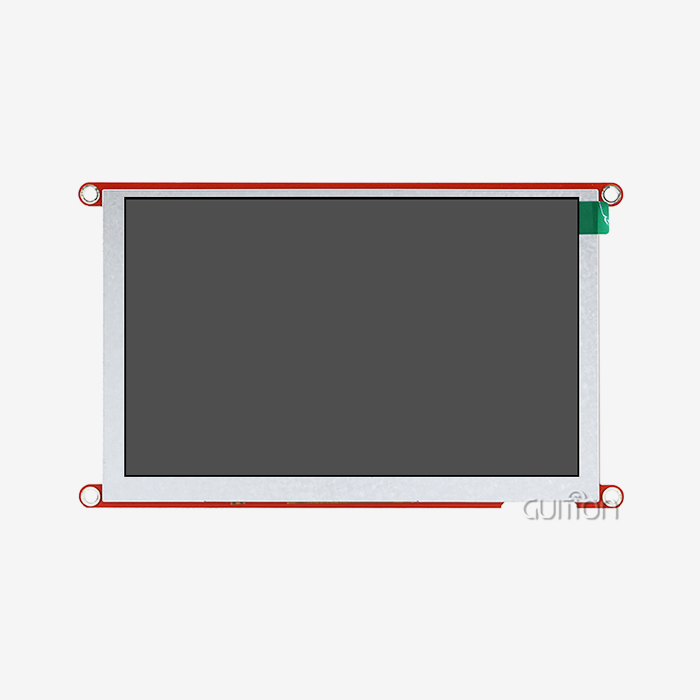
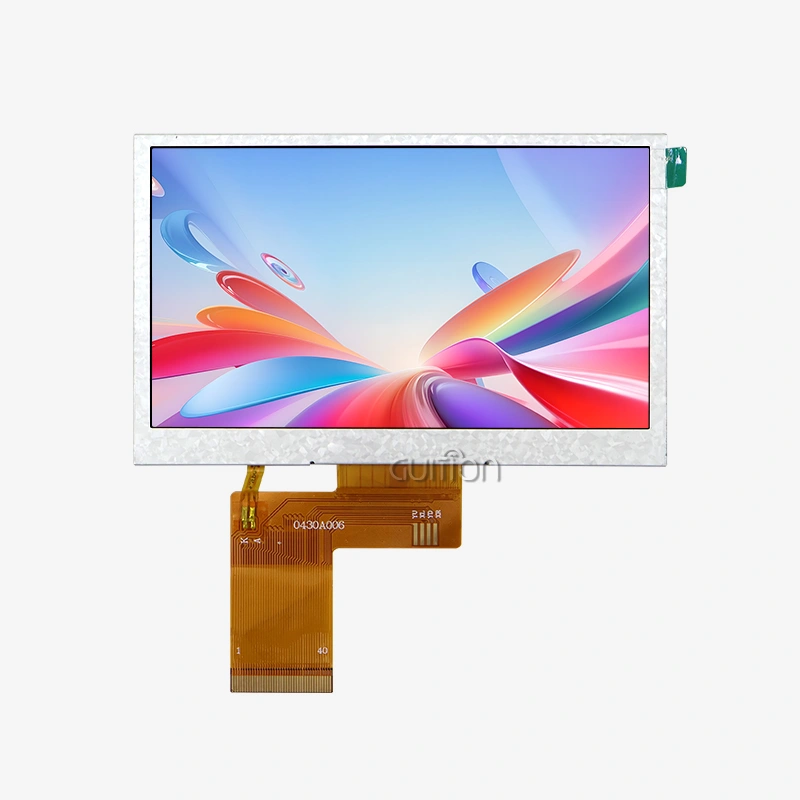
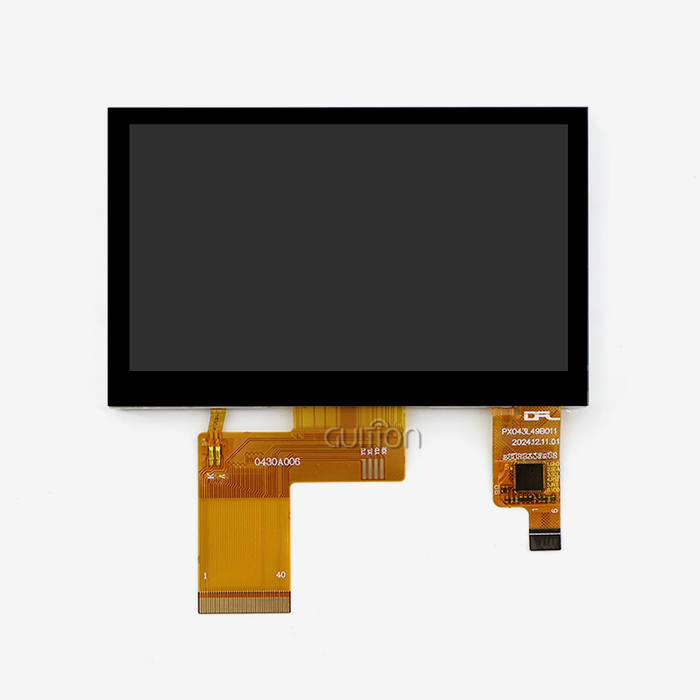
Not all applications need touch. For instance, the GUITION JC4827Q343N_I is a 4.3-inch bespoke IPS LCD without touch, intentionally designed to lower the cost and complexity for industrial and environmental monitoring use cases that do not primarily need touch input. Optical bonding is available for PCAP overlays from approved manufacturers if touch functionality is needed.
Where to Source Custom LCD Modules: Trusted OEM Suppliers and Distributors
Factory-Direct vs. Distributor Purchasing
You are able to have direct control over specification modifications, price negotiations, and production scheduling by buying factory direct from a bespoke custom LCD module manufacturer. Distributors may ship quicker locally, and sometimes sell certified product for basic setups, but customisation is restricted. The more reliable route for OEM applications requiring a unique form factor or interface is factory-direct.
Guition JC4827Q343N_I: A Specific Product Worth Evaluating
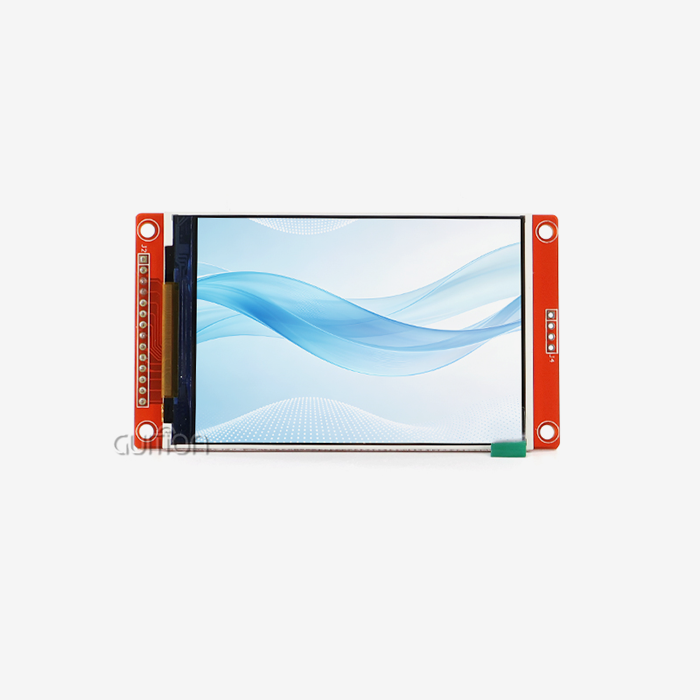
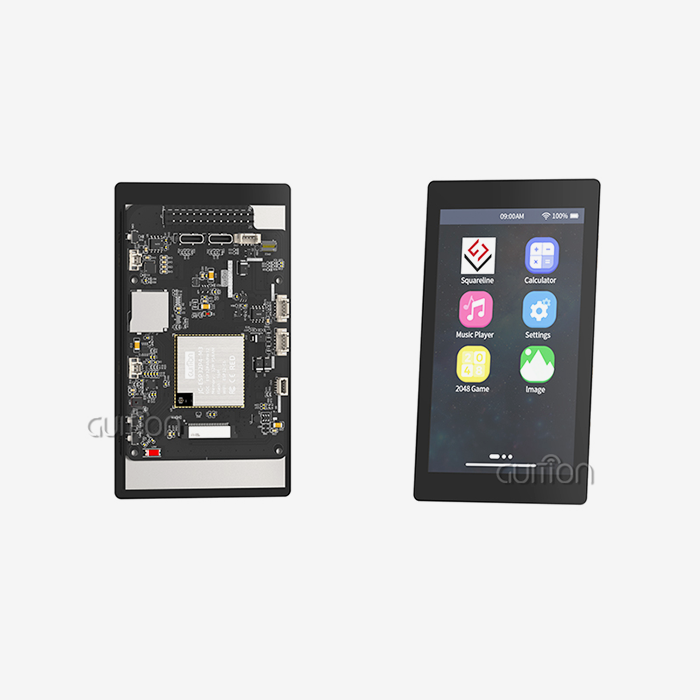
Guition is a technological firm combining R&D, manufacturing, and sales. JC4827Q343N_I is a customized LCD module developed according to the D121BAV single-core MCU with a frequency of 400MHZ. The display is a 4.3-inch IPS screen with a resolution of 480×272, 65K color depth, and excellent viewing angles. The module is ready to use with a test program pre-loaded so your team can start validation right away without creating startup code. The module supports development on Arduino, IDF, and Guition. It has built-in WiFi and Bluetooth for IoT connection.
Validating Quality Before Volume Commitment
Always ask for a sample order before making bulk PO’s. Don’t only bench evaluate it, but rather test the module under your real operational settings, temperature cycling, vibration, interface timing, etc. Guition’s online GUI development tool speeds up prototype validation and reduces time-to-market compared to conventional processes, including cross-platform debugging and drag-and-drop interface layout. Email david@guition.com to obtain a sample.
Post-Purchase Support and Integration for Custom LCD Modules
Technical Onboarding and Integration Assistance
A bespoke LCD module is only as good as the support behind it. Guition offers extensive secondary development documentation, pre-built control libraries, and one-click control addition in the Guition GUI tool. Engineers don’t have to create low-level driver code from scratch. This cuts integration time from weeks down to days for teams already accustomed to Arduino or IDF environments.
Remote Upgrade and OTA Maintenance
One of the lesser-known benefits of new bespoke LCD module platforms is the possibility to update them remotely. Guition’s modules offer OTA project updates, so you can push firmware enhancements to your field-deployed devices without having to physically touch them. That immediately minimizes the cost of after-sales support – a real advantage for any product deployed at scale across industrial or commercial contexts.
Warranty and Long-Term Supply Assurance
Get the warranty scope in writing before signing any supply agreement. Responsible bespoke LCD module suppliers should provide a minimum supply duration that matches your product lifetime and cover material and workmanship problems. Guition’s product portfolio of 1.28” to 21.5” provides a steady supply chain over numerous project generations. This range helps mitigate the danger of being stuck with a single panel size without an upgrade option.
Conclusion
The choice of custom LCD module for OEM application will influence the dependability of your product, the development schedule, and the servicing expenses during the lifetime of the product. This checklist addresses the essential milestones of: confirmed certifications, level of customisation, prototype turnaround time, total cost of ownership, and post-sales support. The GUITION JC4827Q343N_I is one of the most capable options for teams designing industrial, IoT, or commercial products, including a 400MHz CPU, IPS display, drag-and-drop GUI programming, and OTA update support in a small form factor module. Evaluate suppliers on these characteristics, seek samples early, and focus on long-term supply stability rather than short-term unit pricing.
FAQ
1. What is the typical lead time for a custom LCD module?
Counter drawings usually take three to five business days. Tooling and sample fabrication take three to five weeks. Mass production requires four to six weeks depending on component availability.
2. What certifications should a custom LCD module supplier hold?
At minimum, look for ISO 9001, RoHS, and CE compliance. For medical or automotive applications, ask about IEC 60601 or IATF 16949 certification, respectively.
3. Does the GUITION JC4827Q343N_I support Arduino development?
Yes. The JC4827Q343N_I supports Arduino, IDF, and Guition development modes, giving engineers flexibility to work within their existing toolchain.
4. What are NRE charges for a custom LCD module?
NRE covers tooling for LCD glass masks, FPC layout, and backlight molds. Costs typically range from $500 to $5,000 depending on customization complexity.
5. How does Guition handle product EOL risks?
Guition issues last-time-buy notifications and engineers pin-compatible replacements to protect customer production lines from unplanned component obsolescence.
Start Your Custom LCD Module Project with Guition
Your next product deserves a display partner who understands both the engineering and the business side of procurement. Guition's JC4827Q343N_I custom LCD module — with its 400MHz processor, 4.3-inch IPS screen, drag-and-drop GUI tool, and OTA support — is ready for your evaluation. As a proven custom LCD module supplier serving industrial, medical, and IoT markets globally, Guition offers sample orders, full documentation, and direct technical support. Reach out today at david@guition.com to discuss your project requirements.
References
1. Society for Information Display (SID). Display Week Industry Proceedings. 2023.
2. IPC — Association Connecting Electronics Industries. IPC-A-610: Acceptability of Electronic Assemblies. 2020.
3. International Organization for Standardization. ISO 9001:2015 Quality Management Systems — Requirements. 2015.
4. International Electrotechnical Commission. IEC 62341: Organic Light Emitting Diode (OLED) Displays. 2021.
5. MIL-STD-105E. Sampling Procedures and Tables for Inspection by Attributes. U.S. Department of Defense. 1989.
6. ISO 13406-2. Ergonomic Requirements for Work with Visual Displays Based on Flat Panels. International Organization for Standardization. 2001.
Learn about our latest products and discounts through SMS or email