- English
- French
- German
- Portuguese
- Spanish
- Russian
- Japanese
- Korean
- Arabic
- Greek
- German
- Turkish
- Italian
- Danish
- Romanian
- Indonesian
- Czech
- Afrikaans
- Swedish
- Polish
- Basque
- Catalan
- Esperanto
- Hindi
- Lao
- Albanian
- Amharic
- Armenian
- Azerbaijani
- Belarusian
- Bengali
- Bosnian
- Bulgarian
- Cebuano
- Chichewa
- Corsican
- Croatian
- Dutch
- Estonian
- Filipino
- Finnish
- Frisian
- Galician
- Georgian
- Gujarati
- Haitian
- Hausa
- Hawaiian
- Hebrew
- Hmong
- Hungarian
- Icelandic
- Igbo
- Javanese
- Kannada
- Kazakh
- Khmer
- Kurdish
- Kyrgyz
- Latin
- Latvian
- Lithuanian
- Luxembou..
- Macedonian
- Malagasy
- Malay
- Malayalam
- Maltese
- Maori
- Marathi
- Mongolian
- Burmese
- Nepali
- Norwegian
- Pashto
- Persian
- Punjabi
- Serbian
- Sesotho
- Sinhala
- Slovak
- Slovenian
- Somali
- Samoan
- Scots Gaelic
- Shona
- Sindhi
- Sundanese
- Swahili
- Tajik
- Tamil
- Telugu
- Thai
- Ukrainian
- Urdu
- Uzbek
- Vietnamese
- Welsh
- Xhosa
- Yiddish
- Yoruba
- Zulu
What Should Engineers Check Before Buying an ESP32P4 display module?
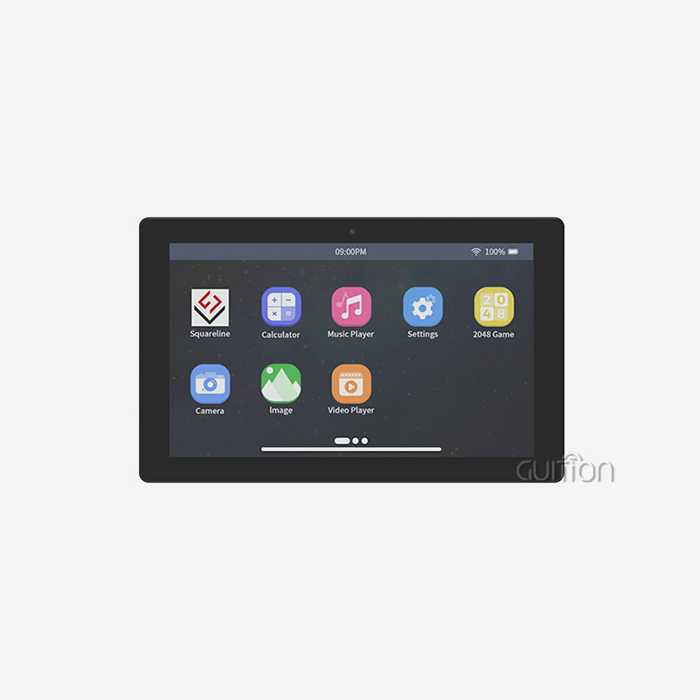
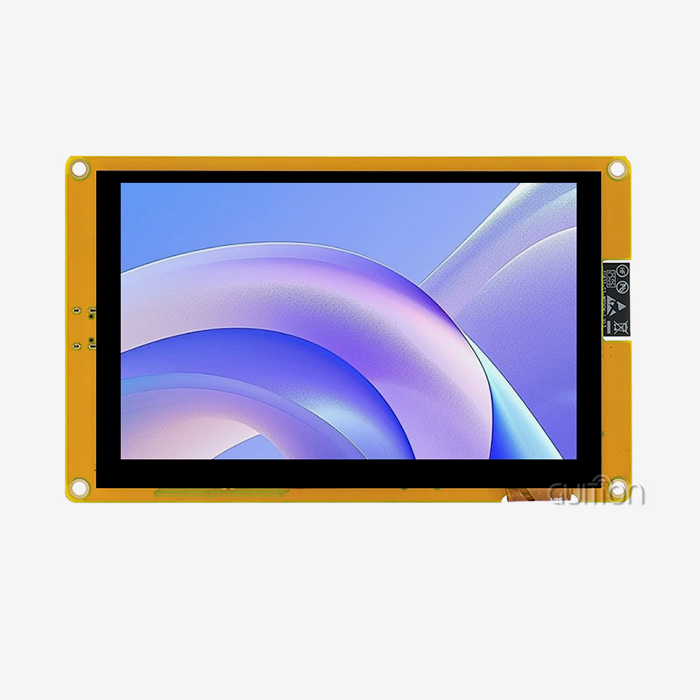
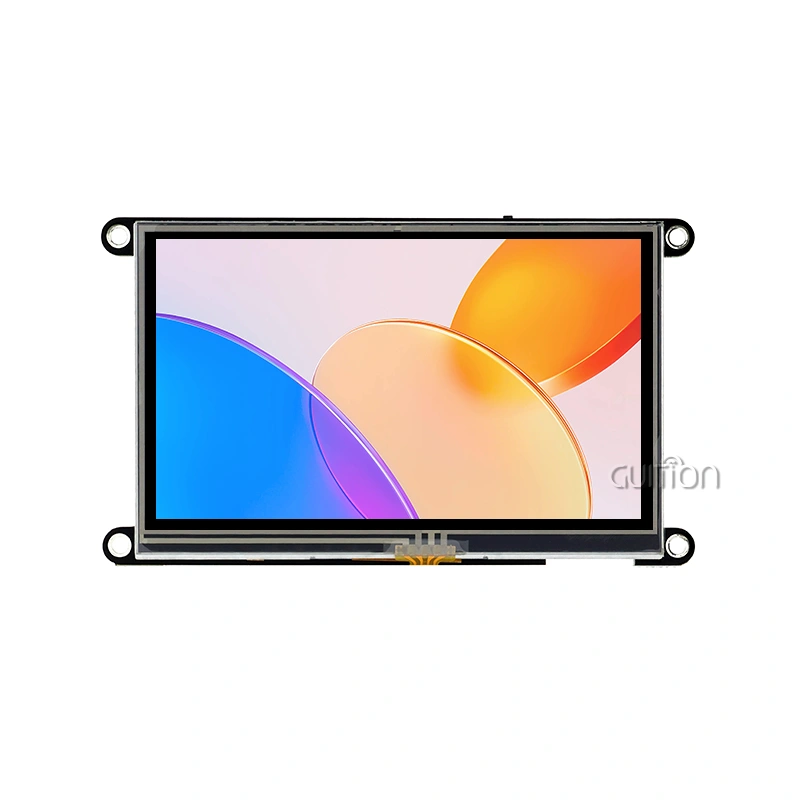
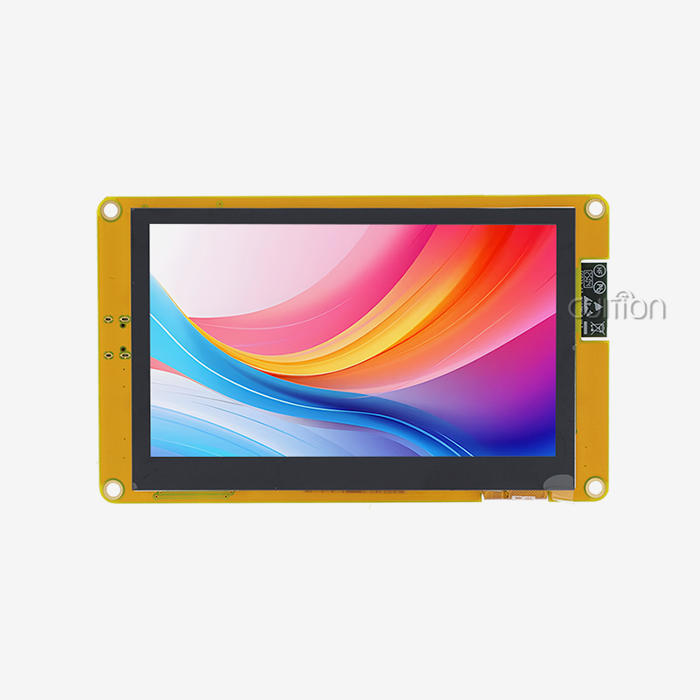
Before buying an esp32p4 display module, engineers should check five main points: the basic technical specs, the relative performance with comparable modules, the supplier's credibility, the programming environment compatibility, and the long-term thermal and power management. The GUITION JC-ESP32P4-M3-DEV is a solid reference point – with a 400MHz dual-core RISC-V CPU with up to 32MB PSRAM, Wi-Fi 6, Bluetooth 5, MIPI-DSI/CSI, H.264 encoding, and USB OTG 2.0 HS. By comparing these criteria with your project requirements, you may avoid expensive rework and your team can confidently meet development timelines.

Understanding the Core Specifications of an ESP32P4 Display Module
Getting the specs right the first time saves weeks of trouble-shooting. I usually advise engineers to read the documentation before they touch a research board.
Resolution and Refresh Rate
Through its MIPI-DSI interface, the GUITION JC-ESP32P4-M3-DEV can output at a high resolution of up to 800x1280. A stable 60 FPS update rate is a must for industrial HMI screens or medical tracking gear. Lower frame rates make it so that there is visible lag when using a touch screen, which is annoying for users and a sign of low product quality.
Interface Types and Peripheral Support
This module has an ISP for MIPI-CSI, SPI, I2C, I2S, UART, ADC, LED PWM, MCPWM, RMT, TWAI, and USB OTG 2.0 HS built in. The module can be used in factory automation systems, smart appliance controls, and business kiosks without the need for extra bridge chips. This saves board room and lowers the bill of materials (BOM) cost.
Environmental and Electrical Ratings
Always examine the operational temperature range, allowable supply voltage, and ESD protection settings. PCBs in industrial environments are exposed to vibration, dampness and electromagnetic pollution. A display panel that passes testing for consumers only will swiftly break down in a factory or outdoor energy management system.
Comparing the ESP32P4 Display Module with Other Popular Options
Choosing between ESP32 generations matters more than most buyers realize. The performance gap between the ESP32-P4 and older chips is significant enough to affect your entire product roadmap.
ESP32-P4 vs. ESP32-S3 vs. ESP32
The ESP32-S3 runs a dual-core Xtensa LX7 at 240MHz and has good support for RGB/8080 display interfaces, but suffers with high-res rendering at 60 FPS. The original ESP32 was limited to 240MHz and no native display interface. The ESP32P4 display module JC-ESP32P4-M3-DEV is built on the 400MHz RISC-V SoC ESP32-P4, which has a specialized 2D Pixel Processing Accelerator (PPA) to support complicated UI animations and real-time video encoding without affecting the CPU.
MIPI-DSI vs. SPI Displays
Panels linked via SPI can only get around 10-20 FPS at 320×240 resolution under severe load. MIPI-DSI has far more bandwidth, so you can have seamless transitions and layered images on screens up to 10.1 inches or more. If you want a fluid interface for something like a smart home hub or medical diagnostic equipment, MIPI-DSI is your only option at this pricing range.
Memory Capacity and Frame Buffering
The JC-ESP32P4-M3-DEV supports up to 32MB external PSRAM, which is essential for double-frame buffering in LVGL. Without sufficient PSRAM, screen tearing appears during animations. Modules with less than 8MB PSRAM are generally unsuitable for color-rich interfaces running at 24-bit color depth.
Procurement Considerations: What to Check Before Buying
It's a big financial risk to purchase integrated display modules. A low price from an unreliable provider might cost you much more in delays, malfunctioning machines, and lost documents.
Before ordering, you should carefully check the following areas:
- Supplier authorization and reputation: Make sure the supplier is an authorized manufacturer or distributor. GUITION is a vertical integrated firm, we take care of R&D, manufacturing and sales directly. This eliminates the chance of fake chips or unknown hardware updates.
- Warranty and after-sales support: Specifically, ask the provider about replacement policies, technical support SLAs, and availability of firmware upgrades. In large-volume industrial installations these concepts immediately impact your cost model for maintenance.
- Bulk price and sample availability Established vendors of ESP32P4 display modules provide engineering samples prior to large purchases. GUTION offers sample assessment units for your team to evaluate the hardware before committing to production numbers.
- Shipping compliance and lead times: If you’re buying from the US, ensure the supplier is handling export papers appropriately and that their lead time estimates are genuine. Unexpected customs delays have disrupted product launch timetables.
Name of supplier and authorization: Be sure that the supplier is a licensed manufacturer or distributor of the ESP32P4 display module. Vertically merged implies that GUITION conducts research and development, manufacturing, and sales on its own. This reduces the risk of phony chips or undisclosed hardware alterations.
Practical Usage and Programming Tips for ESP32P4 Display Modules
When the software environment isn't set up right, even the best hardware doesn't work as well. Teams have spent two weeks trying to figure out what was wrong with a display when it turned out to be a misconfigured PSRAM clock speed.
Pinout Verification and Hardware Setup
Print out the pinout diagram and compare it to your schematic before you write a single line of code. The JC-ESP32P4-M3-DEV uses MIPI-DSI for the display output and MIPI-CSI for the camera input. These are two separate signal lanes that have different needs for impedance and route.
Recommended Development Environments
The JC-ESP32P4-M3-DEV can be programd in three different ways: using Arduino, ESP-IDF, or the custom Guition software. With Guition's drag-and-drop UI builder, designers can make control layouts visually, see how they'll look in real time, and export them straight to the module without having to write low-level display drivers. This is especially helpful for HMI programmers who need to make changes quickly but don't know a lot about embedded code.
Troubleshooting Common Issues
Name of supplier and authorization: Be sure that the supplier is a licensed manufacturer or distributor of the ESP32P4 display module. Vertically merged implies that GUITION conducts research and development, manufacturing, and sales of the ESP32P4 display module on its own. This reduces the risk of phony chips or undisclosed hardware alterations.
Key Factors to Ensure Long-Term Satisfaction and Performance
A display module that performs well at launch but dies 18 months later is a liability. Performance over the long run is the result of purposeful choices made during acquisition and design.
Power Consumption and Thermal Management
The ESP32-P4’s dual-core RISC-V architecture is optimized for low-power multimedia tasks. But if you’re running Wi-Fi 6 and H.264 encoding concurrently, heat dissipation becomes a consideration. Consider passive heatsinking in closed enclosures . Place thermal vias close to power regulators . Testing at full load before completing the enclosure design eliminates field failures.
OTA Firmware Updates and Modular Compatibility
A great feature of the JC-ESP32P4-M3-DEV is its over-the-air firmware update capability. This is a critical feature for devices already in the field. You can deploy bug fixes, add functionality, or patch security issues without having to send a specialist. This is particularly useful for energy management systems, agricultural automation controllers and distributed commercial kiosks across broad geographic regions.
Hardware Security Features
The ESP32-P4 has a digital signature peripheral and a separate key management device. These hardware-level security features safeguard your software from reverse engineering and your devices from unapproved access—a true necessity for medical device makers and industrial system integrators working under compliance frameworks like IEC 62443.
Conclusion
You can’t simply look at the ESP32P4 display module specifications on a product page to get the perfect one for you. However, engineers will need to check that the resolution, interface compatibility, PSRAM capacity, source reliability and long-term support are all addressed before making a final selection. GUITION JC-ESP32P4-M3-DEV is fulfilling all these conditions with 400MHz dual-core CPU, MIPI-DSI/CSI, Wi-Fi 6, Bluetooth 5, H.264 encoding and hardware security features. By taking the time to carefully analyze these aspects you can safeguard the quality of the final product and the project timeframe.
FAQ
Is the ESP32-P4 compatible with Arduino libraries?
Yes. The JC-ESP32P4-M3-DEV supports Arduino as a development environment alongside ESP-IDF and the Guition software. However, some hardware-specific peripherals like MIPI-DSI require ESP-IDF or Guition-specific drivers for full functionality.
How does the ESP32P4 display module differ from ESP32-S3 modules?
The ESP32-P4 runs at 400MHz with a RISC-V architecture, supports MIPI-DSI natively, and includes a hardware PPA for 2D graphics acceleration. The ESP32-S3 tops out at 240MHz with an Xtensa LX7 core and lacks a native MIPI-DSI interface.
What display sizes does the GUITION product line cover?
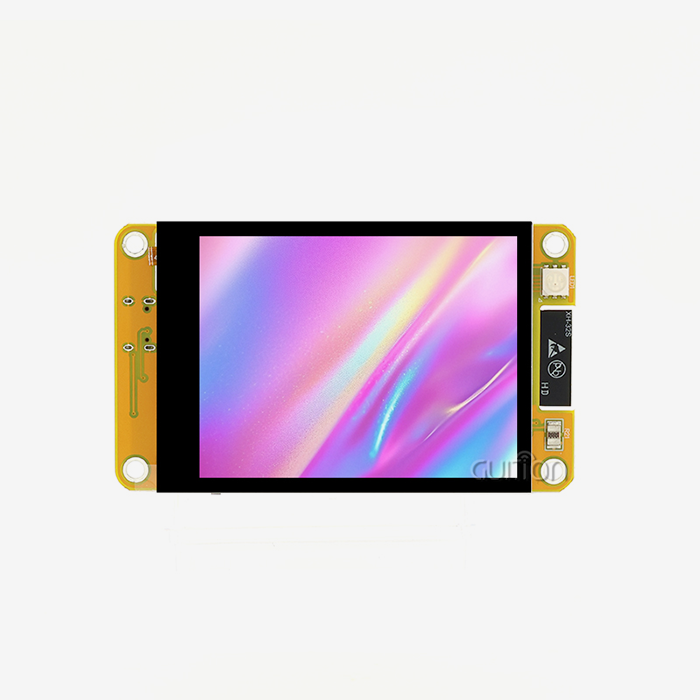
GUITION offers display modules ranging from 1.28 inches to 21.5 inches, covering applications from compact industrial indicators to large commercial kiosk terminals.
How do I find an authorized ESP32P4 display module supplier?
Requesting samples, price, and technical documentation may be accomplished by contacting GUITION directly via their website, which can be found at https://jingcaizhineng.aixdb.cn/.
Does the module support multi-language interfaces?
Yes. The JC-ESP32P4-M3-DEV supports multi-language switching with UTF-8 encoding, making it suitable for global product deployments across North America, Europe, and Asia.
Ready to Source Your ESP32P4 Display Module? Contact GUITION Today
When it comes to ESP32P4 display modules, GUITION has a full line of products from 1.28" to 21.5". One platform, the JC-ESP32P4-M3-DEV, has Wi-Fi 6, Bluetooth 5, MIPI-DSI, H.264 encoding, and the Guition UI development tool. It was made for engineers who need to work quickly without sacrificing quality. You can get a sample or information on bulk pricing by emailing david@guition.com.
References
1. Espressif Systems. ESP32-P4 Technical Reference Manual. Espressif Systems, 2024.
2. Yiu, Joseph. The Definitive Guide to ARM Cortex-M Microcontrollers. Newnes, 2023.
3. Texas Instruments. Embedded Display Interface Design Guide. Texas Instruments Application Report, 2022.
4. MIPI Alliance. MIPI DSI Specification Version 1.3. MIPI Alliance, 2021.
5. Ganssle, Jack. The Art of Designing Embedded Systems. Newnes, 2nd Edition, 2020.
6. International Electrotechnical Commission. IEC 62443: Industrial Communication Networks – IT Security for Networks and Systems. IEC, 2023.
Learn about our latest products and discounts through SMS or email