- English
- French
- German
- Portuguese
- Spanish
- Russian
- Japanese
- Korean
- Arabic
- Greek
- German
- Turkish
- Italian
- Danish
- Romanian
- Indonesian
- Czech
- Afrikaans
- Swedish
- Polish
- Basque
- Catalan
- Esperanto
- Hindi
- Lao
- Albanian
- Amharic
- Armenian
- Azerbaijani
- Belarusian
- Bengali
- Bosnian
- Bulgarian
- Cebuano
- Chichewa
- Corsican
- Croatian
- Dutch
- Estonian
- Filipino
- Finnish
- Frisian
- Galician
- Georgian
- Gujarati
- Haitian
- Hausa
- Hawaiian
- Hebrew
- Hmong
- Hungarian
- Icelandic
- Igbo
- Javanese
- Kannada
- Kazakh
- Khmer
- Kurdish
- Kyrgyz
- Latin
- Latvian
- Lithuanian
- Luxembou..
- Macedonian
- Malagasy
- Malay
- Malayalam
- Maltese
- Maori
- Marathi
- Mongolian
- Burmese
- Nepali
- Norwegian
- Pashto
- Persian
- Punjabi
- Serbian
- Sesotho
- Sinhala
- Slovak
- Slovenian
- Somali
- Samoan
- Scots Gaelic
- Shona
- Sindhi
- Sundanese
- Swahili
- Tajik
- Tamil
- Telugu
- Thai
- Ukrainian
- Urdu
- Uzbek
- Vietnamese
- Welsh
- Xhosa
- Yiddish
- Yoruba
- Zulu
What Should Buyers Check Before Ordering a 1.28 inch ESP32 display module?
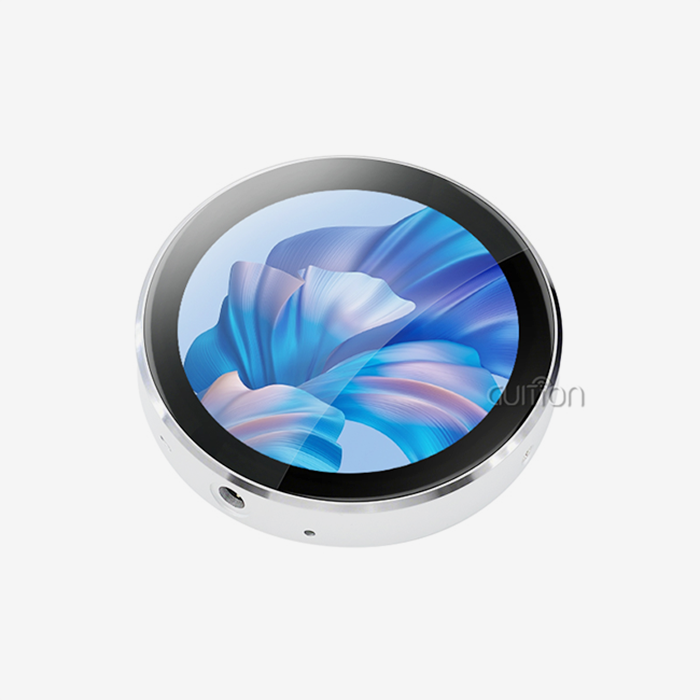
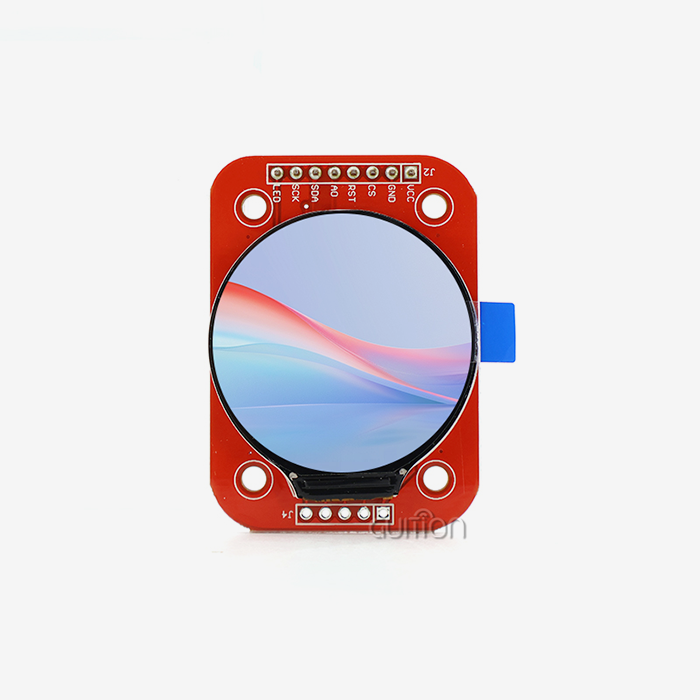
Before placing an order for a 1.28 inch esp32 display module, buyers should verify several critical factors: processor specifications, display resolution and type, touch capability, wireless connectivity, development environment compatibility, and supplier support quality. The GUITION ESP32-2424S012C_I_Y(B) addresses all of these requirements in one integrated package — combining an ESP32-C3-MINI-1U controller, a 240×240 IPS screen, capacitive touch, and built-in Wi-Fi/Bluetooth. Getting these checks right before purchase saves significant time, cost, and frustration during integration.

Understanding 1.28 Inch ESP32 Display Modules: Specifications and Compatibility
Before you can pick the right 1.28 inch ESP32 display module, you need to know how the hardware works. If you skip this step, you might have to make changes that cost a lot of money later on.
Resolution and Display Type
The ESP32-2424S012C_I_Y(B) has a 240×240 IPS screen with 16-bit color depth built in. IPS technology has wider viewing angles (160°+) than regular TN panels. This is very important for industrial and wearable applications where screens are seen at an angle. Just a 240×240 grid is enough if you use the LVGL or TFT_eSPI tools to show UI.
Processing Power and Memory
The board's ESP32-C3-MINI-1U chip has 4MB Flash, 384KB ROM, and 400KB SRAM. 160MHz is how fast it works. With this setup, you can touch interact in real time, send data wirelessly, and create graphics without any visible lag for a single-core MCU. People who want to buy an ESP32 round display module should always make sure that the Flash size fits their software needs.
Interface and Connectivity Standards
I2C is used for capacitive touch and SPI is used to drive the monitor so that the module can talk to other parts of the system. Both of these are standard ways to do things in embedded computers. Wi-Fi and Bluetooth 5.0 LE are already built in, so you don't need any extra RF units. A separate circuit controls the backlight and lets PWM dimming be used for power management in systems that run on batteries.
Critical Comparison Factors: Choosing the Best 1.28 Inch Display for ESP32
It's not always best to use a small 1.28 inch ESP32 display module for a project. If you know about the main technical trade-offs, you won't make bad buying decisions.
OLED vs. IPS TFT for Compact Displays
When used for static material, OLED screens need little power and have deep blacks. However, they get used to being bright over time and can only get as bright as they were at first. IPS TFT screens, like the one in the GUITION ESP32-2424S012C_I_Y(B), have full 65K RGB color, constant brightness (350–450 nits), and last longer. Because of this, they are a better choice for touch screens in smart homes and in factories where dependability is important.
Capacitive Touch vs. No Touch
Touch makes the user interface more adaptable, but it also changes how much it costs and how much power it needs. Smart heaters, portable medical monitors, and business rooms are all good things to buy that use capacitive touch. You can find a capacitive touch driver built right into the PCB of the GUITION module. There isn't much to put together, and the bill of materials (BOM) stays simple.
Price vs. Performance Balance
Some features of a 1.28 inch ESP32 display module can make it cost anywhere from $8 to $25 per unit in the B2B market. Much better deals can be found on modules like the GUITION ESP32-2424S012C_I_Y(B) that have test firmware already installed, wireless connectivity, touch control, and battery management. These are better than bare-panel options that need extra parts to work.
Procurement Considerations for B2B Buyers
Choosing where to get something isn't just based on the unit price. But before deciding on a supplier of ESP32 HMI modules, procurement teams need to look at how they work with that supplier in general.When buying something for a business, these are the most important things to keep in mind:
- Supplier Certifications and Compliance: Check to see if the business follows the rules for RoHS and REACH. These standards mean that GUITION products can be used anywhere in the world in limited areas like medical devices and factory systems.
- Minimum Order Quantities and Bulk Pricing: Early on, make sure you know the MOQ sizes. You can order research samples in small amounts or in large quantities with GUITION. This is helpful for both new businesses starting out and well-known OEMs who want to make more.
- Technical Documentation Quality: For engineers, full datasheets, pin diagrams, circuit files, and example code are very helpful. They save a lot of time. GUITION gives you an Arduino library function, a test program, and a multi-platform development guide for each module in its line.
- Warranty and After-Sales Support: Field devices that use modules need strong warranty terms. OTA updates can be done remotely on the GUITION. This means that firmware bugs found after the product has been shipped can be fixed without having to physically take the product back.
Not only do these things change the unit cost of the line item, but they also change your total cost of ownership. Costs for engineering are kept low over the life of a product by suppliers who provide good documentation and help from afar.
Application-Driven Selection: Matching Modules to Your Project Needs
Only where and how it will be used will tell you which 1.28 inch ESP32 display module is best. By matching hardware specs to application needs, you can avoid over-engineering and bad performance.
Wearable and IoT Devices
The most important thing for gadgets, fitness apps, and handheld health monitors is that they use little power. The GUITION ESP32-2424S012C_I_Y(B) has a charged lithium battery circuit built in that protects against overcharging and overcurrent. This makes it easier to build smart tech that runs on batteries and reduces the number of parts that are needed.
Industrial and Smart Home Control Panels
When used for industrial HMI, the screen must always be readable in a variety of lighting conditions. This module's IPS panel makes text easy to read from a range of viewing angles, and the ESP32-C3's Wi-Fi capability lets cloud dashboards and SCADA systems get to live data. The small circle shape fits with smart home devices that have round faceplates, like security panels, thermostats, and lighting controls.
Medical and Commercial Applications
The screens on handheld diagnostic tools and business food timers should be clear and simple to use. The capacitive touch controller and 240×240 monitor work together to make these settings accurate and quick. The module meets environmental standards, which is needed for legal review processes in the development of medical devices.
Step-by-Step Checklist Before Ordering Your 1.28 Inch ESP32 Display Module
Use this list to make sure you want to buy something before you send in a B2B sale.Before ordering any small ESP32 display module, take the time to make sure of the following:
- Confirm processor compatibility: Make sure that the development environment and number of pins you need work with the type of ESP32 you want to use (C3, S3, or classic).
- Validate display specifications: For UI-heavy apps, make sure the resolution is at least 240×240, the color depth is 16 bits, and the panel type is IPS for wide-angle views.
- Assess touch requirements: See if responsive touch is important for your UI design and make sure the touch controller can correctly track points that are close to the screen's edges.
- Review wireless specifications: Check that the Bluetooth version (BLE 5.0) and Wi-Fi standard (802.11 b/g/n) work with the way you connect.
- Test development environment compatibility: Make sure that the GUITION ESP32-2424S012C_I_Y(B) works with the computer environment. As well as MicroPython, Mixly, and Arduino IDE, it works with them. Check to see if your favorite IDE is on the list of ones that work with it.
- Evaluate supplier support quality: Check how good the supplier's customer service is. Make sure the device can be updated OTA and ask for samples of the paperwork before you place an order. Also, see how quickly technical questions are answered.
Before you buy, make sure you go through this list in order. This will protect your development schedule and keep integration surprises to a minimum.
Conclusion
If you order a 1.28 inch ESP32 display module without going through a structured evaluation process, you run the risk of wasting money and delaying product launches. In a small black shell, the GUITION ESP32-2424S012C_I_Y(B) has a powerful ESP32-C3-MINI-1U processor, a clear 240×240 IPS screen, capacitive touch, Wi-Fi/Bluetooth, and support for various development platforms. It meets all the important needs. Before buying, buyers always check the product's specs, developer compatibility, and seller support. This way, they always find that integration processes are faster and rework costs are lower. These products, which range in size from 1.28" to 21.5", are a reliable way for purchasing managers and engineering teams to get ESP32 display modules that can be used for many things.
FAQ
Can the GUITION ESP32-2424S012C_I_Y(B) be programmed with MicroPython?
Yes. The module works with MicroPython, Arduino IDE, ESP-IDF, and Mixly, among other things. The different ways to start give beginners and embedded engineers a choice based on their skill level.
What graphics library works best with the 240×240 IPS panel?
TFT_eSPI is mostly used for connections that don't change. You can use LVGL and the GC9A01 display driver that comes with most round ESP32 display units to make moving, multi-layer user screens that work well.
Does the module support OTA firmware updates?
Yes, GUITION builds the ability to update modules remotely OTA into them. Users can make changes to the software of devices in the field without having direct access to them. This is useful in medical and industry settings.
How does IPS compare to OLED for this display size?
Since IPS TFT screens don't burn in, they stay bright longer. This makes them better for things that need to be on all the time. When OLED is used all the time at high brightness, it breaks down more quickly, but it works well for low-power static displays.
What is the operating temperature range?
The module is made to work in temperatures between -20°C and +70°C, which means it can be used for most IoT tasks inside and outside of workplaces.
Ready to Source Your ESP32 Display Module? Contact GUITION Today
The ESP32-2424S012C_I_Y(B) is made by GUITION, a trusted 1.28 inch ESP32 display module manufacturer that engineers and OEM product teams in many industries rely on. If you need research samples or a lot of them for production, GUITION has full technical documentation, multi-platform development support, and quick service after the sale. Get in touch with us right away to talk about your project or get a quote. To learn more, please email our team at david@guition.com or visit https://jingcaizhineng.aixdb.cn/.
References
1. Espressif Systems. ESP32-C3 Series Datasheet. Espressif Systems, 2023.
2. Grand View Research. Embedded Display Market Size, Share & Trends Analysis Report. Grand View Research, 2023.
3. IPC Association. IPC-A-610H: Acceptability of Electronic Assemblies. IPC, 2022.
4. Kolban, N. Kolban's Book on ESP32. Leanpub, 2022.
5. European Chemicals Agency. REACH Regulation Guidance for Manufacturers and Importers. ECHA, 2023.
6. IEEE. IEEE Standard for Wearable Electronic Displays: Performance Metrics and Testing Methods. IEEE, 2022.
Learn about our latest products and discounts through SMS or email