- English
- French
- German
- Portuguese
- Spanish
- Russian
- Japanese
- Korean
- Arabic
- Greek
- German
- Turkish
- Italian
- Danish
- Romanian
- Indonesian
- Czech
- Afrikaans
- Swedish
- Polish
- Basque
- Catalan
- Esperanto
- Hindi
- Lao
- Albanian
- Amharic
- Armenian
- Azerbaijani
- Belarusian
- Bengali
- Bosnian
- Bulgarian
- Cebuano
- Chichewa
- Corsican
- Croatian
- Dutch
- Estonian
- Filipino
- Finnish
- Frisian
- Galician
- Georgian
- Gujarati
- Haitian
- Hausa
- Hawaiian
- Hebrew
- Hmong
- Hungarian
- Icelandic
- Igbo
- Javanese
- Kannada
- Kazakh
- Khmer
- Kurdish
- Kyrgyz
- Latin
- Latvian
- Lithuanian
- Luxembou..
- Macedonian
- Malagasy
- Malay
- Malayalam
- Maltese
- Maori
- Marathi
- Mongolian
- Burmese
- Nepali
- Norwegian
- Pashto
- Persian
- Punjabi
- Serbian
- Sesotho
- Sinhala
- Slovak
- Slovenian
- Somali
- Samoan
- Scots Gaelic
- Shona
- Sindhi
- Sundanese
- Swahili
- Tajik
- Tamil
- Telugu
- Thai
- Ukrainian
- Urdu
- Uzbek
- Vietnamese
- Welsh
- Xhosa
- Yiddish
- Yoruba
- Zulu
What Brightness Is Best for a Custom TFT Display Module Outdoors?
If you're deploying a custom TFT display module in an outdoor environment, when it comes to optical specifications, brightness is the single most crucial one that you just must get right. A display with a normal brightness of 300 nits is readily ruined by direct sunshine, which may reach a maximum of 100,000 lux. When it comes to outdoor readability, the majority of engineers recommend a minimum of 800 nits. However, applications that are particularly demanding, such as industrial kiosks or agricultural terminals, need readability levels of 1,000–1,500 nits or greater. It is possible to avoid expensive redesigns and safeguard the functioning of your product in the field by selecting the appropriate brightness level from the beginning.

Understanding Brightness in Custom TFT Display Modules
What "Nits" Actually Means
Nits, which stand for candelas per square meter, are a popular way to measure brightness. A normal indoor TFT LCD module ships at 250 to 400 nits. Even on gloomy days, the light outside can be more than 10,000 lux. Without better optics, that gap makes it almost impossible to read a low-light screen outside. The IEC 61747 standard says that the backlight must be on full power and tests must be done in controlled circumstances in order to find out how bright something is.
Display Types and Their Brightness Behavior
There are three types of optical groups that TFT LCD panels can be put into. Backlight is pushed through the liquid crystal layer by transmissive panels. These panels look great inside but not so well outside. Translucent panels use both backlight and natural light reflection, which means they can be read outside in moderately bright conditions. Reflective panels don't need any backlighting because they only work with light that is already there. An outdoor kiosk or industrial HMI that has a high-brightness transmissive or transflective custom TFT display module is usually the best choice.
How Ambient Light Degrades Readability
There is a significant decrease in contrast ratio when there is a lot of light hitting the screen. In a room with a low level of illumination, a panel with a contrast ratio of 500:1 and a brightness of 300 nits may have a contrast ratio that is lower than 5:1 during the middle of the day. The use of anti-glare (AG) and anti-reflective (AR) coatings to the surface may assist alleviate some of the problems associated with this issue; nonetheless, these films cannot replace total brightness. The process of filling the area between the touch screen and the TFT with optical resin, which is referred to as optical bonding, eliminates internal reflections and has the potential to improve contrast by up to 400% when the circumstances are bright.
Factors Influencing Optimal Brightness for Outdoor TFT Displays
Environmental Light Conditions
Location of the installation for the custom TFT display module is very important. When compared to a billboard that is installed on a wall facing south in Phoenix, one that is mounted on a wall facing east in Seattle receives a much lower amount of peak sunshine. The engineers should get information on the quantity of solar irradiance in the location before setting the brightness, and then they should add twenty to thirty percent as a safety cushion. Alterations in the weather also have a role; fog and overcast skies reduce the amount of light that is present in the room, but rain may cause the cover glass to glare, which has a different impact on visibility than sunlight that is focused directly on the subject.
Application-Specific Brightness Thresholds
Different outdoor uses have different brightness needs. Agricultural automation terminals that are attached to machines usually need between 800 and 1,000 nits because the people who work with them see them up close and in some shade. Commercial booths outside that are in full sunlight need between 1,000 and 1,500 nits. Information boards for public transportation or energy management signs on the side of the road may need between 1,500 and 2,500 nits to be read from a distance. By matching the brightness standard to the real deployment situation, costs can be kept low without affecting performance in the field.
Power Consumption and Backlight Lifespan Trade-offs
Running a backlight at full brightness constantly uses more electricity and generates more heat, which speeds up the degradation of LEDs. If you run a backlight at 100% all the time, it might reach half-brightness (L50 lifespan) after 30,000 to 40,000 hours. Running it at 70% can make that number much longer. A smart way to balance visibility with power use is adaptive backlight control, which changes the brightness based on a sensor that measures the amount of light in the room. This method works especially well for outdoor buildings that are powered by batteries or solar panels.
Comparing Brightness Options for Custom TFT Display Modules
Standard vs. High-Brightness Modules
Standard TFT LCD panels with 250–500 nits give off less light and work well in controlled indoor settings. Most of the time, high-brightness modules with ratings of 800 to 1,500 nits cost 30 to 80% more per unit. However, they get rid of the need for extra shading covers or external brightness boosts. The total cost of ownership often makes it better for a procurement manager to buy the brighter Custom TFT display module up front instead of having to work with a dim panel on the job site.
TFT LCD vs. OLED for Outdoor Visibility
Although OLED screens have great contrast in dark rooms, their brightest setting is usually between 600 and 800 nits in production panels, and UV light burn-in happens faster after long periods of exposure. With the right high-output lighting and AR covering, TFT LCD technology always gives better outdoor performance at a lower price per square inch for screens bigger than 3.5 inches. Although there are other technologies available, TFT is still the best choice for industrial and commercial outdoor uses.
Capacitive vs. Resistive Touch and Brightness Impact
An optically clear glass-sensitive touch layer adds very little light loss (about 3 to 5 percent) and works well with optical bonding. A resistive touch layer, on the other hand, has a plastic film that can make the screen less clear and add glare by 10 to 15%. When choosing a custom TFT display module for use outside, optical bonding and capacitive touch keep more of the backlight's output and make the viewing experience better.
Selecting the Right Brightness Level: A Decision Support Guide
Matching Nit Levels to Real-World Scenarios
For easy reference, here is a table of popular outdoor uses:
- 300–500 nits — Shaded indoor/outdoor transitions, partial sun, retail point-of-sale near windows
- 800–1,000 nits — Agricultural equipment, industrial control panels under partial shade, smart home exterior displays
- 1,000–1,500 nits — Outdoor kiosks, commercial terminals, energy management stations in direct sun
- 1,500–2,500 nits — Roadside digital signage, transportation hubs, high-altitude or high-latitude installations
— 1,500 to 2,500 nits—Digital signs on the side of the road, transportation hubs, and high-altitude or high-latitude installations
Key Evaluation Metrics Beyond Brightness
Brightness is not enough to guarantee a good outdoor show. Engineers and purchasing managers should also look at the contrast ratio (at least 500:1 outside), the viewing angle, the working temperature range (-30°C to +80°C for harsh settings), and the IP rating for closing the enclosure. A module that does well in all of these areas is much more likely to perform as expected than one that does well only in brightness.
OEM Customization to Dial In the Right Specification
You can choose the backlight brightness, surface treatment, FPC interface layout, and cover glass thickness all in one project when you work directly with a TFT display module manufacturer. This is less expensive than buying a standard panel and adding optical films from outside the panel. The Bill of Materials (BOM) can be frozen for 5–7 years by suppliers who have experience with industrial and outdoor uses. This is very important for medical devices and infrastructure equipment that have long production lives.
How to Ensure Quality and Reliability in Outdoor TFT Displays
Evaluating Manufacturer Competence
Ask for data sheets that say the brightness is the same across the working area; try to find variations of less than 20%. Check with the supplier to see if they do aging tests (usually 500 hours at the recommended temperature) and ISO 13406-2 Class II tests for optical defects. Industrial-grade custom TFT display modules also have to pass ESD tests to ±8kV contact and ±15kV air discharge. When suppliers share these test results, they show that they are willing to be open and honest, which is what B2B procurement needs.
Sample Ordering and Validation Process
Before committing to a large order, you should order engineering samples and put them through the conditions of your actual deployment. Test outside during the hottest part of the day, use a calibrated photometer to measure the brightness, and make sure the touch response is accurate after heat cycles. This step finds problems early on when numbers on a document don't match up with performance in the real world. This saves a lot of money later on. Established providers usually allow MOQs of 500–1,000 units for semi-custom designs, which makes it affordable to test samples.
Long-Term Supply and Warranty Considerations
When it comes to equipment that will be used for 5–10 years, supply continuity is just as important as how well it works at first. Make sure the company gets its glass cells from big factories like BOE, Tianma, or AUO, and find out how they handle end-of-life situations. The confidence to specify a custom TFT display module in long-lifecycle industrial or medical products is provided by a clear warranty that covers brightness degradation and defect replacement.
Conclusion
Choosing the suitable brightness for an outdoor Custom TFT display module is not a question of luck but rather a planned technological choice. This is because the panel is designed to be used in outdoor environments. When it comes to outdoor installations, the majority of them need a minimum of 800 nits, while those that are located in full sunlight require between 1,000 and 1,500 nits.
FAQ
What is the minimum brightness for outdoor TFT display readability?
Most display experts say that outdoor settings with some shade should have at least 800 nits (cd/m²). Most setups that are in direct sunlight need at least 1,000 nits. Without extra shade, standard 300-nit screens can't be read in light levels above 5,000 lux.
Does higher brightness reduce the backlight lifespan?
Yes. Running a backlight all the time at full power speeds up the decline of LEDs. With an adaptive ambient light sensor, running the L50 at 70–80% can increase its life by 20–40% while keeping it visible outside.
Can a custom TFT display module be specified for both indoor and outdoor use?
Yes. With adaptive backlight control, one module can automatically dim when used inside and brighten when used outside. When combined with AR coating, this method can be used in a lot of different deployment situations with just one set of hardware.
How does optical bonding affect outdoor brightness performance?
Optical bonding uses optical resin to fill the space between the TFT screen and the top glass that is empty of air. This stops internal light reflection, which raises the apparent contrast by as much as 400% in bright light. This means that you may be able to read the screen outside at a lower raw brightness level.
What is the typical MOQ for a high-brightness custom TFT display module?
An MOQ for semi-custom setups, like changing the strength of the backlight or the FPC connector, is usually 500 to 1,000 units. Fully customized changes to glass cells cost a lot more and take a lot longer.
Get Your Outdoor Display Right — Talk to Guition
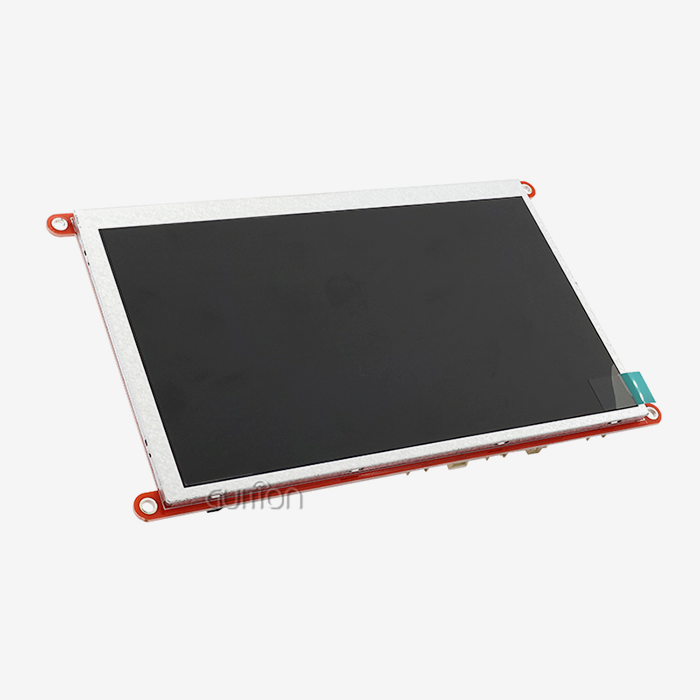
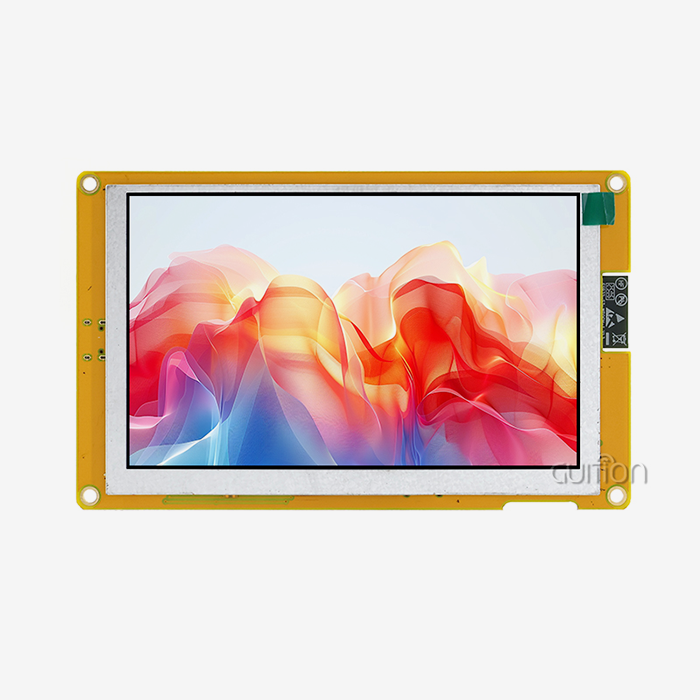
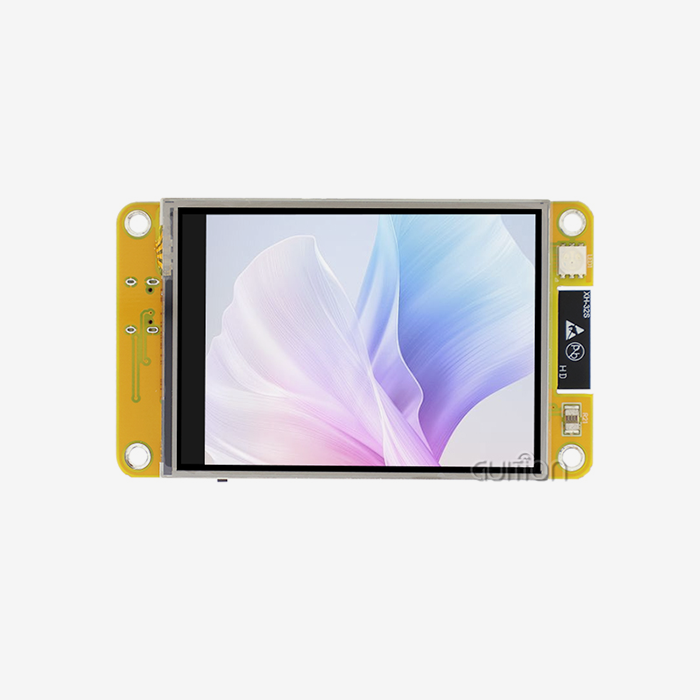
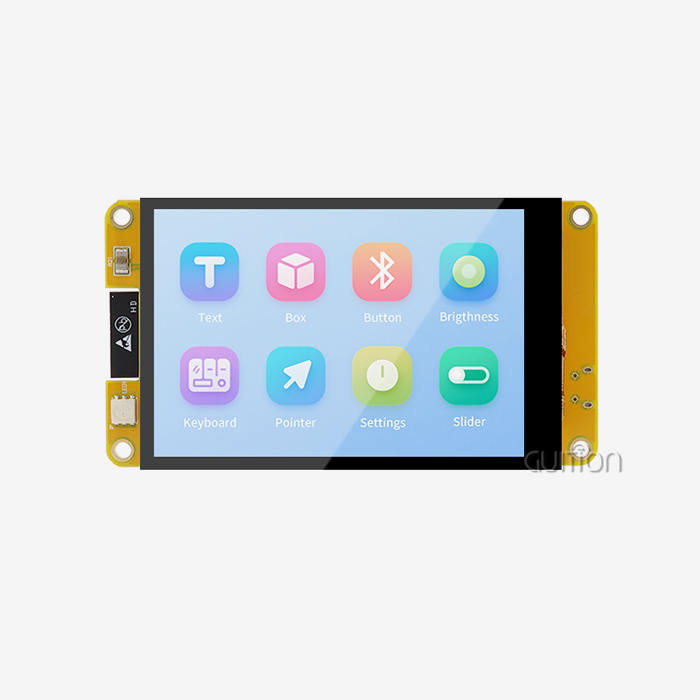
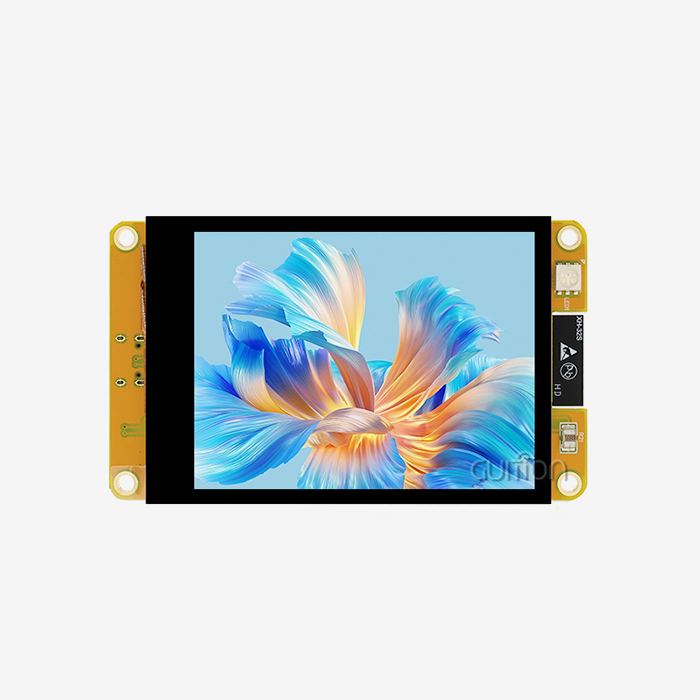
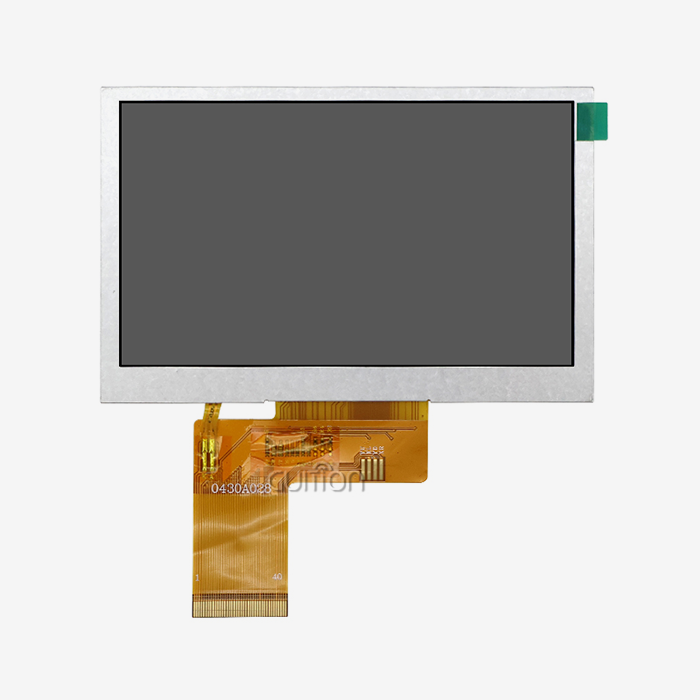
The engineering team at Guition has helped a huge number of industrial and commercial product teams choose and set up the best custom TFT display module for use outside. The GUITION JC8048W550C_I is a good place to start for connected outdoor HMI projects. It is a 5.0-inch, 800x480 IPS module that runs on the ESP32-S3R8 at 240MHz and has Wi-Fi and Bluetooth built in. We support the Arduino IDE, ESP-IDF, MicroPython, and Guition programming environments as a reputable custom TFT display module provider. You can email us at david@guition.com or go to https://jingcaizhineng.aixdb.cn/ to ask for a sample or talk about the details of your project.
References
1. Journal of the Society for Information Display — "Luminance and Contrast Measurement Standards for Flat Panel Displays," 2019.
2. IEC 61747-20-1 — "Liquid Crystal Display Devices — Part 20-1: Measuring Methods for Colour Displays," International Electrotechnical Commission, 2020.
3. Display Technology International — "High-Brightness TFT LCD Modules for Outdoor Applications," 2021.
4. IEEE Transactions on Consumer Electronics — "Adaptive Backlight Control Algorithms for Power-Efficient Outdoor Displays," 2020.
5. Society for Information Display Symposium Digest — "Optical Bonding Effects on Outdoor Display Contrast Ratio," 2022.
6. Asia Display Conference Proceedings — "Reliability Testing Standards for Industrial-Grade LCD Modules in Harsh Environments," 2021.
Learn about our latest products and discounts through SMS or email