- English
- French
- German
- Portuguese
- Spanish
- Russian
- Japanese
- Korean
- Arabic
- Greek
- German
- Turkish
- Italian
- Danish
- Romanian
- Indonesian
- Czech
- Afrikaans
- Swedish
- Polish
- Basque
- Catalan
- Esperanto
- Hindi
- Lao
- Albanian
- Amharic
- Armenian
- Azerbaijani
- Belarusian
- Bengali
- Bosnian
- Bulgarian
- Cebuano
- Chichewa
- Corsican
- Croatian
- Dutch
- Estonian
- Filipino
- Finnish
- Frisian
- Galician
- Georgian
- Gujarati
- Haitian
- Hausa
- Hawaiian
- Hebrew
- Hmong
- Hungarian
- Icelandic
- Igbo
- Javanese
- Kannada
- Kazakh
- Khmer
- Kurdish
- Kyrgyz
- Latin
- Latvian
- Lithuanian
- Luxembou..
- Macedonian
- Malagasy
- Malay
- Malayalam
- Maltese
- Maori
- Marathi
- Mongolian
- Burmese
- Nepali
- Norwegian
- Pashto
- Persian
- Punjabi
- Serbian
- Sesotho
- Sinhala
- Slovak
- Slovenian
- Somali
- Samoan
- Scots Gaelic
- Shona
- Sindhi
- Sundanese
- Swahili
- Tajik
- Tamil
- Telugu
- Thai
- Ukrainian
- Urdu
- Uzbek
- Vietnamese
- Welsh
- Xhosa
- Yiddish
- Yoruba
- Zulu
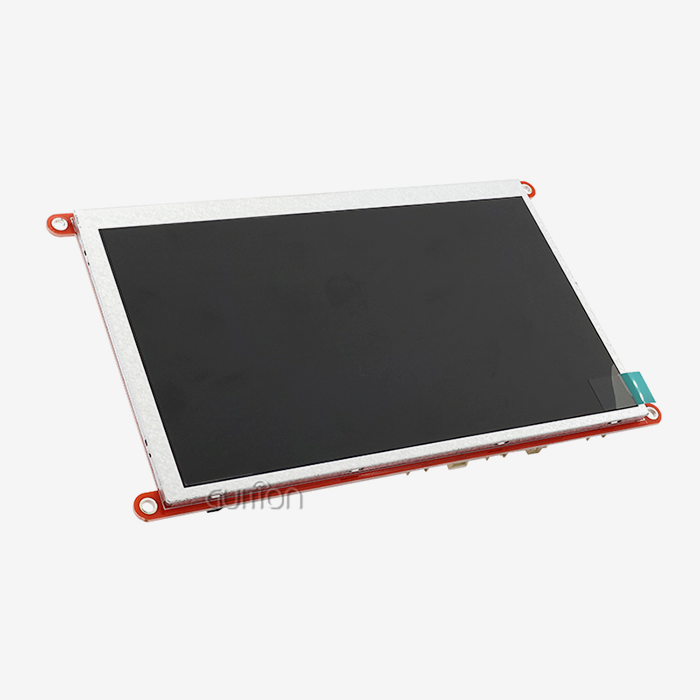
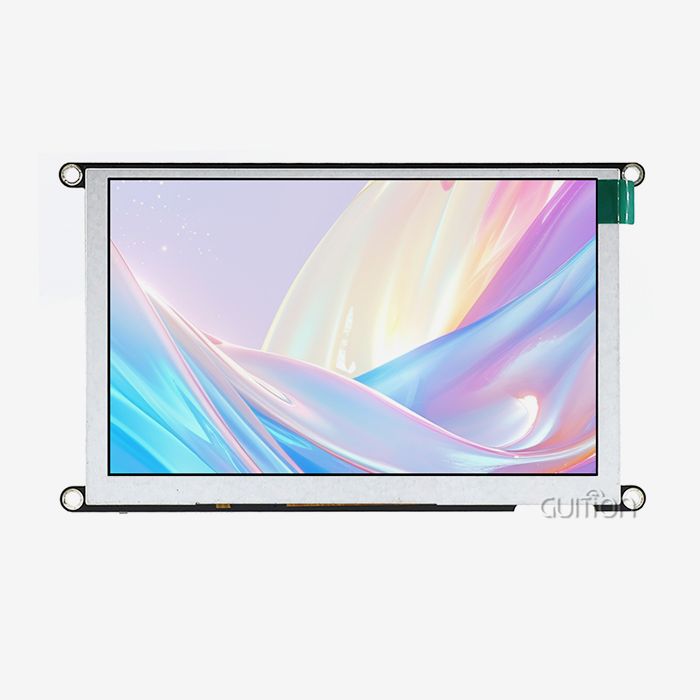
Resistive touch display module for Industrial Control Systems
When engineers and procurement managers search for a dependable resistive touch display module for industrial control systems, they need more than just a screen — they need a pressure-sensitive input solution that works when temperatures swing, gloves are worn, and environments get dirty. A resistive touch display module detects input through physical pressure on two conductive ITO layers, making it immune to moisture, grease, and accidental contact from non-conductive objects. This technology remains the dominant choice across manufacturing floors, medical terminals, and energy management panels, where input certainty directly affects operational safety.

Understanding Resistive Touch Display Modules in Industrial Control Systems
How the Technology Actually Works
Two ITO-coated layers are spaced apart by very small dots to form a Resistive touch display module. When the layers are pressed together, they make contact and read voltage along the X and Y axes. The controller then turns these numbers into locations on the screen. This pressure-based method gets rid of false inputs that are caused by things like water drops, dust, or gloves on the hands, which are common problems on plant floors where capacitive screens are used.
4-Wire, 5-Wire, and 8-Wire Differences
Each of the three main resistance designs is used for a different type of task. A 4-wire Resistive touch display module has sensors on both the film and glass layers. This makes it cheap, but each point can only be touched about 1 million times. With a 5-wire design, all the active wires are moved to the bottom glass layer, leaving the film only as a voltage probe. This makes the service life longer than 10 million activations. The 8-wire version has twice as many electrode connections, which makes the signal more accurate. This is important in high-vibration industry settings.
Maintenance and Calibration in the Field
Most of the time, calibration shift is what goes wrong with resistive screens over time. When the temperature changes, the ITO layers get bigger or smaller, which changes the touch coordinates over time. Modern processors keep calibration data in EEPROM, and this is fixed consistently by software recalibration every so often. Engineers should also keep an eye on Newton ring patterns, which are interference bands that can be seen when the top film touches the bottom glass without being pressed. These patterns show that there is too much mechanical stress or adhesive breakdown.
Resistive vs. Capacitive Touch Display Modules: Which Is Better for Industrial Applications?
Environmental Resilience Compared
Projected capacitive (PCAP) screens work great for home use but not so well in business settings. In contrast to PCAP screens, which frequently show false touches when they are wet, hit by metal particles, or shaken violently, a Resistive touch display module works correctly in temperatures ranging from -20°C to 70°C. This difference has a direct effect on the continuity of production in places that process food or chemicals.
Total Cost of Ownership
Most of the time, a resistive touch panel costs 30–50% less to buy than a similar PCAP module of the same size. In addition to being cheaper to buy, resistive modules don't need as complex controlling hardware, don't need to be sensitive to the ground plane, and can be activated by any object that applies enough pressure, such as gloves, styluses, or tools. Not having to train operators as much means fewer units need to be replaced because they didn't work right.
Where Resistive Technology Wins in Practice
Medical device makers who make infusion pumps or bedside monitors always choose resistive panels because latex and nitrile gloves don't mess up the registration of input, and the screen can handle harsh chemical disinfectants without ghost touches. In the same way, shipping systems that use mobile data collectors depend on Resistive touch display modules for precise stylus-based signature capture outdoors, where rain or very cold temperatures would make capacitive screens useless.
How to Choose the Right Resistive Touch Display Module for Your Industrial System
Matching Size, Resolution, and Interface
Display size and resolution are the first things you should look at when choosing a panel. For small control panels in embedded systems, a 2.8-inch module with 240x320 resolution gives enough visible detail in a small space. For bigger industrial HMI screens, 7-inch to 10-inch choices may be needed. Interface compatibility is also very important. These days, most embedded platforms talk to each other over SPI, which uses fewer IO pins and makes it easier to connect to microcontrollers like the ESP32 or STM32.
Evaluating Touch Technology for Your Environment
A 5-wire Resistive touch display module will last the longest if your application needs a lot of high-force input from people who are wearing gloves. For use at lower frequencies in cleaner settings, a 4-wire module is cheaper without lowering the accuracy. A standard quality standard for linearity error is less than 1.5%. Any module that goes over this level will cause noticeable coordinate drift, which can be frustrating for operators and could be dangerous in control applications.
Supplier Vetting and Customization Options
A reliable Resistive touch display module provider should offer full datasheets, instructions on how to make the module work with controller boards, and easy access to technical support. Customization is important for OEM builds; specifically, ask about changes to the case, the ability to integrate UI software, and the firmware's adaptability. Suppliers who handle R&D, production, and sales all in one place usually have faster response times and better quality control than distributors who buy from many different manufacturers.
Leading Resistive Touch Display Module Brands and Suppliers for B2B Procurement
Established Names in the Market
When it comes to sensitive touch technology, a number of brands have made a name for themselves. EETI is known for making specialized touch controller ICs that are used in a lot of industrial HMI screens. For decades, 3M's MicroTouch line has been used in tough point-of-sale and kiosk settings. Fujitsu has been making resistive panels for medical and automotive instrument clusters for a long time, and Zytronic makes specialized projected resistive sensors for outdoor and ruggedized uses.
Sourcing from Chinese Manufacturers
Chinese companies now make a big chunk of the global Resistive touch display module market. Shenzhen's large production scale lets prices be affordable without lowering technical quality. If people want to buy from this market, they should ask for proof of IEC/EN certification, look at FPC bond strength test reports, and make sure the environmental stress screening results are correct. These should include 60°C/90% RH storage tests that prove the adhesive and ITO layer integrity over 240 hours.
Why GUITION Stands Apart
GUIITION is a display brand of Shenzhen Jingcai Intelligent Co., Ltd., and it has a vertically integrated development and production model. Their products run from 1.28" to 21.5", and their own Guition UI development software lets engineers make professional user interfaces even if they don't know a lot about low-level programming. GUITION modules are made for teams that need both reliable hardware and software flexibility. They come with built-in WiFi and Bluetooth and support development modes for Arduino, ESP-IDF, and GUITION.
Procurement Guide: Ordering Resistive Touch Display Modules for Industrial Control
The GUITION JC2432S028R — A Practical Starting Point
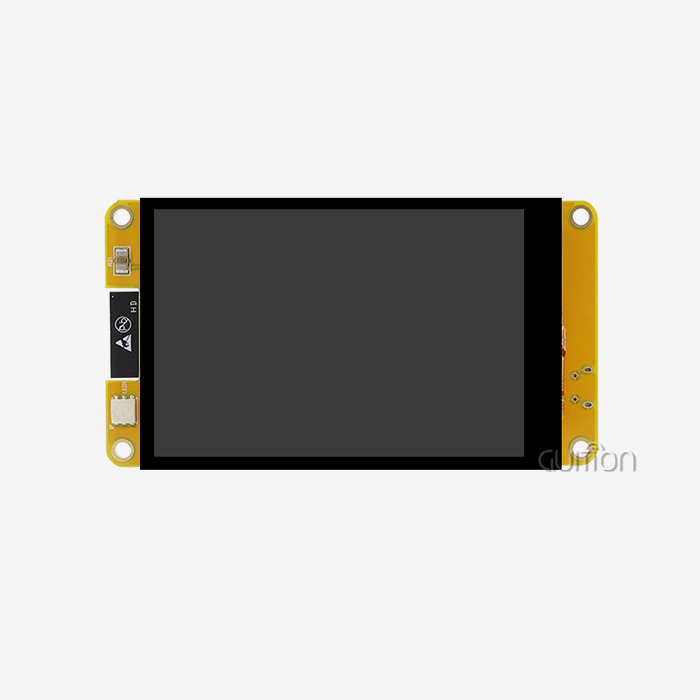
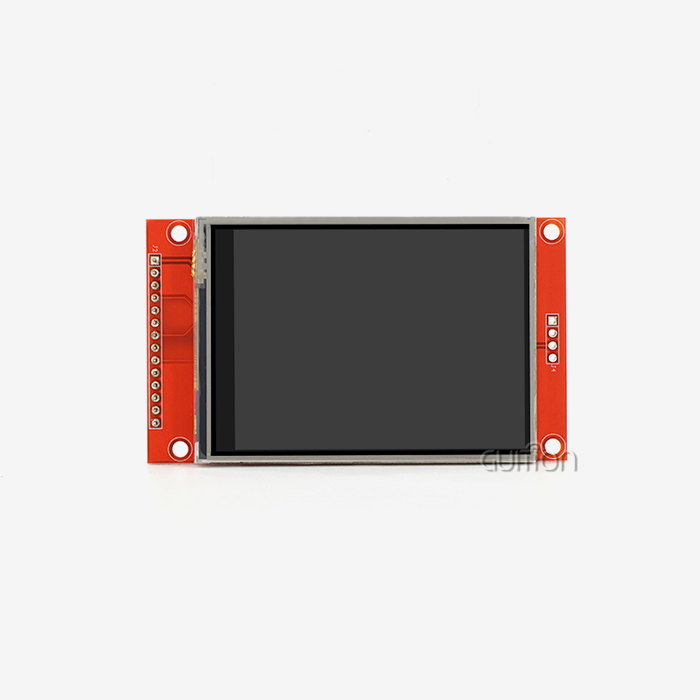
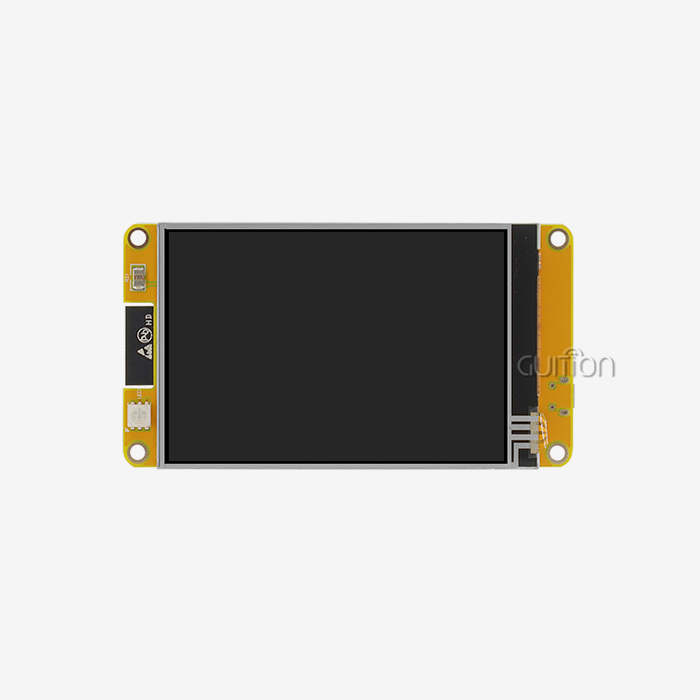
With a resolution of 240x320 pixels and 4-wire SPI communication, the GUITION JC2432S028R is a 2.8-inch Resistive touch display module based on the ILI9341 driver IC. It has circuits for controlling the backlight and the touch screen, as well as an SD card slot for saving fonts and UI materials. Since SPI only needs a few IO pins, it frees up GPIO resources for other system tasks. This is an important thing to think about for embedded designs that don't have a lot of resources. Because this spi display module is good for industry integration, the following hardware and software features make it the best choice:
- Minimal IO overhead: The 4-wire SPI bus leaves the majority of your microcontroller's GPIO free for sensors, relays, or communication peripherals, reducing the need for IO expander chips.
- Onboard SD card slot: Engineers can store UI assets, configuration files, and fonts directly on the module, removing the dependency on external flash memory chips and simplifying the BOM.
- Ready-to-use code samples: GUITION provides tested example code for Arduino and ESP-IDF environments, significantly reducing the time needed to achieve a working display during initial prototyping.
- Remote OTA upgrade: User interfaces and firmware can be updated remotely without physical access, which reduces after-sales service costs for deployed industrial systems.
- Multi-language UTF-8 support: The module handles any language encoding correctly, making it suitable for global deployment without re-engineering the interface.
Most of the time, embedded engineers and R&D managers complain about three things: slow integration, limited IO access, and high upkeep costs after the sale. These benefits directly address these issues.
Ordering Process and Support
GUITION takes questions about standard orders, bulk wholesale pricing, and making things just the way you want them. You can try out sample units before committing to a large order. Their technical support team documents drivers and helps with merging, which cuts down on the time needed for debugging. For clients around the world, shipping logistics are taken care of directly, and all standard modules come with warranty coverage.
Conclusion
One of the most useful and affordable input options for industrial control systems is still a Resistive touch display module, while an SPI Display Module can also support efficient communication in embedded applications. It reliably works in harsh conditions, can be used with gloved hands or styluses, and costs less than capacitive options, both when you buy it and over the years it lasts. When engineers are making HMI panels, medical terminals, or automation controllers, picking the right module means making sure that the technology type, size, and reliability of the supplier all work with the job. The JC2432S028R from GUITION is a flexible and well-documented entry point for teams that need tried-and-true hardware with easy-to-reach expert help.
FAQ
What makes a resistive touch display module suitable for industrial use?
Because it works based on pressure, it doesn't care about water, grease, dust, or things that don't carry electricity. A touch is only registered when physical force is used on purpose. This keeps machines from turning on by chance in factories where people wear thick safety gloves or work near liquids.
How long does a resistive touch panel typically last?
At one point, a standard 4-wire Resistive touch display module can handle about 1 million touches. With a 5-wire module, this can be done over 10 million times because all of the active wires are on the strong glass layer instead of the bendable film.
Can I use the GUITION JC2432S028R with an Arduino or ESP32?
Yes. The gadget talks to other devices using 4-wire SPI, which works with both Arduino and ESP32. Because GUITION gives you sample code that is ready to use for both environments, setting it up for the first time usually takes less than a day.
Does a resistive touch display module support multi-touch input?
One touch point at a time can be found with standard resistive technology. If you need to use multiple touch movements, a projected capacitive screen is better, but it is less resistant to damage from the surroundings.
What should I check when evaluating a resistive touch module from a new supplier?
Ask for details on the linearity error (the goal is less than 1.5%), the environmental stress test results (240 hours at 60°C and 90% RH), the FPC bond strength data, and the Newton ring inspection results. These four signs show the most common ways that a field can fail.
Get a Quote from GUITION — Your Resistive Touch Display Module Supplier
The Resistive touch display module range from GUITION gives your team tried-and-true hardware, easy-to-use UI creation tools, and engineering help that lasts after the sale. You can now test the JC2432S028R. Get in touch with us right away to get a sample, talk about custom configurations, or get wholesale prices for your next production run. To find out more, email our team at david@guition.com.
References
1. Bhalla, M. R., & Bhalla, A. V. (2010). Comparative Study of Various Touchscreen Technologies. International Journal of Computer Applications, 6(8), 12–18.
2. Harper, B. (2015). Human-Machine Interface Design for Process Control Applications. ISA (International Society of Automation).
3. Nissinen, I., & Nissinen, J. (2018). Resistive and Capacitive Touch Screen Technologies in Industrial HMI Design. IEEE Transactions on Industrial Electronics, 65(4), 3120–3128.
4. Park, J., & Kim, S. (2020). Durability Analysis of Resistive Touch Panels Under Industrial Environmental Stress. Sensors and Actuators A: Physical, 312, 112–119.
5. Society of Automotive Engineers. (2019). Touchscreen Interface Standards for Embedded Automotive and Industrial Systems (SAE Technical Paper 2019-01-0535). SAE International.
6. Wilson, A. D. (2021). Touch Input Technologies: A Comparative Review for Embedded System Engineers. IEEE Embedded Systems Letters, 13(2), 45–52.
Learn about our latest products and discounts through SMS or email