- English
- French
- German
- Portuguese
- Spanish
- Russian
- Japanese
- Korean
- Arabic
- Greek
- German
- Turkish
- Italian
- Danish
- Romanian
- Indonesian
- Czech
- Afrikaans
- Swedish
- Polish
- Basque
- Catalan
- Esperanto
- Hindi
- Lao
- Albanian
- Amharic
- Armenian
- Azerbaijani
- Belarusian
- Bengali
- Bosnian
- Bulgarian
- Cebuano
- Chichewa
- Corsican
- Croatian
- Dutch
- Estonian
- Filipino
- Finnish
- Frisian
- Galician
- Georgian
- Gujarati
- Haitian
- Hausa
- Hawaiian
- Hebrew
- Hmong
- Hungarian
- Icelandic
- Igbo
- Javanese
- Kannada
- Kazakh
- Khmer
- Kurdish
- Kyrgyz
- Latin
- Latvian
- Lithuanian
- Luxembou..
- Macedonian
- Malagasy
- Malay
- Malayalam
- Maltese
- Maori
- Marathi
- Mongolian
- Burmese
- Nepali
- Norwegian
- Pashto
- Persian
- Punjabi
- Serbian
- Sesotho
- Sinhala
- Slovak
- Slovenian
- Somali
- Samoan
- Scots Gaelic
- Shona
- Sindhi
- Sundanese
- Swahili
- Tajik
- Tamil
- Telugu
- Thai
- Ukrainian
- Urdu
- Uzbek
- Vietnamese
- Welsh
- Xhosa
- Yiddish
- Yoruba
- Zulu
OEM Guide to ESP32-S31 7 Inch Display Customization
An OEM guide to ESP32-S31 7 inch display customisation starts with one idea: treat the display as a complete embedded platform, not a bare LCD panel. A good ESP32-S31 7 inch display project defines the controller, screen, touch layer, interfaces, power, and software before anyone requests a quotation. We recommend confirming the exact model, writing a clear requirements sheet, testing a sample, and reviewing quality and compliance needs early. This guide uses the Guition JC1060F570C_I_W module as a practical reference for engineers, product managers, and procurement teams in the United States.

What Is an ESP32-S31 7 Inch Display?
A Complete Embedded Display Solution
The ESP32-S31 7 inch display is a single board that includes a microprocessor module, LCD panel, touch layer, and supporting circuits. An unused monitor displays only images that are sent from another computer. This board drives the screen and connects to a network. Where the application runs. Before you give a price, make sure the name refers to a selected board, controller platform, or product name that the customer has selected. Names alone can hide that the memory, screen, and touch parts are not the same. The engineering and purchasing teams don't have to guess. They have a model number, a datasheet, and a pinout. They always know what they need to know.
Meet the Guition JC1060F570C_I_W
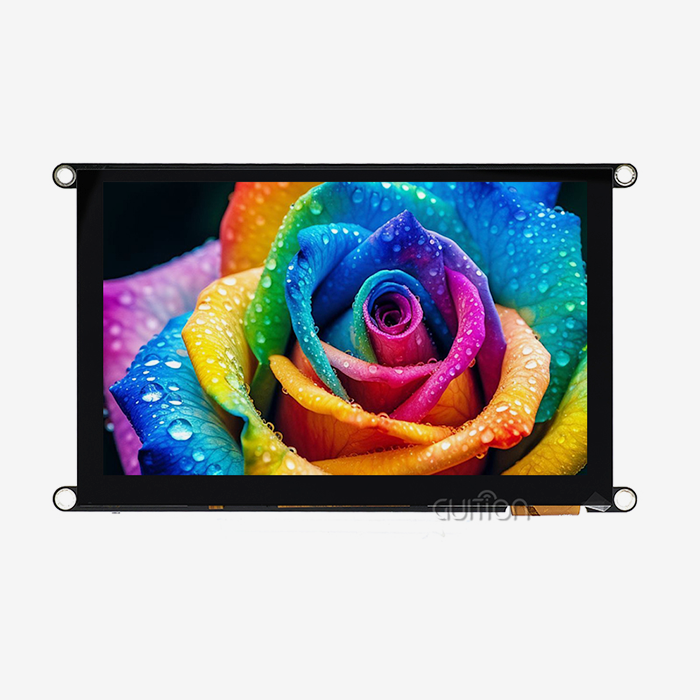
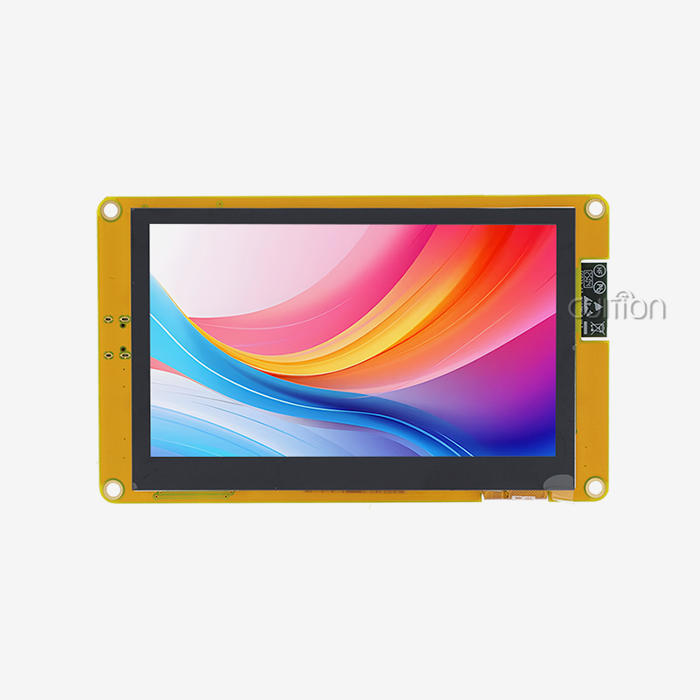
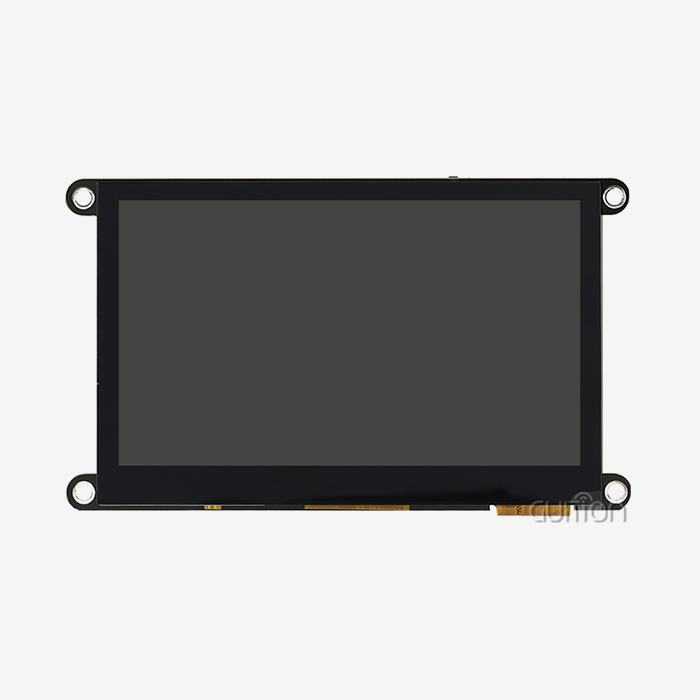
There is a 360 MHz dual-core processor in the JC1060F570C_I_W type of the Guition Housingless 7-Inch ESP32-S31 7 inch display module. It has an ESP32-S31-WROOM-1 MCU. It has both WiFi 6 and Bluetooth Classic built in. That's 16 MB of Flash, 16 MB of PSRAM, 320 KB of ROM, and 512 KB of RAM. KB of low-power SRAM and 1 KB of shared SRAM. It's a 7.0-inch IPS TFT screen with 16.7 million colours and 24 bits of RGB. From any direction, you can see it. It's called "housingless" because the module doesn't come with a case. Instead, OEM teams make their own cases and decide how the finished product looks.
Where a 7-Inch Screen Fits
For balance, seven inches is a good height. That's more than enough space for dashboards, charts, menus, and big touch buttons. The screen has 614,400 pixels (1024x600). On smaller screens, the content is spread out over more pages. On the other hand, bigger screens take up more space, use more power, and cost more. The JC1060F570C_I_W can be used in a number of ways, including:
- Panels for controlling and checking a 3D printer for industrial automation
- Interfaces for medical devices with patients
- Security screens and main panels for smart homes
- Car dashboards and charging port interfaces
- Digital signs, cash registers, and sound controls for business kitchens
- Looking at the air quality
- Ways to control the batteries and solar system
It ranges from 1.28" to 21.5", so teams can switch sizes later on while still using the same method for creation.
ESP32-S31 7 Inch Display Specifications Buyers Should Confirm
Display and Touch Details
Let's start with the panel and see an ESP32-S31 7 inch display. Check the screen’s active area, module size, thickness, viewing angle, colour depth, brightness and contrast, and fixing points. The JC1060F570C_I_W features a resolution of 1024x600, 24-bit RGB colour, and an IPS screen. Not to be assumed to have details about brightness, touch controllers and hardware drawings. The latest datasheet. No, ask for it. Touch needs a separate review. How sensitive it is, how the tech works, if you have gloves on, and how thick the cover glass is all play into how the screen feels in real life. If you put those values in the RFQ, when the first prototype comes in, you’re not going to be surprised.
Interfaces and Expansion
There is a TF card space in this part, IO ports, and a lithium battery connection. As the project grows, the TF card can store more fonts, pictures, or data logs. The battery interface comes in handy for portable designs or for backup power. The IO ports allow you to connect sensors, relays, and other add-ons. Find out the pinout and know which GPIO pins are still free after the touch and display circuits use them. Finally, before you lock down the design, make sure that every interface will work with the accessories you want to use. The display and touch connections are different on each board. This single check can prevent many late hardware changes.
Memory and Frame Buffer Math
Memory does a little quick maths. A full frame file (1024 bytes x 600 bytes) for a 1024x600 screen with 24-bit colour is about 1.8 MB. This ESP32-S31 7 inch display has 16 MB PSRAM where you can save the buffer fonts, and images. Files and software are stored in 16 MB Flash memory, and the 360 MHz dual-core processor handles network tasks and interface logic. But you should still test animations and page changes with a real sample, because the way they work is dependent on how the UI is set up and how the pictures are animated. There are numbers on a specification that tell you how much something can hold, but there are samples that show you how it will work.
How to Customise and Integrate an ESP32-S31 7 Inch Display
Define Requirements First
When customising the ESP32-S31 7-inch display, the first things to think about are application, operating environment, annual volume, and cost target. Write the specs for the resolution of the screen, how it should be touched, how hot it can work, how many links it needs, its logos, and its approval. Then you have to decide if a normal module is enough or you need to make a semi-custom or custom change. The JC1060F570C_I_W is not supplied in a housing, so the enclosure, cover material, and mounting method are usually selected first. Our engineers check each request before starting development, as the options we have available to us vary depending on the size and technical requirements of a project.
Build the UI with Guition Tools.
GUI interface creation software allows engineers to build screens by dragging tools onto a canvas. Add built-in controls with just one click. The creator will also show you what the finished screen will look like and allow you to change the location, size, and style of the buttons. This means that a group has less low-level code to write. The module is compatible with Arduino IDE, ESP-IDF, MicroPython, and the Guition environment, so they can use the tool they already know. Online debugging across platforms can find bugs faster, reducing the time and cost of development. More specific changes can be achieved with full secondary development tools and technical instructions.
Connectivity, Updates, and Languages
This ESP32-S31 7-inch display already has built-in WiFi 6 and Classic Bluetooth, so no additional wireless hardware is required for cloud links or device pairing. Teams can make changes to live projects without even having to visit the site. It costs less to service people after the sale. With UTF-8 encoding, you can see international characters and multi-language switching, so you can sell goods in more than one area. It comes pre-loaded with test programs, and you can post code with just one click, so there's no other hardware needed. It’s better to think about login, how the app will work offline, and how it will recover from updates when designing the app, rather than after it’s been released.
ESP32-S31 7 Inch Display Alternatives and Comparison Guide
ESP32-S3 Display Boards
The closest is the ESP32-S3 board. In their documentation, they say the ESP32-S3 has Bluetooth LE 5 and 2.4 GHz Wi-Fi (802.11 b/g/n). Don’t just look at the name of the chip; look at its memory, display interface, ability to support touch, ability to support tools, and ability to keep the power on. The ESP32-S31 7 inch display used in this guide has Wi-Fi 6, Classic Bluetooth, 16 MB PSRAM, and 16 MB Flash. If a project requires those features or more memory, the newer platform should be considered carefully. If it doesn't need either of those, then they should be honest that it might be cheaper with a simpler board.
Raspberry Pi with a Touch Display
For projects that need lots of software, an operating system, or both. Linux has plenty of software, but it starts up slower, uses more power, and needs regular updates. An ESP32-based module has a microcontroller that runs the firmware directly on the chip. This method is good for control panels that have to start up fast and use little power but are set and forget. Select the position. For an integrated interface, an ESP32-S31 7 inch display is suggested. For general computing, a Raspberry Pi is suggested. Often, the two jobs together cost more than if they were done separately.
HDMI Displays and Standard Modules
An HDMI panel is a display. It gets larger, the wires get longer, and the power supplies get larger because, to send video, it needs a different computer or board. The processor, screen, and interfaces are all contained within an embedded ESP32-S31 7 inch display module, which reduces the number of parts and required lines. OEM designs are better than standard modules if you need custom sizes, branding, or connectors for a product. Standard modules are suitable for prototypes and small and medium-sized orders. Before you decide, you should look at the price, quantity, lifespan, and customisation options. Don’t just ask for the price of the panel; ask for the cost of the whole system. There was real money in testing, in wiring, in hooking it up.
OEM Procurement, Quality, and Buying Checklist
Prepare a clear RFQ.
A strong RFQ for a 7 inch ESP32-S31 display is accelerating the bidding process. Please tell us the exact board reference, the needs for the display and touch, the interfaces, the mechanical models, the environmental conditions, the certificates, the branding, the annual demand, and the date that you want to start the product. As suppliers, ask them to list their MOQ, lead time, warranty, replacement policy, tooling, net new items (NRE), what they cover, and what they do not cover. Then compare providers on the quality of their engineers, their ability to help with software, prototyping, paperwork ,and after-sales service. It was proposed by a company called Jingcai Intelligence, which is engaged in research and development, production, and sales. This group includes help, software, and hardware.
Quality and Reliability Testing
You should check the quality of the whole assembly, not just the LCD. Check for dead pixels, uneven brightness, even colours, accurate touch, surface flaws, a working backlight, and cords and connections. Some things that can be used to test reliability are temperature changes, humidity, shaking, shock, ESD, long-term use, and the backlight getting dim over time. A lot of the time, IEC 61000-4-2 is used to test ESD protection. Enquire about the tests that are appropriate for your ESP32-S31 7 inch display and request the records. It's important to test a module in its final enclosure, even if it works fine on the bench. Heat, wiring, and mounting can change the results.
Compliance and Buying Checklist
Either the part or the whole tool needs to be approved before it can be sold in a certain place. Radio-equipped items sold in the US must follow FCC rules. Early on, make sure you know which approvals cover the whole project and which only cover the module. A lot of people also want RoHS and REACH papers. Before signing off, any ESP32-S31 7 inch display should have an exact model, resolution, interfaces, power requirements, temperature range, enclosure fit, price breaks, samples, shipping schedule, and lifetime plan. To stay on the same page, the buying, quality, engineering, and production teams all use the same bullet point list.
Conclusion
An ESP32-S31 7 inch display works best when used as a full embedded platform, so buyers should double-check the exact model, screen, touch layer, ports, and memory before asking for a price. The Guition JC1060F570C_I_W has a 1024x600 IPS screen, IO ports, a battery interface, WiFi 6, Classic Bluetooth, and a 360 MHz dual-core ESP32-S31 processor. It has 16 MB of Flash and 16 MB of PSRAM as well. Nothing is fixed; you can change the tests, the user interface, and even the firmware. You can use the ESP-IDF, MicroPython, Guition, and Arduino IDE tools. ESP32-S3 boards, Raspberry Pi, and HDMI displays don't work as well with some control ports as an embedded module does. Delays and changes that cost a lot of money can be avoided by having clear RFQs, checking the quality at the assembly level, and doing early compliance reviews.
FAQ
Q: What resolution does the Guition module use?
A: The JC1060F570C_I_W has a 7.0-inch IPS TFT screen that can be viewed from any angle and has a resolution of 1024x600. It also has 24-bit RGB.
Q: Which development tools does it support?
A: It can be used with the Arduino IDE, ESP-IDF, MicroPython, and the Guitown setup. The GUI for Guition is drag-and-drop, and you can debug online on any platform.
Q: Can deployed units receive updates remotely?
A: Yes. The platform lets users make changes to their projects from anywhere. This way, teams can add new features and keep goods up to date without having to visit each site.
Q: Can the module show multiple languages?
A: International characters can be used on goods that are sold in more than one area. This is doable with UTF-8 encoding and moving between languages.
Q: Does the module include storage expansion?
A: Yes. The built-in TF card slot can hold more patterns, fonts, and data logs as the project grows.
Request a Guition ESP32-S31 7 Inch Display Quote
Guition, from Jingcai Intelligence, offers display sizes from 1.28" to 21.5", Guition UI software, secondary development support, remote upgrade, and multi-language capability. If you need an ESP32-S31 7-inch display provider for your next OEM project, email david@guition.com with your resolution, touch, interface, volume, and start specifications. Our techs are going to look at your setup and choose samples. Visit https://jingcaizhineng.aixdb.cn/ to learn more about the product.
References
1. Espressif Systems, ESP32-S3 Series Datasheet, 2023
2. Espressif Systems, ESP-IDF Programming Guide, 2024
3. LVGL Kft., LVGL Documentation, 2024
4. Raspberry Pi Ltd, Raspberry Pi Documentation, 2024
5. International Electrotechnical Commission, IEC 61000-4-2: Electrostatic Discharge Immunity Test, 2008
6. Federal Communications Commission, OET Bulletin 63: Understanding the FCC Regulations for Low-Power, Non-Licensed Transmitters, 1993
Learn about our latest products and discounts through SMS or email