- English
- French
- German
- Portuguese
- Spanish
- Russian
- Japanese
- Korean
- Arabic
- Greek
- German
- Turkish
- Italian
- Danish
- Romanian
- Indonesian
- Czech
- Afrikaans
- Swedish
- Polish
- Basque
- Catalan
- Esperanto
- Hindi
- Lao
- Albanian
- Amharic
- Armenian
- Azerbaijani
- Belarusian
- Bengali
- Bosnian
- Bulgarian
- Cebuano
- Chichewa
- Corsican
- Croatian
- Dutch
- Estonian
- Filipino
- Finnish
- Frisian
- Galician
- Georgian
- Gujarati
- Haitian
- Hausa
- Hawaiian
- Hebrew
- Hmong
- Hungarian
- Icelandic
- Igbo
- Javanese
- Kannada
- Kazakh
- Khmer
- Kurdish
- Kyrgyz
- Latin
- Latvian
- Lithuanian
- Luxembou..
- Macedonian
- Malagasy
- Malay
- Malayalam
- Maltese
- Maori
- Marathi
- Mongolian
- Burmese
- Nepali
- Norwegian
- Pashto
- Persian
- Punjabi
- Serbian
- Sesotho
- Sinhala
- Slovak
- Slovenian
- Somali
- Samoan
- Scots Gaelic
- Shona
- Sindhi
- Sundanese
- Swahili
- Tajik
- Tamil
- Telugu
- Thai
- Ukrainian
- Urdu
- Uzbek
- Vietnamese
- Welsh
- Xhosa
- Yiddish
- Yoruba
- Zulu
LCD Panel Module Benefits for Medical and Industrial Devices
When precision and reliability are non-negotiable, the right display technology makes all the difference. An LCD panel module is a fully integrated display assembly combining a TFT-LCD cell, driver ICs, backlight unit, and structural frame — delivering consistent visual output across demanding environments. In medical diagnostics, industrial control panels, and energy management systems, these modules serve as the critical human-machine interface layer. Their stable backlighting, robust construction, and wide operating temperature tolerance make them a preferred choice for engineers and product teams who cannot afford display failure in the field.

Advantages of LCD Panel Modules in Medical and Industrial Devices
Industrial engineers and people who make medical devices both want SPI LCD Displays that work correctly and don't cut corners. Lcd panel modules meet this need in a number of ways, including optical clarity, physical durability, power economy, and design freedom.
The main reasons why these modules are so useful in tough situations are listed below:
- Precision and Clarity for Critical Monitoring: High-resolution LCD panel modules render patient vitals, equipment diagnostics, and process parameters with exceptional legibility. Stable LED backlighting maintains consistent luminance over thousands of operating hours, reducing the risk of misread data in clinical or factory settings.
- Durability Under Harsh Conditions: Industrial-rated modules withstand vibration, humidity fluctuations, and thermal cycling. Chemically tempered glass with hardness ratings up to 7H protects against mechanical stress, while conformal-coated PCBs resist moisture ingress — extending service life in demanding deployments.
- Energy Efficiency for Continuous Operation: Compared to alternative display technologies, LCD modules consume less power under continuous operation. This matters significantly in always-on applications like patient monitors and factory HMI panels where devices run 24/7.
- Customization for OEM and Integrator Needs: Display size, resolution, interface type, and bezel configuration can be tailored to specific product requirements. This flexibility empowers OEM manufacturers and system integrators to build application-specific solutions without sourcing compromise.
These benefits directly lead to less engineering rework, fewer failures in the field, and faster product approval processes. These are all very important results for any B2B development team that has to meet tight deadlines.
Comparing LCD Panel Modules with Alternative Technologies
People who work in procurement often compare LCD panels to OLED and LED panels. Understanding the pros and cons of each technology helps match the right display with the needs of the application.
The contrast ratios of OLED screens are better, and they are smaller. However, they can get burn-in during static picture display, which is a big problem for medical monitors that show set patient data layouts or industrial HMIs that have status indicators that stay on all the time. When used continuously, OLED screens don't last as long as LCD screens, whose backlight units often last for 50,000 hours or more.
LED screens used for big signs are very bright, but they aren't precise enough at the pixel level for small medical or industrial control displays. Lcd panel modules are still the most stable and cost-effective choice for devices with screens between 2.4 inches and 10 inches.
When deciding between a touchscreen and a non-touchscreen display, the working environment is very important. When used in clean medical areas or when wearing gloves, sensitive touchscreens may make them harder to use. When used with physical controls, non-touch modules often make interaction more reliable in these situations.
Procurement Guide: How to Choose and Source LCD Panel Modules for Medical and Industrial Devices?
An organised method is needed to find a display module for a controlled industry. The first thing that procurement teams should do is write down the technical requirements. These should include the screen size, resolution, type of interface, operating temperature, and any certifications that are needed, like RoHS and REACH compliance.
Evaluating Suppliers and Quality Standards
Reputable Lcd panel module providers follow ISO 9241-307 for pixel flaw classification and perform incoming quality tests such as dead pixel inspection, brightness uniformity measurement, and aging burn-in testing (usually for 24 to 72 hours). Long-term supply availability, ideally with a product lifecycle commitment of 5–7 years, is a key factor for industrial and medical device programmes that cannot accommodate changing parts during production.
The GUITION JC4827Q043N_I: A Purpose-Built Solution
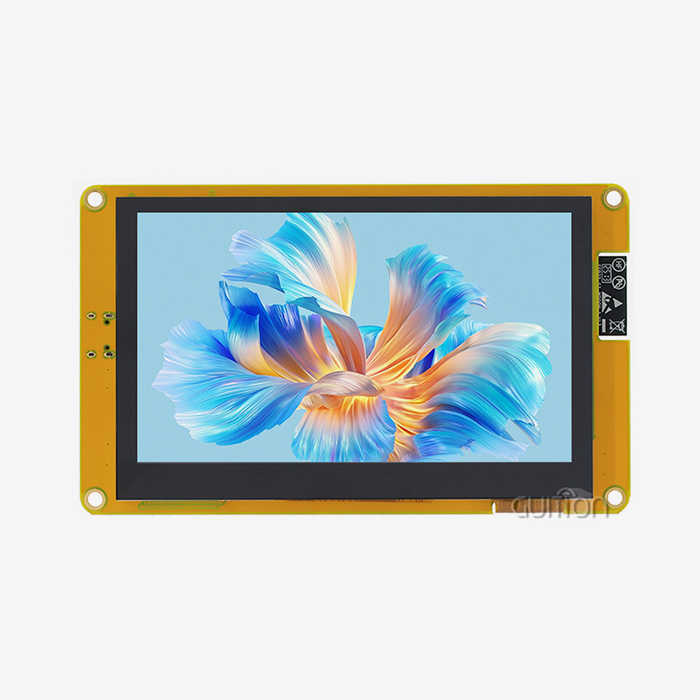
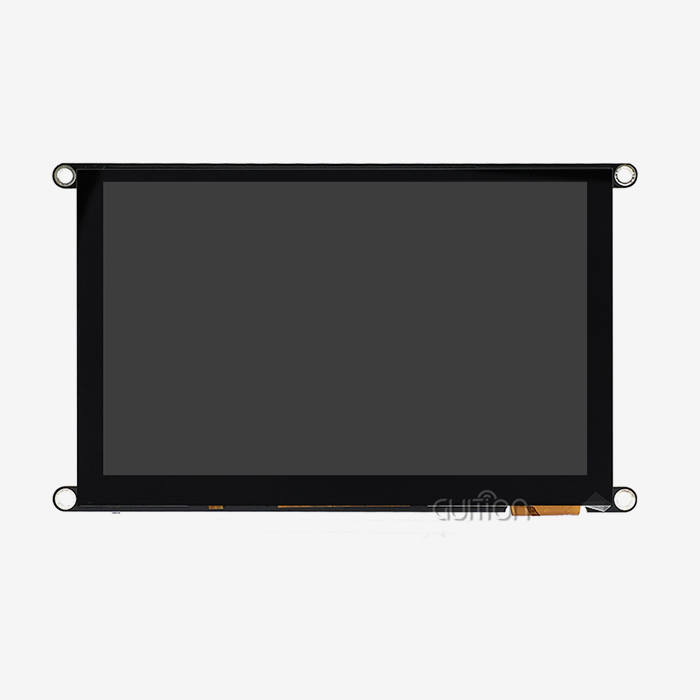
Designed for industrial and medical uses, the GUITION JC4827Q043N_I is a 4.3-inch Lcd panel module. It has an 800x480 resolution and 16.7M colour depth and is driven by the ST3401A driver IC. This makes the images on the whole screen look clear and bright. The MCU interface makes it easy to connect to microcontroller-based systems, and the non-touch design works well in places where reliable input or clean settings are needed.
This module has been used before in 3D printer control screens, EV charging station interfaces, medical aesthetics equipment, and displays for industrial automation. Its bright display output keeps it readable in a variety of lighting conditions, which is useful in both workplace areas and medical settings. The Guition UI development software works with Arduino, IDF, and Guition development modes. This lets engineering teams create polished HMI interfaces without needing to write a lot of low-level code.
Testing, Maintenance, and Troubleshooting of LCD Panel Modules
Protocols for incoming checking keep device makers safe from mistakes in the field. Visual checks should find highlight areas, dead pixels, and Mura (uneven lighting). Before putting the assembly together, functional verification should check the response time, color accuracy, and integrity of the interface signals.
Common Failure Modes and Preventive Measures
Most failures in long-term deployments are caused by backlight degradation. Over time, luminance slowly decreases; in good modules, it usually drops by half after 50,000 hours. A lot of early fails are caused by dead pixels and connection delamination. As a preventative measure, you should keep the operating temperatures within the recommended ranges, shield the modules from electrostatic discharge while they are being assembled, and schedule firmware updates through Guition's remote over-the-air (OTA) upgrade feature to make them last longer without having to be serviced physically.
Conclusion
Lcd panel modules continue to set the bar for trustworthy human-machine contact in medical and industrial devices. Their optical accuracy, physical durability, low energy use, and variety of integration options meet the real challenges that embedded engineers and product managers face every day. This balance is shown by the GUITION JC4827Q043N_I, a 4.3-inch, 800x480, 16.7M-colour display module designed for tough deployments and backed by a development environment that speeds time-to-market without sacrificing reliability. In the end, picking the right Lcd panel module source comes down to product quality and relationship.
FAQ
What makes LCD better than OLED for medical devices?
LCD panel units do not get burnt in, which is important for medical monitors that show static data patterns all the time. They also maintain the same brightness over longer periods, making them more cost-effective for regulated device programmes.
How do I select the right resolution for an industrial HMI?
The size of the screen and the amount of information it holds affect the resolution choice. For parameter displays, status indicators, and control user interface elements common in industrial automation equipment, an 800x480 Lcd panel module on a 4.3-inch screen provides sufficient sharpness.
Can LCD panel modules be customized for OEM applications?
Yes. Leading suppliers offer options that can be customised, including the size of the display, the type of interface, the design of the bezels, and the operating temperature ranges. With full APIs and detailed docs, Guition allows secondary development, which lets teams change both the hardware and software layers to fit the needs of the product.
What certifications should an LCD panel module supplier provide?
Following the rules for RoHS and REACH is a must. IEC 60068-2 outdoor test compliance and ISO 9241-307 pixel flaw standards are important signs of quality that have been checked for industrial use.
Partner with Guition for Your Next LCD Panel Module Project
Engineers in smart systems, medical devices, and industrial automation rely on Guition's tried-and-true solutions for LCD panel modules. The JC4827Q043N^_I has a resolution of 800x480, an ST3401A driver, and an MCU interface. It comes in a small 4.3-inch package and is ready to be put together quickly. Guition offers full secondary development support, the ability to work with multiple languages, and over-the-air (OTA) upgrade features as a specialist Lcd panel module maker. To get a price or technical advice today, email our team at david@guition.com.
References
1. Society for Information Display — Journal of the SID, 2023
2. IEC — IEC 60068-2: Environmental Testing for Electronic Components, 2022
3. ISO — ISO 9241-307: Ergonomics of Human-System Interaction — Optical Laboratory Methods for Electronic Visual Displays, 2021
4. Grand View Research — Global HMI Market Report, 2024
5. MarketsandMarkets — Industrial Display Market by Technology and Application, 2023
6. IEEE — Transactions on Industrial Electronics: Display Interface Standards for Embedded Systems, 2022
Learn about our latest products and discounts through SMS or email