- English
- French
- German
- Portuguese
- Spanish
- Russian
- Japanese
- Korean
- Arabic
- Greek
- German
- Turkish
- Italian
- Danish
- Romanian
- Indonesian
- Czech
- Afrikaans
- Swedish
- Polish
- Basque
- Catalan
- Esperanto
- Hindi
- Lao
- Albanian
- Amharic
- Armenian
- Azerbaijani
- Belarusian
- Bengali
- Bosnian
- Bulgarian
- Cebuano
- Chichewa
- Corsican
- Croatian
- Dutch
- Estonian
- Filipino
- Finnish
- Frisian
- Galician
- Georgian
- Gujarati
- Haitian
- Hausa
- Hawaiian
- Hebrew
- Hmong
- Hungarian
- Icelandic
- Igbo
- Javanese
- Kannada
- Kazakh
- Khmer
- Kurdish
- Kyrgyz
- Latin
- Latvian
- Lithuanian
- Luxembou..
- Macedonian
- Malagasy
- Malay
- Malayalam
- Maltese
- Maori
- Marathi
- Mongolian
- Burmese
- Nepali
- Norwegian
- Pashto
- Persian
- Punjabi
- Serbian
- Sesotho
- Sinhala
- Slovak
- Slovenian
- Somali
- Samoan
- Scots Gaelic
- Shona
- Sindhi
- Sundanese
- Swahili
- Tajik
- Tamil
- Telugu
- Thai
- Ukrainian
- Urdu
- Uzbek
- Vietnamese
- Welsh
- Xhosa
- Yiddish
- Yoruba
- Zulu
How to Choose the Best Industrial HMI Panel Supplier?
Selecting the correct partner for your control interfaces is never a trivial choice. The choice of supplier for an industrial HMI panel is closely related to the dependability, development speed, and long-term cost of your product, as it is central to how operators interact with machines, monitor processes, and react to real-time data. A bad decision might mean sluggish displays, flaky connections, or a development environment that cripples your team for months. This tutorial leads you through what really counts when assessing a supplier—from the hardware in the module to the software tools, connection possibilities, durability requirements, and typical hazards that differentiate a reliable partner from a dangerous one. Whether you develop automation equipment, testing instruments, or field devices, recognising these variables will help you make a confident and educated decision.

Understanding Industrial HMI Panels and Why They Matter
It helps to understand what truly goes into a panel before you start comparing vendors, and why the facts matter more than the marketing text.
What Is an Industrial HMI Panel
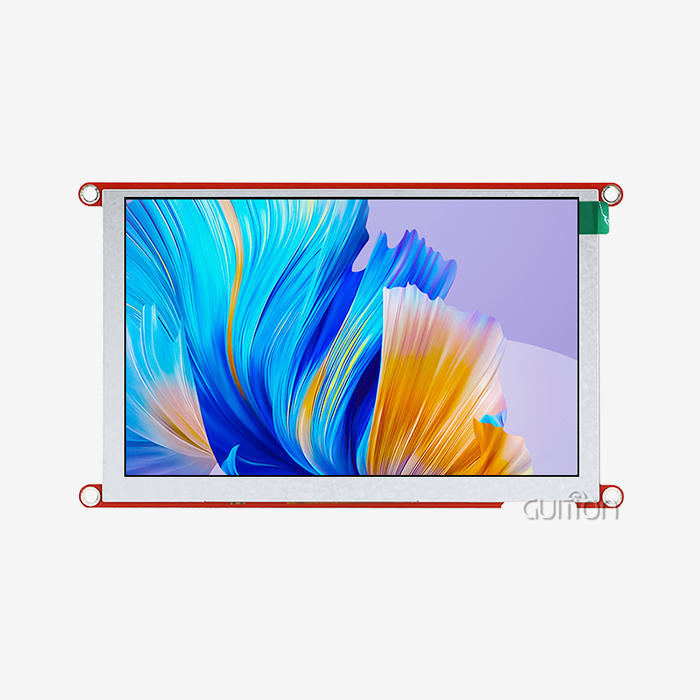
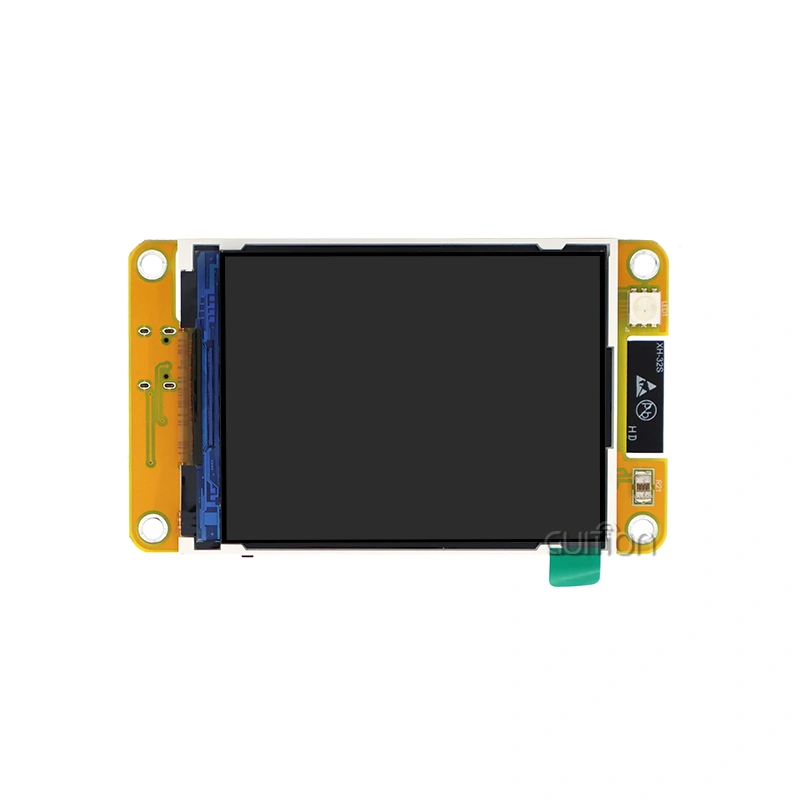
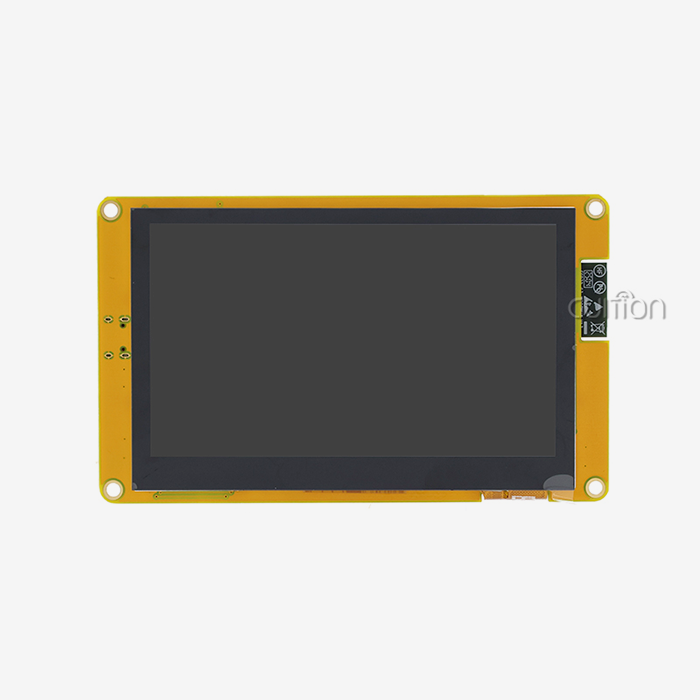
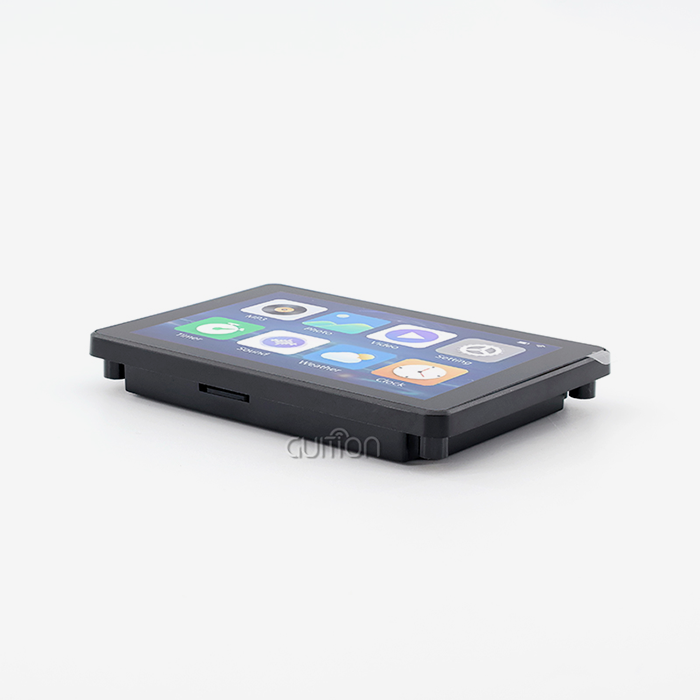
At its heart, an industrial HMI panel is the link between a machine and the person who operates it. A notable example is the GUITION JC8048Q350N_I, a 5.0-inch module based on the D121BBV control board with an 800×480 IPS display. This sort of industrial HMI panel works on a single-core MCU at speeds of up to 400MHz, so it can provide real-time updates without latency, and that may matter hugely when operators are making split-second choices on a factory floor or test rig. These panels are engineered to handle the electrical noise, vibration, and temperature fluctuations of an industrial deployment, unlike consumer tablets; thus, the internal design decisions matter in actual operating terms.
Core Hardware Behind a Reliable Panel
The hardware within a panel is responsible for practically all of its long-term performance. The industrial HMI panel is powered by the Artinchip D121 chip combined with the RT Thread operating system to provide enough processing headroom to handle sophisticated visuals and several background operations at the same time. Those suppliers that scrimp on processing power often churn out panels that stutter or freeze under pressure, so it's worth checking the chipset, RAM allocation, and operating system before committing to an order. A panel that works well in a quiet demo room may react very differently when it is simultaneously processing live sensor data, network traffic, and a busy user interface.
Software and Development Flexibility
But hardware alone doesn’t make a panel usable – the development environment is just as important. A good industrial HMI panel should have a drag-and-drop interface designer that enables engineers to construct and alter layouts without writing large amounts of code. Suppliers providing tools for Arduino, IDF, and proprietary GUI platforms provide development teams the flexibility to work in whichever environment best matches their current workflow, dramatically shortening project times. This flexibility may be quite useful when a team wants to rapidly onboard additional engineers or migrate an existing product to other hardware without having to start the interface design from scratch.
Key Factors to Evaluate When Choosing a Supplier
Once the fundamental building pieces are understood, the next step is to compare vendors on a consistent set of criteria, rather than evaluating on price or look.
Display Quality and Graphics Performance
In an industrial environment, where operators routinely look at displays from odd angles and in low light, visibility is not a luxury. The well-built industrial HMI panel adopts IPS technology with a resolution of 800×480 to guarantee accurate colour and broad viewing angles, while JPEG and PNG decoding support up to 1024×768 at 60fps and 30 fps, respectively, to provide smooth rendering of real-time data and pictures. When evaluating vendors, don’t just look at the spec sheets; ask for real performance benchmarks and, if feasible, a sample unit so your team can test for readability in the lighting conditions your equipment will really be used in.
Connectivity and Integration Options
Modern facilities never operate with stand-alone technology; therefore, connection is a key differentiator between vendors. Verify if the industrial HMI panel has built-in WiFi and Bluetooth, and physical interfaces like a TF card slot, a serial port, and various IO connectors for sensors. This combination enables the panel to connect easily into existing networks and equipment without needing expensive bespoke adapters or workarounds, saving time and cash during implementation. It is also worth checking if the provider allows remote firmware upgrades since this may drastically lower the costs of maintaining panels after they are spread over dozens or hundreds of locations.
Build Quality and Durability
Industrial conditions are tough, with vibration, temperature changes, and dust all acting against delicate electronics. You need an industrial HMI panel that is built to military-grade process standards so it will provide reliable performance, year after year, in continuous operation. Before you choose a supplier, seek documentation of the testing processes. Enquire whether the units you get will be factory-tested and ready for rapid deployment, which decreases the chances of early failures in the field. Ask about warranty terms and normal failure rates, since a provider confident in their construction quality will often be happy to give this information freely.
Industries and Applications That Depend on Quality HMI Panels
The versatility of a well-designed panel becomes clear once you look at how many different sectors rely on the same core technology.
Manufacturing and Automation
Production lines depend heavily on responsive control interfaces to keep operations running smoothly. An industrial HMI panel installed on a manufacturing line allows operators to monitor robotic arms, adjust parameters, and catch faults before they cause costly downtime. The same reliability extends to 3D printing setups, where real-time monitoring and quick parameter adjustments directly affect print quality and material waste. In both cases, a delayed or unresponsive display can translate directly into lost production time, which is why manufacturers tend to prioritize panels with proven processing performance over ones that simply look good in a showroom.
Healthcare, Energy, and Testing Equipment
Beyond factory floors, medical devices, energy management systems, and testing instruments also depend on clear, responsive displays. An industrial HMI panel used in healthcare equipment or power distribution monitoring gives technicians and clinicians immediate visibility into system status, which is critical when devices need to respond instantly to changing conditions. Testing and air-quality detection systems rely on the same responsiveness to deliver accurate, real-time readings, and any lag or misread data in these settings can have consequences well beyond a simple inconvenience.
Smart Buildings, Automotive, and Commercial Use
Interface technology has also moved well beyond heavy industry into everyday commercial and residential applications. An industrial HMI panel now commonly controls HVAC systems, lighting, and security in smart buildings, while similar modules appear in automotive dashboards, EV charging stations, ATMs, and kitchen equipment controllers. This wide range of applications shows why choosing a supplier with proven cross-industry experience matters, since the same design principles apply whether the panel sits in a warehouse or a vehicle dashboard, and a supplier who understands multiple sectors is more likely to anticipate edge cases your team has not yet encountered.
Common Mistakes to Avoid When Selecting a Supplier
Even experienced buyers can fall into a few predictable traps when comparing HMI suppliers, and avoiding them early saves significant time and money later.
Ignoring Total Cost of Ownership
Suppliers are easy to compare on unit pricing, but the real expense of an industrial HMI panel is the firmware upgrades, technical assistance, replacement parts, and the engineering hours needed working past any constraints in the development tools. It’s frequently less costly throughout the life of a project to buy a somewhat more expensive panel that has better documentation and quicker support response times than a cheaper unit that constantly needs troubleshooting.
Overlooking After-Sales Support
Once a panel ships, development is not over. Support from a provider should not be over either. Ask prospective partners about their response time to technical enquiries, whether they provide remote debugging support, and their process for handling firmware upgrades for an industrial HMI panel that is currently in the field. Suppliers with rapid technical teams may reduce the troubleshooting cycle from weeks to days, which is a big deal when the equipment is already at a customer’s facility.
Choosing Based on Price Alone
Price is obviously a key factor, but choosing the cheapest industrial HMI panel you find sometimes means sacrificing display quality, processing power, or long-term durability that only becomes evident after deployment. A more balanced approach is to look at price vs documented performance, warranty coverage, and the supplier's track record with comparable projects. A panel that fails in the field costs significantly more in replacement, downtime, and reputation than the original savings were worth.
Conclusion
Ultimately, the best industrial HMI panel provider comes down to a combination of hardware performance, software flexibility, connectivity, and long-term durability. Jingcai Intelligence, the team behind Guition, has become a prominent supplier of HMI display solutions. Our product line ranges from 1.28” to 21.5” and is enhanced by our self-developed Guition interface software, which simplifies UI creation and speeds up product iteration. Our solutions are designed to make your next project quicker and simpler, with secondary development assistance, remote updates, and multi-language support. Call us and let us help you create it correctly.
FAQ
Q1: What makes an industrial HMI panel different from a standard consumer display?
A: An industrial HMI panel is engineered for continuous operation under harsh conditions, with military-grade manufacturing standards, wider temperature tolerance, and rugged connectivity options that consumer screens simply are not built to handle.
Q2: Can I develop custom interfaces without extensive coding experience?
A: Yes, many suppliers offer drag-and-drop GUI development tools, allowing engineers to design layouts for their industrial HMI panel quickly without deep programming knowledge, while still supporting secondary development for teams that need deeper customization.
Q3: What resolution and display technology should I look for?
A: An 800×480 IPS display is a strong baseline for most applications, offering accurate colors and wide viewing angles suitable for industrial environments, though the right resolution ultimately depends on how much data your interface needs to show at once.
Q4: Does the panel support wireless connectivity?
A: Quality panels typically include built-in WiFi and Bluetooth, letting the industrial HMI panel connect to networks and other devices without additional hardware, which simplifies integration into existing smart systems.
Q5: Can I update or maintain the panel's software after deployment?
A: Many suppliers now offer remote upgrade capability, meaning an industrial HMI panel can receive online maintenance and feature updates without requiring an on-site visit, which significantly reduces after-sales costs.
Contact Guition Today to Power Your Next Industrial HMI Project
Ready to build your next project on a reliable, developer-friendly platform? Whether you need a compact display for a smart device or a full-featured industrial HMI panel for demanding automation environments, Jingcai Intelligence and the Guition team are here to help. From secondary development support to multi-language UI design, our solutions are built to make your development process faster and more flexible. Contact Us today at david@guition.com to discuss your project requirements and discover how our HMI expertise can support your next deployment.
References
1. International Society of Automation (ISA) – Human-Machine Interface Design Standards and Best Practices
2. Automation World – Trends in Industrial Display and HMI Technology
3. Control Engineering Magazine – Selecting HMI Hardware for Harsh Environments
4. IEEE Industrial Electronics Society – Publications on Embedded Display Systems
5. Plant Engineering Journal – Evaluating Suppliers for Industrial Control Equipment
6. Embedded Computing Design – Guidelines for Selecting Embedded Display Modules
Learn about our latest products and discounts through SMS or email