- English
- French
- German
- Portuguese
- Spanish
- Russian
- Japanese
- Korean
- Arabic
- Greek
- German
- Turkish
- Italian
- Danish
- Romanian
- Indonesian
- Czech
- Afrikaans
- Swedish
- Polish
- Basque
- Catalan
- Esperanto
- Hindi
- Lao
- Albanian
- Amharic
- Armenian
- Azerbaijani
- Belarusian
- Bengali
- Bosnian
- Bulgarian
- Cebuano
- Chichewa
- Corsican
- Croatian
- Dutch
- Estonian
- Filipino
- Finnish
- Frisian
- Galician
- Georgian
- Gujarati
- Haitian
- Hausa
- Hawaiian
- Hebrew
- Hmong
- Hungarian
- Icelandic
- Igbo
- Javanese
- Kannada
- Kazakh
- Khmer
- Kurdish
- Kyrgyz
- Latin
- Latvian
- Lithuanian
- Luxembou..
- Macedonian
- Malagasy
- Malay
- Malayalam
- Maltese
- Maori
- Marathi
- Mongolian
- Burmese
- Nepali
- Norwegian
- Pashto
- Persian
- Punjabi
- Serbian
- Sesotho
- Sinhala
- Slovak
- Slovenian
- Somali
- Samoan
- Scots Gaelic
- Shona
- Sindhi
- Sundanese
- Swahili
- Tajik
- Tamil
- Telugu
- Thai
- Ukrainian
- Urdu
- Uzbek
- Vietnamese
- Welsh
- Xhosa
- Yiddish
- Yoruba
- Zulu
How Does SPI LCD Display Speed Affect User Experience?
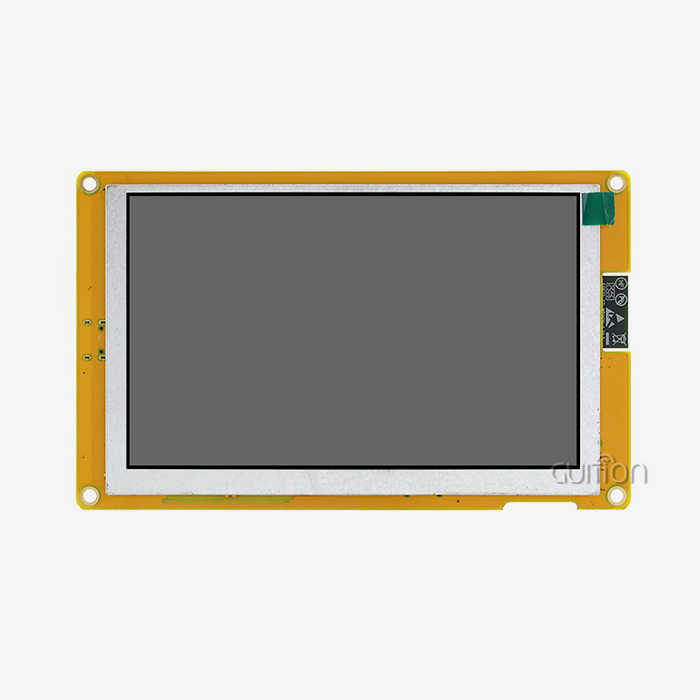
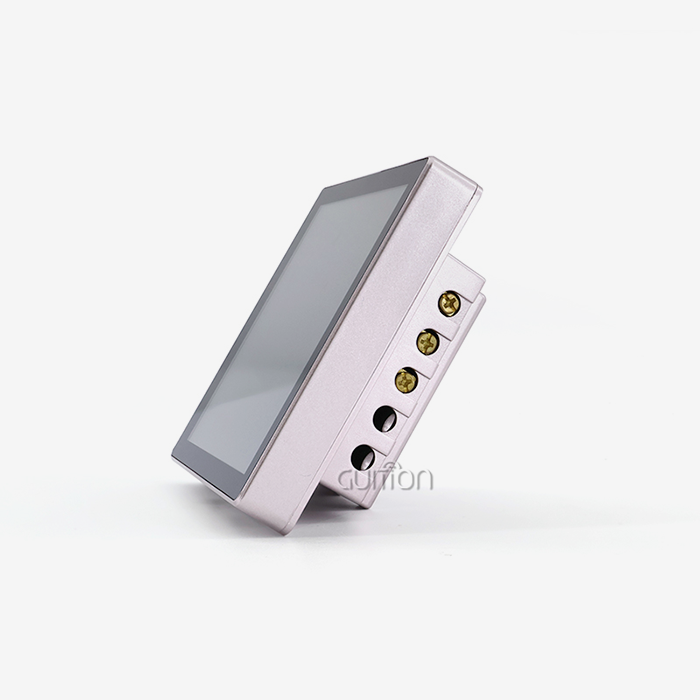
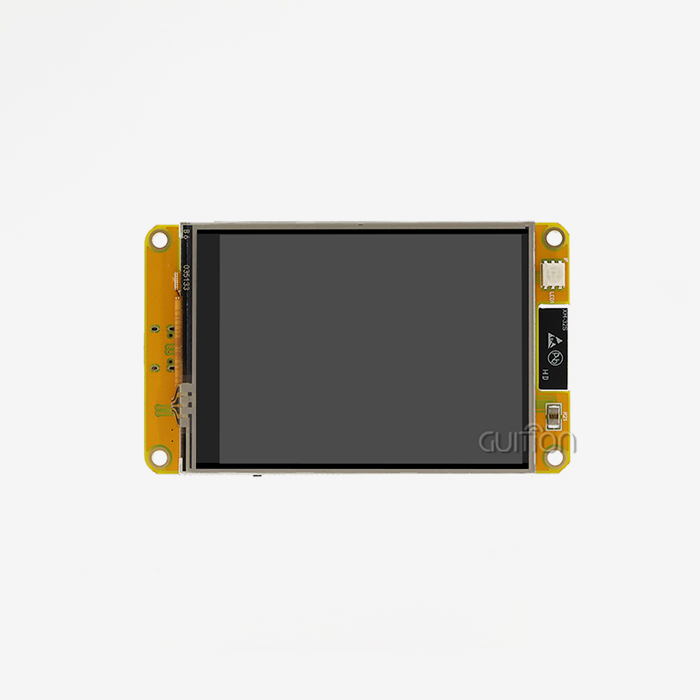
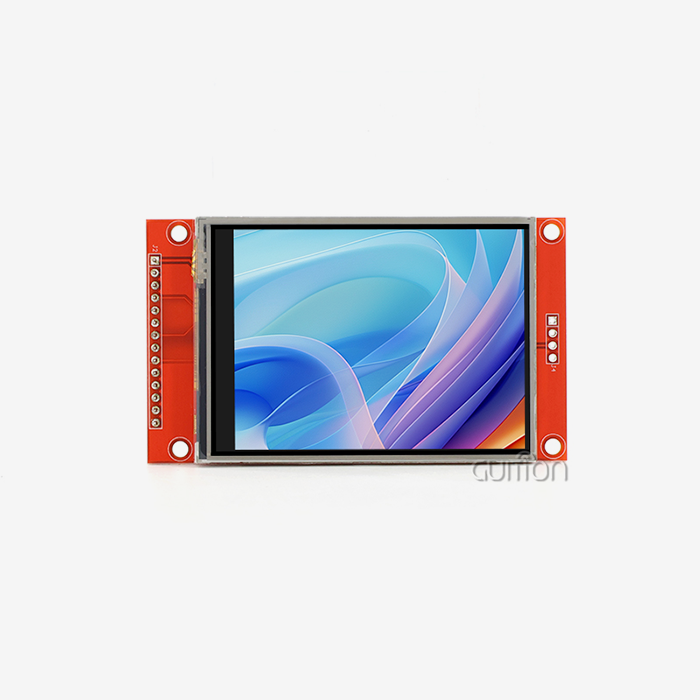
When engineers and product teams ask how SPI LCD Display speed affects user experience, the answer goes far deeper than frame rates. In embedded systems, display speed governs everything from touch responsiveness to real-time data rendering. A slow serial interface creates visible lag, screen tearing, and degraded operator confidence — particularly in high-stakes environments like medical monitors or industrial control panels. The GUITION JC3248A035C SPI LCD Display, built on the ST7796 driver and running a 320×480 resolution at up to 80MHz SPI clock, demonstrates how a well-engineered serial display module can deliver smooth, professional-grade HMI performance without the complexity of parallel or MIPI interfaces.

Understanding SPI LCD Display Speed and Its Impact
Why Clock Rate Defines Display Quality
How fast pixel data moves from the MCU to the display screen depends on the SPI clock rate more than anything else. The ST7796 datasheet says that at 80MHz, an SPI LCD Display can push full-frame updates at rates of about 30 to 60 FPS for QVGA-class resolutions. It's easy to see tearing and input delay below 20MHz, especially during animation changes or dynamic data updates.
Power Efficiency and Reliability
Better SPI implementations let you update only part of the screen at a time, so only the changed area is written over each cycle. This method greatly lowers the amount of power needed, which is very important for IoT devices and small medical tools that run on batteries. The host MCU spends less time in active transmission cycles when the display module works well within its bandwidth range. This lets the host MCU go to deeper sleep states and last longer on a single charge.
Temporal steadiness is also affected by display speed. The driver IC gets hot when high-frequency SPI operations go on for a long time. The GUITION JC3248A035C works steadily from -20°C to 70°C, so it can be used in workplace and outdoor settings where temperature stress is present.
Technical Factors Influencing SPI LCD Display Speed
SPI Bus Constraints and Signal Integrity
SPI was made to be an on-board protocol for short distances. Longer cable runs (10–15 cm) add extra capacitance to the system, which changes the clock waveform at high frequencies and causes pixel artifacts and startup failures. When engineers work with the SPI LCD display, they should use matching impedance PCB routing, keep trace lengths short, and use series termination resistors when needed.
The JC3248A035C has a 4-wire SPI configuration (SCK, MOSI, CS, D/C), which is the best design for apps that use the GUI a lot. In contrast to 3-wire SPI, the dedicated D/C pin gets rid of the bit-banging waste from the MCU's hardware SPI peripheral. This directly leads to higher sustained speed.
SPI vs. Other Interfaces
Here is a useful comparison of SPI to other display interfaces:
- SPI vs. I2C: In Fast Mode Plus, I2C can only go as fast as 3.4MHz, which is too slow for color TFT rendering. SPI, which runs at 20–80MHz, has about 10–20× more bandwidth, which is why 2.4" to 3.5" color display modules always use it.
- SPI vs. Parallel (8080): Parallel interfaces have better raw throughput, but they use 8–16 GPIO lines, which is too many for pin-limited MCUs like the ESP32 or STM32 low-count versions. One of the best things about SPI for small embedded designs is that it only needs four wires.
- SPI vs. MIPI DSI: MIPI DSI is the standard for displays in smartphones and supports gigabit-class bandwidth. SPI is not as fast. But it needs hardware that is only used for the PHY. For screens smaller than 3.5 inches, SPI is still the best choice because it is simple and works with a lot of different microcontrollers.
Because of these pros and cons, the SPI LCD Display is the best interface for most industrial HMI and IoT panel uses, especially when saving GPIOs and working with different platforms is important.
Real-World Impact on Procurement and Product Selection
Evaluating Performance Metrics That Matter
When purchasing managers look at SPI LCD displays, they should consider more than just the size of the screen. Field dependability is based on the refresh rate consistency, the maturity of the driver IC, and the working temperature range. In the GUITION JC3248A035C, the ST7796 driver is used. This is a well-documented, widely supported IC that has a lively software ecosystem spanning the Arduino, ESP-IDF, and LVGL frameworks. Compared to less well-known driver options, this greatly lowers the risk of a merger.
At 3.5 inches, the 320x480 resolution gives a pixel density of about 165 PPI, which means that status panels, diagnostic readouts, and menu-driven interfaces can show clear text. With six LED backlights and 65K RGB565 color depth, the display meets the standards for use in medical esthetics equipment, 3D printer control panels, and charging stations for electric vehicles.
When sourcing on a large scale, the quality of the source paperwork is a must. Most first-article integration failures are caused by incomplete initialization sequences, gamma correction registers that aren't documented, or power control tables that aren't present. Guition gives full secondary development docs so that engineering teams can test and release modules without having to pay for expensive testing cycles.
All of these performance characteristics work together to lower the total engineering cost, which is a big deal when large OEMs are buying things.
Optimizing SPI LCD Display Speed to Enhance User Experience
It takes work at both the hardware and firmware levels to get rid of speed problems in SPI LCD Display systems. The following strategies have been shown to work in real-world settings:
- Enable DMA transfers: Direct Memory Access lets the MCU send data from the frame buffer to the SPI peripheral without the CPU core's help. During full-screen refreshes on ESP32 systems, DMA-driven SPI transfers cut CPU load by over 60%. This frees up cycles for application code.
- Implement dirty-region rendering: Instead of redrawing the whole 320x480 frame every time you update, just redraw the UI parts that have changed. This method is the main one used in LVGL (Light and Versatile Graphics Library), and it cuts bandwidth use by 40–70% in most HMI apps.
- Tune the TE (Tearing Effect) pin: The ST7796 shows a TE output signal that pulses when the screen goes blank for a short time. When MCU write actions are timed to this signal, the frame-tearing flaws that show up during quick screen changes are removed.
These improvements can be used right away on the GUITION JC3248A035C when it is built on devices like Arduino, ESP32, or STM32. With the Guition UI development tool, engineers can make drag-and-drop interfaces with built-in controls. This means that they don't have to write low-level rendering code by hand, which cuts development time from weeks to days.
Future Trends in SPI LCD Display Technology
Higher clock rates and smarter partial-update methods are becoming more popular in the embedded display market. New driver ICs can now work with Quad-SPI (QSPI) modes, which combine four data lines at once. This doubles the speed without changing the basic structure of the SPI protocol. This means that the next generation of 3.5" to 5" modules will be able to handle better graphics and more detailed GUI frameworks while still having the fast GPIO that makes SPI LCD Display technology appealing.
The need for HMI units with built-in WiFi and Bluetooth is also growing faster. This is already taken care of by Guition's environment, which includes built-in wireless connection, over-the-air (OTA) upgrade support, and multi-language UTF-8 encoding. These features are exactly what the market needs to move forward. When OEMs are making plans for products that will come out after 2025, it's smart to choose a display partner that builds these features into the module ecosystem.
Conclusion
Display speed is not an extra feature; it is a key factor in how much users trust a product, how efficiently it works, and how competitive it is in the market. Professional HMI performance can be delivered across industrial, medical, and consumer applications with the right SPI LCD display and optimized firmware stack. With its ST7796 driver, 320x480 resolution, capacitive touch, and wide platform support, the GUITION JC3248A035C is a mature technological choice that is also a reliable business choice for engineering teams that need to ship quickly and with confidence.
FAQ
1. Does SPI LCD display speed affect touch response time?
Yes. There is a close connection between touch latency and display refresh speed. When the SPI bus is full of frame data, tasks that deal with touch events on the MCU are put behind tasks that deal with drawing. When you use DMA transfers for display output, the CPU is free to handle capacitive touch events with little delay. This keeps the interface feeling quick and fast for the SPI LCD Display.
2. What SPI clock speed should I use for the ST7796?
It's possible for the ST7796 driver to handle write cycles of up to 15ns, which is about 66MHz. Most ESP32 and STM32 implementations work well at 40–80MHz, but this depends on the quality of the PCB layout and the length of the traces. Start at 40MHz for testing and slowly raise the speed while keeping an eye out for pixel damage.
3. Can the GUITION JC3248A035C work with Arduino?
Yes. You can use the JC3248A035C with the Arduino, ESP-IDF, and Guition development modes. Guition gives teams that already work with the Arduino environment initialization code and integration documents, which cuts down on setup time by a large amount.
4. What causes a white screen on initialization?
Most of the time, a white screen failure is caused by an incomplete restart process or startup commands that don't match. Before the init process starts, the RST pin has to be held low for at least 10ms. Make sure that the gamma and power control registers in the init code are exactly the same as they are in the ST7796 datasheet.
Upgrade Your HMI Project with a Trusted SPI LCD Display Supplier
Guition doesn't just sell hardware; our team also offers technical help, full documentation, and a flexible development platform that is built around the time frame of your production. The GUITION JC3248A035C SPI LCD display is offered for OEM and bulk sales, backed by long-term supply dependability. Get in touch with our team right away to talk about your project needs or to ask for a trial. You can email us at david@guition.com to see our full catalog of display modules.
References
1. Microchip Technology. (2021). Low-Power SPI Display Design for IoT Applications.
2. Texas Instruments. (2020). Signal Integrity Considerations for SPI Interfaces.
3. Adafruit Industries. (2022). Comparing Display Interfaces: SPI vs I2C vs Parallel.
4. Sitronix Technology. (2022). ST7796S LCD Single-Chip Driver Datasheet.
5. LVGL Development Team. (2023). LVGL Performance Optimization Guide: Partial Refresh and DMA.
6. Espressif Systems. (2023). ESP32 SPI Master Driver Documentation. Espressif IoT Development Framework.
Learn about our latest products and discounts through SMS or email