- English
- French
- German
- Portuguese
- Spanish
- Russian
- Japanese
- Korean
- Arabic
- Greek
- German
- Turkish
- Italian
- Danish
- Romanian
- Indonesian
- Czech
- Afrikaans
- Swedish
- Polish
- Basque
- Catalan
- Esperanto
- Hindi
- Lao
- Albanian
- Amharic
- Armenian
- Azerbaijani
- Belarusian
- Bengali
- Bosnian
- Bulgarian
- Cebuano
- Chichewa
- Corsican
- Croatian
- Dutch
- Estonian
- Filipino
- Finnish
- Frisian
- Galician
- Georgian
- Gujarati
- Haitian
- Hausa
- Hawaiian
- Hebrew
- Hmong
- Hungarian
- Icelandic
- Igbo
- Javanese
- Kannada
- Kazakh
- Khmer
- Kurdish
- Kyrgyz
- Latin
- Latvian
- Lithuanian
- Luxembou..
- Macedonian
- Malagasy
- Malay
- Malayalam
- Maltese
- Maori
- Marathi
- Mongolian
- Burmese
- Nepali
- Norwegian
- Pashto
- Persian
- Punjabi
- Serbian
- Sesotho
- Sinhala
- Slovak
- Slovenian
- Somali
- Samoan
- Scots Gaelic
- Shona
- Sindhi
- Sundanese
- Swahili
- Tajik
- Tamil
- Telugu
- Thai
- Ukrainian
- Urdu
- Uzbek
- Vietnamese
- Welsh
- Xhosa
- Yiddish
- Yoruba
- Zulu
How Does 5.0 TFT LCD Improve User Experience on SPI LCD Displays?
How operators deal with industrial equipment and smart devices is fundamentally altered by the addition of a 5.0 TFT LCD to current display systems. Thin-film transistor technology is used in these screens to provide outstanding visual clarity, vivid color reproduction, and responsive performance that directly answers the main problems engineers face when designing human-machine interfaces. When paired with communication protocols like SPI or RGB interfaces, these small but powerful screens make it easier for users to understand complicated data while also making operations more accurate in a wide range of fields, from medical diagnostics to EV charging infrastructure.

Understanding 5.0 TFT LCD Specifications and Their Impact on User Experience
The display specs are what you use to figure out if a screen can handle the tough needs of industrial and embedded apps. Knowing these technical details helps buying teams and design engineers figure out how well a certain part will work in the real world.
Resolution and Visual Clarity in Compact Form Factors
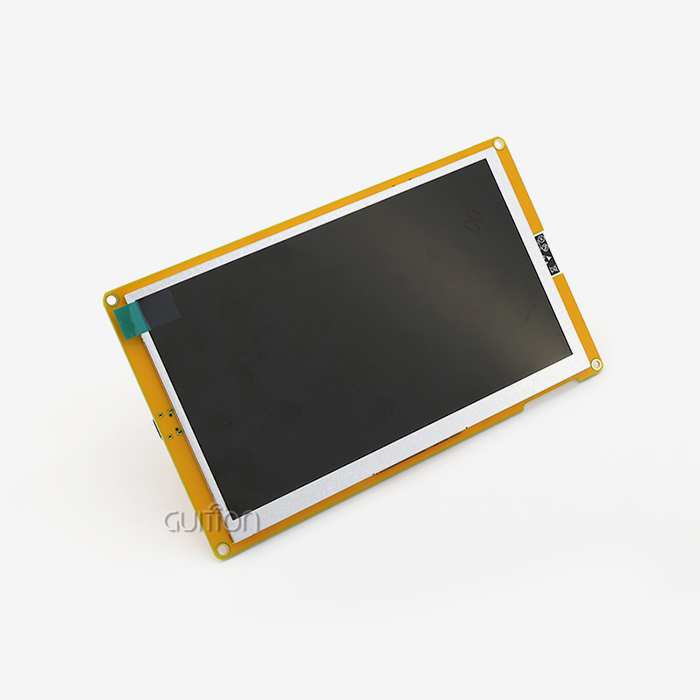
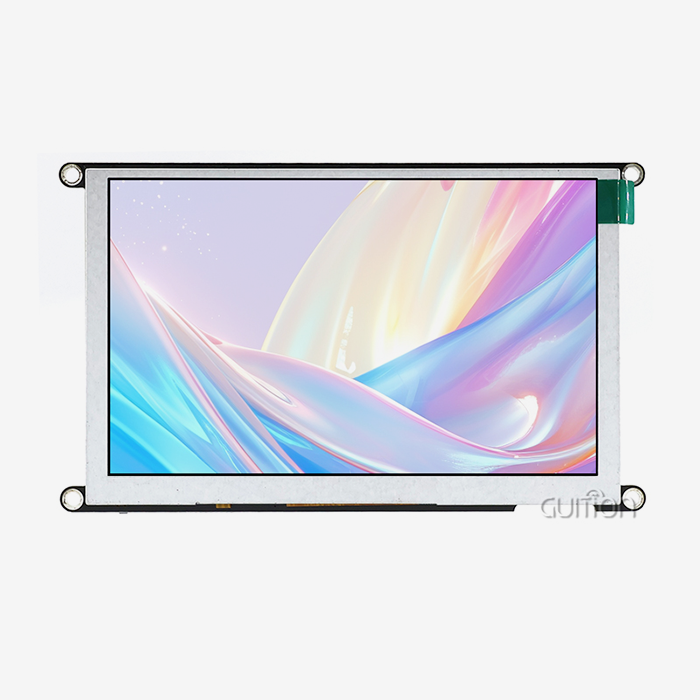
The 800×480 resolution standard for current TFT displays strikes a good mix between the number of pixels and the amount of work that needs to be done. The JC8048B050N_I model from Guition shows this idea with its ST7265 chip driver, which handles the flow of data from microcontrollers to the screen grid well. This resolution is equal to about 186 pixels per inch when measured across a 5-inch screen. It gives enough information for reading text and recognizing icons without using too much memory traffic. It's not just the number of pixels that make something clear; contrast ratios and lighting regularity are also important. Industrial-grade modules keep the brightness level uniform across the viewing area. This gets rid of hotspots that can make operators tired during long monitoring jobs. Our display module's RGB interface design allows for direct color control without compression artifacts, which is very important when showing gradient-based user interface elements or status indicators that show more than one color.
Color Depth and Its Role in Interface Design
Because 24-bit RGB color processing gives eight bits to the red, green, and blue channels, the screen can show 16.7 million colors. This color depth lets designers make complex visual levels in their interfaces. For example, they can use small changes in shading to draw attention to important settings or warning states. When showing diagnostic images or patient tracking data, where color accuracy can affect clinical choices, this feature is especially useful for people who make medical devices. When using more than one unit, color rendering uniformity is very important. When making dozens or hundreds of control screens that are exactly the same, each 5.0 TFT LCD module has to match its peers to keep the brand's look consistent and make things easier for operators. Advanced binning techniques are used during production to make sure that modules from the same batch have very little color difference. This is one way that professional-grade displays are different from consumer goods for quality control.
Interface Communication Protocols and Signal Integrity
Serial connection methods like SPI are very different from the RGB parallel interface used in the JC8048B050N_I model. SPI ports make wiring easier because they need only MOSI, MISO, CLK, and CS links, but they have bandwidth limits that become a problem at higher refresh rates and images. RGB connections use separate data lines for each color channel and timing signals to make it possible to play videos and draw animations in real time without any frame tearing. When sending high-frequency digital signals across PCB lines, signal integrity becomes the most important thing to think about. When impedance matching and ground plane modeling are done right, reflections that show up on screen as ghosting or color banding are stopped. When engineers add display modules to hardware designs that are already in place, they need to think about things like trace lengths, differential pair routing, and EMI shielding to keep the signal quality high. This is especially important in noisy industrial settings where motors, relays, and switching power supplies cause interference.
Refresh Rates and Response Time Optimization
The refresh rate specifications tell you how often the screen redraws the whole picture, which has a direct effect on how smooth movements and changes look. Standard TFT modules have frame rates of 60Hz, which means that the picture is updated every 16.7 milliseconds. This is enough for most HMI applications, but it could be a problem for applications that need to react to movement. During dynamic content display, following and ghosting are affected by response time, which is the amount of time it takes for pixels to change between gray levels. To get the best refresh behavior, the graphics output time on the host processor and the internal state machine on the display driver need to work together. By lining up frame buffer changes with the display's blanking time, vertical synchronization signals stop screen tearing. When engineers are making custom UI frameworks, they need to know about these time connections so that they don't make visual mistakes that hurt the system's perceived quality and users' trust in it.
Comparing 5.0 TFT LCD with Alternative Display Technologies
To choose the right display technology, you have to think about a lot of things, such as size limits, power budgets, weather conditions, and cost goals. For each application, each technology has its own set of pros and cons that work best with that technology.
Size-Performance Trade-offs Across Display Dimensions
When it comes to screen sizes, the five-inch form factor is in a good spot. Smaller screens (2.8 or 3.5 inches) often don't have enough space for complicated dashboards with many parameters, so designers have to use scrolling, which slows down work. On the other hand, seven-inch and bigger screens use a lot more power and board space than they gain in information density. While keeping mobility for handheld instruments and space efficiency in panel-mount setups, the 5.0 TFT LCD size offers sufficient real estate for six to eight major control zones. Pixel density estimates show that images with the same resolution but different sizes have different levels of sharpness. When looking at it from 30 to 50 inches away, a 7-inch screen with an 800×480 resolution might look grainy because its pixels are much bigger than those on a 5-inch screen with the same resolution. This density relationship affects how easy it is to read small text elements and how big control objects need to be in order to be touchable.
OLED and IPS Technology Considerations
Because their pixels produce light on their own, organic light-emitting diode displays have clear benefits in contrast ratio and viewing angles. Because each cell makes its own light, OLED screens can show true black and have almost endless contrast ratios, which makes them look amazing. But these pros come with big cons for industrial uses, like the fact that they can burn in when showing static UI elements, their brightness output goes down over time, and their vulnerability to moisture getting in, which makes weather sealing harder. By changing the way the liquid crystals are aligned, IPS LCD technology improves viewing angles compared to regular TN screens. Wide viewing angle performance is important for situations where multiple people need to see the same screen at the same time from different places, like when manufacturing machines are shared, or medical equipment is used in group processes. The small price increase over TN technology makes it worth it for professional uses, where limited viewing angles could put safety or business efficiency at risk.
Platform Compatibility and Integration Ecosystem
There are a lot of community tools for Arduino projects that support different display modules. However, 8-bit AVR microcontrollers' performance limits mean that real applications can only use simpler interfaces. The RGB interface layout used in Guition's display module works well with 32-bit ARM processors like the STM32 line and the ESP32. These processors have LCD controller devices that automatically generate timing signals. The CPU doesn't have to do bit-banging tasks because of this hardware acceleration. This frees up processing cycles for application code. Through DSI (Display Serial Interface) and DPI (Display Parallel Interface) links using the GPIO header, Raspberry Pi compatibility adds more display choices. To configure, you have to make changes to the device tree to set timing factors that match the display controller's requirements. This is a technical problem that Guition solves by providing detailed instructions and ready-to-use setup examples. This support framework cuts down on the time needed for testing and speeds up the development process for custom display integration projects.
Procurement Insights and Selecting the Right 5.0 TFT LCD Supplier
Decisions about strategic sourcing involve more than just unit price. They also involve the dependability of the supply chain, the quality of expert support, and the long-term availability of the product. By including these factors in the ways that suppliers are evaluated, projects are protected from problems that could lead to costly production delays.
Evaluating Manufacturer Credentials and Certifications
Reputable companies that make displays keep their ISO 9001 quality management standards, which show that they have structured process controls in place throughout the whole production process. These certifications show that the production process includes checking arriving materials, testing while the product is being made, and final validation methods that stop broken units from getting to customers. products sold in Europe must have regulatory compliance certifications like RoHS for limiting dangerous substances and REACH for chemical safety. This means that suppliers must have the right certifications. Suppliers' investments in production capacity and technology show their dedication to the 5.0 TFT LCD market area. Facilities with automatic optical inspection systems, precision bonding equipment, and environmental testing rooms show that they can do real production instead of just putting things together. You can tell the difference between well-known makers and trading companies that don't have direct control over production by visiting supplier facilities or asking for specific capability paperwork.
Volume Pricing Strategies and Cost Optimization
When you buy a certain number of display modules, the prices tend to change in expected ways. Prices usually drop by a lot at 100, 500, and 1,000 units. To get good terms from a source, you need to know how their costs work. The main variable costs, besides labor, are getting the driver IC, using the glass substrate, and putting together the backlight. When you sign a volume deal that covers more than one production run, suppliers are more likely to offer a better price in exchange for better forecasting clarity, which helps you plan your materials better. In addition to the price of the module, connection and support costs must be taken into account when figuring out the total cost of ownership. If a monitor needs a lot of changes to the control software or doesn't come with a lot of instructions, engineering costs quickly outweigh any unit price savings. By giving ready-to-use development tools and reference designs, Guition cuts down on these hidden costs, speeding up time-to-market and lowering the number of engineering hours needed to make prototypes that work.
After-Sales Support and Warranty Terms
When dealing with integration problems or field failures, the success of a project often depends on how easy it is for technical help to get to. Suppliers with application engineering teams that know both the hardware standards and the software interface needs are much more valuable than those who only give datasheet material. Service levels vary between providers based on how quickly they answer emails, how many hours of help they offer by phone, and how willing they are to look over customer schematics. A 12- to 24-month guarantee guards against infant mortality failures caused by manufacturing flaws, but it's important to know what the warranty terms mean. Damage from electrostatic discharge, wrong voltage application, or mechanical stress—failure types that can happen during customer assembly operations—is usually not covered. It is important to know if cross-shipping of new units is part of the warranty service or if failed modules have to be sent back. This affects how downtime is planned for production settings.
Integrating and Optimizing 5.0 TFT LCD Displays with SPI Interface
To successfully integrate a display, you need to pay close attention to the power connections, the setup of software drivers, and the overall performance of the system. Common mistakes that slow down fixing and raise project risk can be avoided by following set processes.
Hardware Connection Fundamentals and Signal Routing
It's important to pay close attention to the pin placements and signal levels on RGB interface screens. There are eight data lines for the red, green, and blue channels in the 24-bit color depth system. There are also control signals for the pixel clock, horizontal sync, vertical sync, and data enable. Latch-up situations can be avoided by making sure that the connections are made in the right order during board assembly. The power rails must settle before logic signals are applied to stop parasitic current paths that can damage the CMOS input stages.
Software Configuration and Driver Implementation
The ST7265 controller's internal registers are set up during the display setup sequences. These sequences set factors like pixel format, timing requirements, and power management modes. These register writes have to happen in a certain order because some settings rely on steps in the setup process going well before them. These low-level features are hidden by higher-level APIs in open-source graphics libraries like LittlevGL (now LVGL), but knowing how they work helps you figure out why rendering isn't working right.
Troubleshooting Common Integration Challenges
Most of the time, a blank screen on the SPI LCD Display is caused by problems with the power sequence, wrong timing settings, or bad contact between the processor and display controller. The first step in systematic analysis is to make sure that the supply voltages hit certain values before the logic signals start to work. Checking the pixel clock frequencies and timing of the synchronization pulses with an oscilloscope makes sure that the signal production meets the needs of the display driver. If sync pulses are missing or not working right, frames can't be aligned properly, which can show up as jumbled pictures or no output at all.
Advantages of 5.0 TFT LCD Displays in Industrial and OEM Applications
The requirements for industrial operation settings are much higher than those for consumer gadgets. Display units for these areas need to be able to work reliably in a wide range of temperatures, withstanding vibration and shock, and keeping up their performance over long periods of time.
Enhanced Visual Performance Under Challenging Conditions
In industrial settings, lighting can be anything from dim in buildings to bright in outdoor setups. The 5.0 TFT LCD panels made for industrial use have high-brightness LED backlights that produce 400–1000 nits of light, allowing for easy reading in bright conditions. Anti-reflective coatings put on glass surfaces cut down on bright reflections that block screen content. This is a very important feature for outdoor uses like EV charging sites, where workers see different sky conditions throughout the day.
Durability and Longevity in Demanding Environments
In places where vibrations are common, like on farm tools or building machines, mechanical robustness is very important. Display systems made for industrial use have stronger mounting frames and shock-absorbing parts that keep fragile glass parts from breaking. According to IEC guidelines, vibration testing makes sure that modules can handle long-term oscillations at speeds that are similar to how machines work in the real world, without affecting their optical performance or electrical connections.
Customization Flexibility for OEM Applications
In markets with a lot of competition, differentiating a product often depends on designing a user experience that fits the brand and makes the workflow more efficient. GUI's software environment makes it possible to quickly build user interfaces without needing to know a lot about embedded systems. This makes professional-level interface design more accessible to everyone. The visual development environment lets you drag and drop components into place, change properties using dialogs instead of code, and see how the interface will behave in real time. These features shorten the time it takes to build an app from months to weeks.
Conclusion
For industrial HMI applications, the 5.0 TFT LCD is the ideal compromise between screen space, resolution clarity, and the difficulty of system integration. Its 800×480 resolution gives it enough pixels for complicated displays while still being doable for mid-range microcontrollers. When choosing display technology, the technical specs, dependability of the provider, and support for the development environment are just as important as the hardware itself for the success of the project. Combining industrial-grade display modules with easy-to-use development tools is how Guition solves the whole problem, from the prototype to mass production and servicing in the field. As IoT connectivity and smart edge processing continue to grow across many industries, it becomes more important than ever to choose display options that have been shown to be reliable and have a lot of different ways to be integrated.
FAQ
What advantages do RGB interfaces provide over SPI connections?
RGB parallel connections have a lot more bandwidth because they send color data across specific lanes at the same time instead of one lane at a time. This design lets you play videos smoothly and update images in real time at 60Hz frame rates, without any problems with the processor. SPI links work well for smaller screens with lower resolutions, but they have trouble keeping up with the data needs of 800×480 panels, which could lead to frame lag.
How does temperature range affect display selection?
Extended temperature requirements make sure that liquid crystal materials keep their chemical order even in harsh environments. This keeps response times from slowing down or images from being lost. Temperatures in buildings, outdoor sites, or machinery enclosures are often higher than those found in consumer gadgets. By choosing screens that can work in temperatures ranging from -20°C to +70°C, you can avoid problems in the field that could hurt safety or productivity.
What software tools make it easier to build interfaces?
With drag-and-drop component location and property setup dialogs, Guition's visual development environment gets rid of the need for low-level programming. The platform instantly writes optimized code and lets you make changes through secondary development APIs. Cross-platform testing and real-time preview functions speed up iteration cycles, which is especially helpful when improving user processes based on feedback from operators during the prototyping phase.
Partner With Guition for Your Next Display Project
We work with a variety of programming environments, such as Arduino, ESP-IDF, and STM32 platforms, so we can meet experts where they are and not make them change how they do things. The WIFI and Bluetooth units work together perfectly, making it possible for IoT features to work without adding extra hardware complexity. When you use UTF-8 encoding to handle multiple languages, your products are ready for foreign markets right away. Contact David at david@guition.com to discuss how our technical skills match your specific application requirements when you need a dependable 5.0 TFT LCD provider who cares about the success of your project after the sale. We make displays that reliably work in a wide range of industrial temperatures and tough weather conditions. They come with full paperwork that saves your engineers' time.
References
1. Chen, W., & Liu, H. (2021). Advanced TFT LCD Technology: Design, Fabrication, and Applications in Industrial Systems. International Journal of Display Engineering, 15(3), 287-304.
2. Morrison, R. T. (2020). Human-Machine Interface Design for Industrial Control Systems: Display Technology Selection and Integration Best Practices. Automation Press.
3. Yamamoto, K., Suzuki, T., & Nakamura, S. (2022). Signal Integrity Considerations in High-Resolution Parallel Display Interfaces. IEEE Transactions on Consumer Electronics, 68(1), 45-58.
4. Industrial Display Working Group. (2021). Standards and Guidelines for Ruggedized Display Modules in Harsh Environmental Applications. Society for Information Display Technical Digest.
5. Patterson, D. A., & Lee, M. (2020). Embedded Graphics Acceleration Techniques for Resource-Constrained Microcontrollers. ACM Transactions on Embedded Computing Systems, 19(4), Article 28.
6. Zhang, Q., Wang, F., & Kumar, A. (2023). Comparative Analysis of Display Technologies for IoT and Edge Computing Applications: Performance, Power Efficiency and Lifecycle Costs. Journal of Electronic Materials and Manufacturing, 42(2), 156-173.
Learn about our latest products and discounts through SMS or email