- English
- French
- German
- Portuguese
- Spanish
- Russian
- Japanese
- Korean
- Arabic
- Greek
- German
- Turkish
- Italian
- Danish
- Romanian
- Indonesian
- Czech
- Afrikaans
- Swedish
- Polish
- Basque
- Catalan
- Esperanto
- Hindi
- Lao
- Albanian
- Amharic
- Armenian
- Azerbaijani
- Belarusian
- Bengali
- Bosnian
- Bulgarian
- Cebuano
- Chichewa
- Corsican
- Croatian
- Dutch
- Estonian
- Filipino
- Finnish
- Frisian
- Galician
- Georgian
- Gujarati
- Haitian
- Hausa
- Hawaiian
- Hebrew
- Hmong
- Hungarian
- Icelandic
- Igbo
- Javanese
- Kannada
- Kazakh
- Khmer
- Kurdish
- Kyrgyz
- Latin
- Latvian
- Lithuanian
- Luxembou..
- Macedonian
- Malagasy
- Malay
- Malayalam
- Maltese
- Maori
- Marathi
- Mongolian
- Burmese
- Nepali
- Norwegian
- Pashto
- Persian
- Punjabi
- Serbian
- Sesotho
- Sinhala
- Slovak
- Slovenian
- Somali
- Samoan
- Scots Gaelic
- Shona
- Sindhi
- Sundanese
- Swahili
- Tajik
- Tamil
- Telugu
- Thai
- Ukrainian
- Urdu
- Uzbek
- Vietnamese
- Welsh
- Xhosa
- Yiddish
- Yoruba
- Zulu
Graphic lcd display module Buying Guide for OEM Procurement Teams
Choosing the right graphic LCD display module for OEM procurement is a decision that shapes your product's long-term performance and user experience. Unlike character LCDs, a graphic LCD display module renders images pixel by pixel, supporting custom fonts, bitmaps, waveforms, and complex UI layouts. In terms of picking the correct display module for your procurement teams in industrial automation, medical devices, and smart appliances, you need to think about resolution, interface type, driver IC, temperature range and supplier dependability. This article takes you through all the factors that matter.

Understanding Graphic LCD Display Modules: Basics & Working Principles
What Is a Graphic LCD Display Module?
An LCD display module is what this dot-matrix screen is called. It shows text, graphics, and photos by working with pixels one at a time. Character LCDs can only show set blocks of letters and numbers. Graphic modules, on the other hand, can show anything in any shape. They can be used in HMI screens, status monitors, and machine control panels in business, medicine, and the market because of this.
Core Components and Architecture
A graphic LCD display module is made up of a glass screen, filter layers, a backlight unit, and a driver IC. The driver IC's job is to link the images and talk to the host MCU. In COG packaging, the integrated circuit (IC) is right on the glass, so there is less room in the package. Small things that don't need a lot of room work better with this. An IC is put on a PCB when COB is used. This makes it safer in places that shake a lot.
Resolution, Contrast, and Pinout Basics
An 800x480 TFT module can be used to make a user interface with lots of icons and text in many languages. It is better to use a 128x64 graphic LCD display module for easy settings and waveforms. So that you can read in different lighting, it's helpful to be able to change the contrast through the V0 voltage or software register. You can keep the MCU I/O pins safe and avoid wiring mistakes if you carefully read the datasheet circuit before merging.
Core Technical Dimensions to Consider When Procuring Graphic LCD Modules
Resolution and Display Clarity
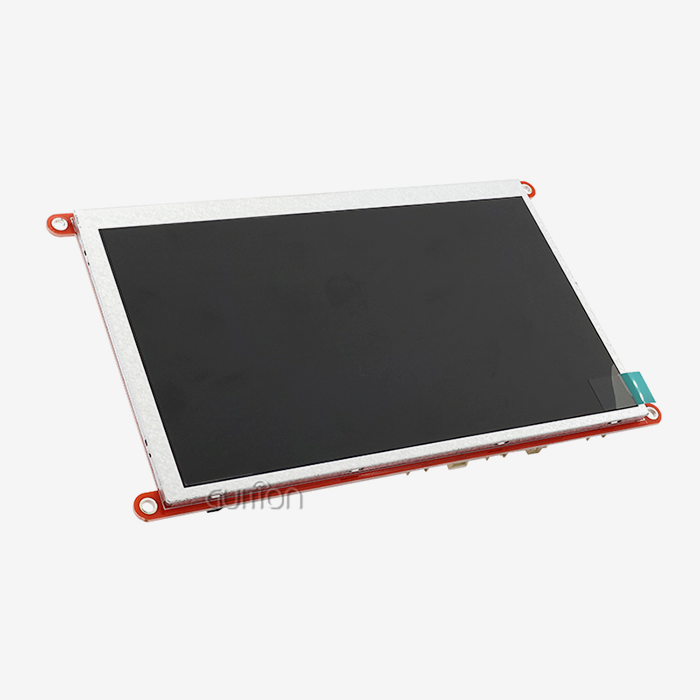
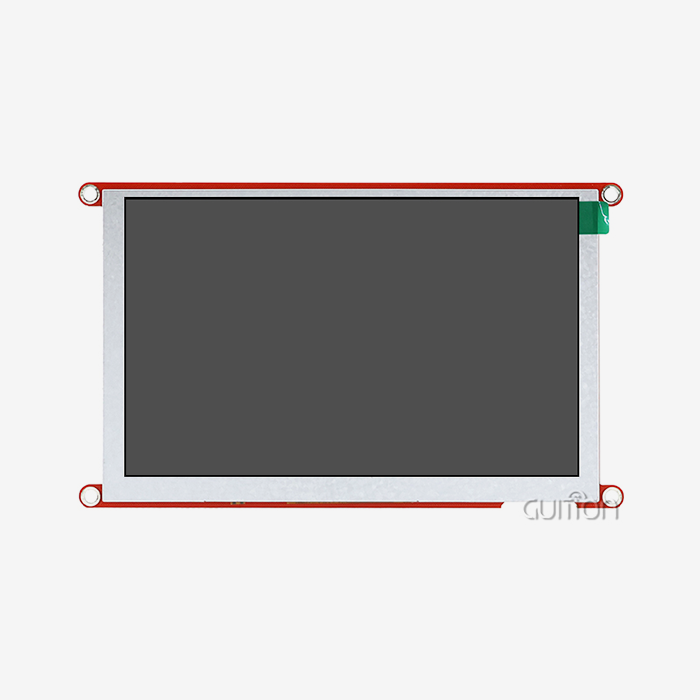
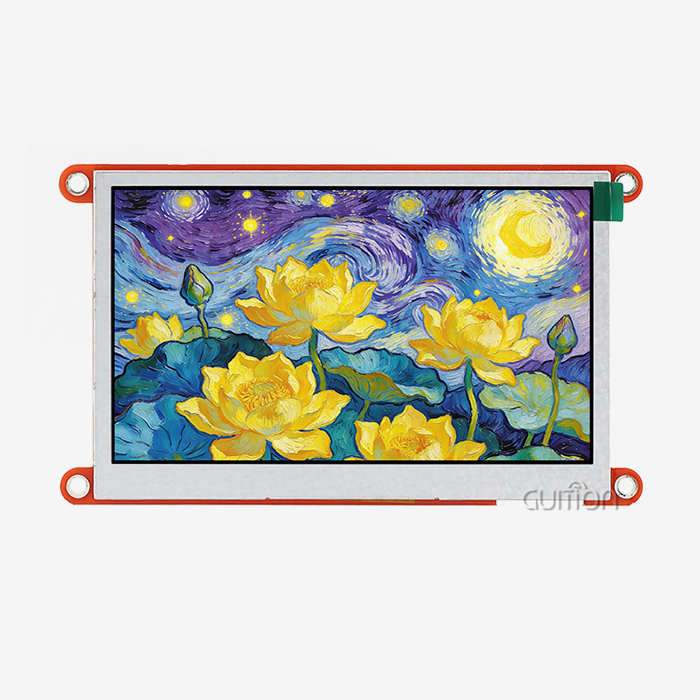
This number tells you how many things your UI can talk to at once. As long as the resolution is low, a Graphic lcd display module could work for simple status screens. But panels for medical, industrial, and smart systems would look much better with more pixels. The 4.3-inch screen of the GUITION JC8048B043N has a 800x480 resolution, which means that workers can read text and pictures clearly even when the lighting is bad.
Interface Type: RGB, SPI, and I2C Compared
How well the system works and how quickly it can be added depend on the interface that is picked. SPI is simple and slow screens are easy to use. I2C saves pins but makes the rate of updates slower. There are RGB parallel ports on the JC8048B043N that let more data pass through. This is why they work well with TFT modules that can handle colorful user interfaces. Before team buys something, they should make sure that the interface works with the MCU or chip they want to use.
Driver IC and Operating Temperature
The driver IC checks to see if the two can work together electrically and if there is extra power. The JC8048B043N has an RGB slot and a ST7265 driver IC that can handle 16.7M colors. The chargers outside, on plant floors, and in hospital buildings where the temperature stays between -20°C and 70°C all work the same. So the screen doesn't break down over time, make sure it works at the right temperature for where it will be used.
Market Comparison and Selecting the Best Graphic LCD Module
Graphic LCD vs. OLED vs. TFT: Trade-offs That Matter
Black-and-white LCD graphs don't use a lot of power and work well with industrial meters that are always on. OLEDs have deep blacks and quick response times, but they tend to burn in when used for screens that don't change. Some TFT LCD panels, like the JC8048B043N, offer good color, brightness, and cost. To make the equipment easy to use, they are often put in 3D printers, charging stations, and medical aesthetics equipment where the colors need to be very clear.
GUITION JC8048B043N: A Strong OEM Option
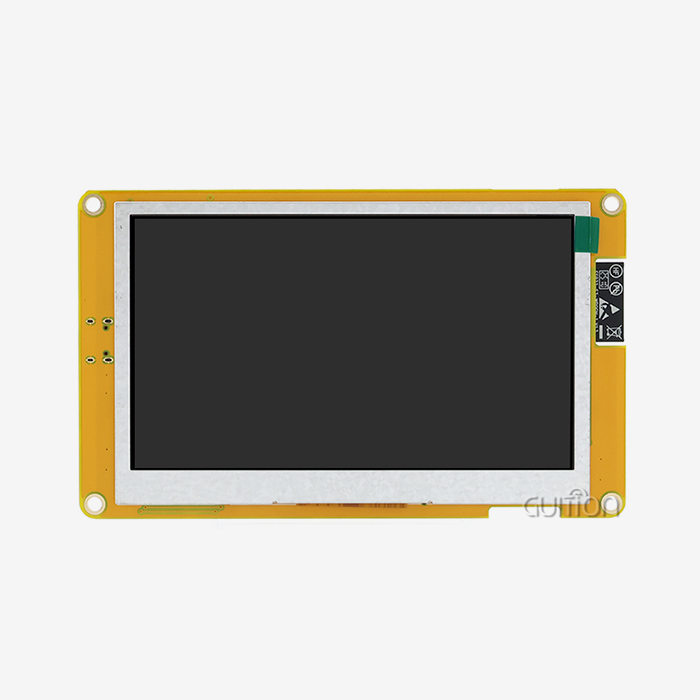
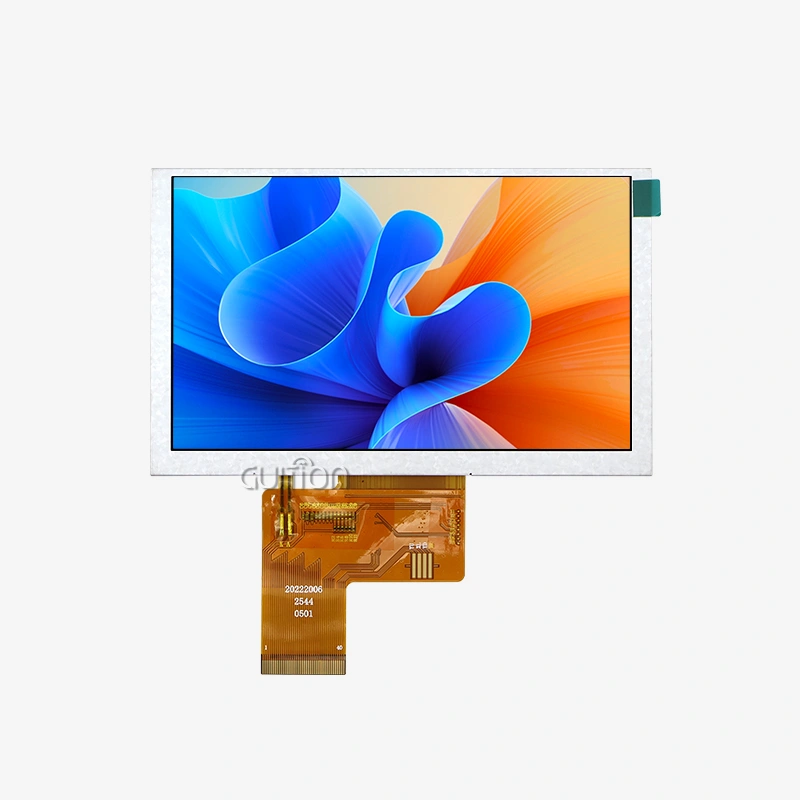
The JC8048B043N is a 4.3-inch TFT Graphic lcd display module with an 800x480 resolution, an RGB interface, and 16.7M color rendering that doesn't need touch input. It has a ST7265 driver IC too. IPS technology makes sure that colors stay true from a lot of different viewing points. It's now easy to see things. It helps OEM teams that don't want to make their own display panels but need one that has been tested and is ready for production.
Evaluating Other Brands for Comparison
Raystar and Newhaven Display are both well-known brands that make graphic LCD display modules for the black-and-white market. Displaytech and Winstar are two other companies that make color TFT applications. However, the amount of documentation and help for further development varies a lot. When teams buy things, they should check out more than just the screen specs. They should also look at the development tools that are available, how fast the technical support team responds, and how long the panel says they will give them.
Procurement Strategies for OEM Teams: How to Buy and Source Graphic LCD Modules
Buying Channels: Distributor vs. Direct Manufacturer
The minimum order size drops and the sample purchase process speeds up when you buy from authorized dealers. For example, when you work with Guition, you can buy in bulk and save money. You can also get different configurations and tech support that is just for you. If an OEM team needs to buy a lot of Graphic LCD display panels, they should talk to the company that makes them. It's now easier to get help with technology problems, and things can be done faster.
Lead Times, MOQ, and Cost Planning
When you place your order and how it is set up, it can take anywhere from two to six weeks to get a graphic LCD display panel. The wait time gets longer when you change the frame, lighting, or interface to make it your own. You should give yourself more time to buy things, especially if you need to show parts that have already been approved for industrial or medical licenses. Make sure you know what the MOQ is right away. To keep you from having to make a big investment right away, many makers offer small amounts that can be changed.
Quality Verification Before Full Orders
Before you place a large order, ask for samples and use AQL standards to make sure they look good. The filter might have dead pixels, air bubbles, or scratches. Feel free to check it out. For both high- and low-temperature storage tests, you should follow the IEC rules. Then, after making the tremors real, make sure the FPC contacts are still solid. With these steps, your production line won't break down in the field, and it will cost less to fix your products after they've been sold. Good customer service is important for OEM products.
Practical Applications and Integration Advice for OEM Projects
Integration with Microcontrollers and Processors
A Graphic lcd display module can be linked to an MCU before that. It's important that the voltage levels are the same, the interface timing is correct, and the correct startup process from the datasheet is followed. The RGB port on the JC8048B043N works well with CPUs that let you send signals to more than one display at the same time. It has an environment for programming that lets you use its own IDE, Arduino, and ESP-IDF. This helps embedded engineers make cross-platform samples more quickly and with fewer mistakes during the first step of integration.
If you want to finish your project faster, here are some important integration tips:
- Voltage matching: Confirm that your MCU I/O voltage matches the module's logic level (3.3V or 5V). Use a level shifter if needed to avoid signal integrity problems or module damage.
- Initialization sequence: Load the correct ST7265 register configuration from the datasheet before sending display data. An incorrect init sequence is the most frequent cause of blank screens during first bring-up.
- Cable management: For RGB interface modules, keep signal traces short and matched in length. Signal skew on parallel buses degrades image quality at higher refresh rates.
To match the voltage, make sure that the 3.3V or 5V logic level on the module matches the I/O voltage on your MCU. If you need to, you can use a level shifter to keep the signal safe and the module from getting broken.- String for setting up: Read the manual to learn how to set up the ST7265 registers correctly. After that, load it and send data to the display. Most of the time, blank screens on the first boot are caused by an incorrect init process.
Long-Term Reliability and Maintenance
These habits cut down on bugs and first-boot mistakes, which speeds up the time it takes to market your goods.
Conclusion
If you're making an OEM product, you should think about the resolution, input type, driver IC capability, temperature tolerance, and how good the seller support is when choosing a Graphic lcd display module. It meets these requirements because it has an 800x480 TFT screen, a ST7265 driver, 16.7M color depth, and can work in temperatures ranging from -20°C to 70°C. This part can be used by your team to make smart home screens, industrial panels, or hospital monitors. You can change the way it looks and how it works with other things.
FAQ
What key factors should I prioritize when selecting a graphic LCD display module?
Prioritize resolution, interface type (SPI, I2C, or RGB), driver IC compatibility, operating temperature range, and supplier documentation quality. For color-rich applications, TFT modules like the JC8048B043N are preferred over monochrome graphic panels.
How do I choose between SPI, I2C, and RGB interfaces?
SPI suits simple, low-refresh displays. I2C saves pins but limits speed. RGB parallel interfaces, as used in the JC8048B043N, deliver higher throughput for color TFT displays and are the right choice when your processor supports parallel display output.
Can the GUITION JC8048B043N be customized for OEM production?
Yes. Guition supports secondary development with full API documentation. Teams can customize UI layouts using the Guition development tool, and the platform supports Arduino, ESP-IDF, and Guition IDE modes for flexible integration across different engineering workflows.
What causes ghosting on graphic LCD display modules?
Ghosting typically results from incorrect contrast voltage (V0) or mismatched bias ratio settings. Adjust the Vop resistor or software contrast register to match the module's duty cycle specification. This resolves most display artifact issues without hardware changes.
Is this module suitable for outdoor or high-brightness environments?
The JC8048B043N uses IPS technology for wide viewing angles and consistent brightness. For direct sunlight applications, confirm backlight luminance specifications and consider adding an anti-glare optical bonding layer to the panel surface.
Get a Custom Quote from Guition — Your Trusted Graphic LCD Display Module Supplier
For your next OEM job, you need a display partner who can work with the technology you have and the short lead times you need. Graph LCD display modules come in a wide range of sizes, from 1.28" to 21.5". They also have their own computer tools, can update their software over-the-air (OTA), and can make their user interface work with more than one language. Get in touch with our team right away to get group prices, samples, or help with setting up your order individually. To get in touch, email us at david@guition.com or go to https://jingcaizhineng.aixdb.cn/.
References
1. Society for Information Display (SID). Information Display Magazine. 2023.
2. IPC Association. IPC-A-610: Acceptability of Electronic Assemblies. 2020.
3. International Electrotechnical Commission. IEC 62368-1: Audio/Video, Information and Communication Technology Equipment Safety. 2018.
4. Bhatt, A. Embedded Systems Design with the Texas Instruments MSP432. Springer. 2022.
5. Mouser Electronics. TFT LCD Module Selection Guide for Industrial Applications. 2023.
6. Digi-Key Electronics. Display Technology Comparison: LCD, OLED, and TFT for OEM Designers. 2024.
Learn about our latest products and discounts through SMS or email