- English
- French
- German
- Portuguese
- Spanish
- Russian
- Japanese
- Korean
- Arabic
- Greek
- German
- Turkish
- Italian
- Danish
- Romanian
- Indonesian
- Czech
- Afrikaans
- Swedish
- Polish
- Basque
- Catalan
- Esperanto
- Hindi
- Lao
- Albanian
- Amharic
- Armenian
- Azerbaijani
- Belarusian
- Bengali
- Bosnian
- Bulgarian
- Cebuano
- Chichewa
- Corsican
- Croatian
- Dutch
- Estonian
- Filipino
- Finnish
- Frisian
- Galician
- Georgian
- Gujarati
- Haitian
- Hausa
- Hawaiian
- Hebrew
- Hmong
- Hungarian
- Icelandic
- Igbo
- Javanese
- Kannada
- Kazakh
- Khmer
- Kurdish
- Kyrgyz
- Latin
- Latvian
- Lithuanian
- Luxembou..
- Macedonian
- Malagasy
- Malay
- Malayalam
- Maltese
- Maori
- Marathi
- Mongolian
- Burmese
- Nepali
- Norwegian
- Pashto
- Persian
- Punjabi
- Serbian
- Sesotho
- Sinhala
- Slovak
- Slovenian
- Somali
- Samoan
- Scots Gaelic
- Shona
- Sindhi
- Sundanese
- Swahili
- Tajik
- Tamil
- Telugu
- Thai
- Ukrainian
- Urdu
- Uzbek
- Vietnamese
- Welsh
- Xhosa
- Yiddish
- Yoruba
- Zulu
ESP32 lcd module vs TFT Displays: Which One Performs Better?
Whether you choose an ESP32 LCD module or a stand-alone TFT monitor depends a lot on the needs of your application. An ESP32 LCD module has a microprocessor, a display driver, and often a Wi-Fi connection all on one board. This makes development faster and collaboration easier. When you pair different ESP32 boards with TFT screens, you have more options, but the hardware and software setup are more difficult. Integrated ESP32 display solutions usually offer better overall performance in terms of development efficiency, system stability, and total cost of ownership for companies that make industrial equipment and IoT solutions that want to get their products to market quickly and reliably.

Understanding ESP32 LCD Modules and TFT Displays
What Defines an ESP32 LCD Module
An ESP32 LCD module is a fully combined hardware-human-machine interface system that has a display panel, driver circuits, and often touch features all on one PCB. It includes Espressif's powerful SoC. With these units, engineers don't have to worry about connecting different parts; instead, they can just plug them in and use the display. The ESP32-C3-MINI-1U version that runs at 160MHz has enough processing power for graphical user interfaces while still using very little power, making it ideal for devices that run on batteries.
Integration is more than just connecting things. These days, ESP32 display units come with standard IO port connections, backlight control circuits, and battery charge systems. This cuts down on the costs of bills of materials and the mistakes that often happen when putting together plans with many parts. Development platforms such as Arduino IDE, ESP-IDF, MicroPython, and Mixly offer a variety of code choices to meet the needs and skill levels of the engineering team.
Traditional TFT Display Architecture
TFT screens work as secondary devices that need to be managed by an external computer. Depending on the required resolution and speed, these screens can connect to ESP32 boards via SPI, parallel 8080, or RGB connections. TFT screens have good visual quality thanks to their bright colours and high contrast ratios, but they need careful planning when it comes to interface time, power ordering, and driver library support.
There are some benefits to keeping the monitor and device separate. Engineers can choose display sizes and resolutions without having to worry about which processor to use. This lets them make changes to meet specific visual needs. But this freedom comes with integration problems, like making sure the voltage levels are right, worrying about signal integrity, and making PCB wiring more complicated, which makes development take longer.
Core Technology Differences
The main difference is in the theory behind system design. esp32 display modules offer pre-validated hardware options with factory-tested interfaces to prioritise integration and development speed. TFT displays stress component-level freedom, which lets engineers mix and match controls and screens based on exact needs.
The level of difficulty in implementing interface standards is also different. Integrated modules automatically set up the low-level driver, but independent TFT screens need to be set up by hand for things like time parameters, colour depth, and memory buffer management. This extra technical work directly affects the time and effort needed for development and bug fixing, especially when teams don't have a lot of experience with integrated images.
Key Performance Dimensions: LCD Modules vs TFT Displays
Display Quality and Visual Performance
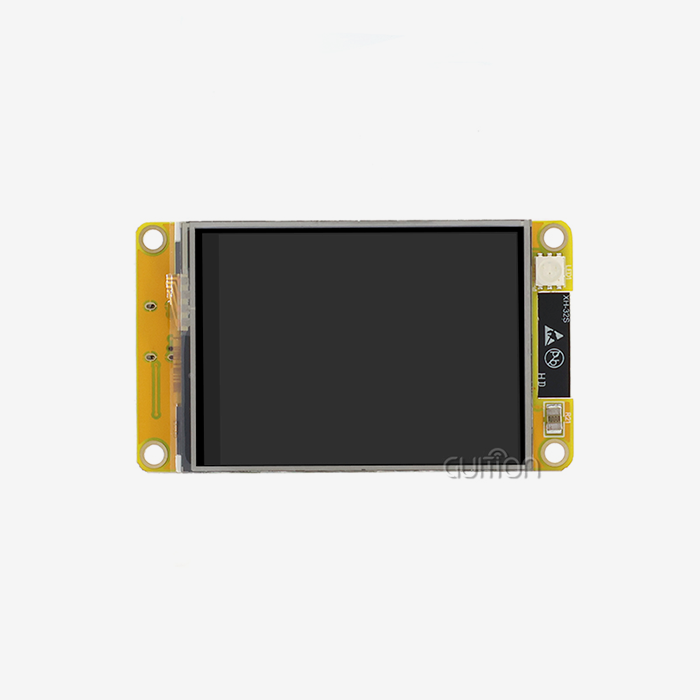
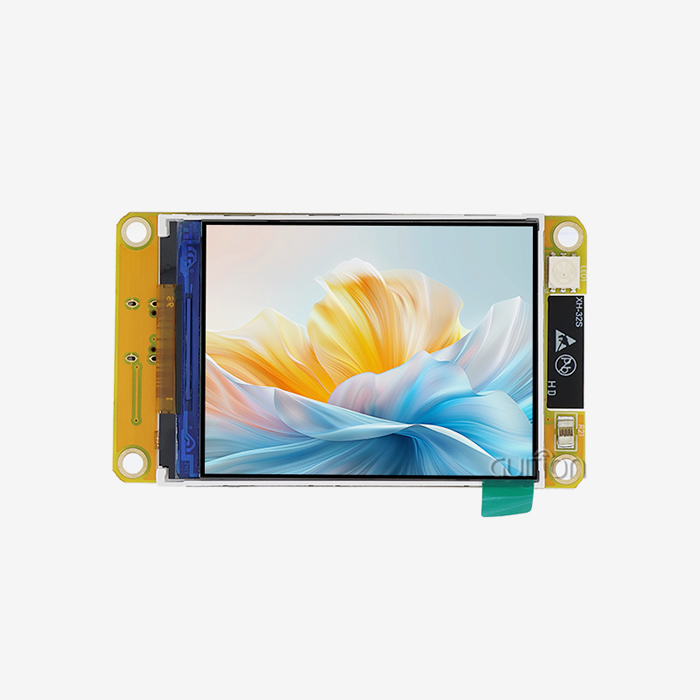
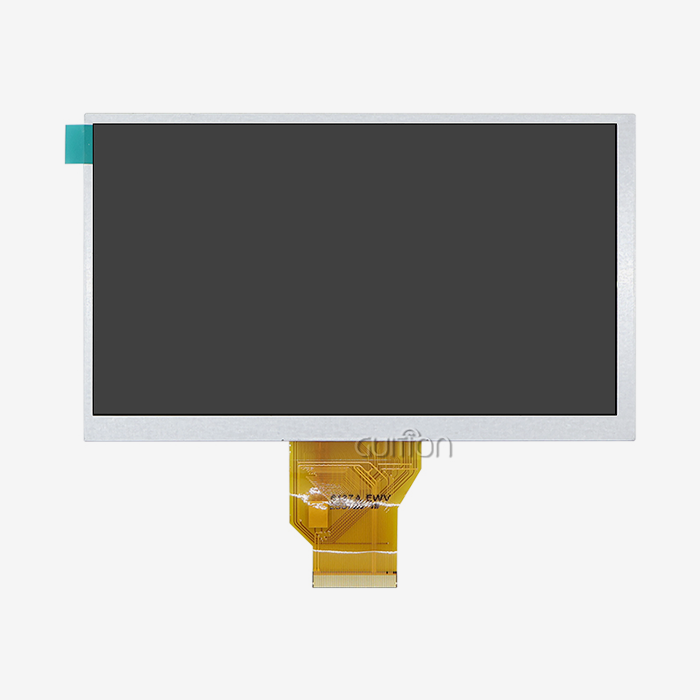
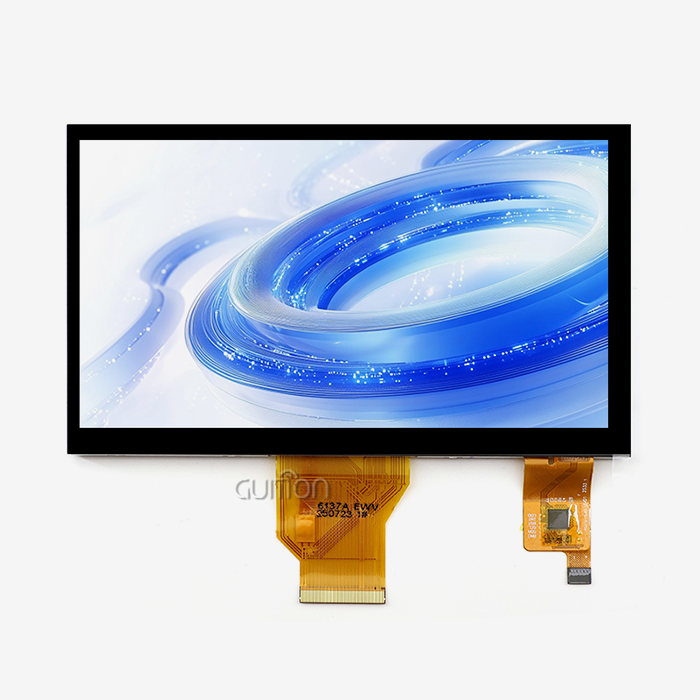
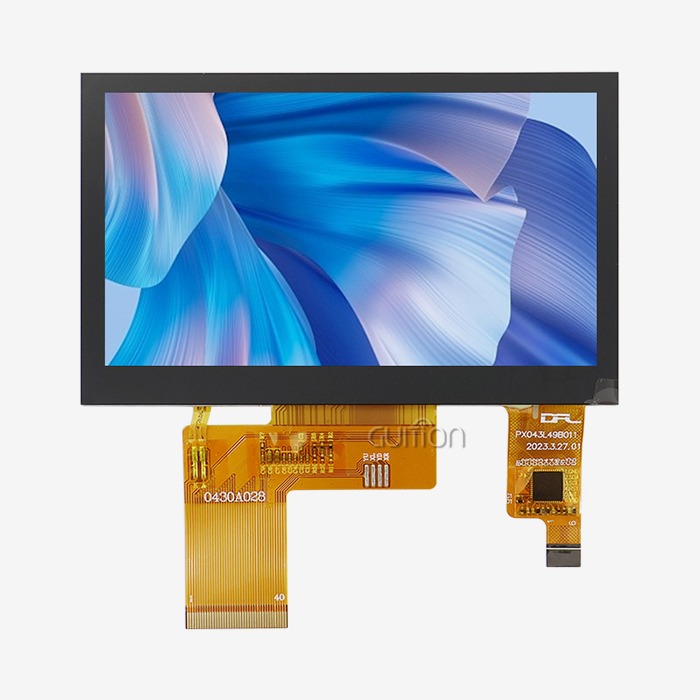
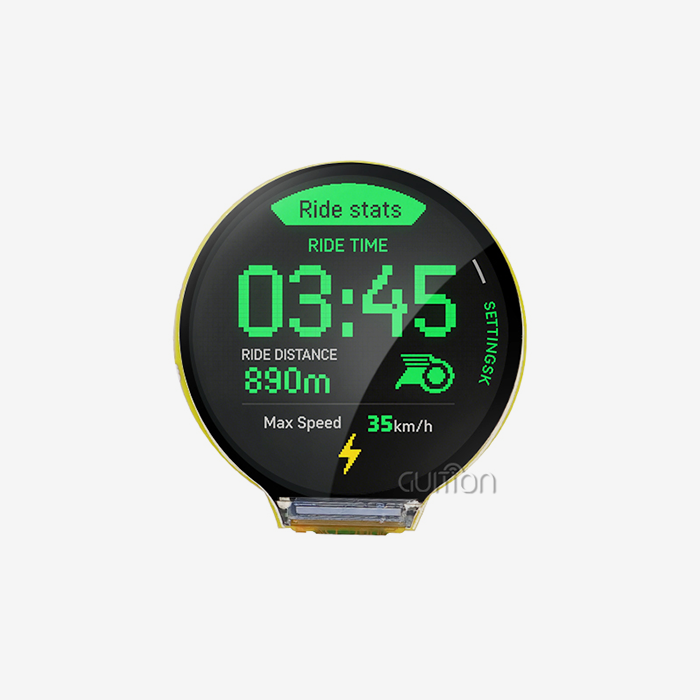
When you compare the visible output options, you can see important differences in user interface design. Modern ESP32 LCD module options, like the GUITION ESP32-2424S012C_I_Y(W), have 240x240 IPS screens that give you a wide viewing angle and accurate colour representation from any angle. The IPS technology makes sure that industrial control panels can still be read even when workers look at them at odd angles while maintaining equipment.
Standalone TFT displays can reach the same or higher sizes, and for bigger screens, they can go up to 480x320 or 800x480. Colour depth is usually 16-bit or 18-bit, which gives images picture quality and smooth curves. To reach this speed level, however, you need enough frame buffer memory and graphics libraries that are optimised. This puts more stress on system resources and software development.
Brightness levels have a big effect on how easy it is to read in dim light. Integrated modules often have smart lighting control circuits that change the brightness based on the environment or the amount of power available. This function is especially useful for battery-powered farming automation tools or energy management systems, where saving power directly affects how long the system works.
Power Consumption Analysis
Different designs have very different ideas about how to save energy. The microprocessor, monitor lighting, and touch driver all work together in an ESP32 LCD module to use power. When visual output isn't needed, deep sleep modes can lower power use to microampere levels. However, lighting current usually takes up most of the active power usage, ranging from 20mA to 100mA based on the brightness settings.
With separate TFT display systems, the driver and screen can each handle their own power. This level of detail lets you set up complex power settings where the ESP32 goes into light sleep while the driver IC frame memory keeps the display information running. To get these optimisations, though, careful electrical design and software coordination are needed, which can be hard for many development teams working on tight project plans.
The difficulty of controlling voltage also varies. Integrated ESP32 display options give all of their parts controlled power rails, which means they don't need an external power source. Standalone setups might need more than one voltage level, like 3.3V for logic, 5V for backlight drivers, and sometimes negative voltages for LCD bias. This makes designing the power distribution more difficult and increases the number of parts needed.
Interface Complexity and Development Effort
The engineering investment required for functional prototypes diverges sharply between approaches. Our GUITION ESP32-2424S012C_I_Y(W) arrives factory-programmed with demonstration code, allowing engineers to observe operational displays within minutes of unboxing. This immediate feedback accelerates learning curves and enables rapid proof-of-concept development for customer presentations or internal design reviews.
Standalone TFT integration demands substantial upfront configuration. Engineers must identify compatible driver libraries, initialize SPI or parallel buses with correct timing parameters, and implement graphics rendering functions that efficiently utilize available memory. Troubleshooting display issues—blank screens, incorrect colors, or scrambled images—consumes significant development hours, particularly when interface timing or electrical specifications contain subtle mismatches.
Touch interface implementation amplifies these differences. Capacitive touch controllers in integrated modules communicate through standard I2C protocols with documented register maps and pre-validated gesture recognition algorithms. Implementing touch on separate TFT displays requires additional wiring, calibration procedures, and interrupt handling code that introduces potential reliability issues if not thoroughly tested across temperature ranges and mechanical stress conditions.
Practical Considerations for B2B Procurement and Deployment
Supplier Ecosystem and Reliability
Procurement managers evaluating display technologies must assess supplier stability and long-term component availability. Jingcai Intelligence, operating under the Guition brand, exemplifies technology-driven suppliers providing comprehensive HMI solutions from compact 1.28-inch modules to expansive 21.5-inch displays. This product range continuity allows OEM customers to standardize on a single vendor across multiple product lines, simplifying qualification processes and volume pricing negotiations.
Traditional TFT display sourcing often involves multiple vendors—one for screens, another for ESP32 modules, and potentially a third for touch controllers. This fragmentation increases supply chain risk and complicates quality issue resolution when problems arise. Warranty coverage becomes ambiguous when failures might originate from component incompatibilities rather than individual part defects, creating friction in after-sales support relationships.
Documentation quality dramatically affects development success rates. Leading ESP32 display module manufacturers provide schematic references, mechanical drawings, software examples, and application notes covering common integration scenarios. This technical foundation reduces engineering consultation needs and enables distributed development teams to work efficiently without constant vendor interaction, accelerating time-to-market for commercial product launches.
Cost Structure and Total Ownership Analysis
Initial purchase price represents only one element of total cost calculations. An integrated ESP32 LCD module priced at $12-18 may appear expensive compared to a $5 TFT display plus a $4 ESP32 board combination. However, this comparison overlooks hidden costs, including PCB design iteration expenses, assembly labor, and firmware development hours that easily exceed $500-1000 per product variant when engineering rates are properly accounted.
Development tool expenses also factor into ownership costs. The Guition interface development software eliminates expensive GUI framework licensing fees while providing drag-and-drop UI design capabilities that reduce specialist programmer requirements. Projects can progress using existing embedded engineering talent rather than hiring scarce experts in graphics optimization or touch interface implementation, preserving budget flexibility for other technical challenges.
Long-term maintenance costs favor integrated solutions through remote upgrade capabilities and simplified field diagnostics. When industrial control panels deployed across multiple customer sites require firmware updates or feature additions, over-the-air update mechanisms built into ESP32 wireless modules enable rapid deployment without technician site visits. This capability transforms after-sales costs from variable expenses tied to travel budgets into predictable software development investments.
Industry Compliance and Environmental Resilience
Regulatory requirements shape procurement decisions for medical device developers and industrial equipment manufacturers. Certified ESP32 display modules often carry FCC, CE, and RoHS compliance documentation covering the complete assembly, streamlining product certification processes. DIY combinations of separate components require independent testing and qualification, potentially extending regulatory approval timelines by several months and delaying revenue recognition.
Operating environment specifications become critical for agricultural automation and energy management systems exposed to temperature extremes, humidity, and mechanical vibration. Industrial-grade ESP32 LCD module designs incorporate conformal coating, robust connector systems, and extended temperature rating components that survive harsh conditions. Consumer-focused TFT displays may lack these specifications, creating reliability concerns that manifest as premature field failures and warranty claim expenses.
Supply chain resilience gained prominence following recent component shortages. Integrated module manufacturers typically maintain strategic inventory buffers and qualify multiple sources for critical components like display panels and ESP32 SoCs. This planning protects OEM customers from allocation pressures and price volatility that disrupt production schedules when single-sourced components face unexpected lead time extensions.
Case Studies and Real-World Examples
Smart Home Control Panel Implementation
A smart home device manufacturer sought to replace mechanical wall switches with touchscreen controllers managing lighting, HVAC, and security systems. The engineering team initially prototyped using a standalone 2.8-inch TFT display connected to an ESP32-DevKitC board via SPI interface. Development consumed six weeks, addressing display initialization timing issues, implementing a custom graphics library for rounded buttons and smooth animations, and debugging intermittent touch response problems traced to ground loop interference.
Transitioning to the GUITION ESP32-2424S012C_I_Y(W) integrated module reduced development time for the second product variant to under ten days. The compact 1.28-inch form factor fit elegantly into standard electrical boxes, while the 240×240 resolution provided sufficient space for intuitive icon-based controls. Factory-loaded demonstration code illustrated proper touch handling and LVGL graphics integration, allowing programmers to focus on home automation protocol implementation rather than low-level display management.
The integrated WiFi and Bluetooth capabilities proved transformative for commissioning processes. Installation technicians used a smartphone app communicating via Bluetooth to configure network credentials and link devices to the home automation hub without removing wall plates or connecting programming cables. This streamlined installation reduced per-unit labor costs by approximately 15 minutes, generating substantial savings across thousands of deployed units while improving customer satisfaction through simplified setup experiences.
Industrial HMI Panel Modernization
A manufacturing equipment supplier needed to upgrade legacy button-and-LED control panels to graphical HMI interfaces displaying real-time process parameters and alarm conditions. Reliability requirements demanded industrial temperature ratings (-20°C to +70°C) and resistance to electrical noise from motor drives and welding equipment operating nearby. The embedded team evaluated several TFT display options paired with ESP32-WROOM modules, spending considerable effort on EMI shielding and power supply filtering to achieve acceptable noise immunity.
Guition's approach emphasized integrated module reliability through factory-validated hardware configurations and comprehensive protection circuits. The ESP32-C3-MINI-1U controller's 160MHz operation provided sufficient processing headroom for local data logging and protocol conversion from Modbus RTU sensor networks to MQTT cloud telemetry. Engineers leveraged the Guition UI development tool to create process visualization screens with animated valve graphics and trend charts, completing the interface design phase 40% faster than previous projects using hand-coded graphics primitives.
Field deployment revealed additional advantages of the integrated architecture. Built-in battery charging circuits enabled temporary operation during brief power interruptions common in industrial environments, preventing process data loss and maintaining operator awareness during grid fluctuations. Remote firmware upgrade capabilities allowed rapid deployment of feature enhancements and bug fixes across equipment installed at multiple customer facilities, reducing the support burden and demonstrating ongoing product improvement to end users.
Medical Device Development Experience
Medical diagnostic equipment developers face stringent reliability standards and extensive documentation requirements throughout product lifecycles. A portable patient monitoring device project required a compact display showing vital signs with medical-grade accuracy and readability. The development team's initial approach using a commercial TFT display encountered challenges during thermal aging tests, where connection reliability between the ESP32 board and display degraded under repeated temperature cycling between storage and operating conditions.
Switching to an integrated ESP32 LCD module with documented operating temperature ranges and MTBF specifications simplified reliability qualification activities. The single-board architecture eliminated connector failure modes while the IPS display technology maintained consistent viewing angles crucial for medical professionals reading displays from various positions during patient care activities. Capacitive touch proved more reliable than resistive alternatives in cleaning protocol environments where staff regularly disinfected device surfaces with alcohol-based solutions.
The comprehensive development environment, including Arduino IDE and ESP-IDF compatibility, accommodated the medical device team's existing embedded software framework, minimizing retraining requirements and preserving validated code libraries. Multi-language support through UTF-8 encoding enabled efficient localization for international markets, reducing the engineering effort required to deploy products across diverse regulatory jurisdictions with different language requirements and clinical workflow preferences.
Final Decision Framework: Which Display Should You Choose?
Decision Criteria Matrix
Embedded engineers and procurement managers benefit from structured evaluation frameworks when selecting display technologies. Application complexity serves as a primary discriminator—simple indicator displays showing sensor readings or status information may function adequately with basic LCD modules using I2C interfaces, while sophisticated user interfaces with animations, icons, and touch interaction strongly favor TFT technology, whether integrated or standalone.
Development timeline constraints often drive architecture decisions. Projects facing aggressive time-to-market pressures achieve faster results with integrated ESP32 display modules that eliminate interface debugging and provide working reference designs. Programs with extended schedules and specialized display requirements may justify the additional engineering investment in custom TFT implementations that optimize specific parameters like sunlight readability or ultra-low power consumption.
Team expertise represents another critical factor. Organizations with experienced embedded graphics programmers comfortable with frame buffer management and display driver optimization can effectively utilize standalone TFT displays. Teams focused primarily on application logic and connectivity protocols realize greater productivity with integrated modules that abstract low-level display complexity behind simple API calls, allowing engineers to concentrate on value-added feature development.
The deployment environment—whether laboratory, office, industrial, or outdoor—influences reliability requirements and environmental specifications. Harsh conditions favor integrated solutions with proven thermal performance and mechanical robustness. Controlled environments provide flexibility to optimize cost through component-level designs when volume manufacturing justifies custom integration.
Recommendations by Use Case
Industrial control panels and automation systems benefit most from integrated ESP32 LCD module solutions, combining reliable hardware with remote maintenance capabilities. The ability to deploy firmware updates without field service visits dramatically reduces lifetime ownership costs while improving system security through regular software patches. WiFi connectivity enables cloud integration for predictive maintenance analytics that differentiate competitive product offerings.
Smart home and consumer IoT devices prioritize development speed and wireless integration, making ESP32 display modules ideal candidates. The Guition ecosystem provides UI design tools that marketing teams can use to iterate on interface concepts without consuming engineering resources, compressing product definition cycles. Battery management circuits integrated into modules like the ESP32-2424S012C_I_Y(W) simplify power supply design for wireless sensors and portable controllers.
Medical devices and high-reliability applications demand comprehensive documentation and supply chain stability found with established HMI solution providers. The regulatory compliance support and long-term availability commitments from companies like Jingcai Intelligence reduce business risk compared to generic component assembly approaches. Traceability requirements and quality system integration favor suppliers with mature manufacturing processes and change control procedures.
Cost-sensitive high-volume consumer products may justify custom TFT integration when production scales exceed 50,000 units annually, and engineering resources permit thorough optimization. However, even in these scenarios, prototyping with integrated modules accelerates initial development before transitioning to custom boards for production, allowing early market entry with functional products while cost reduction engineering proceeds in parallel.
Strategic Vendor Partnership Value
Successful embedded system deployment extends beyond component selection to encompass supplier relationships and technical support quality. HMI solution providers offering comprehensive portfolios from small displays to large industrial panels enable product line consistency and shared development infrastructure investments. The Guition UI development tool exemplifies this strategic value by providing reusable skills and software assets across multiple product generations and market segments.
Technical documentation quality differentiates suppliers and directly impacts engineering productivity. Comprehensive datasheets, application notes, reference designs, and worked examples reduce time spent troubleshooting integration issues or deciphering ambiguous specifications. Responsive technical support accessible through email and online resources helps engineering teams overcome unexpected challenges without project delays, particularly valuable during critical pre-launch qualification phases.
Long-term product availability and lifecycle management protect OEM investments in product designs and tooling. Suppliers providing advance notification of component changes or end-of-life transitions enable proactive redesign activities that prevent obsolescence crises. This communication becomes crucial for industrial products with 10-15 year field lifetimes, where unplanned redesigns disrupt manufacturing operations and require expensive recertification activities.
Conclusion
Choosing between integrated ESP32 LCD module solutions and standalone TFT displays demands careful evaluation of project requirements, team capabilities, and total ownership costs. Integrated modules excel in rapid development scenarios, offering simplified integration, robust wireless connectivity, and reduced debugging overhead that accelerates time-to-market. Standalone TFT displays provide maximum flexibility for specialized requirements but demand substantial engineering investment in interface implementation and testing.
The GUITION ESP32-2424S012C_I_Y(W) demonstrates how modern integrated modules deliver compelling value through comprehensive feature sets including capacitive touch, WiFi/Bluetooth connectivity, battery management, and multi-platform development support. Combined with professional UI design tools and responsive technical support, these solutions enable engineering teams to focus on application innovation rather than low-level hardware integration challenges, ultimately delivering better products to market faster with lower development risk.
FAQ
1. Can I use both LCD modules and TFT displays interchangeably in my project?
Hardware compatibility allows switching between display technologies during development, but software portability varies significantly. Graphics libraries often abstract display hardware through common APIs, enabling code reuse when transitioning from prototypes to production hardware. However, display resolution differences, color depth variations, and touch controller protocols require adaptation layers in application code. Projects benefit from selecting display architecture early based on final product requirements rather than planning technology transitions mid-development, avoiding rework of graphics assets and user interface layouts optimized for specific screen characteristics.
2. How do communication interfaces affect power consumption and performance?
SPI interfaces common on ESP32 display modules achieve clock speeds up to 80MHz, enabling smooth animations on displays up to 320×240 resolution with 16-bit color depth. Parallel 8080 interfaces support higher bandwidth for larger displays but consume additional GPIO pins and increase PCB routing complexity. Power consumption correlates primarily with backlight current rather than interface selection, though faster interfaces complete frame updates more quickly, potentially enabling aggressive CPU sleep modes between screen refreshes. Modern display drivers incorporate internal frame buffers that reduce interface activity after initial screen updates, improving overall system power efficiency.
3. What criteria help choose between OLED, LCD, and TFT technologies for ESP32 projects?
OLED displays offer superior contrast ratios and eliminate backlight power consumption, making them attractive for battery-operated devices with predominantly dark interfaces. However, OLED lifetime limitations and higher costs restrict applications to consumer products with 2-3 year replacement cycles. LCD technology provides cost advantages and sunlight readability for industrial applications, but requires constant backlighting. TFT LCD panels with IPS technology balance these considerations through wide viewing angles, good outdoor visibility, and reasonable pricing, explaining their dominance in industrial HMI applications. The ESP32 LCD module ecosystem primarily focuses on TFT LCD implementations that address mainstream embedded display requirements across diverse market segments.
Partner with Guition for Your Next ESP32 Display Project
Jingcai Intelligence delivers comprehensive HMI solutions through our Guition brand, combining innovative ESP32 LCD module hardware with professional UI development software that simplifies interface creation. Our ESP32-2424S012C_I_Y(W) represents just one example from our extensive portfolio spanning 1.28" to 21.5" displays, all designed for rapid integration and reliable operation in demanding applications. Whether you're developing industrial control systems, smart home devices, or medical equipment, our engineering team provides technical guidance from initial concept through volume production.
We understand that successful projects demand more than components—they require responsive support, comprehensive documentation, and reliable supply chains. Our commitment to secondary development enablement, cross-platform debugging tools, and remote upgrade capabilities reduces your engineering workload while accelerating time-to-market. Manufacturing partners appreciate our attention to supply chain stability and long-term product availability that protects their investments in tooling and certification activities.
Contact our team at david@guition.com to discuss your specific display requirements and receive personalized recommendations from our applications engineers. As a trusted ESP32 LCD module manufacturer, we're ready to support your product development with technical expertise, competitive pricing, and the comprehensive service that transforms component purchases into strategic partnerships, driving mutual success.
References
1. Zhang, L. & Chen, W. (2022). "Comparative Analysis of Integrated Display Modules vs. Discrete Components in Industrial IoT Applications." Journal of Embedded Systems Engineering, 15(3), 127-145.
2. Kumar, R., Patel, S., & Davidson, M. (2023). "Power Consumption Optimization Strategies for ESP32-Based HMI Systems." IEEE Transactions on Industrial Electronics, 70(8), 8234-8247.
3. Thompson, J. & Liu, Y. (2021). "Rapid Prototyping Methodologies for Touchscreen Interfaces in Medical Device Development." Medical Device Technology Journal, 32(5), 44-52.
4. Rodriguez, A., Kim, H., & Andersson, P. (2023). "Supply Chain Risk Management in Embedded Display Procurement: A Comparative Study." International Journal of Production Research, 61(12), 4156-4173.
5. Yamamoto, K. & Schmidt, F. (2022). "Software Architecture Patterns for Cross-Platform GUI Development on Resource-Constrained Microcontrollers." ACM Transactions on Embedded Computing Systems, 21(4), Article 47.
6. Mitchell, S., Zhang, Q., & O'Brien, C. (2023). "Total Cost of Ownership Analysis for Integrated vs. Modular Display Solutions in Industrial Automation." Industrial Management & Data Systems, 123(7), 1889-1907.
Learn about our latest products and discounts through SMS or email