- English
- French
- German
- Portuguese
- Spanish
- Russian
- Japanese
- Korean
- Arabic
- Greek
- German
- Turkish
- Italian
- Danish
- Romanian
- Indonesian
- Czech
- Afrikaans
- Swedish
- Polish
- Basque
- Catalan
- Esperanto
- Hindi
- Lao
- Albanian
- Amharic
- Armenian
- Azerbaijani
- Belarusian
- Bengali
- Bosnian
- Bulgarian
- Cebuano
- Chichewa
- Corsican
- Croatian
- Dutch
- Estonian
- Filipino
- Finnish
- Frisian
- Galician
- Georgian
- Gujarati
- Haitian
- Hausa
- Hawaiian
- Hebrew
- Hmong
- Hungarian
- Icelandic
- Igbo
- Javanese
- Kannada
- Kazakh
- Khmer
- Kurdish
- Kyrgyz
- Latin
- Latvian
- Lithuanian
- Luxembou..
- Macedonian
- Malagasy
- Malay
- Malayalam
- Maltese
- Maori
- Marathi
- Mongolian
- Burmese
- Nepali
- Norwegian
- Pashto
- Persian
- Punjabi
- Serbian
- Sesotho
- Sinhala
- Slovak
- Slovenian
- Somali
- Samoan
- Scots Gaelic
- Shona
- Sindhi
- Sundanese
- Swahili
- Tajik
- Tamil
- Telugu
- Thai
- Ukrainian
- Urdu
- Uzbek
- Vietnamese
- Welsh
- Xhosa
- Yiddish
- Yoruba
- Zulu
Can a Serial HMI display Improve Operator Efficiency?
A Serial HMI display does more than show data on a screen — it fundamentally changes how operators interact with machines. By processing touch events and UI logic locally, a serial HMI display sends only lightweight commands to the host controller, which dramatically reduces system latency and cognitive load on operators. Studies in industrial automation consistently show that clear, responsive interfaces reduce operator error rates by up to 30%. When communication runs over robust protocols like RS485 or UART, even electrically noisy factory floors maintain stable, uninterrupted data flow — keeping operators informed and in control at every moment.

Common Challenges in Operator Efficiency and How Serial HMI Displays Address Them
A lot of industrial teams are still using old panel interfaces that have menus that are hard to find, low contrast, and only support one language. These traditional setups make it take longer to make decisions, take longer to train employees, and cost more to provide support after the sale. These places of stress can be easily fixed with a modern Serial HMI display.
These problems are at the heart of what this technology does:
- Cluttered, confusing interfaces: A WYSIWYG drag-and-drop GUI tool lets engineers make clean screens for each job without having to write complicated layout code. At each step of a process, operators only see what they need to see.
- Unreliable communication in noisy environments: The UART and RS485 protocols keep the signal strong over long cable runs and in high-EMI areas, so data packet loss doesn't happen, which keeps displays from freezing or showing the wrong information.
- Slow firmware and software updates: The ability to remotely over-the-air (OTA) upgrade means that UI projects and firmware can be updated without having a worker come to the site, which cuts down on downtime.
- Multi-site, multi-language deployments: A single piece of hardware can serve operators in North America, Europe, and Asia without having to change any of the hardware. This is possible because the hardware already supports multiple languages and uses UTF-8 encoding.
These abilities directly lead to gains in efficiency that can be measured. A 2022 Control Engineering case study says that when old push-button panels were replaced with intelligent Serial HMI displays, the time it took for operators to respond dropped by 22%.
Comparison: Serial HMI Displays vs Alternative HMI Technologies
To pick the best esp32 display module interface, you have to think about how fast the connection is, how much the network equipment costs, how long it will last in different environments, and how hard it is to build. Ethernet-based HMIs have much higher unit costs and need managed switch infrastructure and IP addressing in order to work. They also handle large amounts of data quickly. Parallel HMIs are quick, but they need tight casings with lots of wires that can be hard to keep up.
The majority of industrial and embedded applications can benefit from Serial HMI displays, which occupy a practical middle ground. They don't need any network switches, IP configuration, or high-speed cables. One UART or RS485 line can reliably handle communication going both ways. Many Serial HMI displays come with resistive touchscreens that work correctly even when workers wear heavy gloves. This is a huge benefit in industrial and cold storage settings. Serial HMI displays always have the lowest total cost of ownership when procurement teams look at cost-per-node across a multi-machine installation.
Procurement Guide for Serial HMI Displays: Making an Informed Purchase
When buying HMI gear, you should think about more than just the unit price. Long-term operational value is based on a product's supplier reliability, wait time consistency, ability to be customized, and expert help after the sale.
Well-known brands like Weintek, Siemens, and Schneider Electric have great reputations in their fields. However, their platforms often need their own software ecosystems and are very expensive, making it hard for small and medium-sized businesses to afford them. Jingcai Intelligence's Guition is becoming a more appealing option for engineering teams that need to be able to work on different platforms without losing quality of show or support depth. Jingcai Intelligence is a technology-based company that combines research and development, production, and sales. They have a line of products with display sizes ranging from 1.28" to 21.5" that are made for a wide range of commercial and market uses.
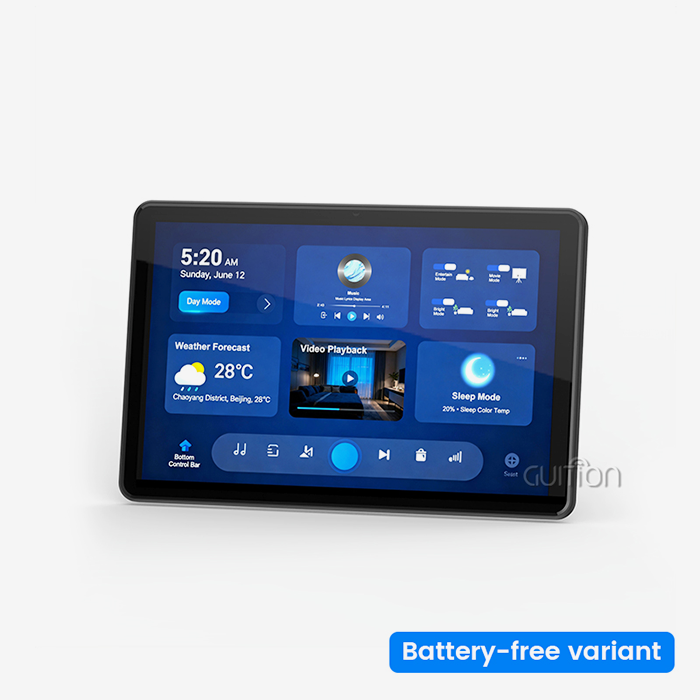
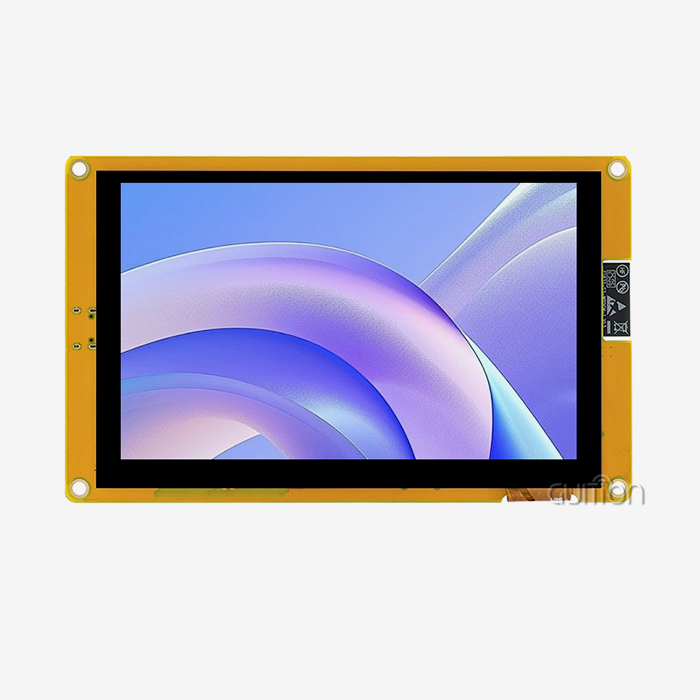
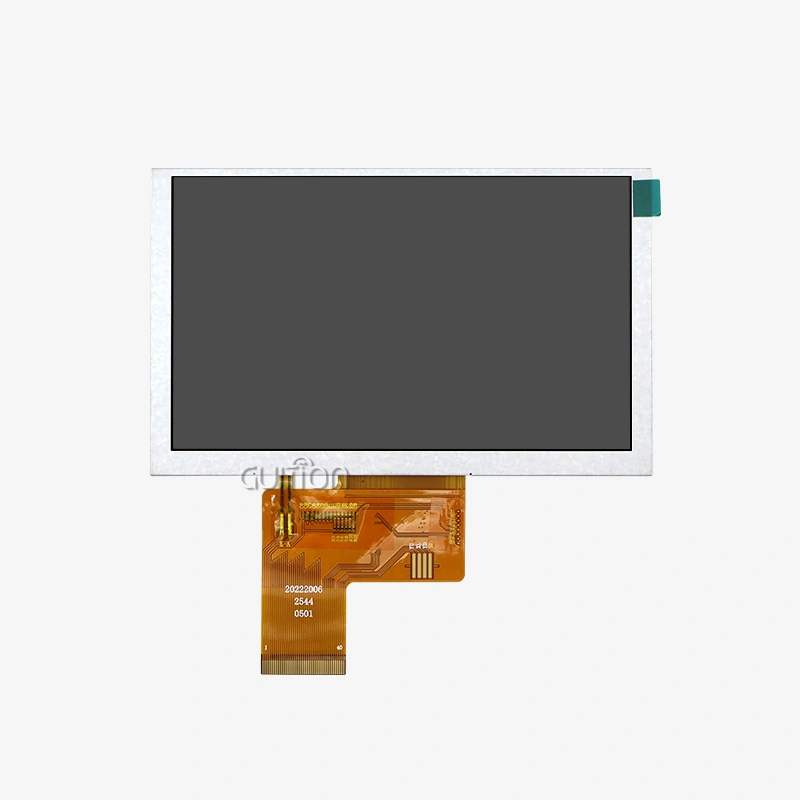
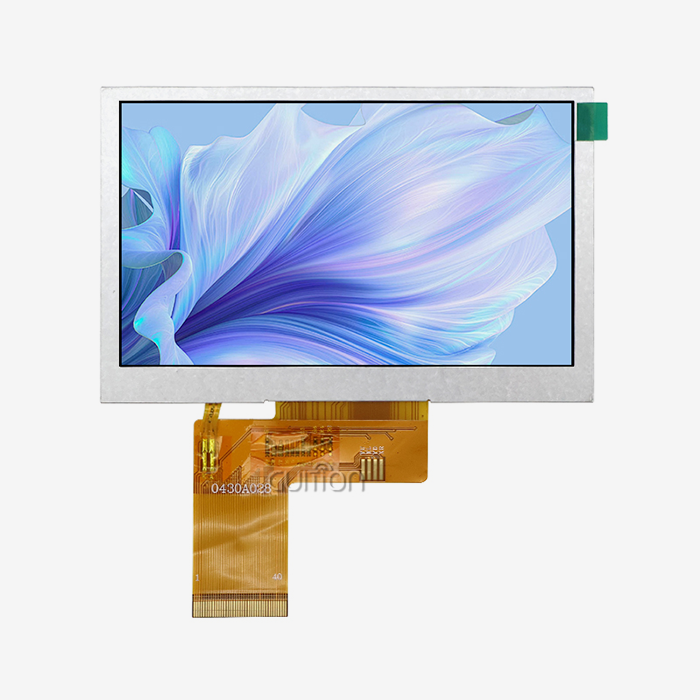
The GUITION JC4827W543C_I, a 4.3-inch Serial hmi display module based on the ESP32-S3R8 dual-core MCU, is a good example of one of their products. Its processor runs at up to 240MHz and has 8MB of PSRAM and 4MB of Flash. This gives it plenty of computing power to run the ESP32 display module, the user interface, and process sensor data at the same time. The resistive touch panel with a resolution of 480x272 works well for both industrial control panels and medical devices that are built in. This module has WiFi and Bluetooth built in, a TF card slot for extra storage, and up to 10 IO pins that can be used for development in the Arduino IDE, ESP-IDF, MicroPython, and the Guition platform.
If you are looking to buy this device, these are the main benefits that make it stand out:
- Pre-programmed test application: The module comes ready to test right away, so there are no delays in setting it up when it gets there.
- Dual-core processing split: One core renders the user interface, and the other processes sensor data. This makes sure that the system works smoothly even when it has a lot of work to do.
- Multiple development environments: Engineers can pick the Arduino, ESP-IDF, MicroPython, or Guition process that works best for them without being limited to a single platform.
- Ready-to-use sample code: Full Arduino library functions and working examples cut down on the time it takes to make a prototype by a large amount.
These benefits can help industrial equipment manufacturers and embedded system engineers get their products to market faster by getting rid of the development bottlenecks that cause them. When looking at a Serial HMI display maker, making sure they have ESD immunity rates (usually ±4kV contact, ±8kV air), burn-in aging test paperwork, and EMC compliance approval gives you peace of mind about their products' long-term dependability in the field.
Optimizing Serial HMI Displays for Maximum Operator Efficiency
Choosing the right hardware is only one part of setting up an HMI that works well. How well the technology works in everyday life depends on how well communication is set up, how well the user interface is designed, and how well operators are trained.
The noise level and cable length of the installation should be taken into account when choosing the baud rate. UART at 115200 bps sends updates quickly over distances of less than 15 meters and with low EMI. For longer runs in places with a lot of electrical noise, RS485 at lower baud rates is more effective for keeping packets together. Engineers can quickly find communication problems with Guition's cross-platform online debugging tool, which cuts debugging sessions from days to hours.
Putting money into training for user interfaces pays off in a clear way. It is easier for operators to enter data correctly and quickly reply to alarms when they know how to use a well-organized HMI screen. Using Guition's drag-and-drop development platform for easy user interface design and structured training together greatly lowers the learning curve, especially for teams that work with languages other than English, thanks to the platform's built-in UTF-8 support for multiple languages.
Conclusion
When it is chosen, set up, and kept with care, a Serial HMI display really does make operators more productive. When you put together strong serial communication, local UI processing, and modern development tools, you get rid of the problems that slow down operators and make engineering teams' jobs harder. The GUITION JC4827W543C_I is a good example of this mix because it has two cores, wireless connectivity, and support for multiple programming platforms all in a small, reliable module. Investing in a capable serial HMI platform is a smart move for embedded engineers, automation integrators, and companies that make industrial equipment and want to speed up product development and lower lifecycle costs.
FAQ
1. What communication protocols does a serial HMI display typically support?
Many serial HMI displays can connect to RS232, RS485, and UART (TTL level). UART is good for connecting MCUs over short distances, RS232 is good for old PLC wiring, and RS485 lets you connect multiple nodes over distances of more than 1,000 meters in noisy industrial settings. Before adding a module to a microcontroller, you should always make sure that it uses TTL logic levels or real RS232 voltage levels.
2. Can a serial HMI display work with Arduino and ESP32 platforms?
Yes. Natively, the GUITION JC4827W543C_I works with the Arduino IDE, ESP-IDF, MicroPython, and Guition development environments. For engineers who are already familiar with the Arduino ecosystem, full sample libraries cut down on the time it takes to set up.
3. How are UI projects updated in the field?
Upgrades can be made to projects via TF card or over-the-air with Guition's remote upgrade feature. This gets rid of the need for on-site service calls and greatly lowers the costs of running the business after the sale.
4. Is resistive touch reliable in industrial conditions?
Because resistive touch works through physical pressure instead of electrical capacitance, it can't be affected by electrical noise and can be used with gloves on. This makes it a good choice for places like factory floors, warehouse management interfaces, and medical device rooms.
Partner with Guition for Your Next Serial HMI Display Project
As a result, Guition offers tried-and-true Serial HMI display options for engineers who can't risk sacrificing either dependability or development speed. Now you can use the JC4827W543C_I in your project. It is based on the ESP32-S3R8 and supports WiFi, Bluetooth, and development on multiple platforms. As a reliable provider of Serial HMI displays, Guition backs up every module with helpful technical documentation and expert help. To start your question, email us at david@guition.com.
References
1. Automation World — 2022. "Intelligent HMI Modules and Industrial Communication Efficiency."
2. Control Engineering — 2022. "Operator Interface Design and Response Time Reduction in Packaging Automation."
3. IEEE Transactions on Industrial Electronics — 2021. "Serial Communication Protocols in Embedded HMI Systems: Performance and Reliability Analysis."
4. Machine Design — 2023. "Selecting HMI Technology for Noisy Industrial Environments."
5. Electronic Design — 2023. "ESP32-S3 Dual-Core Architecture for Embedded Display Applications."
6. InTech Magazine (ISA) — 2020. "Human-Machine Interface Trends in Industrial Automation: From Legacy Panels to Intelligent Displays."
Learn about our latest products and discounts through SMS or email