- English
- French
- German
- Portuguese
- Spanish
- Russian
- Japanese
- Korean
- Arabic
- Greek
- German
- Turkish
- Italian
- Danish
- Romanian
- Indonesian
- Czech
- Afrikaans
- Swedish
- Polish
- Basque
- Catalan
- Esperanto
- Hindi
- Lao
- Albanian
- Amharic
- Armenian
- Azerbaijani
- Belarusian
- Bengali
- Bosnian
- Bulgarian
- Cebuano
- Chichewa
- Corsican
- Croatian
- Dutch
- Estonian
- Filipino
- Finnish
- Frisian
- Galician
- Georgian
- Gujarati
- Haitian
- Hausa
- Hawaiian
- Hebrew
- Hmong
- Hungarian
- Icelandic
- Igbo
- Javanese
- Kannada
- Kazakh
- Khmer
- Kurdish
- Kyrgyz
- Latin
- Latvian
- Lithuanian
- Luxembou..
- Macedonian
- Malagasy
- Malay
- Malayalam
- Maltese
- Maori
- Marathi
- Mongolian
- Burmese
- Nepali
- Norwegian
- Pashto
- Persian
- Punjabi
- Serbian
- Sesotho
- Sinhala
- Slovak
- Slovenian
- Somali
- Samoan
- Scots Gaelic
- Shona
- Sindhi
- Sundanese
- Swahili
- Tajik
- Tamil
- Telugu
- Thai
- Ukrainian
- Urdu
- Uzbek
- Vietnamese
- Welsh
- Xhosa
- Yiddish
- Yoruba
- Zulu
Can a Custom TFT display module Meet Automotive Display Requirements?
Today’s automobiles ask more of their displays than ever before. A bespoke TFT display module, such as a Custom tft display module, is designed to meet the unique optical, mechanical, and electrical requirements of automobile settings. Unlike ordinary off-the-shelf panels, a bespoke TFT display module enables engineers to tune resolution, brightness, touch interface, and interface protocol to precisely fit the host system. TFT LCD modules of today are well-suited for automotive-grade applications, with IPS viewing technology, high-brightness backlights over 1,000 nits, and broad working temperature ranges.

Understanding Custom TFT Display Modules and Their Automotive Relevance
Before you compare technologies or go through the procedures of purchase, it’s vital to know what makes a Custom tft display module different from a generic panel, and why that distinction is crucial in automobiles.
What Is a Custom TFT Display Module?
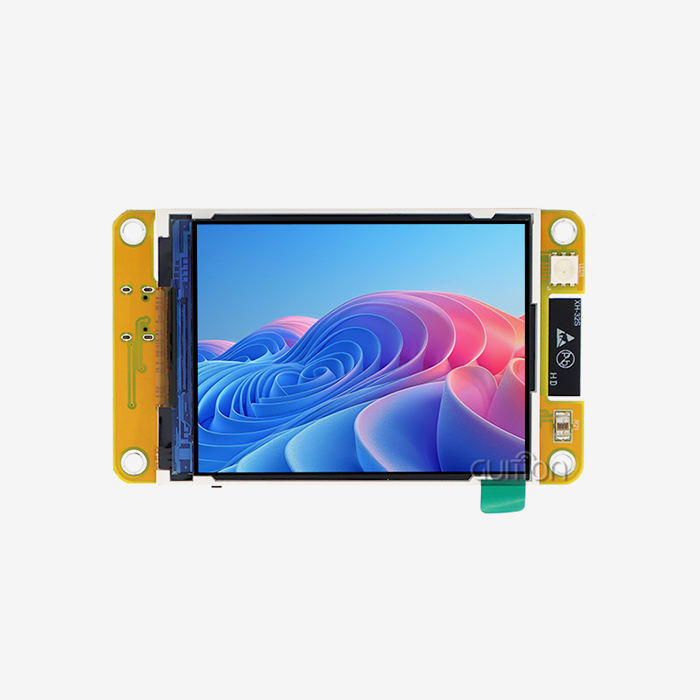
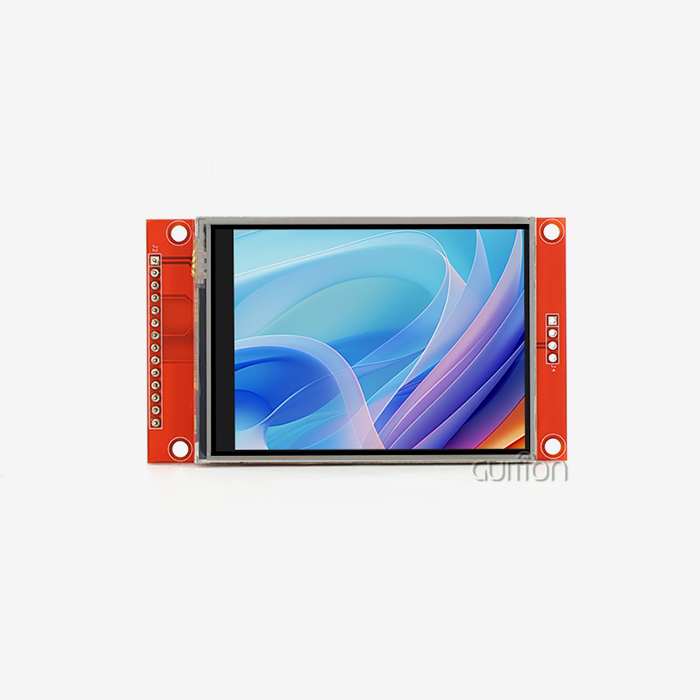
A custom TFT display module is an LCD assembly that uses Thin-Film Transistor chips to provide capabilities that standard panels cannot. Engineers modify the wiring of the Flexible Printed Circuit (FPC), the brightness of the lights, the size of the cover glass, and the construction of the touch sensor. This level of control is critical for automobile designs, where space, temperature and signal integrity cannot be sacrificed.
How TFT Technology Works in Automotive Contexts
Unlike passive-matrix LCD technology, each pixel on a TFT panel has its own transistor to control it. This translates to a quicker-reacting display and improved contrast. This means smoother animations in the gauge cluster, better navigation maps, and easier-to-read climate control readouts, even when it’s hot outdoors.
Why Automotive Engineers Prefer TFT LCD Panels
IPS based TFT LCD Modules feature viewing angles of 85°/85°/85°/85°, covering both driver and passenger sightlines. The TFT glass and touch layer are optically bonded, eliminating the internal air gap. Up to 400% improvement in direct sunlight contrast. Stops condensation within the display assembly, which is known to occur in non-bonded panels in environments of rapid temperature change.
Key Automotive Display Requirements and Challenges
When it comes to electrical and thermal conditions, automotive displays work in one of the harshest environments in consumer goods. The first thing you need to do to choose the right TFT display panel for your project is to understand what those needs are.
Environmental and Thermal Durability
ISO 16750-4 says that automotive-grade display modules must work reliably from -40°C to +85°C and be able to handle thermal shock cycling. The backlight unit must keep putting out light across that range without changing colors. When procurement teams buy TFT screens from big glass manufacturers like BOE, Tianma, and AUO, they can check the thermal performance data that is written down before agreeing to a design.
Sunlight Readability and Optical Performance
The diffuse light level is higher than 100,000 lux when sunshine hits the room directly. In those conditions, a normal 300-nit TFT display module can't be seen at all. For automotive-grade Custom tft display modules, the backlight luminance is usually between 800 and 1,500 nits, and the surface is treated with Anti-Glare (AG) or Anti-Reflective (AR) to keep the contrast when the screen is outside.
Regulatory Compliance and Signal Integrity
Vehicle displays must meet ISO 16750 for testing in harsh environments and AEC-Q100 for component qualification. EMC rules say that the FPC cable has to have shielding mesh to stop radiated emissions. When engineers choose a Custom tft display module that has these features built in, they don't have to go through expensive rethink processes during homologation testing.
Comparing Custom TFT Display Modules with Other Display Technologies
When picking a display technology for automotive use, you have to compare performance, cost, and supply-chain risk. This is how TFT LCD compares.
Custom TFT LCD vs. OLED
Because each pixel in an OLED screen makes its own light, there is no need for a backlight, so the contrast ratio is better. However, OLED burns in more quickly at high working temperatures, and at the same sizes, its cost per unit is still much higher than TFT LCD. When the same static icon or gauge cluster needs to be shown on a dashboard for long periods of time, TFT LCD is the better choice.
Custom TFT LCD vs. Standard LCD
Passive-matrix LCDs aren't as fast at responding to pixels or even out the brightness as TFT technology. A Custom tft display module made with IPS cells achieves color accuracy with Delta E values below 3, which is the minimum color difference that can be seen by the human eye. Most standard LCDs are better than Delta E 5 without any extra calibration.
Capacitive vs. Resistive Touch for Automotive Use
Capacitive touch screens can tell when your finger is close by changing the electrical field. They also allow multi-touch gestures, but they don't work with gloves on. Because they can sense any kind of physical pressure, resistive panels are good for use in industrial settings or work vehicles where people wear gloves. The GUITION JC8048W550C_I can come with or without capacitive touch, so design teams can choose the touch interface that works best for their needs.
How Custom TFT Display Modules Meet Automotive Industry Needs
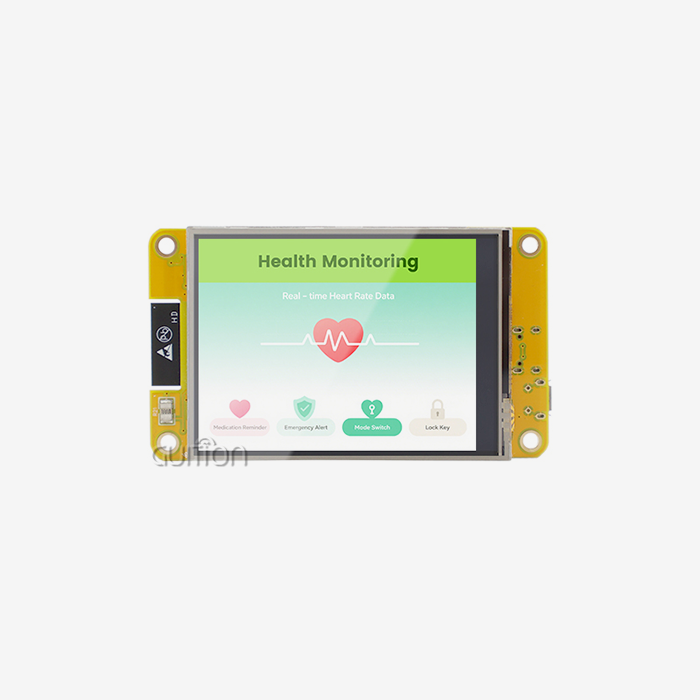
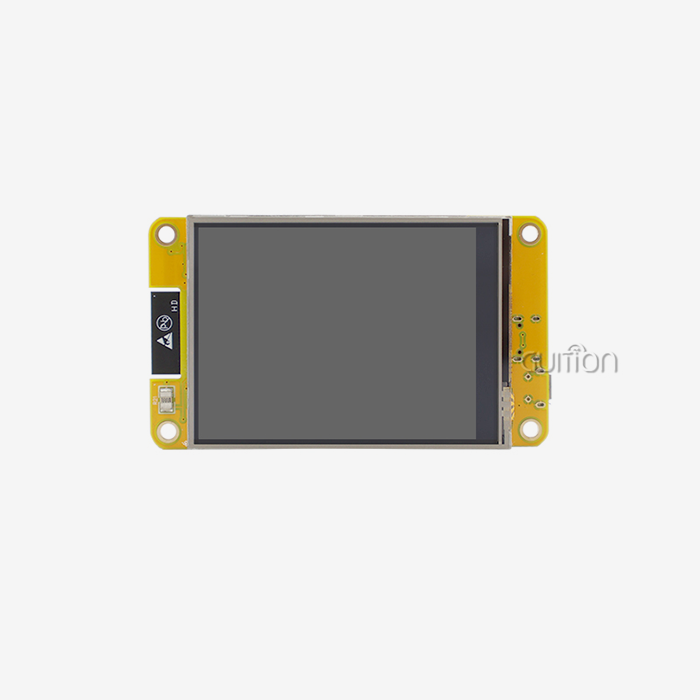
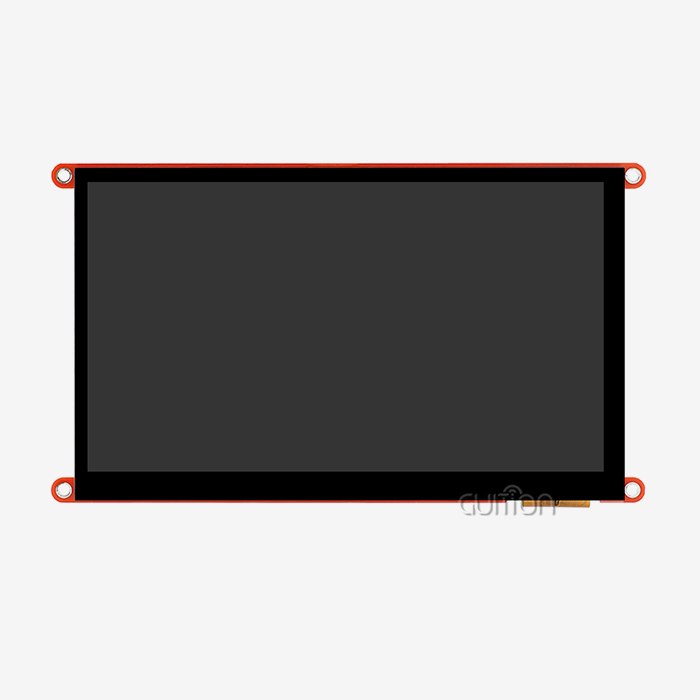
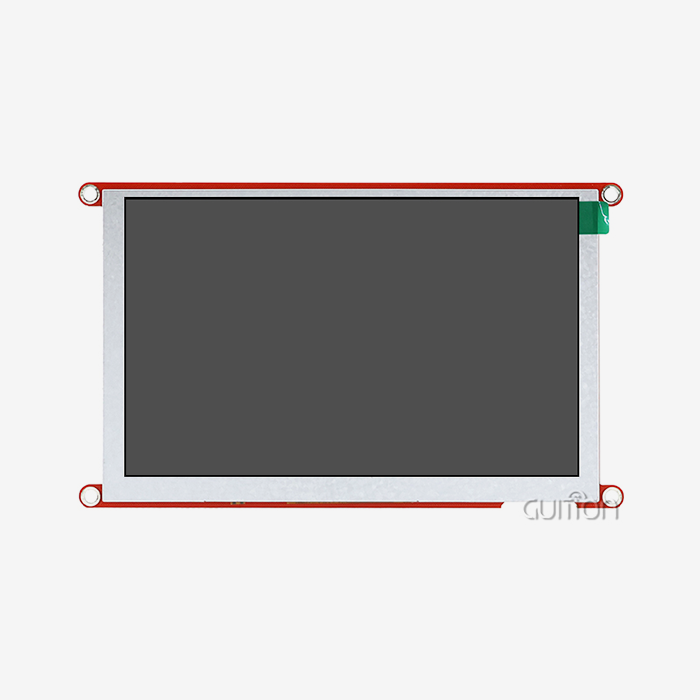
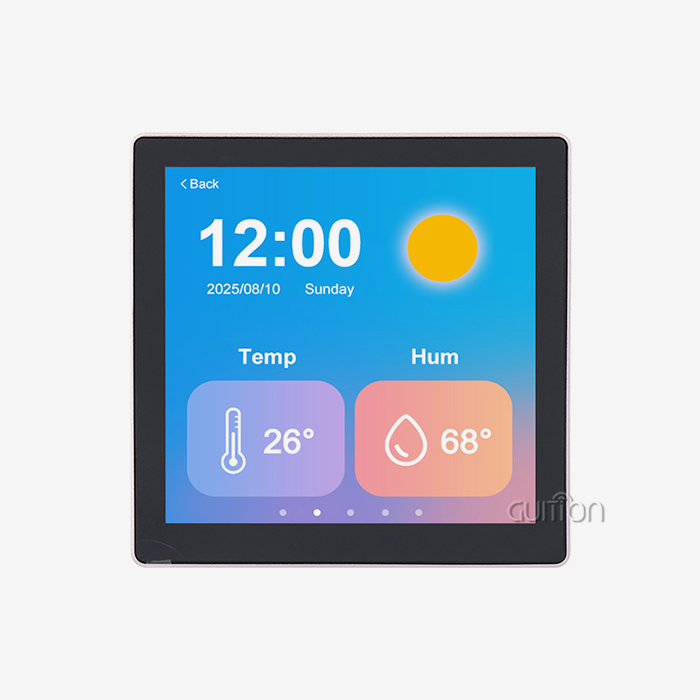
The GUITION JC8048W550C_I is a real-life example of how a modern Custom tft display module works with real engineering challenges in industrial and automotive settings.
Hardware Specifications That Scale to Automotive Demands
It has a 5.0-inch IPS screen with a resolution of 800x480 and an ESP32-S3R8 dual-core processor that runs at 240 MHz. The module has 8 MB of PSRAM and 16 MB of Flash, which is enough space to keep animation images, string tables for multiple languages, and OTA firmware releases locally. The screen can get live info from a CAN-to-Wi-Fi gateway without any extra gear because it has built-in Wi-Fi and Bluetooth. The main hardware benefits of this device that engineers in the auto and industrial fields care about are:
- Dual-core 240 MHz processing: The ESP32-S3R8 handles UI rendering and data communication on separate cores, preventing display lag when the communication bus is saturated with sensor data.
- 16 MB Flash + 8 MB PSRAM: Local storage large enough to cache full-screen bitmap transitions and retain firmware update packages for OTA deployment without relying on a network connection at the moment of installation.
- TF card interface and IO port expansion: Field engineers can load updated map data, calibration files, or localized language packs via TF card, reducing service truck visits for remote agricultural or energy-management equipment.
- Factory-loaded test applications: The module ships pre-programmed, so hardware validation begins within minutes of unboxing rather than waiting for a toolchain setup.
These hardware features directly cut down on the time it takes to integrate and the total engineering cost per unit across production runs.
Development Environment Flexibility
The JC8048W550C_I works with the Arduino IDE, ESP-IDF, MicroPython, and the company's own development tool, Guition. With Guition's drag-and-drop GUI builder, UI designers can place controls visually instead of writing low-level graphics code. This cuts the time it takes to build a UI from weeks to days. Cross-platform online debugging and downloading firmware with just one click close the iteration loop faster than traditional ways of developing display modules.
Quality Control Standards for Custom TFT Display Modules
All authorized custom tft display modules are subjected to optical defect examination according to ISO 13406-2 Class II. This tests for things like dead pixels, mura effects and delta E color shift. In addition, modules are additionally ESD tested at ±8 kV contact / ±15 kV air discharge to safeguard the controller IC in areas with high electrical noise in cars. To verify the mechanical integrity, vibration testing and thermal shock cycling from -20°C to +70°C are performed before shipping.
Procurement Guidance for Automotive Custom TFT Display Modules
In terms of selecting a bespoke TFT display module provider, it’s not just about unit pricing. The entire project cost depends on product lifetime commitments, documentation quality, and customisation scope.
Evaluating Supplier Technical Capabilities
Before ordering samples, ask for datasheets that provide brightness, viewing angle, operational temperature range, and FPC interface description. A provider that cannot give these documentation quickly probably will not assist the engineering questions that may come up during integration. For complete technical documentation and direct engineering help, contact david@guition.com.
Understanding MOQ and Lifecycle Commitments
Semi-custom alterations, such as changing the FPC pinout or backlight brightness, usually need minimum orders of 500 or 1,000 pieces. Full bespoke mask alterations demand far larger quantities. A reputable supplier will guarantee availability of a product for 5-7 years and will formulate a drop-in suitable replacement if a raw material change is necessary – shielding your manufacturing line from an unexpected end-of-life announcement.
Assessing Total Cost of Ownership
The price of a bespoke TFT display module is more on a unit-by-unit basis than that of a commodity panel, but the savings in eliminating external adapter boards, mechanical redesign cycles, and EMC rework can reduce the overall cost of ownership. FPC tooling and backlight housing design are included in the Non-Recurring Engineering (NRE) expenses and are rapidly amortized at production numbers above 1,000 units.
Conclusion
By engineering the correct optical, thermal, electrical, and compliance factors into the design from the outset, a properly defined bespoke TFT display module, including a Custom tft display module, will be certain to fulfill car display standards. The GUITION JC8048W550C_I proves that demanding automotive and industrial applications can be served without compromise by a 5.0-inch IPS TFT display module with 800×480 resolution, dual-core computing, integrated wireless connection and multi-platform development support. Long-term field dependability is established by matching the display specification to the working environment, rather than just choosing the least expensive panel off the shelf.
FAQ
What resolution options are available for automotive TFT display modules?
Custom tft display module sizes for cars typically range from 480x272 for small climate controls to 1280x800 for large infotainment screens. When set to 800x480, the GUITION JC8048W550C_I shows enough pixels for instrument clusters and control screens in the 5.0-inch size range.
How do I confirm compatibility with my vehicle microcontroller?
Read the module datasheet to see how the FPC interface is defined. If your MCU sends RGB or SPI data but the panel needs MIPI DSI, you can add a bridge IC straight to the FPC of the Custom tft display module. This way, you won't need a separate converter board on your PCB.
Which touch technology should I choose for an automotive application?
As long as you don't use your fingers, capacitive touch works well for climate and entertainment controls for passengers. When people wear gloves, like in work cars or outdoor stations, resistive touch works better. The JC8048W550C_I can be bought with or without capacitive touch, depending on the use.
What is the typical product lifecycle guarantee for a custom TFT display module supplier?
Suppliers who are qualified promise that the product will be available for five to seven years. They choose glass cells from factories that have long production schedules and keep key driver ICs on hand in case there are supply problems that delay your production.
Start Your Project with Guition's Custom TFT Display Module
With engineering documentation, Guition development tools, and direct expert help, Guition provides a full range of Custom tft display module options ranging from 1.28 inches to 21.5 inches. The JC8048W550C_I is in stock, and you can buy a sample of it. Email our team at david@guition.com to get a datasheet, talk about the specifications of your automotive display, or place an order for a sample. We work with Custom tft display module suppliers and manufacturers to make sure that every project's needs are met.
References
1. International Organization for Standardization. ISO 16750: Road Vehicles — Environmental Conditions and Testing for Electrical and Electronic Equipment. ISO, 2023.
2. AEC Component Technical Committee. AEC-Q100: Failure Mechanism Based Stress Test Qualification for Integrated Circuits. Automotive Electronics Council, 2014.
3. International Organization for Standardization. ISO 13406-2: Ergonomic Requirements for Work with Visual Displays Based on Flat Panels. ISO, 2001.
4. Bhatt, R., & Tiwari, A. "Sunlight Readability Enhancement Techniques for Automotive TFT-LCD Displays." Journal of Display Technology, 2018.
5. Society of Automotive Engineers. SAE J1211: Handbook for Robustness Validation of Automotive Electrical/Electronic Modules. SAE International, 2019.
6. Espressif Systems. ESP32-S3 Technical Reference Manual. Espressif Systems, 2023.
Learn about our latest products and discounts through SMS or email