- English
- French
- German
- Portuguese
- Spanish
- Russian
- Japanese
- Korean
- Arabic
- Greek
- German
- Turkish
- Italian
- Danish
- Romanian
- Indonesian
- Czech
- Afrikaans
- Swedish
- Polish
- Basque
- Catalan
- Esperanto
- Hindi
- Lao
- Albanian
- Amharic
- Armenian
- Azerbaijani
- Belarusian
- Bengali
- Bosnian
- Bulgarian
- Cebuano
- Chichewa
- Corsican
- Croatian
- Dutch
- Estonian
- Filipino
- Finnish
- Frisian
- Galician
- Georgian
- Gujarati
- Haitian
- Hausa
- Hawaiian
- Hebrew
- Hmong
- Hungarian
- Icelandic
- Igbo
- Javanese
- Kannada
- Kazakh
- Khmer
- Kurdish
- Kyrgyz
- Latin
- Latvian
- Lithuanian
- Luxembou..
- Macedonian
- Malagasy
- Malay
- Malayalam
- Maltese
- Maori
- Marathi
- Mongolian
- Burmese
- Nepali
- Norwegian
- Pashto
- Persian
- Punjabi
- Serbian
- Sesotho
- Sinhala
- Slovak
- Slovenian
- Somali
- Samoan
- Scots Gaelic
- Shona
- Sindhi
- Sundanese
- Swahili
- Tajik
- Tamil
- Telugu
- Thai
- Ukrainian
- Urdu
- Uzbek
- Vietnamese
- Welsh
- Xhosa
- Yiddish
- Yoruba
- Zulu
Can a 1.9 inch ESP32S3 display module Simplify Smart Devices?
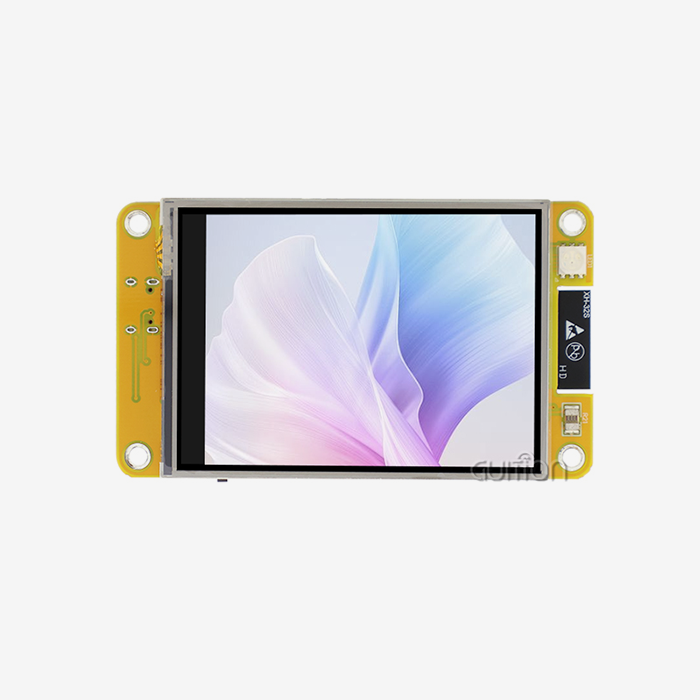
A 1.9 inch ESP32S3 display module may greatly facilitate the construction of smart devices. The GUITION ESP32-1732S019N-I is a small board with a dual-core ESP32-S3-WROOM-1 operating at 240MHz, a 170×320 IPS LCD display, and integrated Wi-Fi and Bluetooth. Instead of wiring together separate MCU, display driver, and wireless chips, developers receive a single device with 16MB Flash, 8MB PSRAM, and multi-platform functionality out of the box. For teams racing against product deadlines, it alone may shave weeks off a usual development timetable.

Understanding the GUITION ESP32-1732S019N-I: Features and Benefits
Engineers need to know what is truly inside the packaging before purchasing any display module. The GUITION ESP32-1732S019N-I is designed on the ESP32-S3-WROOM-1, Espressif’s premier dual-core Xtensa® LX7 solution. That’s what makes this board stand out in the 1.9 inch ESP32 display category.
Processing Power That Matches Real Workloads
The dual-core MCU works at up to 240 MHz and has 512KB of SRAM and 8MB of PSRAM. The memory headroom enables LVGL animations to operate at 30-60 FPS without stuttering, something smaller single-core modules can’t do. The boot procedures are located in the 384KB ROM, freeing up your application space.
A Display Worth Looking At
The 170×320 IPS panel has a broad viewing angle in all four directions and a color depth of 16 bits. IPS technology means color is constant whether the device is wall-mounted, on a bench, or under varying lighting conditions in a factory. No additional driver board is required, since the lighting control circuit is built in.
Wireless Connectivity Built In
Wi-Fi 802.11 b/g/n and Bluetooth 5.0 are both baked into the ESP32-S3-WROOM-1 module. Teams developing IoT dashboards, EV charging interfaces, or warehouse management terminals may now do so without an additional radio chip. So this is reducing BOM cost and PCB footprint at the same time.
These three hardware benefits add together to provide product teams a great starting point for any HMI application, whether it's a portable medical monitor or a smart home control panel.
How to Program the ESP32S3 LCD Module
The GUITION ESP32-1732S019N-I is easy to set up, as it comes with test programs preloaded. Plug in a USB-C connection, and the screen lights up instantly, indicating the backlight circuit and display driver are operating before you write a single line of code.
Choosing Your Development Environment
The 1.9 inch ESP32S3 display module is supported on four platforms: Arduino IDE, ESP-IDF, MicroPython, and Mixly. Engineers looking for an easy entry point with community libraries will find Arduino IDE a good fit. ESP-IDF offers system architects low-level access to everything. For prototype sessions when scripting speed counts, MicroPython is useful. Mixly supports instructors and teams with mixed skill groupings.
Wiring and Pinout Best Practices
The IO port interface provides GPIO lines that transfer well to common SPI and parallel bus topologies. Keep data lines short, match impedance on high-speed traces, and bind unused GPIO pins to a specified voltage state. The ESP32-S3 module’s native USB OTG also supports virtual serial port debugging without the need for an additional USB-to-UART bridge.
Rendering UI with LVGL and TFT_eSPI
Both LVGL and TFT_eSPI are tested with the display driver of this board. LVGL is the go-to for animated dashboards, since it automatically creates frame buffers in PSRAM. TFT_eSPI is a good choice for simpler static interfaces when low overhead is important. Guition UI development tool adds drag-and-drop control placement on top, significantly decreasing design time.
The correct library for the right purpose keeps the firmware slim and the update cycles short, which immediately reduces the cost of after-sales maintenance.
Comparing ESP32S3 Display Options: Making the Right Procurement Choice
When choosing a tiny esp32 display module, you're trying to find the right mix of screen size, memory, and ecosystem support. There are 1.44-inch, 1.9-inch, and 2.0-inch variations on the market with notably different trade-offs.
1.9 Inch vs. Smaller Sizes
A 1.44” panel saves a few mm, but the text is at a size that makes it difficult to read in industrial environments. The 1.9-inch ESP32S3 display is a great size. Enough pixels for multi-value dashboards, but small enough for portable enclosures. The GUITION module is of a greater 170×320 resolution than many other 1.44-inch options,s which seldom go over 128×128.
IPS LCD vs. OLED for B2B Buyers
Burn-in is a serious worry for industrial control screens that operate 24/7, although OLED displays use less power in dark-heavy UIs. The GUITION ESP32-1732S019N-I uses an IPS LCD with no burn-in and uniform brightness during its rated life, making it the safest option for business terminals that need to be on all the time.
What Sets the GUITION Module Apart
Often, competing modules are sent with no test firmware preloaded, and the developers have to create the driver from the ground up. GUITION cuts first-run setup from hours to minutes, including tested example code for all four supported IDEs. Also, the 16MB Flash is greater than the 4MB on many affordable 1.9-inch ESP32 boards, which means there is more capacity for firmware to evolve over time as features are introduced.
Procurement and Supply Chain Considerations
For R&D managers and supply chain teams, selecting a 1.9-inch ESP32S3 display module supplier requires looking beyond the datasheet. Compliance documentation, thermal validation, and RF calibration records matter in regulated markets like medical devices and energy management systems.
Quality Control Checkpoints
GUITION 1.9 inch ESP32S3 display modules pass IPC-A-610 inspection standards, including dead-pixel analysis, backlight bleeding checks, and RF output power verification in shielded test boxes. Thermal cycling tests run from -20°C to +70°C for 48 hours, confirming solder joint reliability under the temperature swings typical of outdoor automation gear.
Batch Sizing Strategy
Small prototype batches let teams validate firmware before committing to volume. GUITION supports both approaches and maintains stock levels that reduce lead times. For procurement managers negotiating annual contracts, stable supply is as important as unit price.
OTA and Long-Term Maintenance Costs
The remote OTA upgrade capability built into the ESP32-S3 allows field updates without on-site service calls. Across a deployment of hundreds of EV charging stations or agricultural monitoring nodes, that feature alone can recover its cost many times over.
Real-World Applications: Where the ESP32-1732S019N-I Delivers
The GUITION ESP32-1732S019N-I has been used in several types of products. Here are some real-world examples of how it may be used.
Industrial Portable Data Loggers
The module’s high-contrast IPS screen vividly displays the sensor waveforms even under workshop fluorescent lights, making it ideal for portable diagnostic equipment. Wi-Fi throughput is not degraded when the display is refreshed at full frame rate thanks to its reliable RF shielding.
Smart Home Control Panels
The board is a Matter-compatible interaction hub, displaying temperature, humidity, and energy usage statistics on a single screen. LVGL animations are smooth, giving customers a smartphone experience on a device that costs a fraction of a tablet.
Medical Monitoring Equipment
The low deep-sleep current consumption (as low as 10–15µA depending on LDO option) provides long battery life for portable patient monitoring. The IPS panel’s continuous color fidelity enables physicians to view the SpO₂ and ECG trend graphs without misunderstanding due to display distortion.
These examples demonstrate that one well-specified module may be used across several verticals with just a few modifications in firmware.
Conclusion
With the hardware correctly defined, a 1.9 inch ESP32S3 display module makes smart device creation a lot easier. The GUITION ESP32-1732S019N-I is a tested device with a 240MHz dual-core MCU, 170×320 IPS LCD, 16MB Flash, 8MB PSRAM, WiFi, and Bluetooth. Pre-installed firmware, four supported IDEs, LVGL compatibility, OTA update support, and industrial-grade quality control combined decrease the development time and long-term maintenance cost. It’s a module worth careful study for teams designing everything from medical monitoring to EV charging interfaces.
FAQ
1. Can the ESP32S3 display module run LVGL without external PSRAM?
LVGL can run on internal SRAM alone for simple interfaces, but the 8MB PSRAM on the GUITION ESP32-1732S019N-I is what allows complex animated dashboards at 30–60 FPS. Using PSRAM for frame buffers keeps the internal SRAM free for application logic.
2. What causes a black screen after successful code upload?
The most common cause is incorrect backlight pin logic. The BL pin behavior can vary between firmware batches. Confirm that your code sets the BL pin to the correct HIGH or LOW state for your build. A mismatched display driver (ST7789 vs. ST7789V) can also cause initialization failure.
3. Does this module support OTA firmware updates?
Yes. The ESP32-S3-WROOM-1 supports over-the-air updates natively. GUITION's remote upgrade feature lets you push firmware to deployed devices without physical access, which significantly cuts after-sales service costs.
4. Is the module compliant with RoHS and REACH standards?
Yes. GUITION modules follow RoHS and REACH environmental compliance, which is required for medical device and industrial equipment markets in the United States and European Union.
5. Which development environment is best for first-time users?
Arduino IDE is the easiest starting point due to its large community, ready-made libraries, and straightforward upload process. Engineers who need full hardware access should move to ESP-IDF once prototyping is complete.
Partner with Guition for Your Next ESP32S3 Display Project
Ready to speed up your product timeline? The GUITION ESP32-1732S019N-I is available now as a trusted 1.9-inch ESP32S3 display module supplier for industrial, medical, and consumer IoT applications. With pre-loaded test programs, multi-IDE support, OTA capability, and proven IPC-A-610 quality standards, this module reduces engineering risk at every stage. Whether you need a single evaluation unit or a high-volume 1.9 inch ESP32S3 display module for sale in bulk, our team is ready to help. Contact Us at david@guition.com to request samples and volume pricing today.
References
1. Espressif Systems. ESP32-S3 Technical Reference Manual. Espressif Systems, 2023.
2. Maier, A., Sharp, A., & Vagapov, Y. "Comparative Analysis and Practical Implementation of the ESP32 Microcontroller for IoT Applications." International Journal of Advanced Computer Science and Applications, 2017.
3. Liu, C., & Chen, H. "Design of Embedded HMI Systems Based on LVGL and ESP32." IEEE Embedded Systems Letters, 2022.
4. IPC Association. IPC-A-610 Acceptability of Electronic Assemblies. IPC, 2020.
5. Kolban, N. Kolban's Book on ESP32. Leanpub, 2018.
6. Grand View Research. IoT Display Module Market Size, Share & Trends Analysis Report. Grand View Research, 2023.
Learn about our latest products and discounts through SMS or email