- English
- French
- German
- Portuguese
- Spanish
- Russian
- Japanese
- Korean
- Arabic
- Greek
- German
- Turkish
- Italian
- Danish
- Romanian
- Indonesian
- Czech
- Afrikaans
- Swedish
- Polish
- Basque
- Catalan
- Esperanto
- Hindi
- Lao
- Albanian
- Amharic
- Armenian
- Azerbaijani
- Belarusian
- Bengali
- Bosnian
- Bulgarian
- Cebuano
- Chichewa
- Corsican
- Croatian
- Dutch
- Estonian
- Filipino
- Finnish
- Frisian
- Galician
- Georgian
- Gujarati
- Haitian
- Hausa
- Hawaiian
- Hebrew
- Hmong
- Hungarian
- Icelandic
- Igbo
- Javanese
- Kannada
- Kazakh
- Khmer
- Kurdish
- Kyrgyz
- Latin
- Latvian
- Lithuanian
- Luxembou..
- Macedonian
- Malagasy
- Malay
- Malayalam
- Maltese
- Maori
- Marathi
- Mongolian
- Burmese
- Nepali
- Norwegian
- Pashto
- Persian
- Punjabi
- Serbian
- Sesotho
- Sinhala
- Slovak
- Slovenian
- Somali
- Samoan
- Scots Gaelic
- Shona
- Sindhi
- Sundanese
- Swahili
- Tajik
- Tamil
- Telugu
- Thai
- Ukrainian
- Urdu
- Uzbek
- Vietnamese
- Welsh
- Xhosa
- Yiddish
- Yoruba
- Zulu
Best Industrial HMI Panel Features for OEM Machine Builders
When evaluating the best Industrial hmi panel for your machinery, OEM machine builders need solutions that balance performance, ease of integration, and long-term reliability. Today's human-machine interface technology has evolved beyond basic display functions to become intelligent control centers that accelerate development cycles, reduce engineering overhead, and enable seamless connectivity across diverse automation ecosystems. Selecting display modules with the right combination of processing power, development flexibility, and communication capabilities can dramatically shorten your time-to-market while ensuring your equipment remains competitive in rapidly changing industrial environments.

Types of Industrial HMI Panels and Their Applications for OEMs
To choose the right interface technology, you need to know what makes each option unique and how to match them to the needs of the application.
Touch Technology Considerations
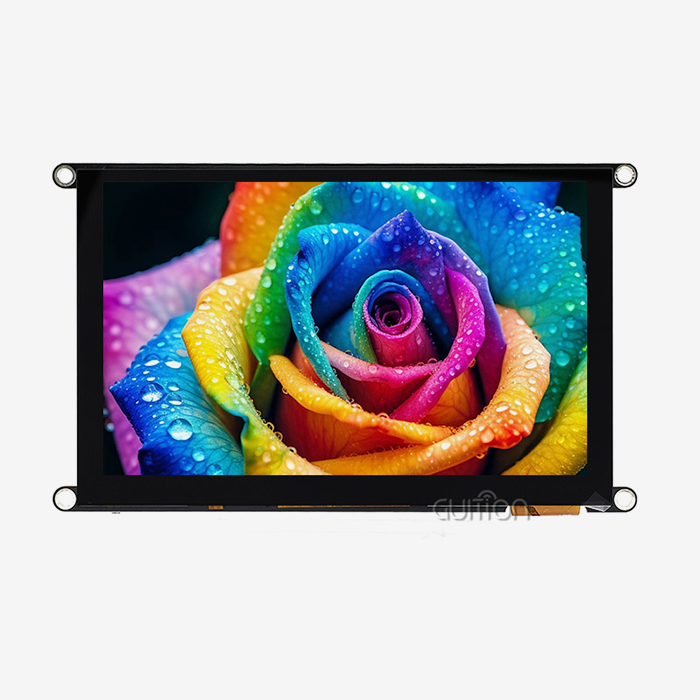
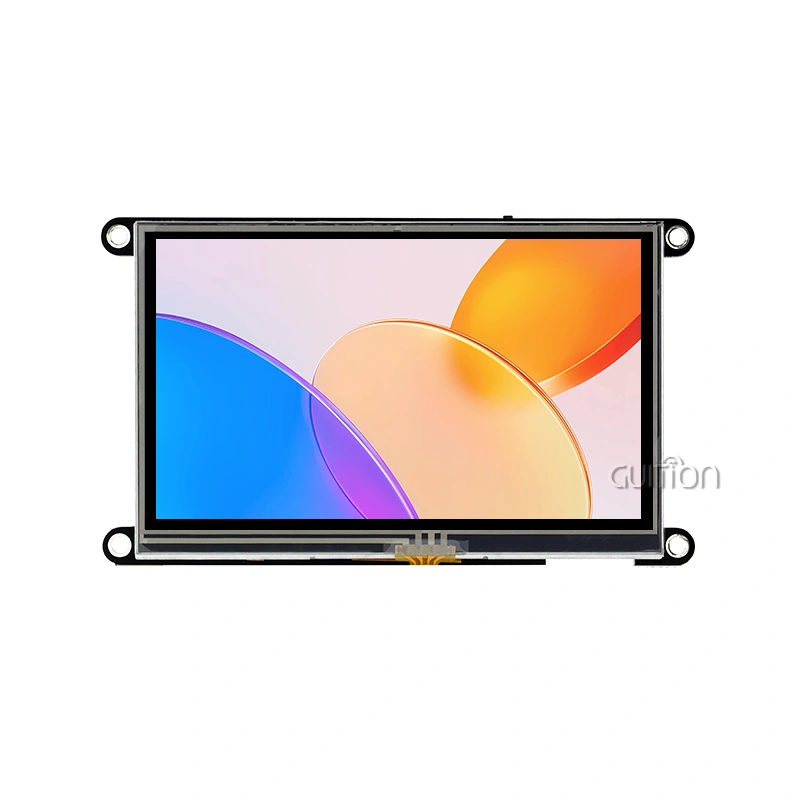
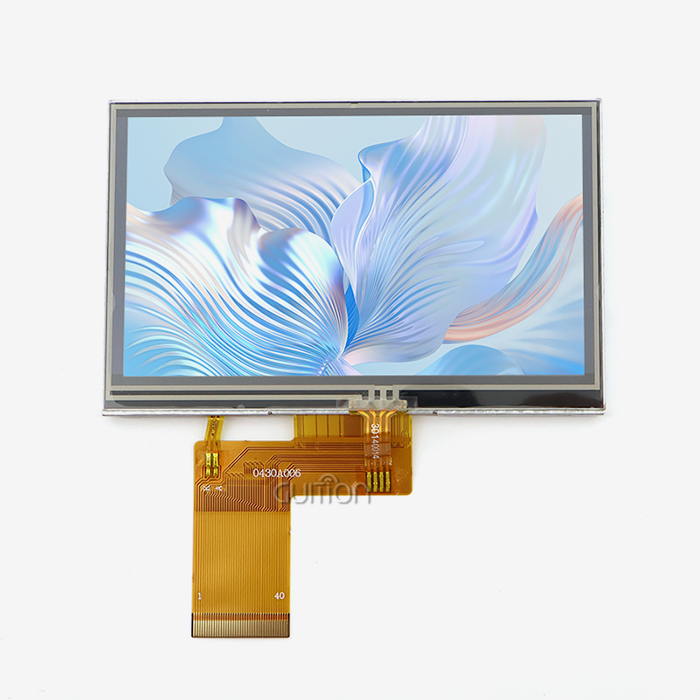
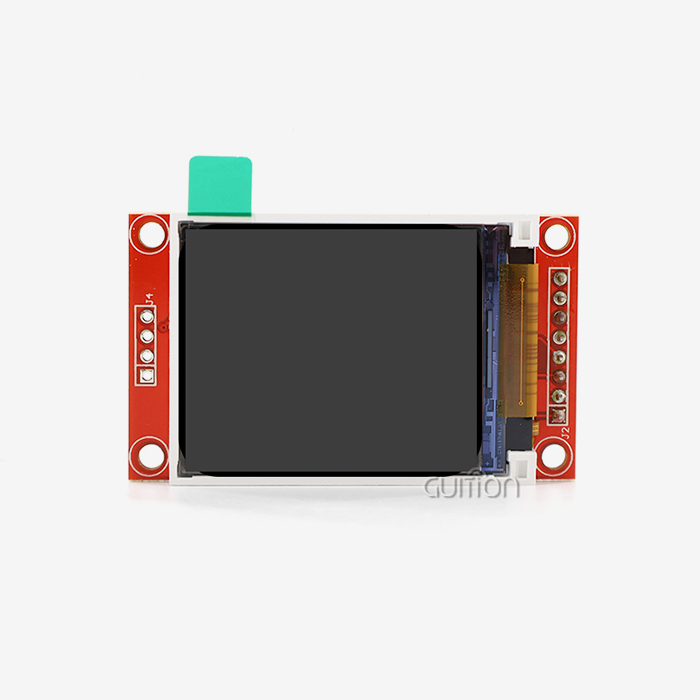
Because they react to pressure, resistive touch screens can be used by people who wear heavy gloves or who work in places with oil, moisture, or dirt. No matter what touches these screens, they always work, but they usually don't have as good eye clarity as other options. Capacitive touch screens have better picture quality and can handle multiple touches, which makes the user experience easier to understand. But to use them, you need to use your bare fingers or special gloves. The main things that determine which of these technologies to use are the operating surroundings and the tools that the operator has. Display-only models, like the JC8048Q350N_I model that doesn't have touch, are used in situations where workers mostly deal with the system through buttons, rotary encoders, or external input devices. This method cuts down on costs and gets rid of any possible tuning problems with touches in places where they aren't very useful.
Connectivity and Mounting Options
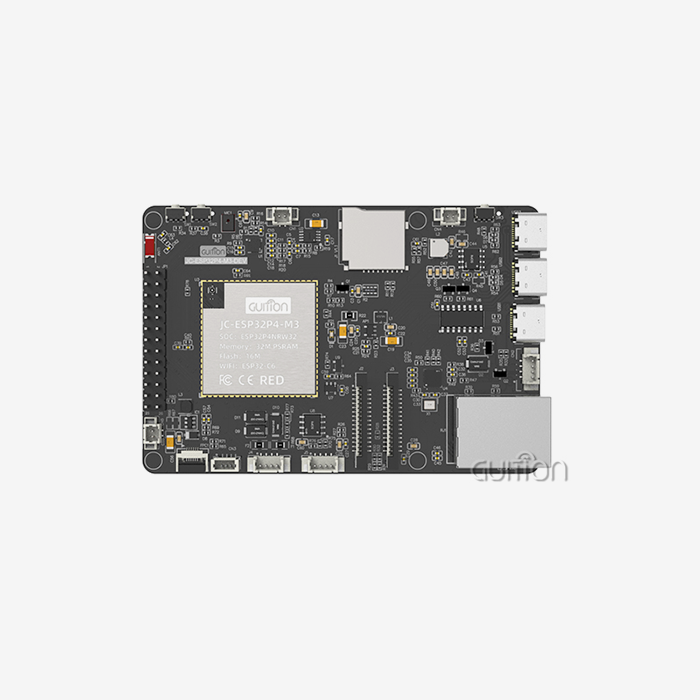
In noisy industrial settings, wired links through UART, RS-232, RS-485, or Ethernet allow for stable contact that doesn't get messed up. Ethernet lets you send data over a higher bandwidth for complex visualizations, while serial communication is still used a lot for integrating older equipment. Mobile operator interfaces, temporary tracking stations, and distributed control systems can all do more when they can join wirelessly through Wi-Fi and Bluetooth. The built-in wireless modules in the Guition platform make connecting to a network easier without the need for extra adapters or complicated setup steps, while the hmi display module provides a more intuitive way to monitor and manage connected devices in various industrial applications.
Environmental Durability Requirements
Consumer gadgets can't handle the problems that come up in industrial settings. Different temperature ranges, vibrations, electromagnetic interference, and the entry of dust or liquids all call for special building techniques. While the exact IP rating and temperature range depend on the application, OEM builders should make sure that the displays they choose can handle the conditions their machines will be in. Standard industrial ratings may work well in manufacturing facilities with controlled conditions, low contamination, and normal room temperatures that are normal. Higher safety standards are needed for sites that are outside, in wash-down areas, or in places with extreme temperatures.
Application-Specific Implementation Examples
Displays that show production counts, speed settings, and fault conditions at a glance are helpful for packaging machines. It is more efficient to be able to change parameters using touch or button interfaces instead of stopping production lines.Interface screens on CNC machining centers show where the tools are, the state of the programs, and when an alarm goes off. Lag that could get in the way of precise operations can be avoided with displays that are responsive and have enough processing power.Network-connected displays in building automation systems let you keep an eye on multiple zones' HVAC performance, energy use, and security status. Wireless connection lets you put things in different places without having to run long cables.
Comparing Industrial HMI Panels: Making the Right Choice for Your OEM Business
Knowing how interface screens work with other automation parts helps original equipment manufacturers (OEMs) make smart buying choices that improve system design.
HMI Relationship with PLCs and SCADA Systems
Rather than replacing programmable logic controllers, Industrial HMI panel devices enhance them. Real-time control logic is run by PLCs, which manage inputs and outputs with microsecond accuracy. Displays show PLC data and give operators ways to enter information. They handle user input while computers run the machines.SCADA systems control many machines in different buildings, gathering information from many PLCs and showing big-picture views. In SCADA designs, interface screens act as local operator stations, controlling machines and sending data to supervisory systems. Because these two things work well together, OEM builders should choose displays that work well with the PLC platforms they choose. Communication protocol compatibility—whether it's Modbus RTU/TCP, Profinet, EtherNet/IP, or a custom protocol—determines how hard it is to integrate and how reliable the system is.
Evaluating Development Ecosystems
The software setting that an HMI platform is in has a big effect on its long-term costs of ownership and how quickly it can be developed. The online GUI creation tool from Guition is a good example of how to do things in a modern way that puts usability first. Engineers make interfaces by putting together images instead of writing code, which makes it much easier for people with no experience to build interfaces. Cross-platform online testing lets engineers test how an interface works from anywhere with an internet connection. This gives developers more freedom, which speeds up troubleshooting and lowers the need to physically access test tools during development.UTF-8 encoding and support for multiple languages make sure that interfaces can adapt to global markets without having to be redesigned. When engineers design something once and use it everywhere, they cut down on the time and money needed to localize it for international sales.
Supplier Evaluation Criteria
Well-known companies like Siemens, Allen-Bradley, Schneider Electric, ABB, and Omron have large support networks and a wide range of products. These brands give people confidence because they have been tested and proven to work. Specialized suppliers, like Guition, only offer display solutions. They usually offer more customization choices and quick expert help. Because they focus on human-machine interface technology, they can come up with new features and quickly adopt new skills.OEM builders should look at how available products are in the size ranges they need (1.28" to 21.5" in Guition's case), how good the documentation is, how quickly technical support responds, and how stable the supply will be in the long term when evaluating suppliers. Component lifecycle management is important for machines that are made over a long period of time, because replacement displays need to work with software that was used in the original machines.
Programming, Troubleshooting, and Optimizing Industrial HMI Panels
To get the most out of an interface panel, you need to know how to program, spot common problems, and use improvement techniques.
Streamlined Development Approaches
Many of the problems that come with interface code are taken care of by modern development tools. Engineers can use the Guition development environment to make full user interfaces by dragging and dropping controls from large libraries that already have controls like buttons, sliders, gages, charts, and text displays.For many common situations, behavior is set by configuration rather than code. Using virtual user interfaces, engineers set characteristics, name data sources, and decide how to communicate. With this method, development times for most apps are cut down from weeks to days. Support for Arduino and ESP-IDF development modes gives embedded engineers familiar work environments when custom functionality needs to be programmed. Because of this, the tool can be used for both simple prototypes and complex custom applications.
Common Issues and Resolution Strategies
The most common problem that needs to be fixed is communication problems between displays and controllers. Most problems with serial communication can be fixed by checking the baud rate settings, protocol configurations, and physical wiring connections. Panels that are connected to a network need to have their IP addresses, subnet settings, and firewall rules checked.Too many updates can sometimes make screens not respond because they use too much computer power. Restoring functionality means adjusting the time between screen refreshes and cutting down on data exchanges that aren't needed. The 400MHz processing speed in units like the JC8048Q350N_I gives you a lot of extra room, but bad code can still slow things down.Backlight fails or decline make it harder to see. Industrial displays of good quality that have the right LED backlight control circuits, like those built into Guition modules, last a long time. Most backlight problems can be found by checking the voltage levels in the power source and the settings for the backlight's strength.
Preventive Maintenance and Optimization
Remote upgrade features change maintenance by letting software updates happen without having to visit the spot. With this feature, manufacturers can fix bugs, add features, and make user interfaces better after the machines have been sent to customers. Over-the-air updates help make customers happier and lower the cost of service. Configurations for data logging should find a good balance between storing information and getting it. When you record important factors at the right times, it helps with diagnosis without using up too much memory or network traffic. Alert systems that work well let workers know about serious situations without sending them too many unnecessary alarms. Regular studies of the interface's usefulness based on feedback from operators find ways to make it better. Making small changes to where controls are placed, color schemes, or the amount of information displayed can greatly increase productivity and decrease operator mistakes.
Procurement Guide: Purchasing Industrial HMI Panels for OEM Machine Builders
Strategic decisions about what to buy weigh the short-term costs against the long-term benefits, taking into account more than just the initial purchase price. Factors such as product reliability, adaptability, and performance are especially important when selecting solutions like HMI Display Module, as they can influence operational efficiency and future maintenance needs.
Cost-Effectiveness Analysis
Interface panels only make up a small part of the total cost of a machine, but the choice of panel affects development costs, production efficiency, and ongoing support needs. When looking at money, it's better to look at the total cost of ownership instead of the unit price. Costs are affected by things like licensing for development tools, training, and the time it takes engineers to make the first prototype that works. When compared to complicated systems that need specialized knowledge, platforms with easy-to-use software environments like Guition greatly lower these costs. Costs per unit are affected by buying in bulk, but OEM builders should make sure that promises to buy in bulk are in line with realistic production predictions. It doesn't matter how low the price is if the costs of keeping the inventory outweigh the savings or if changes to the design leave old stock behind.
Warranty and Support Evaluation
A full warranty guards against early failures, but for most uses, the quality of help is more important than the length of the warranty. Technical help that is available during development stops delays that cost a lot of money and often go beyond the value of hardware warranties. How well engineering teams can solve problems on their own, without help from vendors, depends on how complete the documentation is. Detailed datasheets, integration guides, code examples, and application notes make it easier to get started and lessen the need for help lines. After-sales service options like repair options, replacement parts availability, and quick response times from field service give users confidence in machines used in important tasks. Knowing the limits of the help before committing keeps problems from coming as a surprise.
Strategic Supplier Partnerships
Having long-term relationships with human-machine interface suppliers gives you more than just the ability to make purchases. Suppliers who know a lot about display technology and how it is used in industry can give you good advice on the best configurations for your needs. Companies that focus on HMI display solutions and USART-HMI display modules, like Guition, can give specific knowledge that general component sellers can't match. Their focus on interface technology in product development gives them early access to new features and a say in how features will be added in the future. Long-term supply dependability is important, especially for tools that make a lot of things. When displays unexpectedly reach the end of their useful life, suppliers who are committed to component lifecycle management keep redesigns from having to be done. Talking about how long you expect a product to last during the buying process sets clear standards.
Conclusion
For OEM machine builders to choose the best Industrial HMI panel features, they need to balance technical requirements, the skills of the development environment, and their relationships with suppliers. Today's display modules, like the Guition JC8048Q350N_I, show how powerful processing, easy-to-use development tools, and a wide range of connectivity options can shorten development times while increasing functionality. The 400MHz MCU, flexible programming environments that support Arduino and ESP-IDF, and built-in wireless connection all work together to solve the main problems that OEM makers have, which are fast development, easy customization, and design that will work in the future. Machine builders can stay ahead of the competition by using strategic procurement that looks at total ownership costs instead of unit prices, puts responsive technical support first, and builds relationships with specialized suppliers.
FAQ
How does an industrial display differ from commercial touchscreens?
Industrial displays use parts that can work in a wide range of temperatures, are resistant to vibration, and will be available for a long time. Commercial screens focus on price and features that customers want, but they don't have the reliability and stable supply chains that industrial equipment needs. Machine interface screens are made to be tough, use industrial communication methods, and have parts that are guaranteed to be available for years instead of months.
What integration timeline should we expect with existing PLC systems?
How long it takes to integrate rests mostly on how well the communication protocols work together and how complicated the interfaces are. Modern development tools can make simple displays that show basic parameters from Modbus-compatible PLCs work in just a few days. It could take a few weeks for complex interfaces that need custom graphics, multiple data sources, and complex logic. The drag-and-drop feature of the Guition development environment cuts down on time by a large amount compared to traditional ways of programming.
Can we update interfaces after machines reach customer sites?
Software updates can be done remotely, so users don't have to physically reach the tools. Over-the-air updates can be sent to Wi-Fi-connected screens like those in the Guition line. This lets makers fix bugs, add features, and improve interfaces throughout the lifecycles of their products. This feature lowers the cost of service while increasing customer happiness by constantly making things better.
Partner with Guition for Your Industrial HMI Panel Requirements
Human-machine interface display solutions designed just for OEM machine builders and system integrators are what Guition does best. We have a wide range of products, from 1.28" to 21.5", to meet the needs of a wide range of applications. Additionally, our own development tools simplify the process of making interfaces from complicated code to easy visual design. The JC8048Q350N_I and all of our other modules allow secondary development through well-documented interfaces that let you make changes without adding extra complexity. Manufacturers who are looking for reliable Industrial HMI panel suppliers who know how to meet the specific needs of industrial automation are welcome to Contact Us. Email our engineering team at david@guition.com to talk about how our display solutions, cross-platform development tools, and technical know-how can help you make your product faster and cheaper. Our customer-centered method makes sure that your project gets the care and support it needs, whether you need to buy in bulk, have configurations made just for you, or get ongoing technical advice.
References
1. Smith, J. & Anderson, M. (2022). Industrial HMI Design Principles for Modern Manufacturing. Automation Technology Press.
2. Chen, L. (2023). "Embedded Display Controllers: Performance Comparison and Selection Criteria." Journal of Industrial Electronics, 45(3), 234-251.
3. Robertson, K. (2021). OEM Equipment Interface Standards and Best Practices. Industrial Systems Publishing.
4. Williams, D. & Thompson, R. (2023). "Cost-Benefit Analysis of Rapid GUI Development Tools in Industrial Applications." Manufacturing Technology Review, 18(2), 112-128.
5. Garcia, A. (2022). Wireless Connectivity in Industrial Control Systems: Implementation Guide. Technical Engineering Publications.
6. Peterson, H. (2023). "Component Lifecycle Management Strategies for OEM Machine Builders." Industrial Procurement Quarterly, 31(4), 67-83.
Learn about our latest products and discounts through SMS or email