- English
- French
- German
- Portuguese
- Spanish
- Russian
- Japanese
- Korean
- Arabic
- Greek
- German
- Turkish
- Italian
- Danish
- Romanian
- Indonesian
- Czech
- Afrikaans
- Swedish
- Polish
- Basque
- Catalan
- Esperanto
- Hindi
- Lao
- Albanian
- Amharic
- Armenian
- Azerbaijani
- Belarusian
- Bengali
- Bosnian
- Bulgarian
- Cebuano
- Chichewa
- Corsican
- Croatian
- Dutch
- Estonian
- Filipino
- Finnish
- Frisian
- Galician
- Georgian
- Gujarati
- Haitian
- Hausa
- Hawaiian
- Hebrew
- Hmong
- Hungarian
- Icelandic
- Igbo
- Javanese
- Kannada
- Kazakh
- Khmer
- Kurdish
- Kyrgyz
- Latin
- Latvian
- Lithuanian
- Luxembou..
- Macedonian
- Malagasy
- Malay
- Malayalam
- Maltese
- Maori
- Marathi
- Mongolian
- Burmese
- Nepali
- Norwegian
- Pashto
- Persian
- Punjabi
- Serbian
- Sesotho
- Sinhala
- Slovak
- Slovenian
- Somali
- Samoan
- Scots Gaelic
- Shona
- Sindhi
- Sundanese
- Swahili
- Tajik
- Tamil
- Telugu
- Thai
- Ukrainian
- Urdu
- Uzbek
- Vietnamese
- Welsh
- Xhosa
- Yiddish
- Yoruba
- Zulu
Are Capacitive touch display module Prices Worth Comparing?
Yes — comparing capacitive touch display module prices is absolutely worth your time. Across B2B procurement, price differences between suppliers can range from 15% to over 60% for functionally similar modules. However, price alone tells an incomplete story. The real value lies in evaluating total cost of ownership: development time, after-sales support, firmware compatibility, and long-term supply reliability. A well-chosen capacitive touch display module saves engineering hours, reduces field failures, and protects your product timeline. This guide helps you buy smarter, not just cheaper.

Understanding Capacitive Touch Display Modules: Basics and Benefits
You should know what makes a good Capacitive touch display module different from a bad one before you compare prices. Most buyers don't understand how important the technology is at first.
How Projected Capacitive Touch Technology Works
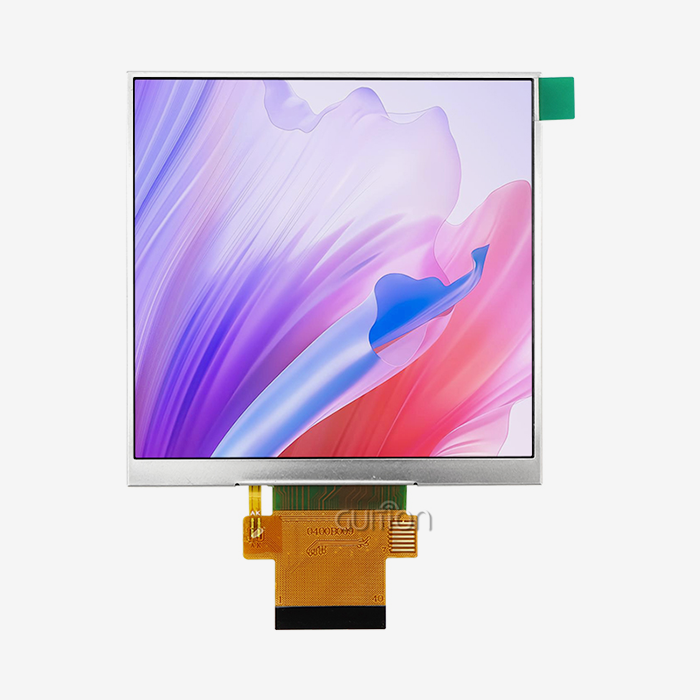
Through a transparent ITO (Indium Tin Oxide) electrode grid attached to the display glass, a Capacitive touch display module senses touch by measuring changes in capacitance. Instead of reacting to physical pressure like resistive screens do, projected capacitive (PCAP) sensors react to the electrical properties of a finger. This means they respond faster, are more accurate, and can handle multiple touches. Industry data shows that PCAP modules can detect touches with an accuracy of ±1mm and support 10 or more touch points at the same time.
Key Performance Benefits Over Resistive Screens
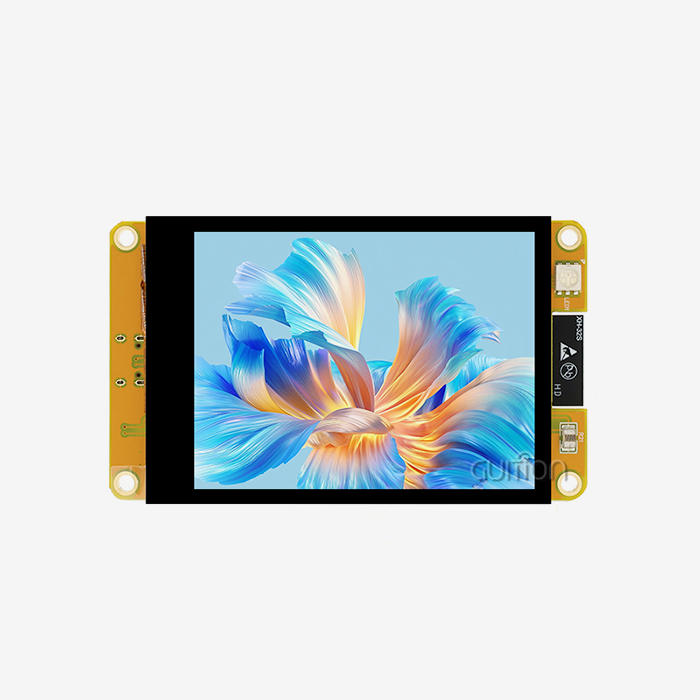
A well-bonded Capacitive touch display module has an optical transmission rate of more than 90%, while resistive options have rates of about 75% to 80%. This directly leads to more accurate color rendering and less eye strain in challenging settings. IPS screens, like the ones in the GUITION JC4827Q343C_I, offer 65K colors and wide viewing angles, which means that workers can see the interface easily from almost anywhere on an industrial floor.
Industrial vs. Consumer Grade Modules
Touch screen panels made for industrial use can work in temperatures ranging from -20°C to +70°C (or -30°C to +85°C for extended-range models), and the cover glass has a hardness rating of 6H to 7H Mohs. Consumer-grade units often don't follow these rules to save money. If you pick the wrong grade for medical tracking equipment, energy management systems, or farming automation, you will have to pay a lot more in repairs than you saved on the price up front.
Why Comparing Prices of Capacitive Touch Display Modules Is Crucial for B2B Buyers
It's not enough to just find the cheapest number on a quote sheet when you compare prices. It's a test of risk management.
What Drives Price Variation in Touch Display Modules
Prices are affected by the type of material used, the resolution of the screen, the way of bonding (air bonding vs. optical bonding), and the level of complexity of the embedded controller. Although it is more expensive up front, a Capacitive touch display module that uses optical bonding and a high-performance MCU gets rid of internal shadows, lowers parallax error, and increases operating life. For instance, the GUITION JC4827Q343C_I runs on the Artinchip D121BAV MCU at 400MHz, which can handle complex UI rendering without the lag that cheaper, less powerful controllers cause.
Hidden Costs of Skipping Price Benchmarking
If procurement teams don't do price benchmarking, they often have to pay for it later. These include the cost of reworking the interface when a display module doesn't work with all platforms properly, the cost of replacing hardware in the field when it breaks down too soon, and the time engineers have to spend fixing bad paperwork. A procurement study by the Aberdeen Group in 2023 found that companies that do organized source price benchmarking cut their overall procurement costs by 11–18% a year on average.
Total Cost of Ownership vs. Unit Price
A touch screen module that costs $8 less per unit might need 40 hours more of custom driver development. At an hourly rate of $85 for both engineers, that's $3,400 in secret development costs, which can easily wipe out any savings from even a medium-sized order. A real price comparison takes into account things like software support quality, the ability to update over-the-air (OTA), and flexibility with multiple languages. These all have a direct effect on your development budget.
Comparing Capacitive Touch Display Modules: What Should Procurement Managers Look For?
It's easy to do organized comparisons once you know what makes price and value change. These are the main things that every buying manager should look at before making an order.
Technical Specifications That Directly Affect Price
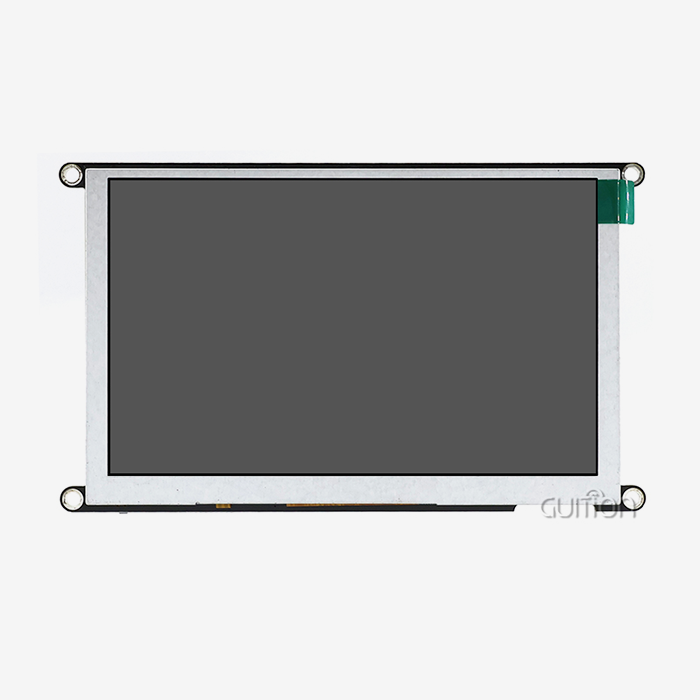
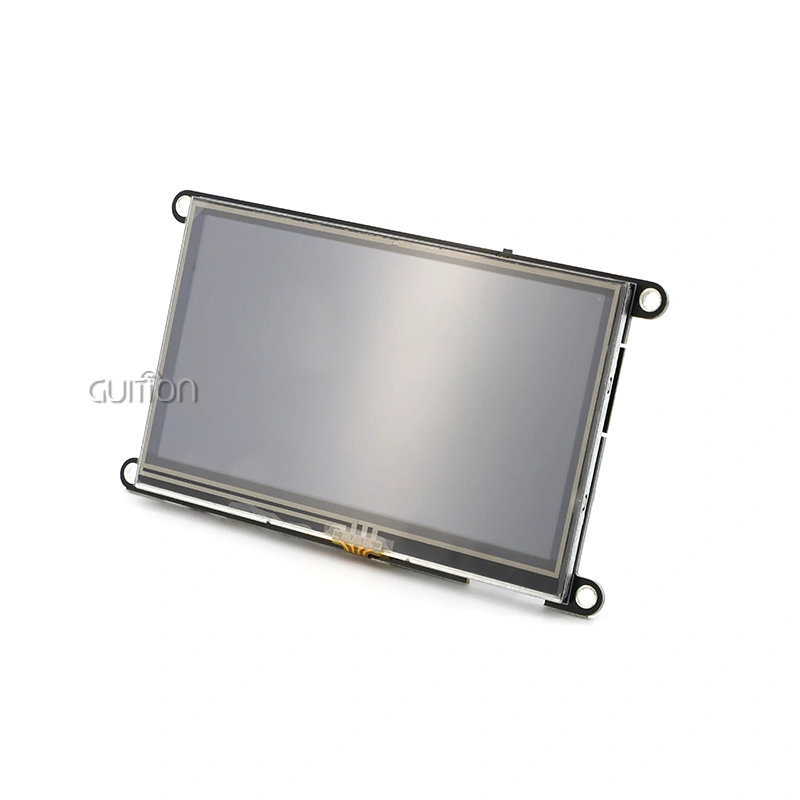
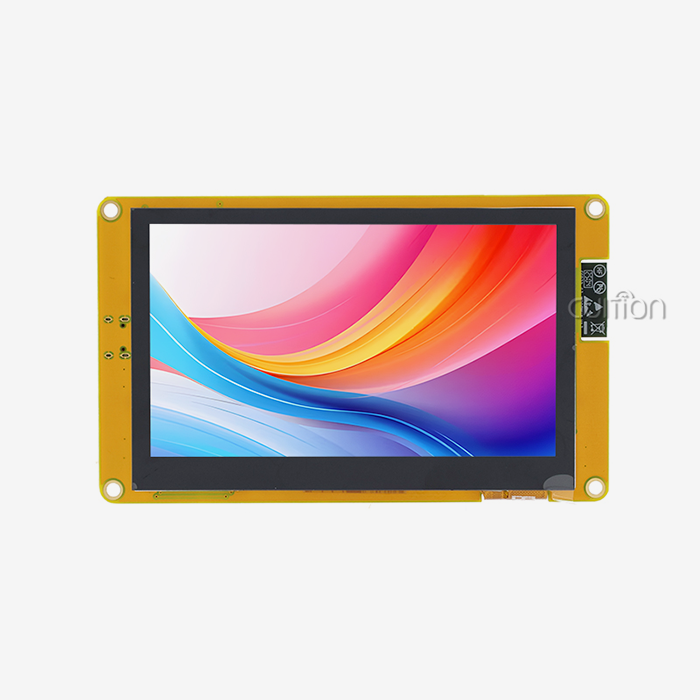
Type of screen, clock speed of the processor, and interface choices (I2C, SPI, USB, LVDS, MIPI-DSI) all affect the price of a module. With a 480x272 IPS screen and capacitive touch, the GUITION JC4827Q343C_I is a single-core MCU-based hmi display module running at 400MHz. It has IO port connections, backlight control circuits, and TF card ports, which lets developers be flexible without having to pay for parts they don't need.
Software Ecosystem and Development Tool Quality
Both the hardware and software of a display module are very important. UI development takes a lot less time when modules are used with GUI development tools, such as the Guition online drag-and-drop interface builder. With just one click, engineers can add buttons, sliders, and data charts, and then they can test them across multiple platforms without having to write any low-level graphics code. This cuts down on time-to-market, which is a measurable cost benefit when comparing suppliers.
Certifications, MOQs, and Supply Chain Reliability
Make sure the seller has the right certifications and can meet your minimum order quantities while keeping quality high. Check to see how long it takes to make their goods and if they offer over-the-air (OTA) software updates for products that are already in use. Long-term supply dependability is especially important for companies that make medical devices and industrial equipment and can't afford to switch out parts in the middle of production.
Procurement Strategies: How to Buy Capacitive Touch Display Modules Efficiently
Smart buying is more than just making the choice to buy something. It changes how you make products all the way through the development process.
Sourcing from Verified Suppliers with Documented Support
Give full secondary development documentation, expert help routes, and tested code libraries to Capacitive touch display module providers. Guition offers development options for Arduino, ESP-IDF, and Guition itself. These are the most popular embedded engineering environments in the US market. This cross-platform flexibility makes it easier for your tech team to learn and speeds up the time it takes to make the first prototype with an HMI Display Module.
Negotiating Quotes That Reflect True Value
When you ask for quotes, make sure that the providers list the unit cost, tooling fees for custom enclosures, shipping terms (FOB vs. DDP), guarantee coverage, and service area after the sale. A thorough quote from a Capacitive touch display module manufacturer will show you if the prices are really reasonable or if they are artificially low because of lowered service promises. A procurement risk is suppliers who can't give itemized quotes.
Avoiding Common Procurement Pitfalls
Most of the time, procurement managers choose a touch display module based only on the size and cost of the screen, without checking to see if it works with software or supports over-the-air (OTA) upgrades. Remote firmware updates are required for goods that are already out in the field, like smart home devices, business kiosks, and energy management screens. It's the difference between a $500 truck roll and a $50 OTA push.
Conclusion
Comparing Capacitive touch display module prices is worthwhile, but only when total cost of ownership, supply dependability, software support, and development tools are taken into account. The GUITION JC4827Q343C_I shows how a well-specified module with strong backing from the development environment can provide real engineering value above and beyond its unit price. When procurement managers look at the big picture, they always get faster product timelines, lower debugging costs, and more reliable performance in the field. When you buy something next, don't just look at the lowest price; look at the total value as well.
FAQ
What factors most affect the price of a capacitive touch display module?
Panel size, IPS vs. TN display type, bonding method (optical vs. air), MCU clock speed, and built-in connectivity (WiFi/Bluetooth) are the primary cost drivers. Industrial-grade environmental ratings and custom cover glass treatments (anti-glare, anti-fingerprint) also add to unit cost but reduce long-term failure rates.
How do I ensure quality consistency in bulk orders?
Request that your supplier provides batch inspection reports covering linearity testing, multi-touch point validation, and high-temperature/high-humidity endurance data. Reputable capacitive touch display module suppliers conduct ESD testing (Contact ±8kV, Air ±15kV) and thermal shock cycling as standard quality control steps.
What is a realistic lead time for custom touch display modules?
Standard modules typically ship within 2–4 weeks. Custom configurations — including modified cover glass size, special coatings, or firmware pre-loading — generally require 6–10 weeks depending on order volume. Confirm lead times in writing before finalizing purchase agreements.
Does the GUITION JC4827Q343C_I support multi-language interfaces?
Yes. The module supports UTF-8 encoding and multi-language switching, making it suitable for global product deployments across North America, Europe, and Asia-Pacific markets.
Get Your Capacitive Touch Display Module Quote from Guition Today
With the Guition drag-and-drop GUI creation tool and real cross-platform support, Guition manufactures a full range of Capacitive touch display modules from 1.28" to 21.5". The JC4827Q343C_I is a tried-and-true choice from a wider range of products designed for use in smart devices, medical equipment, and factories. Get in touch with our team to get price information, technical documentation, and OEM customization choices that are perfect for your production needs. To see all of our Capacitive touch display module products, email us at david@guition.com.
References
1. Aberdeen Group. Procurement Benchmarking and Cost Reduction in Electronics Supply Chains. 2023.
2. Grand View Research. Touchscreen Display Market Size, Share & Trends Analysis Report. 2023.
3. IEEE Transactions on Industrial Electronics. Projected Capacitive Touch Sensing for Industrial HMI Applications. 2022.
4. IHS Markit (S&P Global). Global Display Module Supply Chain and Pricing Outlook. 2023.
5. Electronic Design Magazine. Evaluating HMI Display Modules for Embedded Systems. 2022.
6. Frost & Sullivan. Smart Device Connectivity and HMI Technology Trends in North America. 2023.
Learn about our latest products and discounts through SMS or email