- English
- French
- German
- Portuguese
- Spanish
- Russian
- Japanese
- Korean
- Arabic
- Greek
- German
- Turkish
- Italian
- Danish
- Romanian
- Indonesian
- Czech
- Afrikaans
- Swedish
- Polish
- Basque
- Catalan
- Esperanto
- Hindi
- Lao
- Albanian
- Amharic
- Armenian
- Azerbaijani
- Belarusian
- Bengali
- Bosnian
- Bulgarian
- Cebuano
- Chichewa
- Corsican
- Croatian
- Dutch
- Estonian
- Filipino
- Finnish
- Frisian
- Galician
- Georgian
- Gujarati
- Haitian
- Hausa
- Hawaiian
- Hebrew
- Hmong
- Hungarian
- Icelandic
- Igbo
- Javanese
- Kannada
- Kazakh
- Khmer
- Kurdish
- Kyrgyz
- Latin
- Latvian
- Lithuanian
- Luxembou..
- Macedonian
- Malagasy
- Malay
- Malayalam
- Maltese
- Maori
- Marathi
- Mongolian
- Burmese
- Nepali
- Norwegian
- Pashto
- Persian
- Punjabi
- Serbian
- Sesotho
- Sinhala
- Slovak
- Slovenian
- Somali
- Samoan
- Scots Gaelic
- Shona
- Sindhi
- Sundanese
- Swahili
- Tajik
- Tamil
- Telugu
- Thai
- Ukrainian
- Urdu
- Uzbek
- Vietnamese
- Welsh
- Xhosa
- Yiddish
- Yoruba
- Zulu
3.5 inch ESP32S3 display module: What Features Matter Most?
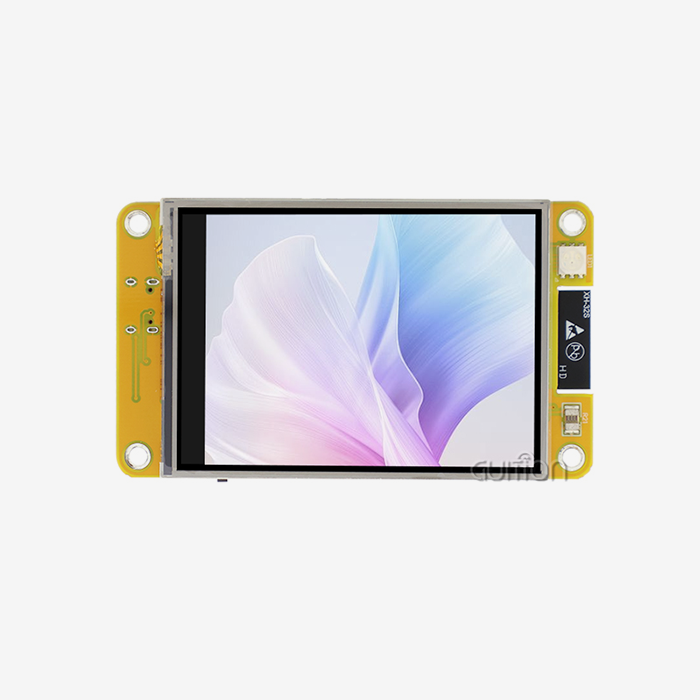
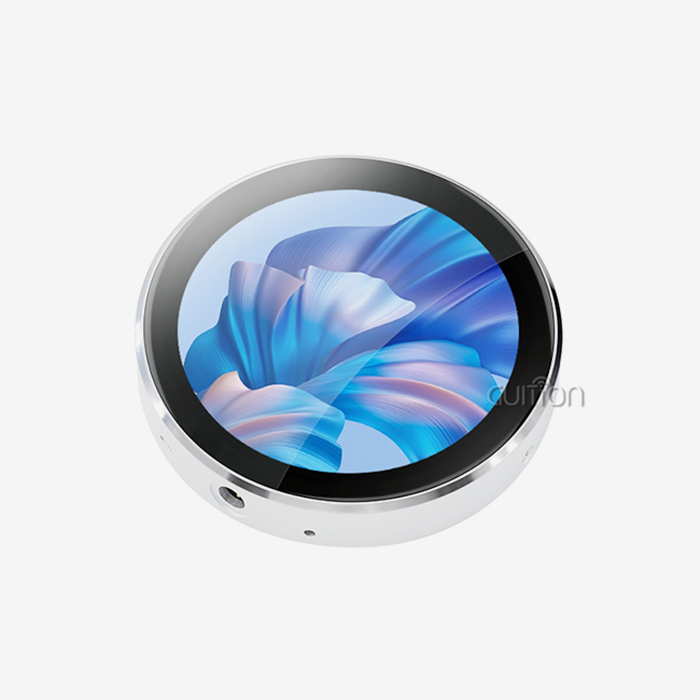
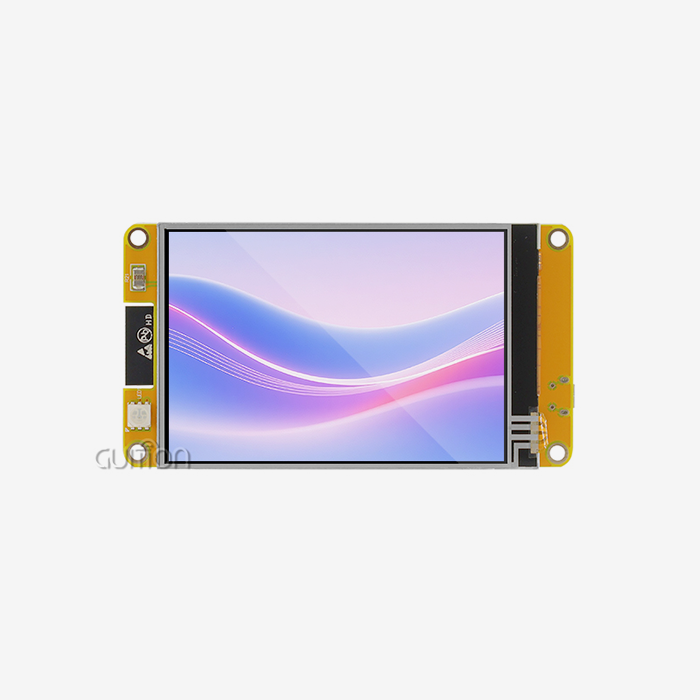
When engineers and product managers search for the right embedded display solution, the 3.5 inch ESP32S3 display module consistently rises to the top of the shortlist. This module category combines a high-resolution IPS panel, wireless connectivity, and a dual-core processor into one compact unit — eliminating the BOM complexity that once slowed embedded development teams. The GUITION JC3248W535C_I_Y exemplifies what a well-engineered ESP32S3 display module can deliver: 320×480 resolution, capacitive touch, 16MB flash, 8MB PSRAM, and native support for Arduino IDE, ESP-IDF, MicroPython, and the Guition development platform — all in a 3.5-inch form factor built for real-world deployment.

Understanding the Core Specifications of a 3.5 Inch ESP32S3 Display Module
Selecting the right display module begins with a clear-eyed look at its electrical and physical foundation. Specification mismatches are one of the leading causes of project delays in embedded development.
Resolution, Interface, and Memory Architecture
The GUITION JC3248W535C_I_Y has an IPS panel with 320x480 pixels and a wide viewing angle of 170°. This is very useful for industrial control panels and medical monitoring equipment where people sit in different positions and look at the screens. There are two Xtensa® LX7 cores running at up to 240MHz in the ESP32S3R8. It also has 512KB of SRAM, 384KB of ROM, and 8MB of PSRAM on-chip. That extra PSRAM space is what makes double-buffered LVGL graphics smooth and free of frame breaking. With 16MB of flash storage built in, the module can handle large UI assets and firmware without needing to use external memory.
Power Design and I/O Availability
The module works with 3.3V logic and 5V backlight drive, which is a common setup that works well with most embedded power architectures. You can still connect up to 12 GPIO pins to sensors, switches, encoders, and data buses, among other things. A special TF card slot lets you add more storage for things like data logging or media-rich displays. The module is not just a lab prototype part because it has a lithium battery charging circuit built in with overcharge and overdischarge protection. This makes it ready for use in a portable device.
Key Features That Influence Performance and Usability
Hardware specifications only tell half the story. The features that determine daily usability — touch quality, panel type, firmware compatibility — are where this 3.5-inch esp32 display module truly differentiates itself.
Capacitive Touch and IPS Panel Quality
The JC3248W535C_I_Y has a sensitive touch driver (I2C interface) that lets you use multiple touch gestures and accurately measure deviations of less than 1 mm. Resistive screens need actual pressure to work, but capacitive touch doesn't. This makes it a better choice for healthcare interfaces and kiosks that people use. The IPS panel's color accuracy and contrast stay the same across its full 170° viewing angle. This is something that TN panels at similar price points can't do.
Firmware Ecosystem and Development Flexibility
What separates a capable module from a genuinely productive one is its software ecosystem. Here are the core development advantages the JC3248W535C_I_Y delivers out of the box:
- Arduino IDE support allows quick prototypes with a huge community library base, cutting the time it takes to make the first prototype from days to hours for teams already familiar with the ecosystem.
- ESP-IDF compatibility lets embedded engineers directly access FreeRTOS, hardware abstraction layers, and Espressif's official driver stack — necessary for making production-grade software that can schedule tasks in a predictable way.
- MicroPython support enables changes at the script level to try out different user interfaces and add sensors without having to recompile the whole software.
- Guition software platform provides a drag-and-drop UI builder with a large control library, cross-platform online debugging, OTA remote update functionality, and UTF-8 multi-language encoding — greatly shortening the time it takes to create an HMI.
These development paths get rid of the "choose your ecosystem" problem that many competing ESP32 display modules have. Engineers on the same team can work in any setting they like and still aim for the same hardware.
How to Choose the Best ESP32S3 Display Module: A Buying Guide
B2B procurement decisions for an ESP32 display module involve more than comparing datasheets. Supply reliability, after-sales support, and ecosystem longevity carry equal weight for teams shipping products at scale.
GUITION, which is run by Jingcai Intelligence, makes display solutions for screens ranging from 1.28" to 21.5". This wide range of sizes shows that the company can make a lot of different products and will have a steady supply of them for a long time. Finding a 3.5-inch ESP32S3 display module from a supplier with a vertically integrated development platform (Guition software) and dedicated technical documentation makes things a lot easier after the purchase. The company's engineering support team handles issues related to debugging, OTA upgrades, and multilingual deployment, which is something that generic module suppliers don't usually do.
When choosing an ESP32-based display module provider, make sure the paperwork is complete, sample code is available, and cross-platform compatibility is checked before looking at unit price alone.
Step-by-Step: Programming and Deploying the JC3248W535C_I_Y
It shouldn't take two weeks of driver archeology to get from unboxing to a working UI. The JC3248W535C_I_Y comes from GUITION with factory test programs already installed. When you plug it in via USB, the display turns on right away, checking the hardware's integrity before you run a single line of custom code.
Hardware Setup and Initial Configuration
Use the USB port to connect the module to your development host. Because the ESP32S3 has a built-in USB Serial/JTAG controller, you don't need an extra USB-to-UART bridge. The official hardware guide lists the pin assignments for all 12 GPIOs and makes the I2C, SPI, UART, and PWM channels easy to find. The lighting control circuit lets software change the brightness using PWM, which is helpful for managing power in battery-powered devices.
Debugging and Remote Upgrade Workflow
Cross-platform live testing through the Guition environment lets teams find problems with how the UI is rendered and fix calibration drift without having to flash the firmware over and over again. Once it's set up, the over-the-air (OTA) upgrade path lets firmware versions be changed remotely. This feature greatly lowers the cost of maintenance after the sale for spread-out installations like commercial kiosks or agricultural automation stations.
Future Trends in ESP32S3 Display Module Development
The market for integrated displays is growing faster. According to Grand View Research, the global HMI market was worth about $5.27 billion in 2023 and will continue to grow at a rate of 10.1% per year until 2030. Because they combine edge AI processing, wireless connection, and rich UI capabilities at a price point that SME product teams can afford, ESP32S3-based modules play a key role in this growth.
3.5-inch AMOLED screens are now being added to embedded development catalogs, promising deeper blacks and less active power use than IPS displays. At the same time, manufacturers like GUITION are changing how their software platforms are set up because more people want flexible secondary development frameworks that let teams add to factory UI templates without starting from scratch. In a market that is getting more and more competitive, modules that support this growth model will win customers over.
Conclusion
A 3.5 inch ESP32S3 display module called the GUITION JC3248W535C_I_Y shows that it is possible to get industrial-grade reliability, developer-friendly flexibility, and wireless connectivity without having to choose between speed and capability. The flaws that slow down embedded product teams are fixed by the 240MHz dual-core processor, capacitive IPS display, 16MB flash, multi-framework development support, and over-the-air (OTA) upgrade feature. When engineers, R&D managers, and technical leaders are looking for their next HMI platform, this module is a good option from both a technical and a business point of view.
FAQ
1. What resolution does the GUITION JC3248W535C_I_Y support?
The module has a 3.5-inch IPS screen with 170° viewing angles and works at 320x480 pixels. It can be used for both horizontal and landscape UI setups.
2. Can I run LVGL on this ESP32S3 display module?
Yes. The ESP32S3R8's dual-core architecture, 8MB of PSRAM, and DMA support make it possible for smooth LVGL rendering at 30+ FPS, which is enough for animated interfaces that move smoothly.
3. Does the module support OTA firmware updates?
Over-the-air (OTA) remote upgrades are built into the Guition platform. This means that teams can send firmware updates to deployed units without having to physically access them.
4. What touch controller does the JC3248W535C_I_Y use?
It has a capacitive touch device that works over I2C and supports multiple touch gestures with very accurate location tracking.
5. Is the module compatible with Arduino IDE?
Yes. The JC3248W535C_I_Y works with Arduino IDE, ESP-IDF, MicroPython, and Guition, so development teams can choose whichever software they want.
Partner with GUITION for Your Next ESP32S3 Display Project
Ready to source a reliable 3.5 inch ESP32S3 display module manufacturer? GUITION delivers engineering-grade HMI solutions with full development ecosystem support, OTA upgrade capability, and proven supply reliability across industrial, medical, and smart device applications. Contact our technical team directly at david@guition.com to request samples, bulk pricing, and application-specific guidance.
References
1. Grand View Research. Human Machine Interface (HMI) Market Size, Share & Trends Analysis Report. 2024.
2. Espressif Systems. ESP32-S3 Technical Reference Manual. 2023.
3. Embedded Computing Design. Selecting Display Modules for Industrial HMI Applications. 2023.
4. IEEE Transactions on Industrial Electronics. Low-Power Embedded Display Architectures for IoT Edge Devices. 2022.
5. Electronics Weekly. Trends in Capacitive Touch Integration for Embedded Systems. 2023.
6. Microcontroller Tips. ESP32-S3 Development Frameworks: Arduino, ESP-IDF, and MicroPython Compared. 2023.
Learn about our latest products and discounts through SMS or email