- English
- French
- German
- Portuguese
- Spanish
- Russian
- Japanese
- Korean
- Arabic
- Greek
- German
- Turkish
- Italian
- Danish
- Romanian
- Indonesian
- Czech
- Afrikaans
- Swedish
- Polish
- Basque
- Catalan
- Esperanto
- Hindi
- Lao
- Albanian
- Amharic
- Armenian
- Azerbaijani
- Belarusian
- Bengali
- Bosnian
- Bulgarian
- Cebuano
- Chichewa
- Corsican
- Croatian
- Dutch
- Estonian
- Filipino
- Finnish
- Frisian
- Galician
- Georgian
- Gujarati
- Haitian
- Hausa
- Hawaiian
- Hebrew
- Hmong
- Hungarian
- Icelandic
- Igbo
- Javanese
- Kannada
- Kazakh
- Khmer
- Kurdish
- Kyrgyz
- Latin
- Latvian
- Lithuanian
- Luxembou..
- Macedonian
- Malagasy
- Malay
- Malayalam
- Maltese
- Maori
- Marathi
- Mongolian
- Burmese
- Nepali
- Norwegian
- Pashto
- Persian
- Punjabi
- Serbian
- Sesotho
- Sinhala
- Slovak
- Slovenian
- Somali
- Samoan
- Scots Gaelic
- Shona
- Sindhi
- Sundanese
- Swahili
- Tajik
- Tamil
- Telugu
- Thai
- Ukrainian
- Urdu
- Uzbek
- Vietnamese
- Welsh
- Xhosa
- Yiddish
- Yoruba
- Zulu
What Resolution Is Best for a Small LCD Display Module?
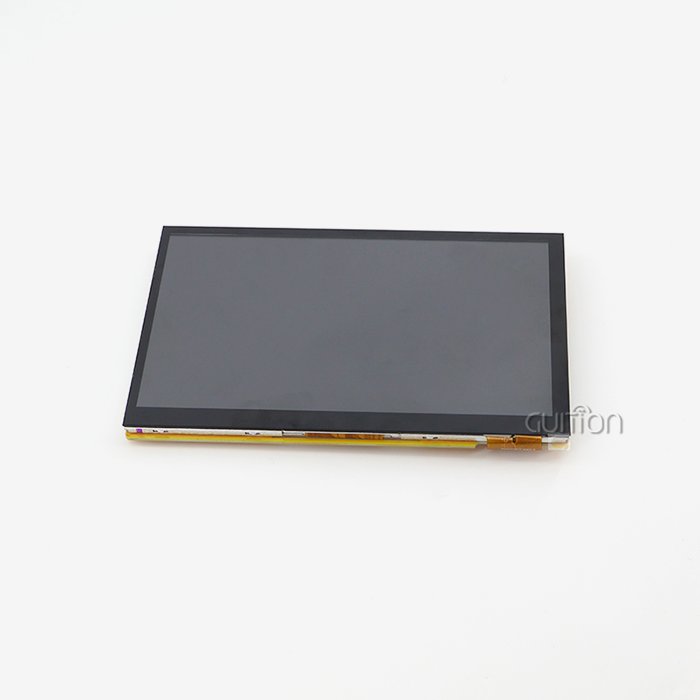
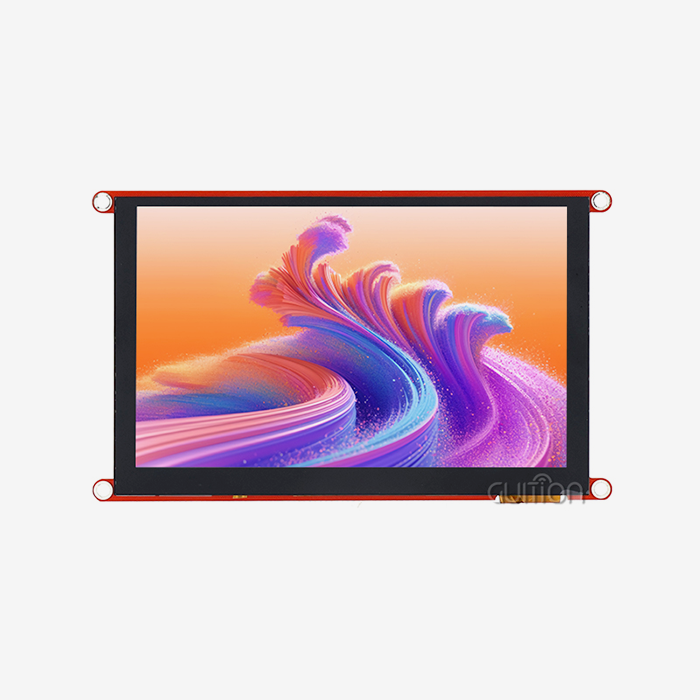
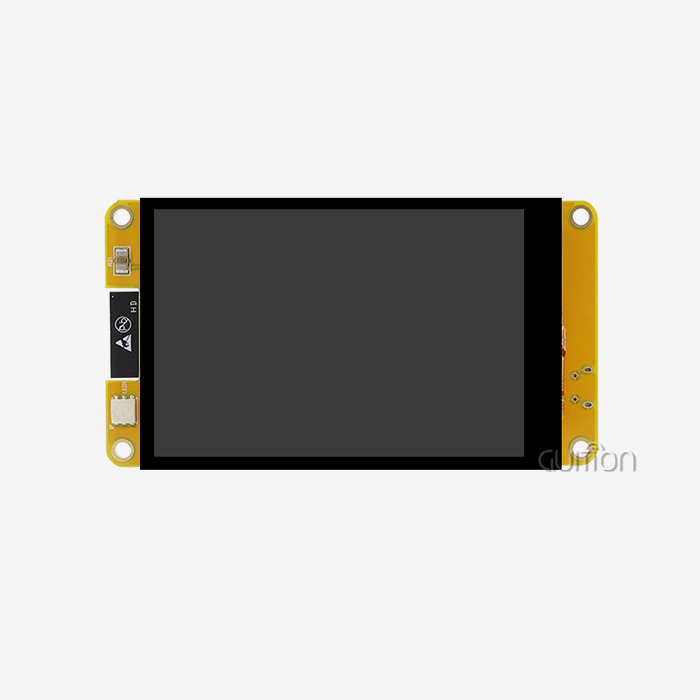
Engineers and procurement managers would answer that question differently, depending on the screen size, viewing distance, application, sort, and processing power. The appropriate resolution for a small LCD display module will depend on these aspects. GUITION JC3248S035N 3.5 Inch 320×480 165 PPI Display for industrial panels, medical monitors, and smart home interfaces that will not overwhelm your microcontroller. A wrong resolution choice costs GPIO resources and money. This lesson walks you through everything crucial.

Understanding Small LCD Display Module Resolutions
Resolution is more than a number on a spec sheet. This is a measure of the amount of information that can be clearly conveyed by the display at a given size.
What Resolution Actually Means
Resolution is the number of pixels that form a screen. This is in the form width x height (320x480). Pixel density (PPI, pixels per inch) is the number of pixels divided by the physical size of the screen: The 3.5” LCD display module with 320×480 pixel resolution has a PPI of about 165, which is just enough to read sensor values, status icons, and navigation menus from arm’s length.
Low, Medium, and High Resolution Tiers
Industry practice groups break down LCD resolutions into three categories. Low-end displays (128x128 to 240x320) are appropriate for basic status signals. The mid-size panels (320x480 to 480x800) are utilized in the widest range of HMI projects, from industrial control panels to smart appliance interfaces. High-tier displays (720p and above), video-heavy commercial kiosks, and advanced medical imaging. The majority of embedded efforts are mid-range, striking a nice balance between cost and clarity.
Reading Datasheet Parameters Correctly
Beyond width and height, datasheets list pixel pitch (distance between pixel centers), refresh rate (typically 60 Hz for smooth animation), and interface protocol. The ILI9488 driver IC on the GUITION JC3248S035N uses 4-wire SPI, which keeps GPIO pin usage minimal. Always cross-check the controller's maximum clock speed against your MCU's SPI output to avoid frame-rate bottlenecks.
How Resolution Impacts Performance and Applications
The resolution you choose has real effects on how much power it uses, how fast it renders, and how good the UI is. Finding the right mix early on will save you a lot of work later on.
Power Consumption Trade-offs
More pixels mean that the backlight needs to be brighter and update processes need to happen more often. At 60 Hz, a 320x480 screen sends about 9.2 million image updates per second, which is enough for most 32-bit MCUs to handle. That number would go over 55 million if the same Small lcd display module were scaled up to 720x1280, which would put a lot of strain on the processor and the power supply. When it comes to IoT devices that run on batteries, sticking in the mid-tier quality range can often add 30–40% to the battery life compared to high-tier options.
Touchscreen vs. Non-Touch Considerations
Adding a capacitive touch layer doesn't affect the original resolution, but it changes how crisp something seems. Air-bonded touch glass might result in internal reflections when touched, which can decrease the contrast by 15-20%, making the picture seem less clear. This gap is eliminated, and with optical bonding, things are clear again. The GUITION JC3248S035N is also available as a touch version for engineers. This allows them to choose the most suitable setting for their user interface interaction model without any degradation of the display quality.
Application-Specific Resolution Needs
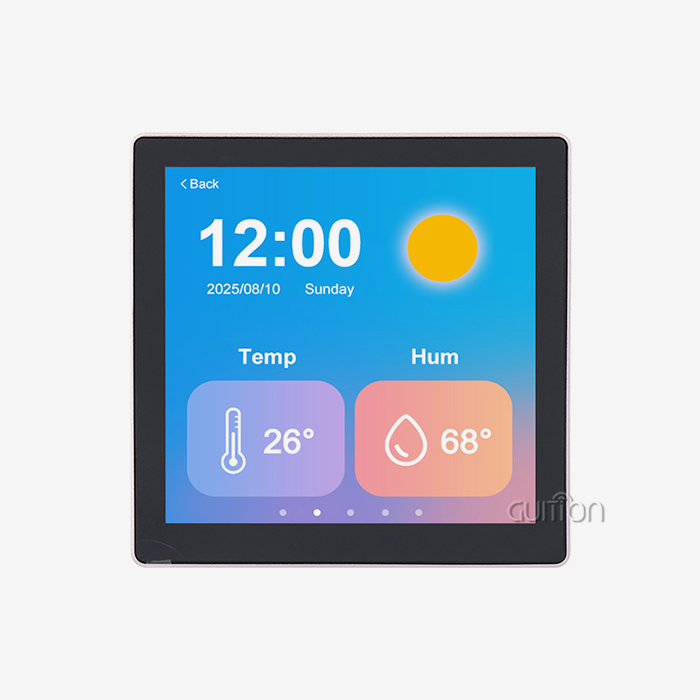
The starting point for each industry is different. Most medical monitoring gadgets need at least 300 PPI to make small print easy to read. Industrial control panels on factory floors put contrast and clear icons ahead of pixel density, so panels with 165 PPI are more than enough. Mid-level resolution works best for smart home thermostats and energy management displays where people interact with them up close and expect the text to be clear. You can avoid over-specifying and spending if you know where your product fits in the market.
Comparing Small LCD Display Module Resolutions With Other Technologies
TFT LCD, OLED, and e-paper all handle resolution in different ways. When buying, if teams know the differences, they can make more solid choices about where to get things.
TFT LCD vs. OLED Resolution Performance
TFT LCD panel with equal brightness throughout the whole display area. - Wide operating temperature range (Typically industrial grade -20°C to +70°C) - Accurate color reproduction TFT Small LCD display module 320x480. One concern with industrial interfaces that show the same symbols for hundreds of hours at a time is individual pixel burn-in. OLED screens might potentially fit more pixels into the same area.
IPS vs. TN Panel Clarity
IPS screens have 178°/178° viewing angles, so the picture appears the same from any seat. On TN screens, colors change when you move them more than 45 degrees off-axis. TN is good for control boards at eye level. IPS technology offers a lot more detail at the same resolution on medical carts or booths where patients are looking at the screen from many different angles.
Where Touchscreen Integration Changes the Equation
Adding a resistive or capacitive touch layer on top of a panel with a medium resolution works well because the controller only has to map touch coordinates to a 320x480 grid, which is a simple calculation. When you put capacitive touch on a high-resolution panel, you need touch controllers that work faster and interface with more bandwidth. To make up for this, the GUITION JC3248S035N has a 4-wire SPI framework with an optional touch configuration. This keeps the hardware stack simple.
How to Choose the Best Resolution for Your Procurement Needs
A structured evaluation method keeps display specs and product needs from not matching up, which can be very expensive.
Define Your Use Case First
Note the minimum visible text size, viewing distance, ambient lighting conditions, and MCU type before calling any Small lcd display module suppliers. Reading numbers from 50 cm away is easy for an embedded engineer making a smart meter; 165 PPI is more than enough. If a product manager is making a handheld testing tool for doctors, they might need at least 240 PPI. Writing down these needs takes the guessing out of negotiating with suppliers. When choosing a resolution, these are the main things to think about:
- Screen size and PPI target: A 3.5-inch panel at 320×480 yields ~165 PPI, suitable for most industrial HMI tasks. Larger panels at the same resolution show lower PPI and may appear coarser at close viewing distances.
- Interface and MCU compatibility: SPI-based modules like the JC3248S035N require fewer GPIO pins, leaving room for sensors, communication modules, and other peripherals.
- Operating environment: Industrial-grade modules rated for −20°C to +70°C protect against field failures in manufacturing plants and outdoor enclosures.
- Expandability: The built-in SD card slot on the JC3248S035N lets teams store fonts, images, and configuration files directly on the module, reducing MCU flash demands.
The JC3248S035N has an SD card slot that lets teams store fonts, images, and configuration files directly on the module. This saves MCU flash memory.
Match Resolution to Your Software Stack
Both development speed and long-term dependability are directly affected by these things. If you miss any of them, you'll probably have to pay a lot of money to fix the hardware in the middle of the project.
Evaluate Supplier Reliability
The GUITION programming environment works with Arduino, ESP-IDF, and the default GUITION mode. Frame rendering is done in a different way in each mode. With SPI DMA transfers, Arduino projects on a 320x480 TFT run easily at 30 to 60 frames per second. Direct memory access is good for ESP-IDF systems because it speeds up processing. As important as the hardware specs are, the resolution your software stack can render at a good frame rate is also very important.
Implementation and Troubleshooting for Small LCD Displays with Optimal Resolution
If you skip integration steps, even a show that was set up correctly might not work as well as it should.
Hardware Interfacing Basics
First, connect the four-wire SPI lines (MOSI, MISO, SCLK, and CS). Then, connect the DC/RS and RST control lines. To keep signals from getting weaker at higher clock rates, keep SPI trace lengths short. The JC3248S035N's ILI9488 can handle SPI clock speeds of up to 40 MHz, but starting at 10 MHz during bring-up helps find wiring problems before boosting throughput.
Diagnosing Common Display Problems
Flickering often suggests the power supply is too weak or the SPI clock speed is too high for the panel. Image distortion is typically the result of an incorrect register configuration. Always follow the starting instructions recommended by the manufacturer. If the screen remains blank, check that a suitable low pulse is delivered to the RST pin during power-up. GUITION provides extensive test scripts for the JC3248S035N covering all these starting processes. That means it may get a system up in minutes, rather than hours.
Firmware Optimization Tips
If your platform enables it, use DMA-based SPI transfers. Instead of drawing essential UI components over and over again, put them into a framebuffer ahead of time. The Guition development tool has drag and drop features that automatically build the appropriate display code. And you don't have to reimplement the low-level drawing routines.
Conclusion
The right resolution for your Small lcd display module is based on the PPI being appropriate for your application, the interface complexity being within the capabilities of your microcontroller, and the supplier you choose having long-term availability of the parts. The GUITION JC3248S035N is a nice middle-of-the-road IC, works well with 3.5 inch screen and a resolution of 320x480. It is powered by the highly acclaimed ILI9488 via 4-wire SPI and is built to military specs with full developer support. Whether you’re designing smart home devices, industrial control panels, or hospital monitoring, this space gives your team a solid foundation to deliver on time.
FAQ
Does higher resolution always mean better image quality on a small LCD display module?
Not all the time. The quality of the image depends on the viewing distance and the PPI. A 3.5-inch screen with a 320x480 panel has about 165 PPI, which makes it look sharp when viewed at arm's length. Trying to get higher resolutions on panels of the same size raises the PPI, but it also needs faster processors and more power. Mid-tier resolution is the best choice for most industrial and commercial HMI tasks.
What interface should I use for a 320×480 LCD module?
For 320x480 screens in embedded systems, 4-wire SPI is the best choice. It only needs four to six GPIO pins and works well on platforms like Arduino, ESP32, and STM32. Because the GUITION JC3248S035N works with the ILI9488 driver over SPI, it can be used with many different development platforms.
How does resolution affect touch screen performance on a small LCD?
For touch mapping, the resolution sets the grid of coordinates. A 320x480 grid is good for displays with buttons and simple scales. Capacitive touch controllers accurately map finger positions to this grid down to the pixel level. This means that 320x480 supports responsive touch without needing very fast touch scan rates.
Can I upgrade a deployed product from one resolution to another?
If the hardware resolution changes, the whole board has to be redesigned, unless the new module has the same footprint and interface. If you choose a provider like GUITION that offers pin-compatible updates, it will be easier to make changes in the future and will protect your PCB investment.
What is the typical operating lifespan of an industrial-grade small LCD display module?
Under normal conditions, the backlight of industrial-grade LCD panels will usually last for more than 50,000 hours. Modules like the JC3248S035N that are made to military-grade standards go even further by using parts that are rated for the wide range of temperatures and humidity changes that happen in factories and outside.
Get the Right Small LCD Display Module for Your Project — Contact Guition Today
You should have a show section for your project that works right away. The 320x480 ILI9488-driven screen, 4-wire SPI interface, SD card expansion, and military-grade build quality of GUITION's JC3248S035N make it a reliable Small lcd display module for sale. The cross-platform support for Arduino, ESP-IDF, and native Guition modes in the Guition development software cuts UI design time by a large amount. To get datasheets and bulk rates right away, email our tech team at david@guition.com or go to https://jingcaizhineng.aixdb.cn/.
References
1. Bhowmik, A. K., Bhatt, R. S., & Chen, J. (Eds.). (2016). Handbook of Visual Display Technology. Springer.
2. Castellano, J. A. (2005). Liquid Gold: The Story of Liquid Crystal Displays and the Creation of an Industry. World Scientific Publishing.
3. Display Industry Association. (2022). Annual Display Technology Market Report. SID — Society for Information Display.
4. Moini, A. (2020). Embedded Systems Design with the Texas Instruments MSP432 32-bit Processor. Springer.
5. Society for Information Display (SID). (2021). Display Measurement Standards: Flat Panel Display Metrology. SID Publications.
6. Tsai, C.-H., & Lin, C.-F. (2019). "Resolution and Power Consumption Trade-offs in TFT-LCD Modules for Industrial HMI Applications." Journal of Display Technology, 15(4), 312–319.
Learn about our latest products and discounts through SMS or email