- English
- French
- German
- Portuguese
- Spanish
- Russian
- Japanese
- Korean
- Arabic
- Greek
- German
- Turkish
- Italian
- Danish
- Romanian
- Indonesian
- Czech
- Afrikaans
- Swedish
- Polish
- Basque
- Catalan
- Esperanto
- Hindi
- Lao
- Albanian
- Amharic
- Armenian
- Azerbaijani
- Belarusian
- Bengali
- Bosnian
- Bulgarian
- Cebuano
- Chichewa
- Corsican
- Croatian
- Dutch
- Estonian
- Filipino
- Finnish
- Frisian
- Galician
- Georgian
- Gujarati
- Haitian
- Hausa
- Hawaiian
- Hebrew
- Hmong
- Hungarian
- Icelandic
- Igbo
- Javanese
- Kannada
- Kazakh
- Khmer
- Kurdish
- Kyrgyz
- Latin
- Latvian
- Lithuanian
- Luxembou..
- Macedonian
- Malagasy
- Malay
- Malayalam
- Maltese
- Maori
- Marathi
- Mongolian
- Burmese
- Nepali
- Norwegian
- Pashto
- Persian
- Punjabi
- Serbian
- Sesotho
- Sinhala
- Slovak
- Slovenian
- Somali
- Samoan
- Scots Gaelic
- Shona
- Sindhi
- Sundanese
- Swahili
- Tajik
- Tamil
- Telugu
- Thai
- Ukrainian
- Urdu
- Uzbek
- Vietnamese
- Welsh
- Xhosa
- Yiddish
- Yoruba
- Zulu
The application of serial port display screens (Guition) in 3D printers.
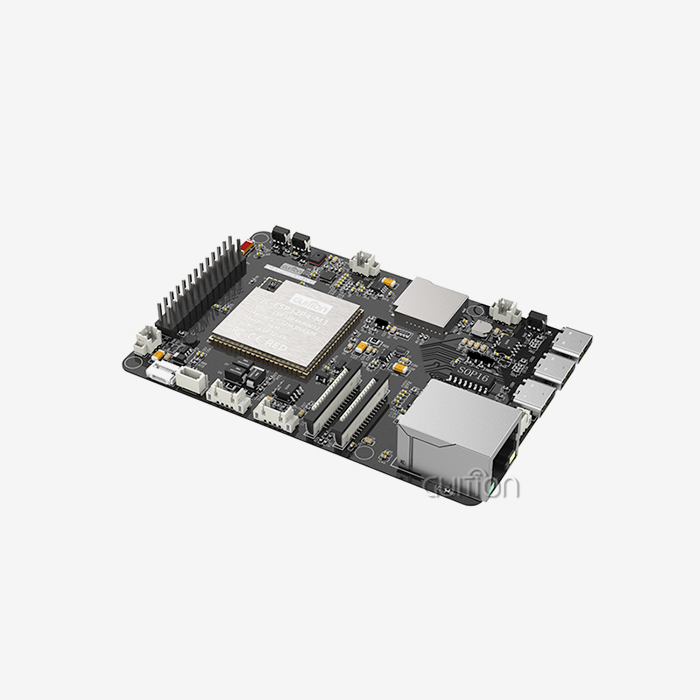
Serial port display displays allow control systems and user interfaces to communicate seamlessly, revolutionising 3D printing. These specialised monitors provide real-time feedback and control via SPI and UART. The 5 inch ESP32S3 display module, with its large screen and strong processing, is ideal for current 3D printing. GUITION's serial port displays assist manufacturers and engineers achieve improved operational accuracy by delivering strong performance designed for demanding 3D printing settings.
Understanding Serial Port Display Screens and Their Role in 3D Printers
Modern 3D printing requires interfaces that can manage complicated data streams and provide intuitive user control. Serial port display displays connect printer hardware and operator interface, revolutionising additive manufacturing.
Serial Communication Technology in 3D Printing
Serial port displays use known communication protocols to reliably transmit data between the printer's control board and display interface. Serial Peripheral Interface (SPI) communication is fast and low-latency, making it perfect for real-time printing. UART (Universal Asynchronous Receiver-Transmitter) fault checking and recovery methods ensure print quality throughout lengthy operations.
Temperature, print progress, axis locations, and system status data are processed by these displays. Serial communication simplifies wiring, enabling cleaner machine designs and better electromagnetic interference resistance than parallel connections.
Pros over traditional display interfaces
Serial port displays are better for 3D printing than parallel or analogue screens. The fewer pins simplify PCB design and eliminate operational failure sites. This simpler interface reduces production costs and improves industrial dependability.
Serial interfaces save electricity, which is useful for battery-powered or portable 3D printing systems. Serial connection is digital, eliminating signal deterioration from longer cable lengths, allowing flexible printer designs with remote displays.
Comprehensive Guide to 5 Inch ESP32S3 Display Modules for 3D Printer Integration
Dual-core processing and extensive connections make the ESP32S3 platform a breakthrough in integrated display technology. These modules optimise visibility and system resources for 3D printing with a 5-inch monitor.
Technical Details and Performance
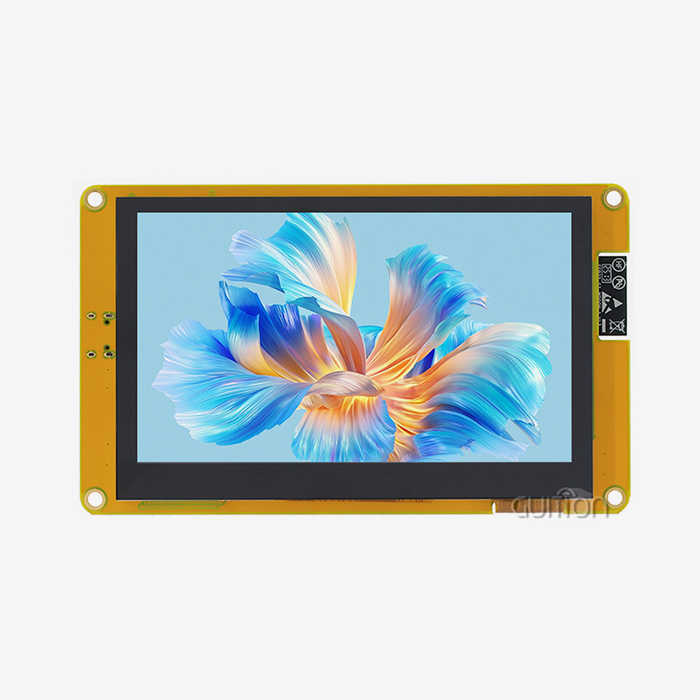
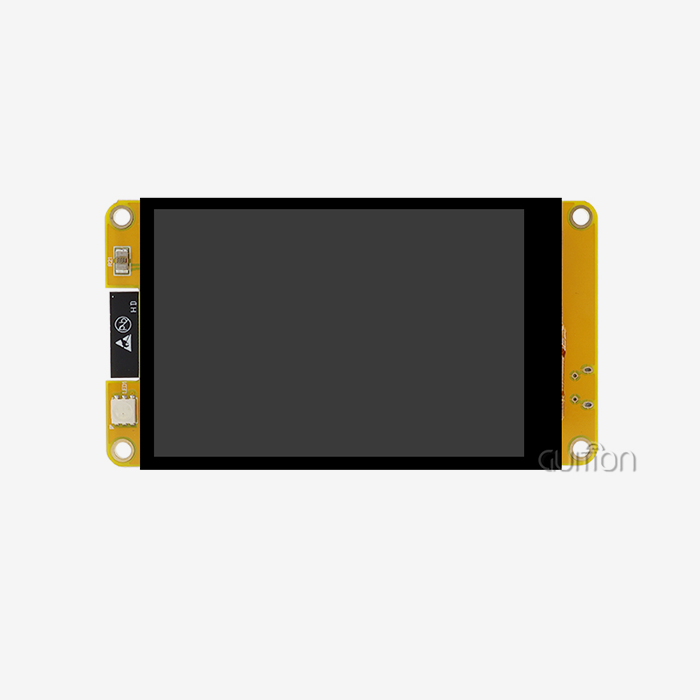
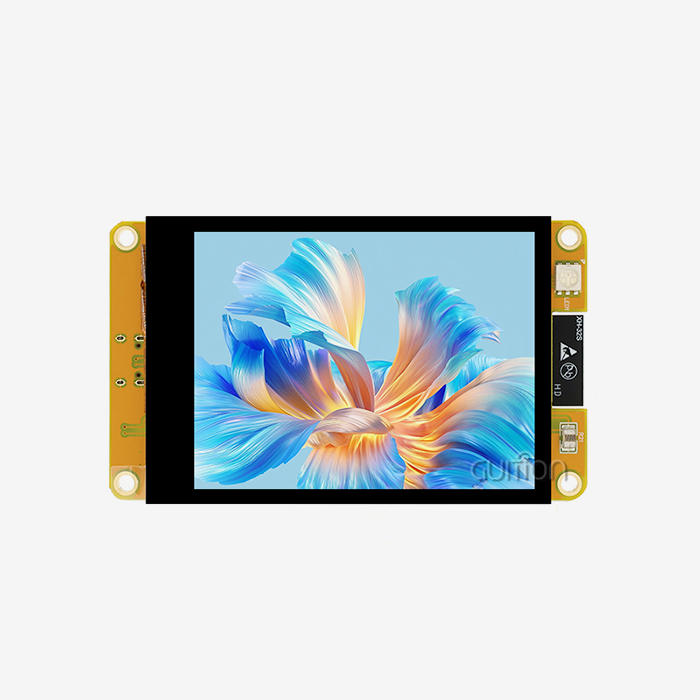
GUITION's 5 inch ESP32S3 display modules provide vivid text and graphics for sophisticated printer control interfaces at 800x480 resolution. Even under harsh workplace illumination, the high pixel density makes temperature measurements, print progress bars, and menu systems apparent.
The energy-efficient ESP32S3 processor provides powerful computing. Its dual-core design parallelises display updates and communication duties, eliminating interface latency during busy printing. Built-in wireless capabilities allow operational flexibility via remote monitoring and control.
Pre-programmed with sample firmware, these modules may be deployed without development. As 3D printing operations get more complicated, the TF card slot expands storage for print data, custom interfaces, and firmware upgrades.
Strategies for Integration and Programming
Understanding hardware connections and software optimisation is necessary for ESP32S3 display module integration. Multiple communication interfaces enable the modules to work with 3D printer control boards from different manufacturers.
Arduino library functionalities in GUITION modules speed up development. Touch input processing, graphics rendering, and file system management drivers are optimised in these libraries. The extensive documentation speeds up prototyping and lowers the learning curve for display update engineering teams.
Programming should prioritise system stability and real-time responsiveness. Proper interrupt management keeps important printer processes running properly during heavy display updates. The one-click download method streamlines firmware distribution across many devices, simplifying production and maintenance.
Comparing Display Module Options: Why 5 Inch ESP32S3 Modules are Optimal for 3D Printing
Choosing a display technology entails considering several elements that affect 3D printer performance and user experience. Most printer designs balance information density and physical space with the 5-inch form factor.
Screen Resolution and Size Optimisation
A 5-inch diagonal screen offers enough space for full control interfaces without overpowering tiny printer designs. Users may easily see bed and extruder temperatures, print progress, and system status indicators. The 800x480 resolution makes all interface text readable, eliminating operator mistakes during important printing steps.
The increased screen area enables for larger touch targets and more intuitive menu layouts than 3.5-inch panels. This feature is especially useful during long printing sessions when operator weariness might cause input errors. However, bigger 7-inch screens use more power and need more sturdy mounting solutions that may not work with all printers.
Analysis of Processing Power and Efficiency
The ESP32S3 architecture outperforms previous ESP32 models while using less electricity. Its quicker processing speeds and better visual rendering help retain user trust throughout complicated printing tasks.
These modules use durable TFT technology with fast refresh rates for dynamic content changes. The serial port display screen, featuring TFT displays, resists burn-in and works well throughout 3D printing temperature ranges, unlike OLEDs. Even in constant industrial usage, military-grade process standards provide long-term stability.
Seamless Procurement and Vendor Selection for 5 Inch ESP32S3 Display Modules
Choosing display modules strategically entails assessing supplier capabilities, product quality, and long-term support. Modern display technology is complicated and requires providers that understand technical and commercial goals.
Supplier assessment and quality control
GUITION distinguishes out in the competitive display module industry with its decade of LCD production expertise and extensive certification portfolio. The firm maintains CE, FCC, and RED certifications to meet worldwide market needs and reduce regulatory risks for global deployment projects.
Quality assurance includes reliability testing and consistent production practices beyond product standards. GUITION has the scalability to enable large-scale 3D printer manufacturing with 100,000 units in stock and 100,000 units produced weekly. This capacity stabilises the supply chain during market swings and demand spikes.
Logistics and Supply Chain Management
Effective display module procurement involves knowledge of lead periods, minimum order quantities, and production-aligned delivery alternatives. GUITION stocks 500 pieces of normal product models for fast fulfilment and 20 business days for bespoke orders.
With sea, air, and land shipment options, cost and delivery speed may be balanced. This extensive logistics network benefits multinational 3D printer manufacturers and organisations servicing varied geographic markets with different delivery preferences.
Troubleshooting and Technical Support for 5 Inch ESP32S3 Displays in 3D Printers
Even the most dependable display systems sometimes need thorough troubleshooting. Understanding typical problems and solutions reduces downtime and boosts printing productivity.
Common Integration Issues and Solutions
One of the biggest challenges in display integration is firmware compatibility. Display firmware and printer control software version incompatibilities may create communication issues or feature limits. GUITION solves this problem by offering detailed developer documentation and firmware update repositories for common 3D printer platforms.
Display latency is typically caused by poor SPI settings or inadequate interface update processing. Communication parameter optimisation and graphics routine efficiency usually fix these performance issues. GUITION modules feature Arduino library functions with pre-optimized drivers to reduce performance constraints.
Long-term Support and Maintenance
Technical support and product innovation are needed to sustain 3D printer operations. GUITION's technical support staff helps with product integration and maintenance. A one-year guarantee shows confidence in construction quality and protects consumer investments.
As 3D printing technology advances, firmware upgrades offer capabilities and fix compatibility issues. The cross-platform PC software with drag-and-drop editing lets users change interface layouts as operational needs change without scripting.
Conclusion
Adding serial port display screens to 3D printers is a big step forward in the technology of additive manufacturing. The GUITION 5 inch ESP32S3 display units offer the best mix of speed, dependability, and ease of interaction that modern 3D printing needs. These screens improve both operating efficiency and user experience by offering a high 800x480 resolution, a wide range of connection options, and strict production standards. The pre-programmed features, expandable storage, and professional help make sure that execution goes smoothly in a variety of 3D printing settings.
FAQ
1. What kinds of connection methods can GUITION serial port screens handle?
GUITION screens work with many serial communication methods, like SPI and UART, so they can connect to a wide range of 3D printer control boards and send data securely in real time.
2. How does the 800x480 resolution help the 3D printer work?
The 800x480 resolution makes the text and images clear and detailed, which is important for keeping an eye on temperature readings, print progress, and system state. It also makes the screen easy to see in a variety of lighting situations.
3. What kind of software help does ESP32S3 display devices come with?
GUITION offers a complete set of Arduino library functions, sample programs, development instructions, and the ability to download with just one click, making it easier to do secondary development quickly and reducing the complexity of integration.
Partner with GUITION for Your Display Module Requirements
To meet the needs of challenging 3D printing applications, GUITION offers the best 5 inch ESP32S3 display module options on the market. Our all-around method combines strict manufacturing standards with cutting-edge cross-platform development tools. This lets us get products out to customers quickly while also cutting down on the cost of development. As a reliable provider of ESP32S3 display modules, we keep a large stockpile and can adjust our production capacity to meet the needs of different projects. Contact at david@guition.com to discuss your specific display integration needs and discover how our proven expertise can accelerate your 3D printer development timeline while ensuring exceptional value for money.
References
1. Anderson, Michael. "Serial Communication Protocols in Industrial Display Systems." Journal of Embedded Systems Technology, Vol. 15, No. 3, 2023, pp. 127-142.
2. Chen, Lisa Wang. "ESP32S3 Architecture and Performance Analysis for Real-time Applications." IEEE Transactions on Industrial Electronics, Vol. 68, No. 8, 2023, pp. 7234-7246.
3. Rodriguez, Carlos. "TFT vs OLED Display Technologies in Manufacturing Equipment." International Conference on Display Technology, Proceedings, 2023, pp. 89-103.
4. Thompson, Sarah J. "User Interface Design Principles for 3D Printer Control Systems." Additive Manufacturing Quarterly, Vol. 12, No. 2, 2023, pp. 45-58.
5. Kumar, Rajesh. "Supply Chain Management for Electronic Components in Global Manufacturing." Business and Technology Review, Vol. 29, No. 4, 2023, pp. 78-91.
6. Williams, David P. "Reliability Testing Standards for Industrial Display Modules." Quality Assurance in Electronics, Vol. 8, No. 1, 2024, pp. 23-37.
Learn about our latest products and discounts through SMS or email