- English
- French
- German
- Portuguese
- Spanish
- Russian
- Japanese
- Korean
- Arabic
- Greek
- German
- Turkish
- Italian
- Danish
- Romanian
- Indonesian
- Czech
- Afrikaans
- Swedish
- Polish
- Basque
- Catalan
- Esperanto
- Hindi
- Lao
- Albanian
- Amharic
- Armenian
- Azerbaijani
- Belarusian
- Bengali
- Bosnian
- Bulgarian
- Cebuano
- Chichewa
- Corsican
- Croatian
- Dutch
- Estonian
- Filipino
- Finnish
- Frisian
- Galician
- Georgian
- Gujarati
- Haitian
- Hausa
- Hawaiian
- Hebrew
- Hmong
- Hungarian
- Icelandic
- Igbo
- Javanese
- Kannada
- Kazakh
- Khmer
- Kurdish
- Kyrgyz
- Latin
- Latvian
- Lithuanian
- Luxembou..
- Macedonian
- Malagasy
- Malay
- Malayalam
- Maltese
- Maori
- Marathi
- Mongolian
- Burmese
- Nepali
- Norwegian
- Pashto
- Persian
- Punjabi
- Serbian
- Sesotho
- Sinhala
- Slovak
- Slovenian
- Somali
- Samoan
- Scots Gaelic
- Shona
- Sindhi
- Sundanese
- Swahili
- Tajik
- Tamil
- Telugu
- Thai
- Ukrainian
- Urdu
- Uzbek
- Vietnamese
- Welsh
- Xhosa
- Yiddish
- Yoruba
- Zulu
OEM Resistive Touch Display Modules: Design and Sourcing Guide
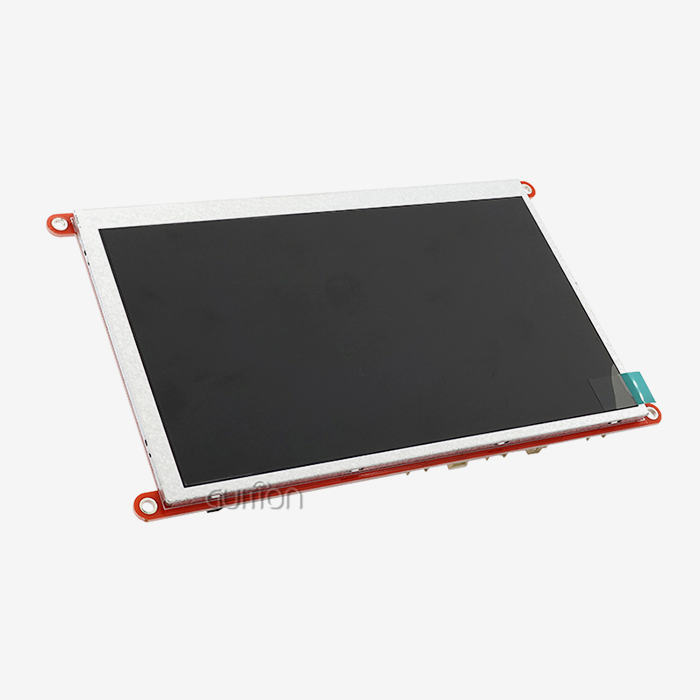
Selecting the right resistive touch display module for your OEM project requires balancing technical performance, durability, and supplier reliability. These pressure-sensitive interfaces remain essential across industrial, medical, and automation applications where gloved operation and harsh environmental resistance outweigh the multi-touch capabilities of capacitive alternatives. With options ranging from compact 2.8-inch displays to expansive 21.5-inch panels, understanding design fundamentals and sourcing strategies ensures your HMI solution delivers consistent performance while meeting time-to-market demands and budget constraints.


Key Design Considerations for OEM Resistive Touch Display Modules
To choose the best Resistive touch display module, you have to look at a number of performance factors that have a direct effect on the user experience and the integration of the system. Your interface's ability to meet application-specific needs depends on the materials you choose, how well they match the resolution, and how well they protect the environment.
Material Thickness and Layer Composition
The top layer that is bendable is usually between 0.125mm and 0.188mm thick. Thinner films are more sensitive to touch but less durable, while thicker ones can handle rough use in industrial settings. For control panels that get a lot of stylus input, 4H pencil-hard hard-coated polyester films keep the surface from scratching and maintain the clarity of the images throughout the product's lifecycle. Display rigidity and touch response are both affected by the thickness of the glass base. For laptop apps, standard 1.1mm glass is enough to support the structure. However, for ruggedized solutions, 1.8mm or chemically strengthened glass may be needed to fight vibration. Optical bonding services get rid of air holes between layers, which lowers internal reflection and makes it easier to read in direct sunlight. This is very important for outdoor booths and displays on vehicles.
Resolution and Display Size Matching
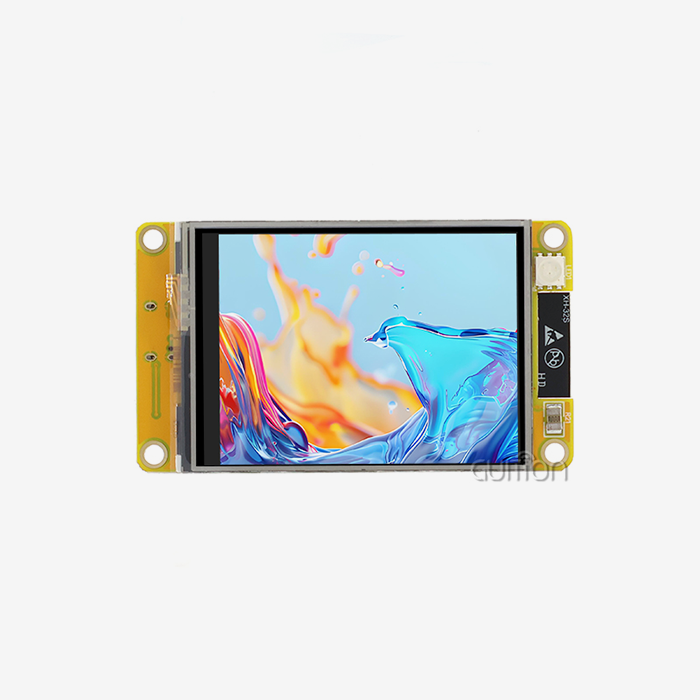
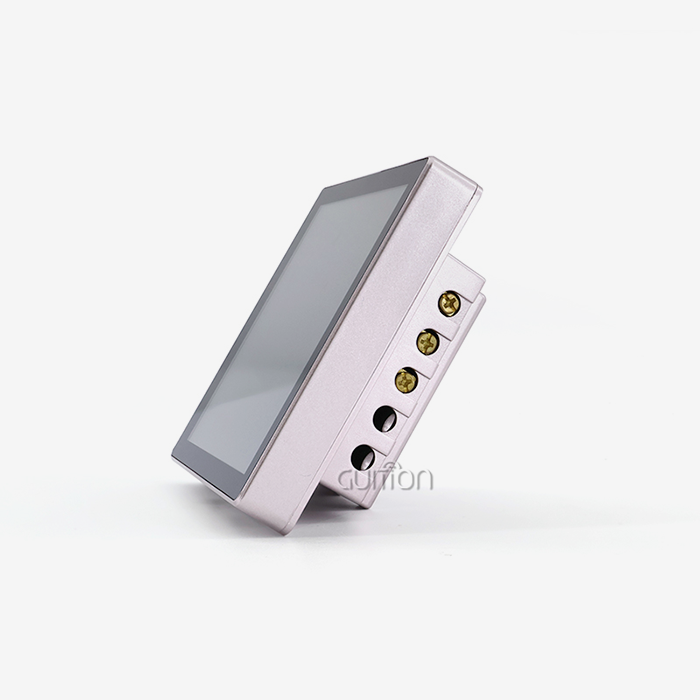
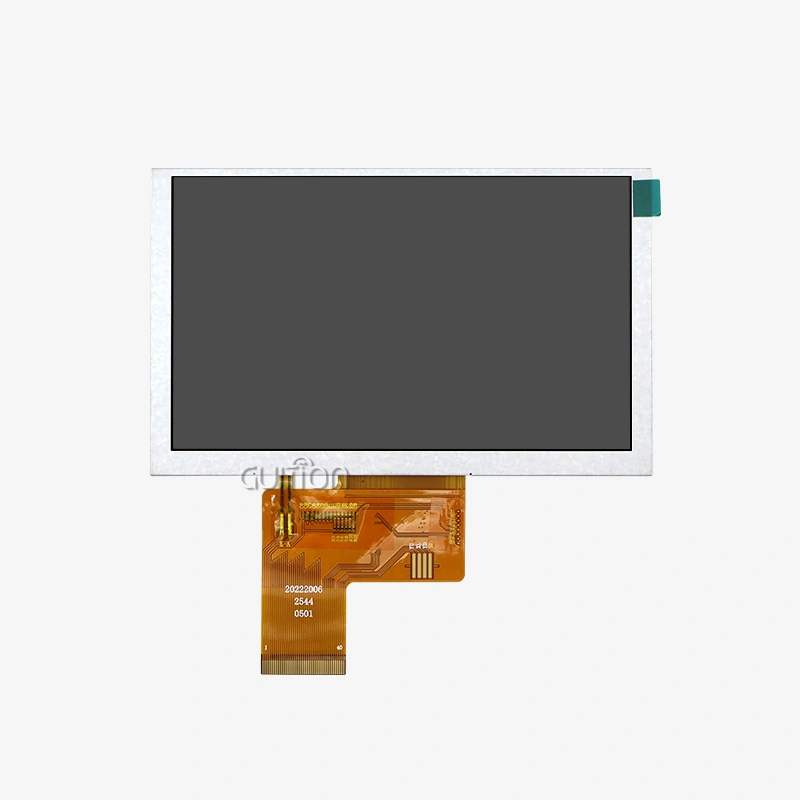
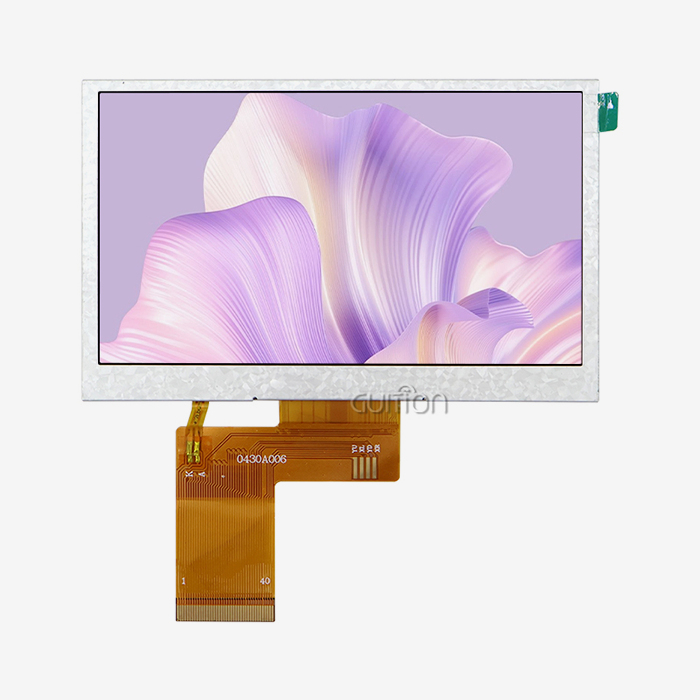
With its 2.8-inch size and 240x320 pixel density, the GUITION JC2432S028R is a great example of useful design integration. This module gives you 262,144 colors through SPI serial communication and only needs a few GPIO pins from your microcontroller. It is powered by the tried-and-true ILI9341 controller. This smart design frees up important processing power that can be used for logic in applications instead of managing displays. When choosing larger formats, pixel density becomes very important. For industrial HMI uses, a 7-inch screen with an 800x480 resolution gives enough detail. But for diagnostic clarity in medical imaging, higher pixel counts may be needed. Matching the resolution to the viewing distance and the complexity of the content keeps costs down and makes sure that text and graphics can be read.
Controller Compatibility and Interface Options
Popular development tools, such as Arduino, ESP32, and STM32 microcontrollers, can all work with SPI transmission. Parallel RGB interfaces need dozens of I/O pins, but the four-wire serial interface (MOSI, MISO, SCK, and CS) makes PCB routing easier. Built-in SD card slots add more features and let you store custom fonts, graphics libraries, and setup files on the device itself, without using external memory chips. Touch controller integration is different for single-chip solutions that combine the LCD driver and touch sensing and for discrete components. Single-chip designs cut down on bill of materials (BOM) costs and board space, and separate drivers let you customize touch algorithms more. For uses that need accurate palm rejection or proximity sensing, comparing the controller's abilities to its useful needs can save a lot of money on redesigns.
Environmental Protection and Durability
For front-panel mounting, industrial automation needs ingress protection ratings of IP65 or higher. Dust and liquid can't get into sealed bezels with gasket compression, so they stay reliable in machine shops and outdoor installations. Specifications for vibration resistance are important for transportation uses, since machinery used in farming and cars is constantly under mechanical stress that can break solder joints or peel off display layers. Temperature performance goes beyond the areas used for operations and includes endurance in storage and thermal cycles. Display units that can work in temperatures ranging from -30°C to +80°C can be used in buildings that aren't heated and in full sunlight. Wide-temperature LCD formulations also stop viscosity changes that slow down pixel reaction in cold conditions.
Sourcing and Procurement Strategies for OEM Resistive Touch Display Modules
To make buying work well, technical requirements, source dependability, delivery times, and the total cost of ownership must all be balanced. Large buyers have more negotiating power, but even medium-sized projects can benefit from strategic sourcing methods that guarantee consistent quality and quick technical support for Resistive touch display modules.
Evaluating Supplier Credentials and Certifications
Checking the credentials of the maker guards against low-quality parts that break down early in the field. ISO 13485 compliance is required for medical device applications, while ISO 9001 certification shows that quality management systems are in place. RoHS and REACH compliance paperwork makes sure that materials are safe and good for the environment, which is very important for markets in Europe and North America that are closely watched by regulators. Assessments of a manufacturing capability should look at things like production capacity, methods for tracking down parts, and ways to analyze failures. Maintaining cleanroom assembly facilities by suppliers shows that they are dedicated to preventing contamination, which is especially important for optical bonding processes that affect the clarity of displays. To get a sense of how disciplined the manufacturing process is, ask for process control data such as inspection reports that come in and quality assurance test results that go out.
Minimum Order Quantities and Lead Times
The MOQ standards for catalog items and unique setups are very different. Standard display panels from well-known companies may come with MOQs as low as 50 units, which lets you test a sample before committing to large-scale production. To spread out the one-time costs of engineering custom tools for specific sizes, connector configurations, or coatings, most companies need to commit to orders of 1,000 units or more. For in-stock catalog items, lead times are shorter—often sending within two weeks—but for custom orders, they can take up to twelve weeks, based on the supply of parts and the schedule for production. Adding gaps to the supply chain stops production delays, especially for holiday goods or projects with set start dates. Setting up framework agreements with preferred suppliers ensures that capacity is allocated during shortages of parts.
Comparing Technology Alternatives
Infrared and capacitive technologies are also being considered as replacements for resistive technology. Each has its own pros and cons. Capacitive screens have better visual clarity and can handle multiple touches, but they don't work when your hands are wet or when you're wearing gloves. Infrared frames can work with any input object and can handle very large sizes, but they need borders that stick out past the surface of the screen, which makes designing industrial enclosures more difficult. When comparing costs, you should look at the whole system, including controllers, protective overlays, and labor for putting it all together. Capacitive screens have more expensive parts, but resistive systems might need stronger mechanical housings to keep the bendable layer safe. The total cost of ownership includes regular maintenance for calibration, cleaning, and replacements that are expected to happen at set times based on the number of times the touch activates.
Negotiating Volume Discounts and Payment Terms
Annual volume agreements are used by procurement professionals to discuss tiered price structures. When you buy 5,000 units a year, you might get 15-20% off the spot-buy price, and the prices go down even more as you buy more. Buying multiple lines of products from the same supplier makes it easier to negotiate prices and keep track of vendors. Payment terms have a big effect on cash flow, especially for small and medium-sized businesses. Working capital management is better when Net-60 or Net-90 terms are negotiated instead of advance payment requirements. Letters of credit or escrow arrangements protect foreign deals while still giving both sides some freedom.
Market Landscape: Leading Manufacturers and Emerging Trends
The market for Resistive touch display modules is always changing because of new discoveries in materials science, technology in production, and shifting needs in different applications. Strategic sourcing decisions that make product designs future-proof are based on knowing what suppliers can do and how technology is changing.
Evaluating Manufacturer Capabilities
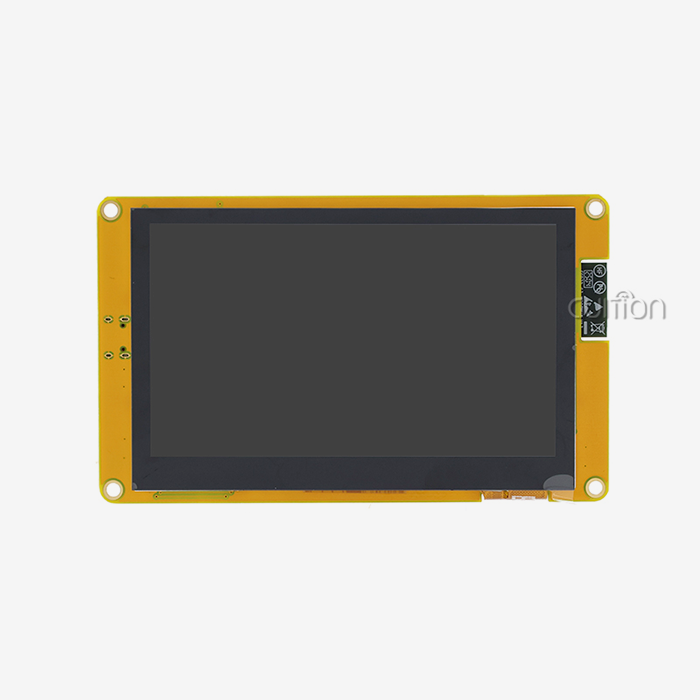
GUITION is the new generation of technology-driven suppliers that manage production, research, and development all from one place. Our wide range of products, from 1.28" to 21.5", meets a wide range of application needs, including spi display module solutions. Our own development software speeds up the time it takes to market for complicated HMI projects. Military-grade production methods guarantee long-term stability, even in harsh environments. Vertical integration lets established companies compete by keeping control of the whole process, from ITO finishing to final assembly. This operational model allows for tight quality control and quick design changes, but it might not be as flexible for needs that are very specific. Contract manufacturing agreements are often used by new suppliers to get low prices and quick responses, but they may come at the cost of less clear supply chains.
Technology Innovation and Durability Improvements
New developments aim to increase the useful life of things by using better ITO deposition and hard-coating methods. Nano-coating techniques make surfaces less likely to scratch while keeping light transfer above 85%. This keeps the brightness and color accuracy of the display. Better glue mixtures stop delamination when heated and cooled many times, which fixes common failure modes in car and outdoor uses. Because of automated application methods that cut down on worker costs, optical bonding has gone from being a premium feature to a common one. This technology gets rid of parallax errors and internal reflections, making it easier to read in direct sunlight, from 400 nits to 800+ nits without using more power for the backlight. For small gadgets that run on batteries, this efficiency gain greatly extends their useful life.
Sustainability and Circular Economy Initiatives
Environmental factors are becoming more important in purchasing decisions because of rules and companies' promises to be more environmentally friendly. Companies that set up closed-loop recycling systems for ITO recovery and glass reuse show they care about the environment. European and North American buyers want to know more about the supply chain, and conflict-free mineral certifications and ethical sourcing documentation meet their needs. Backlight designs that use less energy and have LED drivers with dimmer control use 40 to 60 percent less power than older CCFL designs. When it comes to installations with thousands of displays, like building automation networks, these efficiency gains mean lower operating costs and less need for cooling infrastructure.
Comprehensive Buying Guide for U.S. B2B Procurement
When looking for Resistive touch display module suppliers, American industrial buyers look at how reliable the supplier is, how quickly they respond to technical support requests, and how well they follow regulations. Setting clear guidelines for review makes it easier to make decisions and lowers the risks of integration.
Technical Specification Checklist
Write down the functional requirements, such as the touch activation force (10–100 grams on average), the response time (less than 10ms), and the accuracy of the coordinates (±2% of the dimension). Specifications for the environment should include operating temperature ranges, resistance to humidity, and vibration tolerance based on the conditions of deployment. For medical uses, make sure that materials that will come into contact with patients or users have biocompatibility certifications. Integration delays can be avoided by checking the interface's compatibility. Make sure that the voltage levels (3.3V or 5V logic), SPI clock speeds, and reset time needs are all the same as what the microcontroller says they should be. Check to see if there are any sample codes available for your development platform. For example, complete Arduino and ESP-IDF examples make prototyping faster than starting from datasheet specs.
Quality Assurance and Testing Protocols
Ask for pre-shipment inspection reports that include checks for cosmetic flaws, measurements, and data from functional tests. Setting acceptance criteria up front, like the maximum number of dead pixels that can be used, the range of acceptable regularity, and the required level of touch accuracy, stops disagreements over biased quality judgments. If you have a high-value order or an important application where field failures could have big effects, you might want to use third-party inspection services. When goods come in, they should be inspected to make sure the package is complete, the part numbers are correct, and electrical factors are tested on a sample. By making standard test fixtures for checking touch sensitivity and display uniformity, quality gates can be enforced consistently across multiple shipments and suppliers.
Warranty Terms and Technical Support
Standard warranty coverage usually lasts between 12 and 24 months from the date of shipment and covers problems with the materials or the way they were made. Make sure you understand what the guarantee doesn't cover. Usually, mechanical damage, liquid entry, and high working temperatures are not covered. For an extra fee, you may be able to get extended warranty plans that put the long-term dependability risk on the provider. Responding quickly to technical help requests is what sets exceptional providers apart from average ones. GUITION offers dedicated engineering support throughout the entire lifecycle of your product, from helping you with the initial specifications to resolving problems during production integration and providing support for field deployment. Check how responsive the supplier is during the quotation phase. Quick, detailed answers to technical questions about SPI Display Module solutions are a good indicator of how good the support will be in the future.
Conclusion
To find the best SPI Display Module resistive touch display modules, you have to balance technical performance, supplier capabilities, and total cost. Resistive technology is still used in important places where it is better than capacitive technology for things like gloved operation, pen input, and longevity in harsh environments. Integration that works and products that last for a long time are made possible by carefully choosing suppliers, making sure that specifications are clear, and using smart buying methods. The GUITION JC2432S028R is a modern resistive display solution that combines tried-and-true technology with full development support. It meets the tight deadlines for getting products to market while maintaining the high-quality standards needed for use in industrial, medical, and automation settings.
FAQ
What distinguishes 4-wire from 5-wire resistive touch architectures?
The main difference is where the electrodes are placed and how long they last. In 4-wire setups, one conductive layer checks the X-axis and the other checks the Y-axis. When the top film layer is bent over and over, it wears down the ITO material, which means it can only be used for about 1 million hits. On the other hand, 5-wire designs put all of the active electrodes on the rigid glass substrate and only use the flexible top layer to measure the voltage. This design makes it last longer than 30 million touches, which makes it better for public stations with a lot of users and industry settings that get a lot of use every day.
How do environmental conditions affect calibration stability?
Changes in temperature make the glass substrate and the flexible ITO film's materials expand and shrink. This changes the connection between touch coordinates and display places. Good controllers use non-volatile memory (EEPROM) to store calibration values and compensation methods to account for temperature-related drift. Industrial-grade Resistive touch display modules list the highest levels of drift, which are usually less than 2% across the operating temperature range. This makes sure that the accuracy stays the same without having to be recalibrated by hand.
Can resistive displays support multi-touch gestures?
Standard resistive technology can only pick up on single touch points because the pressure device records the center when multiple contacts happen at the same time. There are special dual-touch resistive panels that use complex controller algorithms to understand multiple pressure points. However, capacitive technology is usually better for uses that really need multi-touch capability because it is easier to implement and costs less. Single-touch precision input works well for most industrial and medical applications.
Partner with GUITION for Your Resistive Touch Display Module Requirements
Through our full product environment, which includes sizes from 1.28" to 21.5", Shenzhen Jingcai Intelligence offers complete HMI options. As a Resistive touch display module manufacturer with a lot of experience, we combine study, production, and expert support to help you get your product to market faster. Our GUITION interface development software gets rid of the need for complicated low-level coding. It also makes it easy to create UIs quickly with drag-and-drop controls and cross-platform debugging. Military-grade manufacturing processes make sure that uses of industrial technology, medical devices, and smart equipment will be stable for a long time. Email our engineering team at david@guition.com to talk about the details of your project, get technical information, or set up sample review units that show how committed we are to quality and new ideas.
References
1. Zhang, L., & Chen, M. (2023). "Advances in Resistive Touch Screen Technology for Industrial Human-Machine Interfaces." Journal of Display Technology, 19(4), 245-258.
2. Anderson, P. R. (2024). "Comparative Analysis of Touch Technologies for Medical Device Applications." Biomedical Instrumentation & Technology, 58(2), 112-127.
3. Williams, K. T., & Roberts, S. J. (2023). "Material Science Innovations in Transparent Conductive Coatings for Touch Displays." Materials Science and Engineering Reports, 156, 78-94.
4. Thompson, R. D. (2024). "Procurement Strategies for OEM Display Integration in Industrial Automation." Industrial Engineering Journal, 45(1), 34-49.
5. Martinez, E., & Liu, H. (2023). "Environmental Durability Testing Protocols for Ruggedized Touch Display Modules." IEEE Transactions on Industrial Electronics, 70(8), 8234-8246.
6. Foster, J. M. (2024). "HMI Design Considerations for Safety-Critical Applications in Medical and Industrial Sectors." Human Factors in Engineering, 42(3), 189-203.
Learn about our latest products and discounts through SMS or email