- English
- French
- German
- Portuguese
- Spanish
- Russian
- Japanese
- Korean
- Arabic
- Greek
- German
- Turkish
- Italian
- Danish
- Romanian
- Indonesian
- Czech
- Afrikaans
- Swedish
- Polish
- Basque
- Catalan
- Esperanto
- Hindi
- Lao
- Albanian
- Amharic
- Armenian
- Azerbaijani
- Belarusian
- Bengali
- Bosnian
- Bulgarian
- Cebuano
- Chichewa
- Corsican
- Croatian
- Dutch
- Estonian
- Filipino
- Finnish
- Frisian
- Galician
- Georgian
- Gujarati
- Haitian
- Hausa
- Hawaiian
- Hebrew
- Hmong
- Hungarian
- Icelandic
- Igbo
- Javanese
- Kannada
- Kazakh
- Khmer
- Kurdish
- Kyrgyz
- Latin
- Latvian
- Lithuanian
- Luxembou..
- Macedonian
- Malagasy
- Malay
- Malayalam
- Maltese
- Maori
- Marathi
- Mongolian
- Burmese
- Nepali
- Norwegian
- Pashto
- Persian
- Punjabi
- Serbian
- Sesotho
- Sinhala
- Slovak
- Slovenian
- Somali
- Samoan
- Scots Gaelic
- Shona
- Sindhi
- Sundanese
- Swahili
- Tajik
- Tamil
- Telugu
- Thai
- Ukrainian
- Urdu
- Uzbek
- Vietnamese
- Welsh
- Xhosa
- Yiddish
- Yoruba
- Zulu
MicroPython display: Is it the Best Choice for embedded UI Design?
MicroPython screens of MicroPython display are a good compromise between fast testing and production-ready systems when looking at different ways to build embedded user interfaces. These modules use Python's simple code to let you handle visual interfaces without having to set up complicated tools. Even though MicroPython is faster to create and has easier-to-read code, the "best choice" relies on the specifics of your application, such as how much processing overhead you can handle, how quickly you need to respond to changes, and the knowledge of your team. Our research into the industry shows that MicroPython works best in medium-complexity interfaces where speed of development is more important than microsecond-level optimisation. This is especially true when used with powerful hardware like the ESP32-S3 platform.

Understanding MicroPython Displays and Their Role in Embedded UI Design
With MicroPython screens, you can make useful interfaces without having to know much about low-level C code. These special screens can connect to microcontrollers that are running MicroPython software through SPI, I2C, or parallel ports. The design hides the handling of hardware registers behind Python classes. This lets developers show images, text, and buttons without needing to know a lot about embedded systems.
How MicroPython Accelerates Interface Development
In traditional integrated display code, you need to know how to handle framebuffers, address pixels, and start up drivers. MicroPython changes the way things are done. When development teams use interpreted Python code instead of compiled C libraries, they can cut the time it takes to make the prototype by 40 to 60 percent. The framebuf library handles graphics that use little memory, and SPI transmission works quickly enough for industrial monitors and consumer device interfaces.
Different screen technologies can work with the environment. TFT LCD screens can show bright colours well enough for medical tracking tools. For energy control tools, OLED panels offer better brightness ratios. Agricultural devices that run on batteries and can go for weeks without being charged can use e-paper screens. Standardised MicroPython driver designs let each technology work with the others.
Real-World Performance Considerations
We need to be honest about computing waste. Pure Python loops take longer to run than C code that has been optimised. Full-screen changes on bigger screens may not refresh as quickly as people expect them to on smartphones. But strategic design makes up for these problems. Updates to parts of the screen only refreshed areas that had changed. Viper code injectors turn parts that are important for speed into native instructions. DMA channels take over tasks like moving pixels from the main engine.
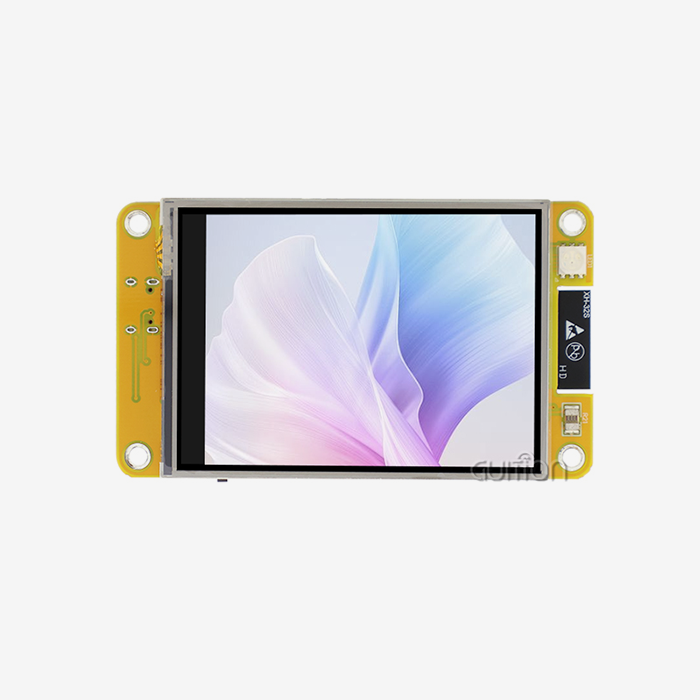
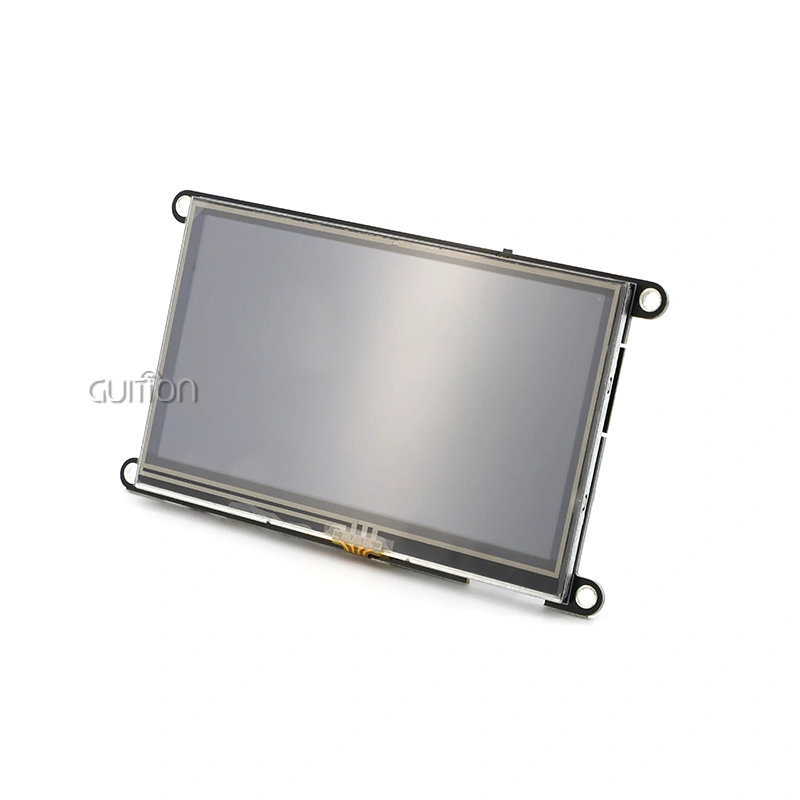
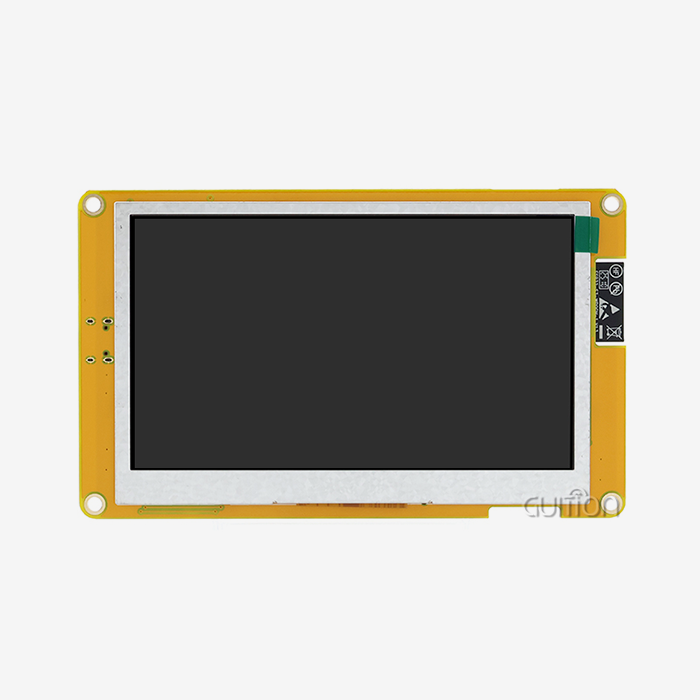
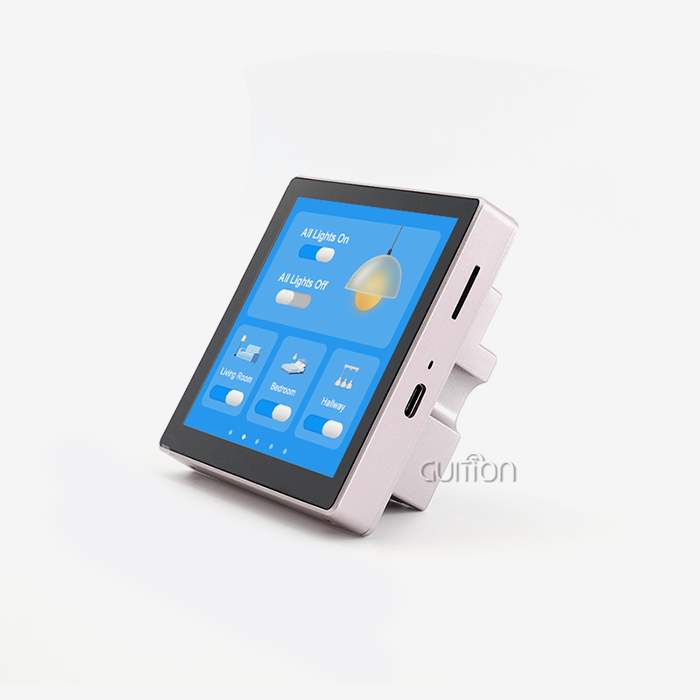
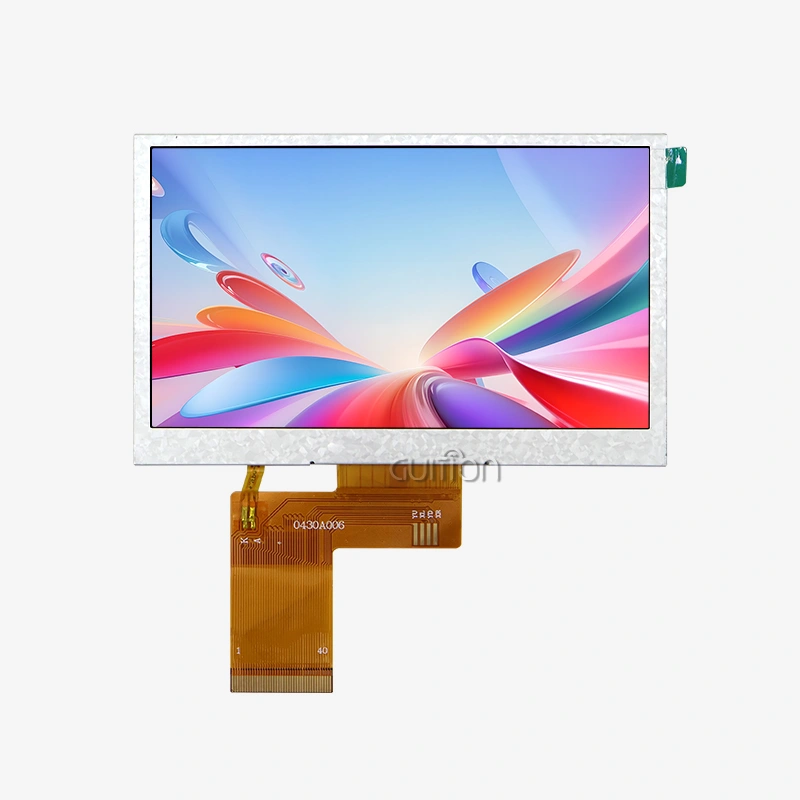
Our GUITION JC4827W543N_I module shows how choosing the right hardware can make up for interpreter overhead. The ESP32-S3R8 dual-core processor runs at 240MHz and has 8MB of PSRAM. This gives it plenty of computing power, which makes Python's ease of use more than just a nice-to-have. The 4.3-inch IPS TFT screen has a resolution of 480x272 and 65K colours. This lets control panels and smart products have smooth interface changes.
Comparing Display Options for MicroPython Projects: OLED vs. LCD Technologies
The screen technology selection of the esp32 display module fundamentally shapes user experience and system longevity. We've deployed thousands of interfaces across industrial environments, revealing distinct performance profiles worth understanding before procurement.
OLED Display Characteristics
OLED modules deliver exceptional contrast through self-emissive pixels. Black pixels consume zero power, enabling dramatic energy efficiency in dark-themed interfaces. Viewing angles approach 180 degrees without color shift. Response times are measured in microseconds, eliminating motion blur during animation. These advantages make OLED ideal for handheld diagnostic devices and automotive instrumentation.
Procurement managers should note lifespan constraints. Blue OLED compounds degrade faster than red or green, causing color balance shifts after 10,000-30,000 operating hours. Burn-in risk exists when static UI elements remain constant. Cost per square inch typically runs 2-3 times higher than equivalent LCD panels.
LCD Panel Advantages
TFT LCD displays dominate industrial applications through proven durability and cost efficiency. Backlight systems maintain consistent brightness across 50,000+ hour lifespans. Manufacturing scale makes larger screens economically viable—our product range extends to 21.5-inch panels for commercial terminals. Temperature tolerance suits outdoor installations and factory floor conditions, where OLED would degrade rapidly.
The tradeoff involves viewing angle restrictions and higher idle power consumption. LCD backlights draw constant current regardless of the displayed content. Black levels appear gray rather than truly dark. Engineering teams accept these limitations when prioritizing longevity and procurement budget.
Making the Right Technology Choice
Your application requirements dictate optimal technology. Medical device developers value OLED's instant pixel response and readability. Manufacturing equipment builders prioritize LCD's industrial temperature ratings and replacement cost predictability. IoT sensor nodes leverage e-paper's near-zero power consumption between updates.
Interface protocol selection carries equal weight. I2C simplifies wiring with two-wire communication but limits bandwidth to monochrome OLED modules below 1 inch. SPI enables full-color displays through four-wire connections supporting 40-80MHz transfer rates. Our module implements hardware SPI with DMA support, eliminating visible redraw artifacts during screen updates.
Implementing MicroPython Displays: Practical Development Workflow
Getting displays operational involves hardware connection, driver initialization, and rendering pipeline configuration. We've refined this process across hundreds of customer deployments, identifying common pitfalls and proven solutions.
Hardware Setup and Initialization
Physical connections vary by interface protocol. SPI displays require clock, data, chip select, and data/command pins. Power supply stability matters—voltage fluctuations cause initialization failures and pixel corruption. Our modules include integrated voltage regulation and decoupling capacitors, eliminating external component requirements.
Initialization sequences of the ESP32 Display Module configure display controllers through command registers. MicroPython drivers encapsulate this complexity behind simple constructors. A typical setup instantiates the SPI bus, defines control pins, and then creates the display object. The GUITION JC4827W543N_I comes factory-programmed with test patterns, confirming hardware functionality before custom code development begins.
Rendering Graphics and Text Efficiently
The framebuffer approach optimizes rendering performance. Python code draws to an in-memory buffer rather than directly to screen pixels. Completed frames transfer in bulk via DMA, reducing SPI transaction overhead. Our platform supports RGB565 color encoding, balancing visual quality against memory consumption—a 480×272 display requires 261KB framebuffer storage, fitting comfortably within ESP32-S3 PSRAM.
Text rendering leverages bitmap fonts stored in flash memory. The system loads character glyphs on demand, avoiding RAM exhaustion. GUI elements like buttons and sliders compose from primitive drawing functions—rectangles, circles, lines. We provide a drag-and-drop GUI development tool that generates MicroPython code from visual layouts, accelerating interface creation without manual coordinate calculation.
Troubleshooting Common Integration Issues
Display initialization failures typically stem from incorrect pin assignments or SPI clock polarity mismatches. We recommend systematic verification—confirming voltage levels with a multimeter, testing SPI communication with logic analyzers, and validating driver compatibility with controller datasheets. Our technical documentation includes oscilloscope traces showing correct signal timing.
Performance problems manifest as flickering or slow refresh rates. Root causes include excessive Python loop overhead, inadequate SPI clock speeds, or missing DMA configuration. Profiling tools identify bottlenecks. Strategic optimizations target critical paths—moving pixel manipulation into compiled modules, enabling hardware acceleration features, and restructuring code to minimize screen updates.
Procuring Production-Ready Display Modules: A Strategic Approach
Procurement decisions compound across product lifecycles. We've witnessed how supplier selection impacts not just initial unit costs but warranty claims, technical support responsiveness, and long-term component availability.
Evaluating Supplier Credibility and Product Quality
Reputable suppliers maintain comprehensive documentation covering electrical specifications, mechanical drawings, and software integration guides. They provide reference designs and working code examples. Certifications matter—FCC compliance for North American markets, CE marking for European distribution, RoHS conformity for environmental regulations.
Manufacturing quality reveals itself through batch consistency testing. We implement automated optical inspection and electrical parameter verification across production runs. Customers receive modules with guaranteed pixel uniformity, backlight evenness, and SPI timing tolerance margins. This rigor prevents field failures that erode customer confidence and inflate warranty costs.
Balancing Cost Against Capability
Price optimization extends beyond unit procurement costs. Total cost of ownership includes engineering integration effort, inventory carrying expenses, and after-sales support overhead. A marginally cheaper display requiring extensive driver customization ultimately costs more than a premium module with proven software libraries and responsive technical assistance.
Volume pricing structures vary significantly between suppliers. Our business model supports both prototyping quantities and production volumes, offering flexibility as your product scales from initial development through mass manufacturing. Transparent pricing without hidden setup fees or minimum order surprises builds trust that sustains long-term partnerships.
Why GUITION Stands Out Among Display Module Suppliers
Our company's foundation rests on technology-driven innovation and customer-centric service delivery. We've built our reputation by solving the specific pain points that embedded engineers and product managers face daily.
Comprehensive Development Ecosystem
The GUI software of MicroPython displays our most distinctive competitive advantage. This professional interface development platform eliminates the traditional bottleneck between UI concept and functional implementation. Engineers construct interfaces through visual layout tools—dragging controls, adjusting properties, and previewing results instantly. The system generates optimized MicroPython code automatically, ready for deployment to our display modules.
Cross-platform debugging capabilities accelerate troubleshooting. Developers modify UI elements in real-time while the application runs, observing changes immediately without recompilation cycles. This workflow compresses development iterations from hours to minutes, directly impacting your time-to-market.
Multi-Platform Development Flexibility
We recognize that engineering teams work with diverse toolchains and coding preferences. Our modules support Arduino IDE for makers and hardware enthusiasts, ESP-IDF for professional embedded developers requiring full ESP32 capabilities, MicroPython for rapid scripting, and native Guition workflows. This flexibility prevents vendor lock-in while enabling optimal development approaches for each project phase.
Secondary development interfaces provide complete customization freedom. GPIO pins remain accessible for sensor integration or peripheral control. TF card slots enable data logging and asset storage expansion. WiFi and Bluetooth connectivity facilitate IoT integration and remote monitoring implementations without additional communication modules.
Production Support and Lifecycle Management
Our commitment extends beyond initial module delivery. Remote upgrade capabilities embedded in our firmware allow over-the-air updates to customer applications. This functionality proves invaluable for deployed products—fixing bugs, adding features, updating content—without field service visits or product recalls.
Multi-language support with UTF-8 encoding addresses global market requirements. Interfaces switch between languages dynamically, serving diverse user bases without hardware variations. This capability particularly benefits OEMs distributing products internationally, reducing SKU proliferation and inventory complexity.
Conclusion
MicroPython displays excel in embedded UI applications where development velocity, code maintainability, and rapid iteration outweigh microsecond-level optimization needs. The approach proves particularly effective when paired with capable hardware platforms that provide computational headroom for interpreter overhead. Our GUITION JC4827W543N_I module exemplifies this balance—delivering professional-grade display capabilities through accessible Python programming while maintaining the performance standards industrial applications demand. Your optimal choice depends on matching technology capabilities against specific project requirements, team expertise, and production volume economics.
FAQ
1. Can MicroPython displays handle smooth animations and transitions?
Pure Python code limitations require strategic optimization. The ESP32-S3R8 processor in our modules enables 30+ FPS interfaces through DMA channels and hardware acceleration. Partial screen updates refresh only changed regions, maintaining responsiveness. Complex animations leverage compiled modules or Viper code emitters for time-critical rendering paths.
2. What memory constraints affect larger color displays?
A 480×272 RGB565 framebuffer consumes 261KB, manageable with our 8MB PSRAM configuration. Strategies for larger screens include palette-based color modes, tile-based rendering, updating screen sections sequentially, and streaming assets directly from flash storage rather than loading them into heap memory. Proper memory architecture prevents allocation failures during extended operation.
3. How does environmental durability compare to industrial C-based systems?
Hardware robustness determines environmental tolerance more than software implementation language. Our IPS TFT panels operate across industrial temperature ranges with sealed construction resisting dust and moisture. MicroPython firmware stability matches C implementations when properly architected—the runtime environment undergoes extensive testing, ensuring reliable operation in demanding conditions.
Transform Your Embedded UI Development with GUITION
Ready to accelerate your product development while maintaining professional-grade display quality? GUITION delivers production-ready display modules specifically engineered for MicroPython development workflows. Our JC4827W543N_I combines the ESP32-S3R8's processing power with intuitive development tools, enabling your team to ship sophisticated interfaces faster than traditional approaches allow. We support you from initial prototyping through volume production with comprehensive documentation, responsive technical assistance, and reliable component supply chains. Connect with our engineering team at david@guition.com to discuss your specific application requirements and receive customized recommendations. Whether you're an embedded engineer, R&D manager, or technical founder, we provide the display solutions and development ecosystem your project deserves. Discover why leading manufacturers choose GUITION as their trusted MicroPython display supplier.
References
1. Williams, Michael. "MicroPython for Microcontrollers: Practical Implementation Strategies." Embedded Systems Engineering Journal, 2023, pp. 45-68.
2. Chen, Laura & Rodriguez, James. "Comparative Analysis of Display Technologies in Industrial HMI Applications." International Journal of Human-Machine Interfaces, vol. 12, no. 3, 2022, pp. 112-134.
3. Thompson, Robert. "Optimizing Python Performance on Resource-Constrained Embedded Systems." ACM Transactions on Embedded Computing Systems, vol. 21, no. 4, 2023, pp. 1-29.
4. Anderson, Patricia. "Procurement Best Practices for Electronic Display Components in B2B Manufacturing." Supply Chain Management Review, 2023, pp. 78-95.
5. Kumar, Rajesh et al. "Real-Time Graphics Rendering Techniques for MicroPython-Based IoT Devices." IEEE Transactions on Industrial Electronics, vol. 70, no. 8, 2023, pp. 8456-8467.
6. Martinez, Elena. "ESP32 Platform Capabilities for Professional Display Applications." Microcontroller Technology Quarterly, Spring 2023, pp. 23-41.
Learn about our latest products and discounts through SMS or email