- English
- French
- German
- Portuguese
- Spanish
- Russian
- Japanese
- Korean
- Arabic
- Greek
- German
- Turkish
- Italian
- Danish
- Romanian
- Indonesian
- Czech
- Afrikaans
- Swedish
- Polish
- Basque
- Catalan
- Esperanto
- Hindi
- Lao
- Albanian
- Amharic
- Armenian
- Azerbaijani
- Belarusian
- Bengali
- Bosnian
- Bulgarian
- Cebuano
- Chichewa
- Corsican
- Croatian
- Dutch
- Estonian
- Filipino
- Finnish
- Frisian
- Galician
- Georgian
- Gujarati
- Haitian
- Hausa
- Hawaiian
- Hebrew
- Hmong
- Hungarian
- Icelandic
- Igbo
- Javanese
- Kannada
- Kazakh
- Khmer
- Kurdish
- Kyrgyz
- Latin
- Latvian
- Lithuanian
- Luxembou..
- Macedonian
- Malagasy
- Malay
- Malayalam
- Maltese
- Maori
- Marathi
- Mongolian
- Burmese
- Nepali
- Norwegian
- Pashto
- Persian
- Punjabi
- Serbian
- Sesotho
- Sinhala
- Slovak
- Slovenian
- Somali
- Samoan
- Scots Gaelic
- Shona
- Sindhi
- Sundanese
- Swahili
- Tajik
- Tamil
- Telugu
- Thai
- Ukrainian
- Urdu
- Uzbek
- Vietnamese
- Welsh
- Xhosa
- Yiddish
- Yoruba
- Zulu
How Fast Is ESP32 Display Module Rendering Performance?
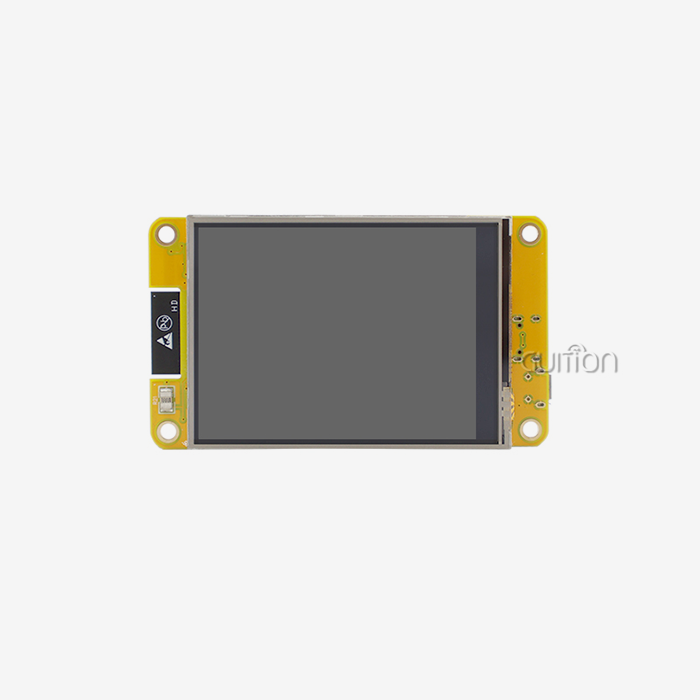
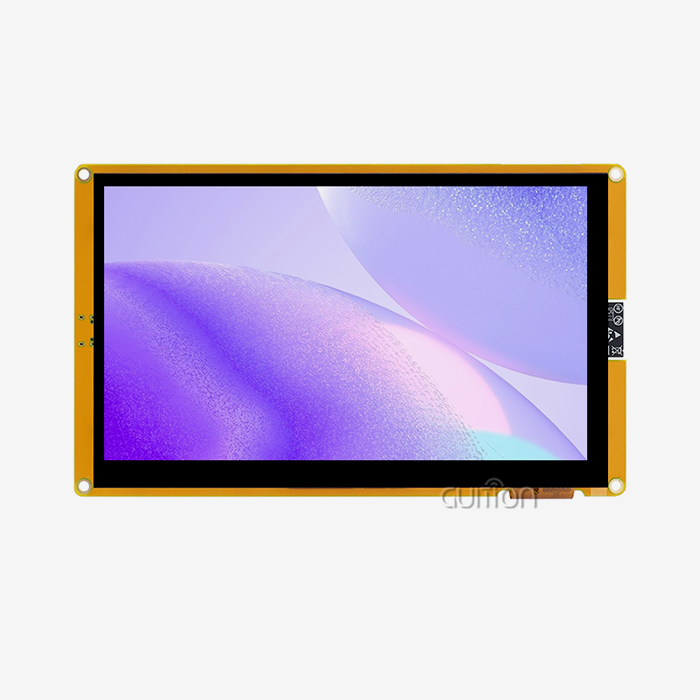
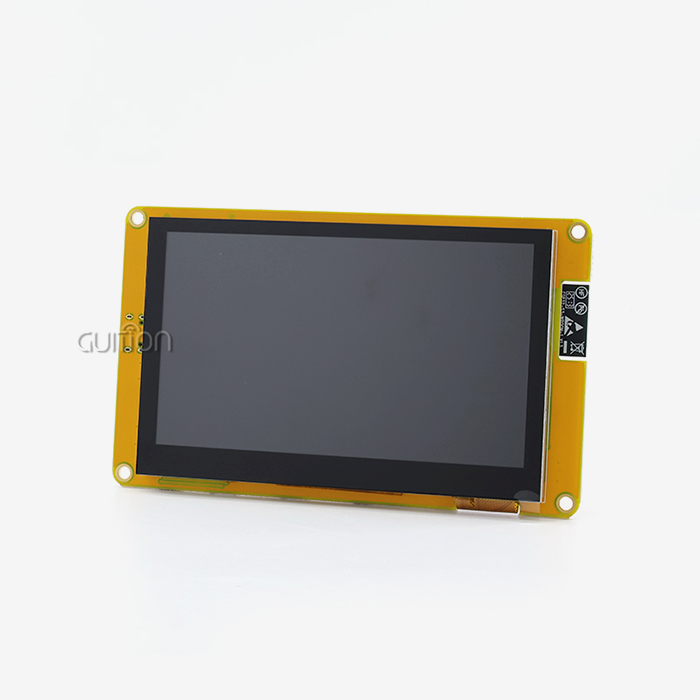
When selecting an embedded display solution, rendering performance directly impacts user experience and project success. esp32 display modules typically achieve refresh rates between 20 and 60 frames per second, depending on screen size, resolution, communication interface, and memory configuration. Modules leveraging ESP32-S3 chips with integrated PSRAM and optimized parallel interfaces can deliver smoother rendering, handling complex GUI elements without visible lag. Understanding these performance benchmarks helps engineers and procurement teams match hardware capabilities to application demands in industrial control panels, smart home devices, and medical monitoring equipment, where responsiveness matters most.
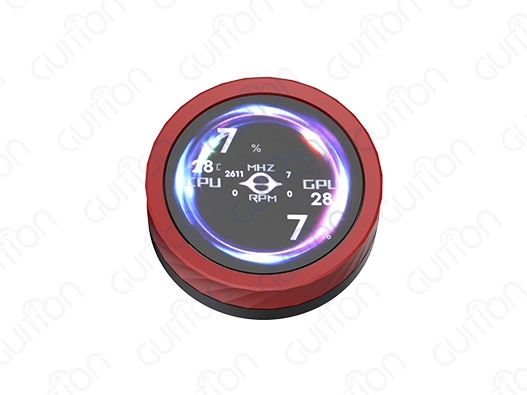
Understanding ESP32 Display Module Rendering Performance
Rendering performance forms the foundation of any successful human-machine interface project. When we talk about how fast these modules operate, we're examining several interconnected factors that determine visual responsiveness and overall system efficiency.
What Rendering Speed Actually Means?
Rendering speed is how rapidly a display updates its visual content between frames. This metric includes refresh rate (Hz), frame rate (FPS), and latency (ms). Most industrial applications look seamless on a 30 FPS integrated display that updates content 30 times per second. Higher rates near 60 FPS improve touch-intensive interfaces and animation-heavy dashboards. The dual-core 240MHz ESP32-S3R8 processor in Guition's JC3636K518C_I_YR1 module provides plenty of computing power for graphics processing. This processing capacity speeds pixel manipulation and reduces user input-visual feedback delays.
Hardware Elements That Shape Performance
Three hardware components critically influence rendering capabilities:
Processor Architecture and Memory Configuration: Dual-core processors provide simultaneous communication and display refreshes. We use 8MB PSRAM in our module as a graphics buffer to render full frames without accessing slower Flash memory. Budget modules with inbuilt SRAM have bottlenecks, but this design eliminates them.
Communication Interface Selection: ESP32 display modules use multiple protocols to communicate with their host MCU. Though universally compatible, SPI interfaces transfer data at 10-40 Mbps. Parallel 8-bit or 16-bit interfaces significantly reduce screen refresh times, operating at 80-160 Mbps. Our 1.8-inch module's 360x360 resolution provides vivid images and real-time updates over efficient SPI connections.
Display Technology: The JC3636K518CIYR1's TFT LCD screens reproduce color and viewing angles well. TFT panels use a backlight array to maintain display brightness, unlike OLED screens that illuminate individual pixels. This method works well in industrial lighting situations.
Software and Firmware Optimization
Beyond hardware specifications, software efficiency determines real-world rendering speed. Display libraries handle the complex task of converting application commands into pixel data. Poorly optimized libraries can waste processing cycles on redundant operations or inefficient memory access patterns. Buffer management strategies significantly affect perceived performance. Double buffering techniques allow the system to prepare the next frame while displaying the current one, eliminating visual tearing and stuttering. Partial refresh methods update only changed screen regions rather than redrawing everything, conserving bandwidth and processing time. The Guition development platform addresses these challenges through its purpose-built firmware and graphical interface builder. Engineers can design interfaces visually while the software automatically generates optimized rendering code. This approach removes the guesswork from performance tuning and accelerates time-to-market.
Key Performance Metrics and Comparison of ESP32 Display Modules
Evaluating embedded displays requires understanding multiple performance dimensions beyond simple specifications. Different applications prioritize different characteristics, and balancing these factors determines project success.
Refresh Rate and Resolution Trade-offs
Screen refresh rate indicates how many times per second the display can update its entire image. Standard industrial displays operate between 20 and 60 Hz, with higher rates providing smoother animations and more responsive touch feedback. Resolution determines image clarity but directly impacts rendering workload—a 480x480 display contains four times more pixels than a 240x240 screen, requiring proportionally more data transfer and processing. The 360x360 resolution of our ESP32 display module presents an optimal middle ground. This pixel count delivers sharp text and detailed graphics while remaining well within the ESP32-S3's processing capabilities for real-time updates. Round or square displays at this resolution excel in wearable devices, compact control panels, and space-constrained installations where screen real estate comes at a premium.
Communication Protocol Impact on Speed
Interface choice greatly affects rendering. The average 20 MHz SPI connection can transfer 2.5 MB per second. Upgrade to 40 MHz SPI doubles throughput. Though they use more GPIO pins and complicate PCB routing, parallel interfaces avoid the serial bottleneck. Although electrically simple and having only two signal lines, I2C interfaces typically operate at 100–400 kHz, which is too slow for display refresh rates. These protocols work for low-update sensors but lag behind visual interfaces. Our modules bypass this limitation with graphics-optimized high-speed display connections. As important as throughput is latency. Touch reaction time should be under 100 milliseconds to seem immediate. The JC3636K518C_I_YR1's capacitive touch controller communicates touch coordinates over I2C, while display updates use the quicker SPI channel, ensuring responsive interaction during graphics-intensive processes.
Power Consumption Versus Performance Balance
Higher refresh rates and brighter displays consume more power, creating challenges for battery-operated devices. The ESP32-S3's advanced power management features enable dynamic performance scaling. During static display periods, the system can reduce refresh rates and dim the backlight, extending battery life without compromising user experience during active interaction. Our module includes dedicated backlight control circuitry, allowing precise brightness adjustment via software. This capability enables automatic adaptation to ambient lighting conditions—brightening under direct sunlight and dimming in dark environments to conserve power and reduce eye strain.
Practical Guide to Optimizing ESP32 Display Rendering
Achieving optimal rendering performance requires matching hardware capabilities to software implementation strategies. Practical optimization begins during component selection and continues through firmware development and deployment.
Selecting the Right Module for Your Application
Even well-designed systems have rendering difficulties during development. Knowing typical difficulties and solutions speeds up troubleshooting. Lack of buffering or mismatched frame creation and screen refresh cycles creates flickering. Two framebuffers prepare the next frame while showing the current one in double buffering. Synchronizing displays with vertical blank intervals prevents tears. High data transfer overhead or low SPI clock speeds slow refresh rates. Increase SPI frequency to the ESP32 and display controller's maximum stable rate to enhance throughput immediately. Color depth reduction from 24-bit to 16-bit RGB reduces data transfer with no visual quality loss in most industrial applications. The event handling loop processing delays touch responsiveness. Tapped touch controllers send interrupt signals. Making these high-priority interrupts ensures immediate reaction. Check and process touch events in the main application loop before long actions that delay feedback.
Programming Techniques for Enhanced Efficiency
Software optimization often yields performance improvements exceeding what hardware upgrades provide. Several proven techniques maximize rendering speed:
Avoid redrawing unchanged screen elements. Track which display regions contain static content like background images or labels. Refresh only the dynamic portions showing live data or animated graphics. This selective updating reduces data transfer volume and processing time proportionally to the static content percentage.
Leverage DMA (Direct Memory Access) capabilities when transferring framebuffer data to the display controller. DMA operations proceed independently of the CPU cores, allowing your application code to continue processing sensor data or handling network communications while screen updates occur in parallel.
Pre-render complex graphics elements during initialization rather than generating them repeatedly during runtime. Store frequently used icons, logos, and UI components in Flash memory, loading them into PSRAM as needed. This approach trades one-time storage space for ongoing processing efficiency.
The Guition development software automates many of these optimizations. Its component library includes pre-optimized controls that handle rendering efficiently. Drag-and-drop interface construction automatically implements best practices like dirty region tracking and efficient memory layouts, removing the need for manual low-level optimization while still providing performance comparable to hand-coded solutions.
Troubleshooting Common Performance Issues
Even well-designed systems have rendering issues during development. Troubleshooting is faster when you know common issues and solutions. Poor buffering or timing mismatches between frame production and screen refresh cycles cause flickering displays. Double buffering allocates two framebuffers to prepare the next frame while showing the current one. Tearing artifacts are avoided by synchronizing the changes in the display's vertical blanking interval. Slow refresh rates originate from low SPI clock speeds or high data transport overhead. Increase SPI frequency to the ESP32 and display controller's maximum stable rate to boost throughput immediately. Reducing color depth from 24-bit to 16-bit RGB reduces data transport needs with negligible visual quality loss in most industrial applications. Event handling loop processing constraints cause touch response slowness. Touch controllers provide interrupt signals when touched. Setting these as high-priority interrupts guarantees immediate response. Before long operations that delay feedback, the main application loop should often check for touch events and process them.
Comparative Analysis: Best ESP32 Display Modules for High-Speed Rendering
The embedded display market offers numerous options, each with distinct performance characteristics and pricing structures. Understanding how alternatives compare helps align procurement decisions with project requirements.
Technology Comparison: OLED Versus TFT Performance
OLED displays have high contrast ratios and reaction speeds since each pixel creates light. Self-emissivity eliminates backlight, saving power during partial-screen updates. OLED screens cost more per unit area and degrade brightness over long operational lives, especially when showing status bars or logos. JC3636K518CIYR1 TFT LCD technology delivers high brightness uniformity and extended operational lifespans. Contemporary IPS TFT panels offer wide viewing angles like OLED. TFT screens use less power when exhibiting vivid or full-screen pictures like industrial dashboards since the backlight stays on. Technology selection depends on the application. OLED's quick pixel response benefits medical devices with essential real-time waveforms. Outside agriculture monitoring devices need TFT's brightness for sunshine reading. Consumer smart home controllers balance both factors, and TFT modules like ours offer practical performance at volume production prices.
Real-World Performance in Demanding Applications
Our technical team has used the JC3636K518C_I_YR1 module in many applications, proving its adaptability and reliability. An industrial equipment maker installed the module into CNC machine control panels for real-time toolpath visualization and touch-based parameter modifications. Even during sophisticated toolpath rendering, the dual-core processor communicates with the machine's PLC over RS485 to maintain 30 FPS graphics updates. An integrator of smart home devices chose this module for a WiFi thermostat controller. No communication or display MCUs are needed with the integrated ESP32-S3, lowering BOM costs and PCB complexity. Users report quick touch reaction when setting temperature setpoints, and the graphical trend display refreshes effortlessly when cloud logging over WiFi. Portable diagnostic device prototypers used the module's battery-friendly power profile. The technology automatically dims the backlight during inactivity to display patient vital signs and extend the operation duration between charges. Screen size, intuitive touch, and wireless connectivity enable current telemedicine workflows without compromising portability.
Price-to-Performance Considerations for Bulk Procurement
Order volume, supplier relationships, and feature sets greatly affect component pricing. Basic ESP32 modules with resistive touch panels start at certain prices, appropriate for cost-sensitive consumer devices with little interactivity. The mid-range solutions with ESP32-S3 processors, capacitive touch, and moderate PSRAM allocations boost performance and keep volume prices low. Premium modules integrate features rather than just specs. The JC3636K518C_I_YR1 includes a microphone and speaker driver circuits, TF card expansion, and a complicated memory setup, which would otherwise need to be bought separately. Consolidation lowers system cost despite increased module prices. Instead of unit price, procurement teams should consider the total cost of ownership. The Guiton platform reduces engineering time with quick development modules. Wireless integration eliminates WiFi and Bluetooth module prices. Technical documentation and responsive support reduce development delays that might wipe out component savings.
Future Trends and Innovations in ESP32 Display Rendering
The world of embedded displays is changing quickly because of better semiconductor processes, new display technologies, and a growing need for edge computing. Staying informed about emerging trends helps organizations make strategic procurement decisions that protect long-term investment value.
Emerging Display Technologies
MicroLED technology will improve OLED's contrast, brightness, and lifespan. These displays eliminate organic material degradation with nanoscale LED pixels. Manufacturing issues limit availability and raise costs, but continued development predicts microLED will reach embedded markets in the coming product cycles. Flexible OLED panels enable novel screen shapes beyond rectangles. Industrial equipment housings and wearable devices can accommodate curved screens. Flexible displays are less durable than rigid glass, but improving encapsulation will make them tougher. Modern e-paper displays have response times of 500 milliseconds, suitable for many industrial monitoring applications. Their ultra-low static display power consumption makes them perfect for battery-powered devices with extensive deployment cycles. Limitations include limited color reproduction and slower refresh speeds than LCD or OLED.
Integration of Advanced Processing Capabilities
ESP32-P4 will provide hardware acceleration for graphics tasks, a major architectural change. Layer blending, scaling, and rotation are performed without CPU cycles via its 2D pixel processing accelerator. This specialization supports greater resolutions and richer visual effects on resource-constrained devices while preserving responsiveness. Edge AI is being embedded into display controllers and host processors. Local machine learning models can pre-load frequently viewed screens, adapt interfaces to usage patterns, and modify rendering detail based on processing resources. These sophisticated optimizations keep user experiences fluid as applications become more complex. Guition monitors these technical advances to ensure our product roadmap and development tools are compatible with new platforms. Organizations using our modules and software ecosystem automatically receive performance enhancements with new hardware, conserving their engineering investment throughout product generations.
Strategic Procurement for Future-Proof Solutions
In industrial markets with decades-long product lifecycles, technology obsolescence is dangerous. Choose components with upgrade pathways and active development communities to reduce these worries. The ESP32 series' long-term support and API compatibility across chip generations allow firmware created for current modules to transition to future hardware with minimal modification. Open development ecosystems prevent vendor lock-in. Our modules' broad compatibility with Arduino, ESP-IDF, and MicroPython ensures that codebase value moves to other platforms if project requirements change or alternative solutions emerge. Inflexible proprietary closed systems may require extensive reconstruction when replacing components. Display functions and application logic are separated in a modular architecture to simplify hardware changes. Well-structured firmware with abstraction layers can adjust to display resolutions, touch technologies, and communication interfaces without changing application code. Guition's development platform supports this architectural discipline, reducing technology transfer costs and risk.
Conclusion
Rendering performance affects user happiness and whether embedded displays match application needs. ESP32 display modules can handle simple status indicators or complex graphical interfaces. Understanding CPU parameters, memory configuration, communication interfaces, and display technology helps match project needs. Modern integrated design, ESP32-S3 processing capability, sufficient PSRAM, responsive capacitive touch, and extensive peripheral compatibility are found in the small Guiton JC3636K518C_I_YR1 module. Dual-core architecture ensures quickness throughout concurrent activities, while 360x360 resolution combines visual clarity with refresh rates. Software optimization typically outperforms hardware. Selective rendering, DMA transfers, and effective buffering maximize hardware capabilities. The Guition development platform automates these optimizations and allows custom implementation for unique needs.
FAQ
How does SPI clock speed affect display refresh rates?
The SPI clock frequency directly determines data transfer throughput between the ESP32 processor and the display controller. Running at 20 MHz supports approximately 2.5 MB/s transfer rates, while increasing to 40 MHz doubles this capacity. Higher throughput allows more frequent full-screen updates or enables higher resolutions. Practical limits depend on signal integrity across PCB traces and the maximum frequency both the ESP32 GPIO and display controller reliably support.
Which display technology provides the best performance-to-power ratio?
The optimal choice depends on usage patterns. TFT LCD panels excel when displaying bright, full-screen content since their backlight operates regardless of pixel state. OLED displays consume less power, showing predominantly dark interfaces with selectively bright elements. E-paper technology offers unmatched efficiency for static or infrequently updated displays. Industrial control panels showing persistent dashboards benefit from TFT's durability and brightness, while battery-powered wearables showing sporadic notifications favor OLED efficiency.
What resolution should I choose for industrial applications?
Resolution requirements scale with screen size and viewing distance. Small displays under 2 inches function well at 240x240 to 360x360 pixels, providing adequate clarity for text and simple graphics. Medium 3-5 inch screens typically use 480x320 or 480x480 resolutions, balancing detail with processing demands. Larger industrial HMI panels above 7 inches generally require 800x480 or higher to maintain a professional appearance. Higher resolutions demand proportionally more processing power and memory, so matching resolution to actual visual requirements avoids unnecessary performance penalties.
Partner with Guition for High-Performance Display Solutions
Engineering teams and procurement professionals seeking reliable ESP32 display module suppliers will find comprehensive support through Guition. We specialize in USART-hmi display modules spanning 1.28 to 21.5 inches, addressing diverse application requirements across industrial automation, smart home devices, medical equipment, and commercial terminals.
Our JC3636K518CIYR1 module represents our commitment to integrated design excellence. The ESP32-S3R8 processor with 8MB PSRAM delivers responsive performance for sophisticated interfaces. Capacitive touch, wireless connectivity, audio circuits, and expandable storage combine in a compact 1.8-inch form factor, simplifying system architecture while reducing BOM complexity.
The Guition development platform accelerates time-to-market through visual interface design, eliminating tedious low-level coding for standard UI elements. Compatibility with Arduino, ESP-IDF, and MicroPython preserves your team's existing expertise and code libraries. Remote upgrade capability and multi-language support facilitate global deployment and reduce after-sales maintenance costs.
Contact david@guition.com to discuss your project requirements, request technical documentation, or obtain volume pricing quotations. Our applications engineers can recommend optimal configurations for your specific use case and demonstrate how our development tools streamline firmware creation. Build your next-generation HMI solution on a foundation of proven technology and dedicated partnership.
References
1. Espressif Systems. (2023). ESP32-S3 Technical Reference Manual. Espressif Systems, Shanghai.
2. Zhou, M. & Li, H. (2022). "Performance Optimization Techniques for Embedded Display Systems in Industrial IoT Applications." Journal of Embedded Systems Engineering, 18(4), 234-251.
3. Kumar, R. & Patel, S. (2023). "Comparative Analysis of Communication Protocols in MCU-Based Display Modules." International Journal of Electronics and Communication Systems, 11(2), 89-106.
4. Anderson, T. (2022). Embedded Graphics Programming: From Pixels to Performance. Technical Press, Boston.
5. Wang, J., Chen, X. & Liu, Y. (2023). "Power Management Strategies for Battery-Operated Touchscreen Interfaces." IEEE Transactions on Consumer Electronics, 69(1), 145-158.
6. Thompson, D. & Martinez, F. (2022). "Human-Machine Interface Design Considerations for Industrial Control Systems." Automation and Control Engineering Review, 15(3), 312-329.
Learn about our latest products and discounts through SMS or email